

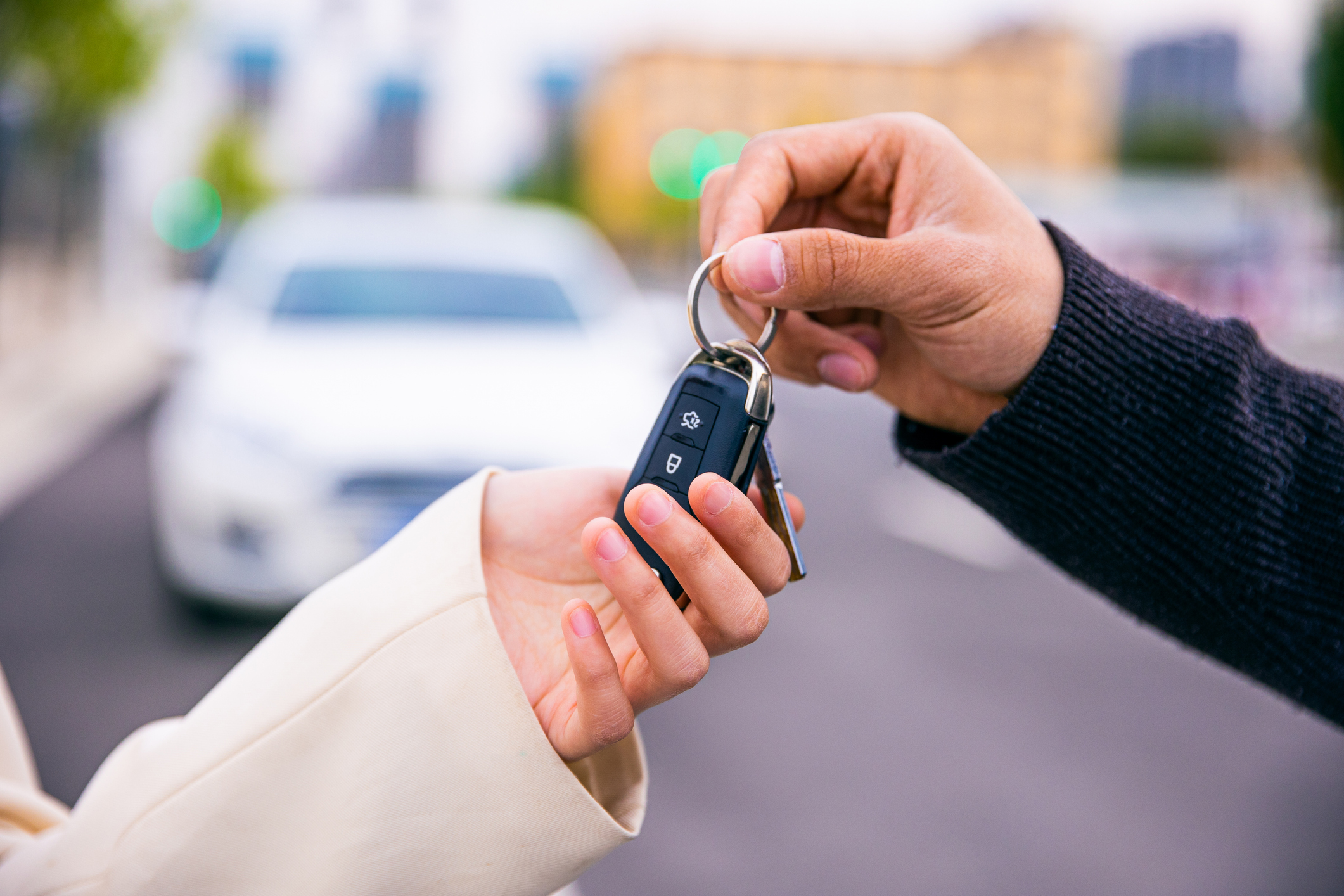
Borrowed Car Accidents in Fort Myers: Who Pays for the Damage?
Florida operates under the dangerous instrumentality doctrine — a long line of Florida Supreme Court cases that says when you hand your car to someone with your permission, you take on legal responsibility for the harm they cause behind the wheel. That is not how most people in Fort Myers think about lending a car. A son borrows mom’s SUV to run to Publix on Cleveland Avenue and rear-ends a delivery van. A retired neighbor lends his sedan to a houseguest for a beach run down Summerlin Road. A college kid hands his roommate the keys for a quick airport pickup off Daniels Parkway. The crash happens, the police leave, and then the slow panic sets in: whose insurance gets the bill?
The answer in Florida is not what most people expect, and it has gotten more consequential since the 2023 tort reform shortened the filing clock and tightened the rules around comparative fault. Let me walk through what Florida law actually says, where it pinches, and what to do if it happens to you.
What Florida Law Actually Says About Borrowed Cars
Three rules from Florida statute and case law do most of the work in a borrowed-car claim.
The dangerous instrumentality doctrine. Florida is one of a small number of states that treats a car as a dangerous instrumentality. The short version: when you let someone drive your car with your permission, you are on the hook for the harm they cause behind the wheel, up to the limits the law allows. This is not a statute you can look up by number — it is a long line of Florida Supreme Court cases — but it is the single most important rule in a borrowed-car claim. The owner is in the case whether the owner was at the wheel or not.
Modified comparative negligence — §768.81, Fla. Stat. Since the 2023 reform, Florida runs on modified comparative negligence with a 50% bar. In plain English: if a jury finds the injured party more than 50% at fault, they recover nothing. At 50% or less, their recovery is reduced by their fault share. In a borrowed-car case, that bar matters a lot when fault is muddy — say, your friend was speeding on Pine Island Road but the other driver pulled out of a lot without looking.
PIP and UM — §627.736 and §627.727. Florida is a no-fault state for medical bills up to $10,000 in Personal Injury Protection benefits. PIP follows the injured person in most cases, not the car. Uninsured Motorist coverage, when you carry it, is the layer that protects you when the at-fault driver has no insurance or not enough. In a borrowed-car claim, the PIP coverage that pays the borrower’s medical bills is often the borrower’s own PIP first, then the owner’s PIP — but the order depends on residency and whether anyone in either household has a vehicle of their own.
The filing clock — §95.11(4)(a), Fla. Stat. After March 24, 2023, negligence claims in Florida run on a two-year statute of limitations, not the old four. If your borrowed-car crash happened last summer on I-75 near Alico Road, you do not have nearly as much runway as people assume.
The patterns that turn into claims in Fort Myers
Almost every borrowed-car case our office handles falls into one of these patterns:
- The licensed family member. Adult child, sibling, parent borrows the car for an errand. Clean license, sober, full permission. Owner’s policy is primary, borrower’s policy sits behind it, and the claim is mostly a math problem about limits.
- The houseguest or friend. Out-of-town visitor, neighbor, college friend. Permissive use covers the loss in most cases, but the insurer is going to ask a lot of questions about whether the use was truly permitted and whether the borrower was a regular driver who should have been listed on the policy.
- The excluded driver. A household member specifically named on the policy as not covered — usually because of a prior DUI, suspended license, or rough driving record. If that person takes the car and crashes, the insurer almost always denies. The owner is exposed personally.
- Negligent entrustment. The owner hands the keys to a driver they knew or should have known was unfit — visibly drinking, no valid license, a long suspension history. Now the owner has direct liability of their own on top of the dangerous-instrumentality liability for the borrower’s driving.
- Non-permissive use. The car was taken without consent. Maybe a former roommate, maybe a teenager who grabbed the keys without asking. Coverage often follows the driver, not the car, but proving non-permission to the satisfaction of an insurance carrier is harder than it sounds.
Most of the disputes in our practice are not about which scenario applies. They are about which one the insurance carrier decides to argue for, because each one shifts the bill to a different policy.
Borrowed-Car Cases — Why These Are Harder Than They Look
On the surface, a borrowed-car claim looks like a straight rear-end or intersection case with a different name on the driver’s license. In practice, a few things tend to complicate them.
Two carriers, one fight. The owner’s insurer and the borrower’s insurer often disagree about who is primary. Each carrier has a financial reason to put the other one in front. While they argue, the injured party waits. We have had cases sit for weeks because two adjusters in different states could not agree on coordination of benefits.
The “regular use” trap. Many auto policies exclude coverage for a household resident who drives the car regularly but is not listed on the policy. A grown child who lives at home and drives mom’s car three days a week is not really a “borrower” in the insurance sense. If a carrier finds that pattern, they may try to deny on the theory that the driver should have been a listed insured.
Stacking and household coverage. When a Fort Myers family has two cars and two policies, the borrower’s own UM may stack with the owner’s UM after a hit by a phantom or uninsured driver. Whether stacking applies depends on the policy language, the household structure, and how the premiums were paid. This is one of those areas where a careful read of the declarations page can recover an extra layer of coverage that the carrier did not volunteer.
The Fabre problem. Florida lets defendants point at non-parties — what is called a Fabre defendant. In a borrowed-car case, that might be a road contractor, a phantom hit-and-run driver, or the owner of a parking lot where visibility was bad. Each pointed finger is a chance for the jury to push fault onto someone with no insurance at the table, which under §768.81 directly reduces what the injured party recovers.
A rear-end case out of Fort Myers
A few years back we represented a client who was rear-ended on US-41 in Fort Myers by a driver who never stopped. He pulled out of the lane, drifted, and clipped our client at a light. By the time the responding officer arrived, the at-fault driver was gone. No tag, no plate photo, no usable witness.
Our client did the right things. He stayed at the scene, called 911, and took the ambulance to the emergency room when his neck started to lock up that night. The diagnosis was a chronic cervical strain — the kind of injury that does not show up dramatically on an X-ray but settles in and stays. He spent months in physical therapy and ended up in a pain-management program for the soft-tissue damage that would not quit.
Because the at-fault driver was never found, the case ran entirely on our client’s own Uninsured Motorist coverage. We recovered the full policy payout under his UM coverage. It was not the headline-grabber type of recovery — it was the steady, document-everything, push-the-carrier-on-the-soft-tissue-injury type — and it is exactly the kind of file that makes me tell every Fort Myers client to carry UM and to carry it stacked.
The borrowed-car wrinkle on cases like this one is that the UM coverage in play is often the owner’s UM, the borrower’s UM, or both. Sorting out which policy responds, in what order, and for how much is half the work.
What to Do If Someone Crashes a Car You Lent Out
Here is the sequence I tell people to follow. None of this is generic checklist stuff — these are the steps that have actually changed the outcome of files we have handled in our office:
- Make sure 911 is called and a crash report is generated. Under §316.066, Fla. Stat., a long-form crash report is required for any wreck involving injury, fatality, a commercial vehicle, or substantial property damage. Even if it feels minor, get the report. Without a report, an insurer will second-guess everything later.
- Have the borrower text you photos before they leave the scene. Vehicle positions, license plates of every car involved, the other driver’s insurance card, the responding officer’s name and badge number, and any visible road conditions. Pictures from the scene are worth more than a written statement two weeks later.
- Get medical attention within 14 days. Florida’s PIP statute will not pay medical benefits if the injured person does not seek initial care within 14 days of the crash. I have seen otherwise clean claims fall apart because the injured driver toughed it out for two weeks and then went to urgent care on day 16.
- Do not give a recorded statement to the other side’s adjuster. Your own carrier you usually owe a duty of cooperation to. The other driver’s carrier you owe nothing to. They are calling to lock in language they can use against the claim.
- Pull both declarations pages — yours and the borrower’s. Before anyone signs anything, get a clean copy of both policies. Look at liability limits, UM coverage, whether UM is stacked, listed and excluded drivers, and any household-resident exclusions. The whole strategy of the case turns on what those two pages say.
- Call a lawyer before you call your carrier back the second time. The first call to report the crash is fine. The second call, where the adjuster starts asking about who lives in the household and who drives the car regularly, is where files get won or lost.
Key Takeaways
- In Florida, car insurance generally follows the vehicle, not the driver, so the owner’s policy is usually primary in a borrowed-car crash.
- The dangerous instrumentality doctrine puts the owner on the hook for harm caused by anyone driving with permission — that is a Florida rule, not a national one.
- Permissive use is broad, but excluded drivers, household residents who drive regularly without being listed, and non-permissive takers can all trigger a coverage denial.
- Under §768.81, an injured party more than 50% at fault recovers nothing, and under §95.11(4)(a) the filing clock is two years from the crash.
- UM coverage and PIP coordination between the owner’s and borrower’s policies often decide whether the claim resolves quickly or sits for months — pull both declarations pages early.
Frequently Asked Questions
Q1. If a friend wrecks my car in Fort Myers, whose insurance pays first?
In Florida, the auto policy generally follows the vehicle, not the driver. So when you hand the keys to a friend or family member and they cause a crash, your own liability and PIP coverage pays first up to its limits. Your friend’s policy can sit behind yours as secondary coverage if damages run past your limits.
Q2. Will my rates go up if someone else was driving my car?
Often, yes. Because Florida insurers price the policy around the vehicle, an at-fault loss on your car can raise your premium at renewal even when you were home on the couch. The size of the increase depends on the carrier, fault, and prior claims history.
Q3. What if the person driving my car was not on my policy?
Florida permits permissive use, which means a one-time or occasional borrower can be covered under your policy even if they are not a listed driver. The two big exceptions are excluded drivers named on your policy and people who took the car without your permission. Both can trigger a denial.
Q4. Can I be sued personally if the damage is bigger than my policy?
Yes. Once policy limits are exhausted, the injured party can pursue the borrower and, under Florida’s dangerous instrumentality doctrine, the owner who entrusted the car. That is why negligent entrustment cases (lending to an impaired or unlicensed driver) are so risky for the owner.
Q5. How long do I have to bring a claim after a Fort Myers crash?
After the 2023 tort reform, Florida’s statute of limitations for negligence is two years from the date of the crash under §95.11(4)(a). Older cases were on a four-year clock, but anything that happens today runs on two. Wrongful-death actions have their own two-year window.
Talk to Our Office Before You Talk to the Other Driver’s Insurance Company
If you lent your car to someone and they crashed it in Fort Myers — or you were driving a borrowed car and got hit — call our office before you give any recorded statements. We will pull both declarations pages, walk you through what your policy actually covers, and tell you straight whether you have a case worth bringing. Call 239-992-8259 for a free consultation. There is no fee unless we recover for you.
About the Author

David B. Pittman, Esq. founded Pittman Law Firm, P.L. and has practiced personal injury law in Fort Myers and across Lee County since, with a sustained focus on serious-injury auto and complex-liability cases. The firm’s Fort Myers presence handles a steady stream of serious-injury work along the Daniels Parkway, Six Mile Cypress, McGregor Boulevard, Cleveland Avenue, and Summerlin Road corridors, and along I-75 between Estero and Bell Tower.
Academically: The Citadel, The Military College of South Carolina for undergraduate; the University of South Carolina School of Law for the JD. Professionally: AV-Preeminent at Martindale-Hubbell and a member of the Multi-Million Dollar Advocates Forum.
David has held a Florida real estate broker license for twenty-five years, a credential that shapes how the firm reads the property side of premises cases. The firm handles personal injury cases across Lee and Collier Counties, serving Fort Myers, Bonita Springs, Naples, Cape Coral, Estero, and Lehigh Acres, with offices at Windsor Place in Bonita Springs (main) and Fort Myers (satellite). Call 239-992-8259 for a free consultation.
The information on this page is provided for general educational purposes and is not legal advice. Reading this article does not create an attorney-client relationship with Pittman Law Firm, P.L. Every case is different, and the outcome of any particular case depends on its own facts and applicable law. This page may be considered attorney advertising under Florida Bar rules.