

Written By David B. Pittman, Attorney and Founder of Pittman Law Firm, P.L.
If you have driven through North Naples during the winter or spring months, you have likely spent more time than you would care to admit sitting at the gridlocked light on Immokalee Road and I-75 at rush hour, waiting for traffic to clear. Between local commuters heading home, retirees traveling to our beautiful golf courses, and a massive influx of seasonal tourists renting cars at Southwest Florida International Airport (RSW), our local roadways are pushed to their absolute limits. While we welcome our winter visitors, sharing the road with drivers who do not know where they are going presents a very real danger.
First and foremost, if an out-of-state driver hits your vehicle in North Naples, your Florida Personal Injury Protection (PIP) insurance covers your first $10,000 in medical bills. This occurs regardless of who causes the accident. This is very frustrating and confusing for Florida drivers who don’t understand why their own insurance company has to pay, when some other driver caused the accident.
For damages exceeding that limit, you can file a bodily injury liability claim against the non-resident’s insurance policy in a Florida court under the state’s Long-Arm Statute.
When you drive south from our main office at Windsor Place on Bonita Beach Road in Bonita Springs and cross the county line into Collier County, you are immediately surrounded by license plates from Ohio, Michigan, New York, and Ontario. When one of these out-of-town visitors makes a reckless decision—staring at a GPS map screen instead of the traffic signal ahead—your life can become incredibly complicated.
A Case Example From A Previously Represented Client:
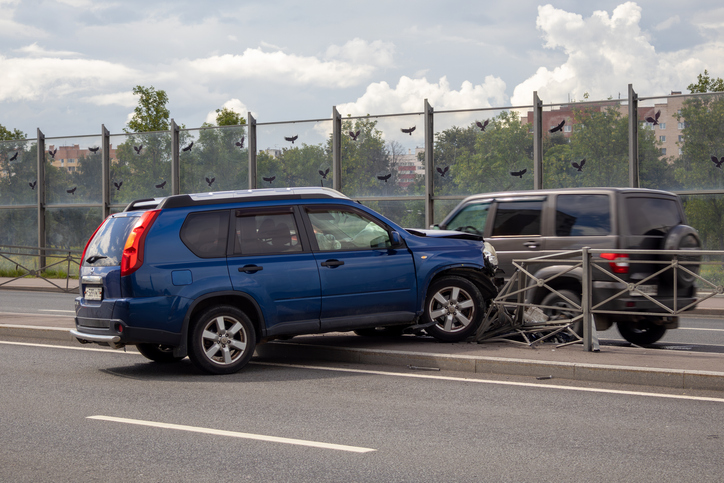
Our office handles these multi-state insurance cases regularly. We recently represented a local driver who was traveling safely through the busy intersection of Immokalee Road and Airport-Pulling Road in North Naples. He had a green light and was moving through the crossing when another vehicle completely ignored a solid red light, entering the intersection at a high rate of speed and broadsiding our client’s vehicle.
The impact was devastating. When deputies from the Collier County Sheriff’s Office arrived to document the scene, they investigated the scene and cited the out of state driver with Failure To Yield and Reckless Driving.
Our client survived the collision, but his vehicle took the brunt of the force. The structural damage was catastrophic, and the automobile was declared a total loss by the insurance appraiser. The physical toll on our client’s body was immense. He sustained severe spinal and soft-tissue trauma that severely limited his mobility and daily life.
He spent months undergoing extensive physical therapy to rebuild his strength. When conservative physical therapy treatments failed to provide enough relief from the constant, radiating pain in his back, he had to undergo multiple epidural steroid injections to manage the spinal inflammation.
Because specialized medical care, clinical treatments, and vehicle replacement costs create massive financial burdens, we immediately initiated a thorough insurance investigation. We secured the sheriff’s criminal arrest records, and identified all available insurance coverage. By building an strong case, we successfully forced the out-of-state driver’s insurance carrier to pay out a maximum policy limit settlement, ensuring our client could cover his extensive medical expenses and recover without a mountain of debt.
Key Takeaways: What to Do Immediately
- Seek Medical Care Within 14 Days: Under Florida law, you must receive a professional medical evaluation within 14 days of the crash to secure your Personal Injury Protection (PIP) benefits.
- Do Not Speak to Out-of-State Adjusters: You are not obligated to give a recorded statement to the at-fault driver’s insurance representative.
- Act Quickly to Secure Video Footage: Commercial properties near busy intersections like Immokalee Road and Airport-Pulling Road routinely overwrite their security camera footage within 7 to 14 days.
Why Are Out-of-State and Rental Car Accident Claims So Complicated?
An accident with a local Naples neighbor is usually straightforward: you swap insurance cards, get the police report, and deal with a local Florida adjuster. But when an out-of-state tourist or a rental car hits you, the entire claims process changes:
- Adjusters Who Do Not Know Florida Law: The visitor’s insurance adjuster may be sitting in an office in Ohio or Michigan. They are often completely unfamiliar with Florida’s specific injury statutes, and they may try to evaluate your claim using their own state’s rules to delay or minimize your payout.
- The Rental Car Loophole (The Graves Amendment): Many tourists rent vehicles at RSW. Under a federal law known as the Graves Amendment (49 U.S.C. §30106), commercial rental car companies like Enterprise, Hertz, or Avis cannot be held vicariously liable for the negligent driving of their customers. Unless we can prove the rental agency was directly negligent—such as renting out a vehicle with known mechanical failures—we cannot pursue a claim against the rental company itself. Instead, your recovery must come from the renter’s personal home-state auto policy, any supplemental liability insurance they bought at the counter, or your own uninsured motorist coverage.
How Florida Insurance and Traffic Laws Impact Your North Naples Car Crash
When you are hit by a visitor, the insurance company will immediately try to exploit Florida’s traffic laws to limit what they pay you. Protecting your recovery requires understanding three Florida rules:
1. Your Florida PIP Coverage Handles the Immediate Costs
Florida is a no-fault auto insurance state under Section 627.736, Florida Statutes. No matter who caused the intersection collision, your own auto policy is responsible for paying the initial portion of your medical bills. Your Personal Injury Protection (PIP) policy covers 80% of necessary medical care and 60% of lost wages up to a maximum of $10,000.
2. The Strict Two-Year Lawsuit Timeline
For any motor vehicle collision occurring on or after March 24, 2023, Florida law under Section 95.11(4)(a), Florida Statutes imposes a strict two-year statute of limitations from the exact date of the crash. If you fail to file a lawsuit within this two-year window, your case will be dismissed permanently. Because out-of-state cases involve tracking down out-of-state drivers and coordinating with corporate rental entities, starting the investigation immediately is vital.
3. Florida’s 50% Fault Bar
Under Section 768.81, Florida Statutes, Florida uses a modified comparative negligence system. This means a jury or insurance adjuster can divide blame between both drivers. You can still collect compensation if you are partially at fault, but your recovery is reduced by your percentage of blame. However, if the defense proves you were 51% or more at fault, you are legally barred from recovering any compensation. Insurance companies will work tirelessly to shift blame onto you to cross that 51% threshold.
Can You Sue a Non-Resident in a Florida Court?
Yes. A common worry for local crash victims is the mistaken belief that they must travel to the at-fault driver’s home state to file a lawsuit or collect a settlement.
Under Florida’s Long-Arm Statute (Section 48.193, Florida Statutes), any non-resident who operates a motor vehicle within our state borders automatically submits to the jurisdiction of our local legal system if they cause injury or property damage.
If the insurance carrier refuses to offer a fair settlement and we must file a formal lawsuit, we file that case right here in the Collier County or Lee County court system. The out-of-state resident is legally required to answer the lawsuit and defend the case in Southwest Florida.
Frequently Asked Questions About Tourist Car Accidents
What if the out-of-state driver was in a rental car but has no personal insurance?
If an uninsured visitor declines the optional liability insurance at the rental counter and carries no insurance back home, your primary path to recovery is through your own Uninsured Motorist (UM) policy under Section 627.727, Florida Statutes. This policy protects you by stepping into the shoes of the at-fault driver’s missing coverage to pay for your treatment and pain.
How do you prove a visitor ran a red light if they deny it?
We move quickly to secure independent physical evidence. The busy commercial plazas, gas stations, and shopping strip centers near the intersection of Immokalee Road and Airport-Pulling Road often have exterior security cameras that capture the traffic lanes. However, these commercial systems routinely overwrite their video data every 7 to 14 days. When you hire our firm, one of our first steps is to send formal evidence preservation letters to these surrounding businesses to legally protect and secure that video footage before it disappears.
Should I speak to the tourist’s out-of-state insurance adjuster?
No. You have no legal obligation to provide a statement to the at-fault driver’s insurance company. Adjusters representing out-of-state carriers are trained to look for ways to minimize your injuries or shift blame onto you to take advantage of Florida’s modified comparative negligence rules. Speak with an attorney before signing any medical releases or giving recorded statements.
What happens if the out-of-state driver’s policy limits are lower than my medical bills?
If your total medical expenses exceed the visitor’s available bodily injury coverage, we look for secondary layers of compensation. This includes checking if the tourist purchased supplemental umbrella insurance or if they have multiple auto policies back home that can be stacked. We also review your own underinsured motorist (UIM) coverage to bridge the financial gap.
Can a passenger in my vehicle recover compensation if an out-of-state driver hits us?
Yes. Passengers injured in an intersection accident have the legal right to pursue compensation. Their medical bills are initially covered by their own Florida PIP policy, or by your PIP policy if they do not own a vehicle. For their remaining damages, they can pursue a bodily injury liability claim against the out-of-state driver’s insurance.
Who pays for my vehicle repairs if my car is declared a total loss by a tourist?
You can choose to file a property damage claim directly through the out-of-state driver’s insurance, which is required to carry property damage liability under Florida rules. Alternatively, if their out-of-state carrier delays the process, you can use your own collision coverage to get paid for the total loss immediately, and your insurance company will seek reimbursement from the at-fault driver’s insurer later.
About David B. Pittman, Esq.
David B. Pittman is the founder of Pittman Law Firm, P.L., a family-run personal injury practice that has protected the rights of injured individuals and families throughout Southwest Florida for more than 30 years. A graduate of The Citadel and the University of South Carolina School of Law, David concentrates his practice on representing victims of car, truck, and motorcycle collisions across Lee and Collier counties. He holds an AV-Preeminent rating from Martindale-Hubbell and is a member of the Multi-Million Dollar Advocates Forum. David also leverages his extensive local knowledge as a 25-year licensed Florida Real Estate Broker to provide valuable insight into complex roadway safety and premises liability claims.
If you or a loved one have been injured by an out-of-state driver or a rental vehicle in the North Naples area, protect your legal rights before dealing with an insurance company. Call our Bonita Springs office today at 239-992-8259 to schedule a free, confidential consultation.
Legal Disclaimer:
Information provided on this blog is for general information purposes only and is non not intended to constitute legal advice. While every effort is made to ensure the accuracy and timeliness of the content, the material presented may not reflect the most current legal developments, or apply to your specific situation. Reading this blog, using the information contained herein, or communicating with their firm through this website does not create an attorney-client relationship with David B. Pittman or Pittman Law Firm, P.L. . An attorney-client relationship is only formed through a written agreement signed by both the client and the firm. Past results discussed on this blog do not guarantee or predict similar outcomes in future cases. Each case is unique and must be evaluated on its own merits. If you need legal advice regarding a personal injury matter, contact our please contact our office to schedule a consultation.