

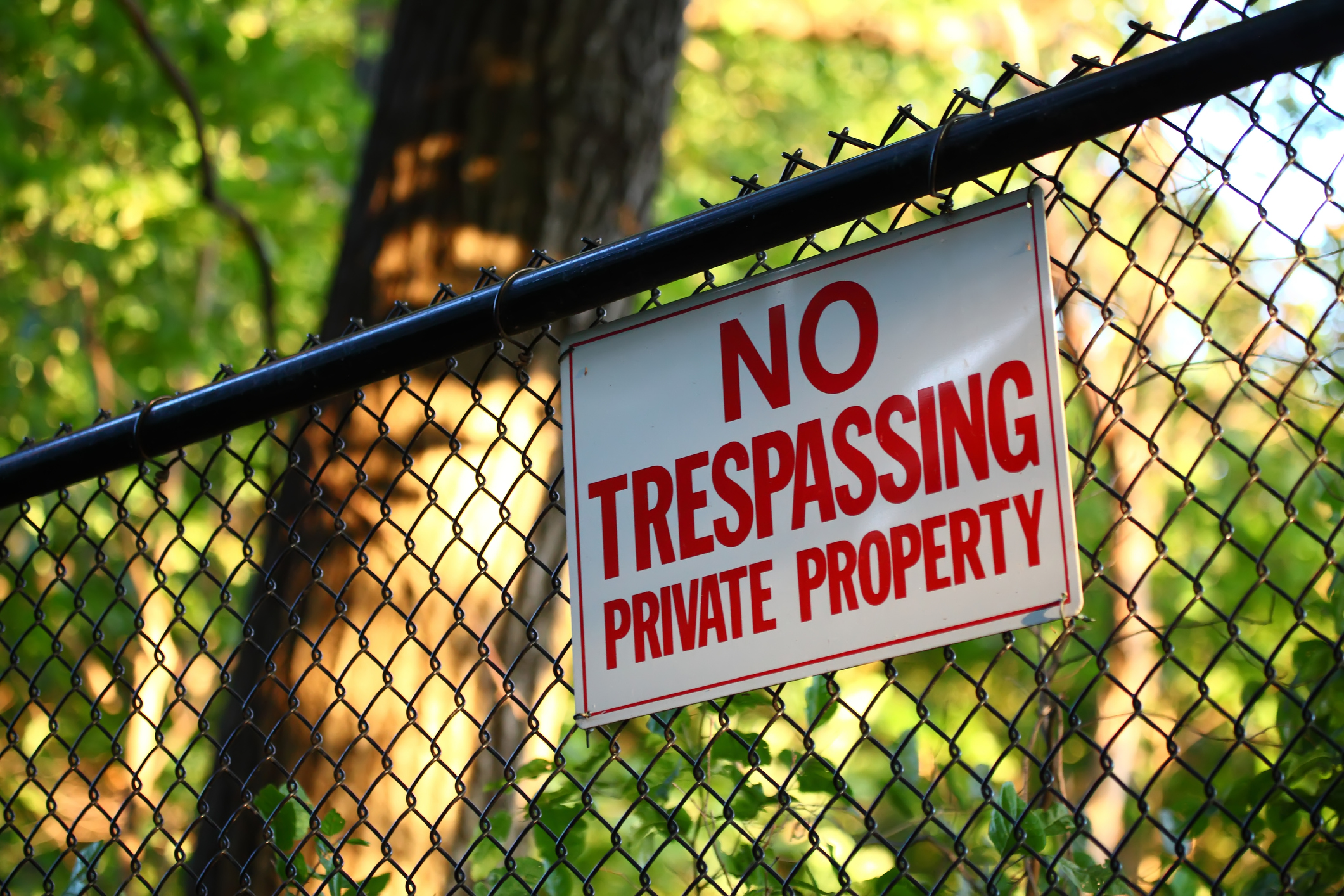
Injured While Trespassing? Here’s What Fort Myers Property Laws Say
The call usually arrives with some version of this: a property owner in Fort Myers heard something in the back lot off Cleveland Avenue or in the brush behind a strip plaza on Pine Island Road, and now somebody is hurt. The owner calls in a small panic asking whether they are about to be sued by a person who had no business being on the property in the first place. The answer in Florida is not a simple yes or no — it is a layered duty-of-care analysis, and the layer that applies depends on what the owner knew, when they knew it, and what was sitting on the property at the time.
I have been handling premises cases in Lee and Collier Counties for over thirty years, and I have also held a Florida real estate broker license for twenty-five of those years. That second credential matters here. When I look at a trespasser case, we are reading the property the way an owner-operator reads it, not just the way a lawyer reads a statute. What follows is what we tell Fort Myers property owners, and what we tell injured people who come to our office wondering whether the trespasser label ends their claim.
What Florida law actually says about trespasser injuries
The governing statute is Florida Statute 768.075, the trespasser-liability section the legislature reworked in 2010 and has touched a few times since. It draws a line between a discovered trespasser and an undiscovered trespasser. A discovered trespasser is someone whose presence was detected within 24 hours before the injury. An undiscovered trespasser is someone whose presence the owner had no reason to know about. The duty owed runs on that distinction.
For a discovered trespasser, the duty climbs. The owner has to refrain from gross negligence and has to warn that person about known dangers that are not obvious on casual inspection. Gross negligence in Florida means conduct so reckless it shows a conscious disregard for the safety of others. A loose railing the owner has been meaning to fix for two years, on a stairwell the owner watched the trespasser climb, can cross that line.
Three other Florida statutes routinely show up alongside 768.075 in our trespasser files:
- Florida Statute 768.81 — modified comparative negligence. After the March 2023 tort reform, a plaintiff who is found more than 50 percent at fault recovers nothing. The jury still assigns percentages to every party, but the threshold is now a hard cliff, not a sliding scale.
- Florida Statute 95.11(4)(a) — the statute of limitations for negligence is now two years from the date of injury for incidents on or after March 24, 2023. Before that, it was four. We have already seen valid trespasser-injury claims walk in our door past the two-year window, and once the deadline passes, the case is gone.
- Florida Statute 627.736 — PIP, the $10,000 no-fault medical layer, runs off the injured person’s own auto policy and applies in some of these cases when a vehicle is involved on the property (delivery driver cases, parking-lot ATV cases, lawn-equipment cases on a commercial lot).
There are also two carve-outs in 768.075 that property owners should know about. The owner is generally immune from liability if the trespasser was intoxicated at a blood-alcohol level of 0.08 or higher, or under the influence of a controlled substance, and that condition was more than 50 percent the cause of the injury. The owner is also generally immune if the trespasser was on the property to commit, or in the act of committing, a felony.
The four patterns we see in Fort Myers trespasser files
Looking back at our Fort Myers trespasser files, almost every case sorts into one of four patterns. The labels matter because the duty analysis is different in each.
- The kid and the pool. A child slips through a gap in a fence on a property along McGregor Boulevard, off Summerlin Road, or in one of the older neighborhoods south of Colonial Boulevard. The pool is unfenced, half-fenced, or the gate latch is broken. The attractive nuisance doctrine survives the 2010 reform and applies even though the child was technically trespassing. We have handled enough of these to say plainly: the latch and the four-sided fence are the difference between a defensible case and an indefensible one.
- The known shortcut. A commercial property along Daniels Parkway or Six Mile Cypress Parkway has a worn footpath cutting across the back lot. People have been walking it for years. Somebody falls into an unmarked drainage cut or trips over a broken concrete pad. Once the owner knew or should have known about the foot traffic, the trespassers stop being undiscovered, and the duty to warn about the non-obvious hazard kicks in.
- The dog. A homeowner with a dog that has bitten before, or that the owner has been warned about, lets it run a fenced yard a meter reader or a delivery driver routinely cuts through. Florida dog-bite liability under Section 767.04 runs on its own track and does not require trespasser status to attach in the way premises liability does. The dog’s history is what we build the case around.
- The willful trap. Rare, but it happens. An owner frustrated with theft sets something up that is designed to hurt whoever triggers it. That is the one fact pattern where the trespasser label gives the owner essentially no protection at all, because willful or wanton conduct is the floor the statute cannot drop below.
Trespasser cases: why the facts matter more here than anywhere else
I want to be candid about something. Trespasser-injury cases are some of the most fact-dependent files we handle. The same physical hazard, the same injury, can come out three different ways depending on what the discovery turns up.
The first complication is the discovered-versus-undiscovered question. We have to reconstruct what the owner saw and when. Security camera footage off a property along Cleveland Avenue or I-75 near Alico Road can settle it in one afternoon. So can a series of text messages to a property manager. Without that record, the case turns into one side’s recollection against the other’s, and a jury has to decide.
The second complication is the comparative negligence cliff at 51 percent. A jury that finds the injured person was, say, 55 percent at fault for climbing a fence and ignoring a posted warning produces a defense verdict outright. Not a reduced recovery, a zero. After 2023, that cliff is sharper than people realize. We have to think about every fact through that lens from the first interview forward.
The third complication is the carve-outs. If the property owner has any reason to argue the injured person was intoxicated or committing a felony, we have to be ready for that defense from the start. Toxicology, the police report under Florida Statute 316.066 when a vehicle is involved, and the booking records all matter.
The fourth complication is insurance. Homeowners and commercial general liability policies often have exclusions or sub-limits that bite hardest in trespasser scenarios.
What to do if you own property and someone is hurt on it
Over thirty years of handling these files, here is what I tell Fort Myers property owners and managers to do in the hours and days after a trespasser-injury incident. None of this is generic. Each step ties to a specific reason we have seen cases turn on it.
- Call your liability carrier the same day. Not the next week. Most policies have notice provisions that can be argued as breached if you delay, and the carrier’s investigator on site within 24 hours preserves the scene before weather, repairs, or foot traffic change it.
- Photograph the hazard from the angle the injured person would have seen it. Not just the wide shot. The eye-line shot is what a jury looks at later. If a fence had a gap, photograph the gap from outside the property at the height of whoever came through it.
- Write down, that day, what you knew about the hazard and when. A contemporaneous note in your own handwriting is the single most useful document we ever recover for a property owner. Memory shifts. The note does not.
- Pull whatever camera footage you have within 48 hours. Most consumer systems overwrite on a one-to-two-week cycle. By the time a lawsuit is filed, the footage that would have settled the discovered-versus-undiscovered question is gone.
- Do not have a recorded conversation with the injured person or their family. Sympathy is fine, an apology is human, but a recorded factual recitation in the first 48 hours, given without counsel, has sunk more property-owner defenses than any other single act.
- If a child is involved, secure the hazard before the sun goes down. Drain or fence the pool. Remove the door from the appliance. Lock the equipment. Florida’s attractive nuisance doctrine asks whether the burden of fixing the hazard was less than the risk it created. Show you fixed it.
And if you are the injured party, or the family of the injured party, the most useful thing you can do is preserve every piece of paper and every photograph from the day of the incident, get to a doctor on record within the two-year window so the medical chain is documented, and call a lawyer before you talk to the property owner’s insurer. The carrier’s first call is not a settlement call. It is a fact-gathering call, and what you say in it gets used.
Key Takeaways
- Florida property owners owe even trespassers a baseline duty under Florida Statute 768.075 — no willful traps, no gross negligence toward someone whose presence the owner knows about.
- The discovered-versus-undiscovered line at 24 hours is the single most outcome-determinative fact in a Fort Myers trespasser case; camera footage and contemporaneous notes are how the line gets drawn.
- The attractive nuisance doctrine survives every Florida tort reform so far and applies to pools, trampolines, abandoned appliances, and unsecured equipment, regardless of how the child entered the property.
- After the 2023 reform, a plaintiff more than 50 percent at fault recovers nothing under Florida Statute 768.81, and the limitations period under Florida Statute 95.11 is now two years instead of four.
- Intoxication at 0.08 or higher and felony commission are statutory carve-outs that can defeat a trespasser claim outright, but they have to be more than 50 percent causal to the injury for the bar to apply.
Frequently Asked Questions
Q1. If someone trespasses on my property in Fort Myers and gets hurt, can they really sue me?
Yes. Florida property owners owe trespassers the lowest duty of care, but it is not zero. Under Florida Statute 768.075, a property owner can still be liable if the injury came from intentional misconduct, gross negligence, or a hazard the owner knew about and did not warn a discovered trespasser about. The fact that someone walked onto your land uninvited does not, by itself, end the analysis.
Q2. What is the difference between a discovered and an undiscovered trespasser under Florida law?
Q3. How does the attractive nuisance doctrine change the rules for children?
Florida keeps the attractive nuisance doctrine alive even after the 2010 trespasser-liability reforms. If a child wanders onto your land and is hurt by a hazard the child cannot reasonably appreciate, the owner can be liable. Pools, trampolines, abandoned appliances with intact doors, construction pits, and unsecured heavy equipment are the recurring examples. Under Florida case law, a child under six generally cannot be assigned any percentage of fault.
Q4. Does Florida’s modified comparative negligence rule apply to a trespasser case?
Yes. Under Florida Statute 768.81, as reformed in 2023, a plaintiff who is more than 50 percent at fault recovers nothing. In a trespasser case, the plaintiff’s own conduct, including the act of trespassing itself in some situations, factors into the percentage assigned by the jury. That is one of the reasons these cases turn on the specific facts more than any other premises category.
Q5. How long do I have to file a Florida premises liability lawsuit after a trespasser injury?
Two years from the date of the injury, under the 2023 amendment to Florida Statute 95.11. Before March 24, 2023, the deadline was four years. The shortened window applies to injuries occurring after that date, and it does not pause for negotiations with an insurer. If you wait, you can lose the claim entirely no matter how strong the underlying facts are.
Talk to our office
If you were hurt on someone else’s property in Fort Myers, Bonita Springs, Naples, Estero, Cape Coral, or Lehigh Acres — or if you are the property owner on the other side of one of these incidents and you want a candid read on where you stand — call our office at 239-992-8259. Consultations are free. There is no fee unless we recover for you. I will pick up the phone, and we will tell you what we think the case actually is, not what we wish it were.
About the Author

David B. Pittman, Esq. has spent more than thirty years on personal injury cases in Fort Myers and across Lee County. He founded Pittman Law Firm, P.L. and continues to lead it today, representing injured clients across Lee and Collier Counties, with a particular focus on commercial-vehicle, complex-liability, and serious-injury cases. The firm’s Fort Myers presence handles a steady stream of serious-injury work along the Daniels Parkway, Six Mile Cypress, McGregor Boulevard, Cleveland Avenue, and Summerlin Road corridors, and along I-75 between Estero and Bell Tower.
David’s background: The Citadel, The Military College of South Carolina for undergraduate; the University of South Carolina School of Law for his JD; an AV-Preeminent rating from Martindale-Hubbell; membership in the Multi-Million Dollar Advocates Forum.
David has held a Florida real estate broker license for twenty-five years, a credential that shapes how the firm reads the property side of premises cases. The firm handles personal injury cases across Lee and Collier Counties, serving Fort Myers, Bonita Springs, Naples, Cape Coral, Estero, and Lehigh Acres, with offices at Windsor Place in Bonita Springs (main) and Fort Myers (satellite). Call 239-992-8259 for a free consultation.
Disclaimer: This article is general information about Florida law and is not legal advice for any individual situation. Reading it does not create an attorney-client relationship with Pittman Law Firm, P.L. Outcomes in past cases do not guarantee a similar result in any future matter. For advice on your own facts, contact a Florida-licensed attorney.