

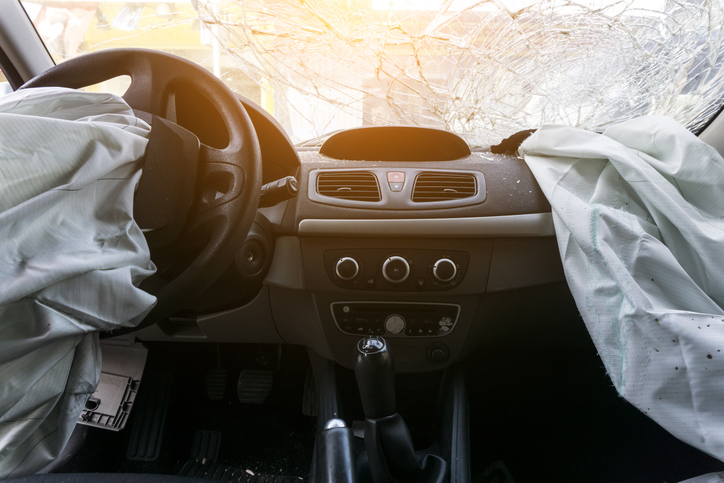
Immediate Steps to Treat Airbag Burns After a Fort Myers Car Accident
A burn from a deployed airbag is its own injury, and Florida law treats it that way. People assume the airbag is the hero of the story, and most of the time it is, taking the stopping force on a nylon bag instead of on your face. What they do not expect is to show up at our Fort Myers office two weeks later with a forearm that looks like a bad sunburn, a chemical rash across the neck, or a fabric-pattern abrasion on the chest, asking whether it counts as anything. It does.
It is also the injury carriers most like to wave off, because it looks minor on day three and feels worst on day fourteen. This guide walks through what Florida law actually says about these claims, the patterns we see in our office, the first-aid steps that matter most in the first hour, and a case we worked along US-41 in Fort Myers that ended in a full policy payout.
What Florida Law Actually Says About Airbag Burn Claims
Most people calling our office after an airbag burn want to know one thing first: who pays for the ER visit? In Florida, the answer almost always starts with your own car insurance, not the other driver’s. That surprises people. Here is the framework we walk clients through.
PIP — Personal Injury Protection under section 627.736, Florida Statutes. Every Florida-registered driver carries at least $10,000 in PIP. After a crash, PIP pays 80% of your reasonable medical bills, regardless of who caused the wreck, up to that $10K cap. The catch: you have to be seen by a qualifying provider within fourteen days of the crash. Burns are a category PIP covers without argument: irrigation, wound care, debridement, follow-up dressings. But only if you walk into the ER, an urgent care, or a qualifying clinic within that two-week window. Wait until day fifteen and PIP is gone. We have watched that happen more times than I want to count.
Statute of limitations — section 95.11(4)(a), Florida Statutes. Florida’s 2023 tort reform cut the negligence statute of limitations in half. Before March 24, 2023, you had four years to file a personal injury lawsuit. Now you have two. In plain English: from the date of your Fort Myers crash, the clock runs for two years and then the case is gone, no matter how serious the burn turns out to be. Airbag burns are a category where this matters more than people realize, because scarring keeps changing for the first eight to twelve months. We have had clients who waited eighteen months to make sure the scar had stabilized, then discovered the carrier was running out the clock on them.
Modified comparative negligence — section 768.81, Florida Statutes. The same 2023 reform package changed how shared fault works in Florida. If a jury (or, more often, a claims adjuster anticipating a jury) decides you were 51% or more responsible for your own crash, you recover nothing. At 50% or less, your recovery gets reduced by your share. This is the single biggest reason carriers spend so much energy trying to push the fault number up on the injured driver. With airbag-burn claims, the fight often centers on seating position, seatbelt use, and following distance: anything that lets the adjuster shift a few percentage points your way.
UM coverage — section 627.727, Florida Statutes. If the at-fault driver fled, was uninsured, or carried only the bare-minimum bodily injury limits, your Uninsured/Underinsured Motorist coverage is what actually pays the burn-related damages above your PIP cap. UM is optional in Florida and a large share of drivers reject it in writing without understanding what they just gave up. Before you call about a claim, dig out your own declarations page and look for a UM line item. If it is there, that is often where the recovery comes from.
The Three Burn Patterns We Actually See in Our Office
Airbags do not produce one kind of burn. They produce three, and the treatment, the documentation, and the legal value of each look different. After three decades of these cases, here is what walks through our door most often:
- Friction abrasions. The airbag deploys at around 200 mph and the nylon fabric scrapes skin off contact points: forearms, the back of the hand, the chin, the cheek. These look like rug burns the size of a fist and usually scab within a week. They are the most common pattern we see, accounting for roughly half the airbag-injury intakes I review.
- Thermal burns. The chemical reaction inside the inflator unit hits temperatures hot enough to char fabric. When sleeves and pant legs trap that heat against skin, you get second-degree thermal burns: red, blistered, often forming a clear blister line that matches the shirt’s seam. These hurt more on day two than day one and tend to be misjudged at triage.
- Chemical irritant burns. The deployment releases alkaline byproducts (sodium hydroxide is the main one) that splash across exposed skin. The pattern looks like a rash, often around the neck and upper chest, with a stinging itch that does not match a normal scrape. The eyes are the worst place this can land. Anyone who took alkaline residue to the face needs to be flushed for at least fifteen continuous minutes and seen by an ophthalmologist before the ER discharges them.
Why the breakdown matters legally: each burn type leaves a different scar profile, requires different follow-up care, and is documented under different ICD-10 codes. When the codes line up cleanly in the ER record, the carrier has a much harder time arguing the burn was incidental.
Airbag Burn Cases: Why They Are Harder Than They Look
From the outside, an airbag burn looks like a clean, photo-documented injury. The bag deployed, the burn is right there on the skin, the ER chart says what it is. On the inside of a claim file, three complications come up over and over.
First, the burn keeps changing. A friction abrasion that looked like a scrape on day three can hyperpigment into a dark patch by day ninety. A second-degree thermal burn that healed without grafting at week two can develop a raised hypertrophic scar at month four. When the carrier wants to settle in week six, the injury they are valuing is not the injury the client is going to live with. We routinely hold burn cases open for six to nine months to let the scar stabilize before we send a demand.
Second, the burn often shares billing with something bigger. Most of our airbag-burn clients also have a neck strain, a concussion, or a chest contusion from the same crash. ER charts sometimes lump the burn into “multiple soft tissue injuries” and the carrier later argues the burn was already paid for inside the neck claim. The fix is making sure the ER documents the burn by location, depth, type (thermal/friction/chemical), and percentage of total body surface area. If that itemization is missing, we send the client back to dermatology or plastic surgery for a separate evaluation.
Third, there is sometimes a product case hiding inside the auto case. If the burn pattern, the deployment timing, or the inflator residue suggests the airbag itself was defective, not just that it deployed in a violent crash, there may be a product liability claim against the manufacturer in addition to the negligence claim against the other driver. Takata-era inflator recalls are still working their way through the system. Preserving the vehicle matters. Once it goes to a salvage yard, the product case is usually finished. We tell every burn client on the first call: do not let the insurance company total and remove the car until we have eyes on the deployed module.
A truck matter we took on in Fort Myers
A client of ours was driving north on US-41 in Fort Myers, just past the Edison Mall, when a pickup truck rear-ended her in stopped traffic. The driver of the pickup got out, looked at the back of his truck, got back in, and left. No exchange of information, no police on scene yet, no plate she could read from where the airbag had landed in her lap. She was alone with a deployed driver-side airbag, a chest contusion, and a row of second-degree thermal burns where her seatbelt had pressed against her forearm during inflation.
The ER at Lee Memorial documented the burns properly, the neck strain separately, and started her on irrigation and wound care that night. She came to us about a week later, after the carrier she had called told her the case was hopeless because the other driver was gone. That is a refrain we hear constantly on hit-and-run calls. It is also wrong.
Her own auto policy included Uninsured Motorist coverage. Under section 627.727, Florida Statutes, an unknown driver who flees is treated as uninsured for UM purposes. We held the file open for about seven months so the burn scar could stabilize before we sent the demand.
The case settled for the full policy limits of her UM coverage. She kept the lion’s share after medical liens were resolved. The driver who hit her was never identified. That detail does not show up in the headline number, but it is the part of the story I want people to take away: a hit-and-run airbag-burn case is not a hopeless case, as long as the right coverage is in place and the medical record is built carefully.
What To Do in the First Hour After an Airbag Burn
The first sixty minutes after a crash with airbag deployment have an outsized effect on how the burn heals and how the claim ends up looking. After watching this play out for thirty years, here is the sequence I tell clients who call us from the roadside:
- Call 911 and stay in the car if it is safe. If you can move without sharp pain, get out. If something feels wrong in your neck or chest, wait for EMS. Even after a hit-and-run, the dispatched officer needs to file a crash report under section 316.066, Florida Statutes. No report, no UM claim later. That much is direct.
- Cool the burn with running water for fifteen to twenty minutes. Not ice, not cold water from a cooler, not a wet rag. Running, lukewarm-to-cool tap water. The goal is to pull heat out of the tissue and flush alkaline residue away from skin. If the burn is on the face or neck and chemical-pattern, this needs to start at the scene if possible; bystanders carrying water bottles can buy you minutes that matter.
- Take off rings, watches, and anything tight near the burn. The tissue swells fast. A wedding band that was loose at the scene can cut off circulation by the time you reach the ER. Do not pull clothing that is melted to the skin; cut around it.
- Skip the butter, toothpaste, aloe, and ointments. I am amazed how often this still comes up. Anything greasy traps heat and contaminates the wound. The ER will thank you for arriving with clean, irrigated skin under a loose, dry cloth.
- Photograph the burn at the scene and again every day for two weeks. Same lighting, same angle, ruler in frame if you can. Burn appearance changes daily. The photo set is what makes the difference between an adjuster taking the injury seriously and treating it as a footnote.
- Get to a qualifying provider within fourteen days. ER on the day of the crash is best. If you walked away from the scene and the burn surfaced overnight, urgent care the next morning works. After fourteen days, your PIP benefit is gone under section 627.736, and the path to recovery gets much harder.
- Do not let the car be towed to a salvage yard before the airbag is inspected. Tell the carrier you want the deployed module preserved. Take photos of the steering wheel, the deflated bag, and the residue on the dash. If there is any chance the bag was defective, that evidence is non-recoverable once the car is crushed.
- Keep your own decisions about treatment. A carrier-recommended doctor is not your doctor. You pick the provider. PIP pays the same way either way.
What I have noticed over thirty years of these cases is that the clients who do the first three items well rarely end up with the worst outcomes. Cool water, photograph, get seen. That is the whole ballgame in the first hour.
Key Takeaways
- An airbag burn is a separate injury from any neck, chest, or head injury in the same Florida crash. Documented separately at the ER, valued separately in the claim.
- Florida PIP pays 80% of reasonable medical bills up to $10,000, but only if you are seen by a qualifying provider within fourteen days of the crash under section 627.736.
- The window to file a negligence lawsuit in Florida is now two years from the date of the crash, not four, under section 95.11(4)(a) as amended in 2023.
- If the driver who hit you fled, your own Uninsured Motorist coverage under section 627.727 is usually the path to recovery; a hit-and-run is not a hopeless case.
- Preserve the vehicle until the deployed airbag is inspected. Once the car is crushed at salvage, any product liability claim against the airbag maker is finished.
Frequently Asked Questions
Q1. Are airbag burns considered a separate injury in a Florida car accident claim?
Yes. A thermal, friction, or chemical burn from a deployed airbag is its own distinct injury and gets documented and valued separately from neck strain, fractures, or concussion. Make sure the ER chart names the burn by type and location so the carrier cannot fold it into a general soft-tissue line item.
Q2. Does Florida PIP pay for emergency burn treatment after a crash?
Yes, within limits. Under section 627.736, Florida Statutes, Personal Injury Protection pays 80% of reasonable medical bills up to a $10,000 cap if you are seen by a qualifying provider within fourteen days of the crash. Burn treatment, irrigation, and wound care all count. Once PIP is exhausted, health insurance, MedPay, or the at-fault driver’s bodily injury coverage picks up the rest.
Q3. How long do I have to file a lawsuit for airbag burn injuries in Florida?
Two years from the date of the crash under section 95.11(4)(a), Florida Statutes, as amended by the 2023 tort reform. The old four-year window no longer applies to negligence claims arising after March 24, 2023. Burn cases sometimes take longer to evaluate because scarring keeps changing for months, so it is risky to wait.
Q4. What if the burns are mostly from a defective airbag rather than the other driver’s fault?
That opens a second track: a product liability claim against the airbag manufacturer or vehicle maker, on top of the negligence claim against the at-fault driver. Preserving the vehicle and the deployed airbag module is the first step. Once a salvage yard crushes the car, the product case usually dies with it.
Q5. Can I still recover money if part of the crash was my fault?
In most cases, yes, but only up to a point. Florida uses modified comparative negligence under section 768.81, Florida Statutes. If a jury assigns you 50% or less of the fault, your recovery is reduced by your percentage. At 51% or more, you recover nothing. That is the single biggest reason carriers fight over who did what in the seconds before impact.
Talk to Our Fort Myers Car Accident Lawyers
If you were burned by a deployed airbag after a Fort Myers crash, or anywhere across Lee and Collier Counties, our office is happy to walk through the facts with you at no charge. I look at every call personally. We will tell you straight whether there is a case to build, what coverage you have under your own policy, and what the next thirty days should look like for your medical record. Call 239-992-8259 for a free consultation. There is no fee unless we recover for you.
About the Author

David B. Pittman, Esq. is a thirty-plus-year personal injury attorney in Fort Myers and across Lee County and the founder of Pittman Law Firm, P.L., with a sustained focus on serious-injury auto and complex-liability cases. The firm’s Fort Myers presence handles a steady stream of serious-injury work along the Daniels Parkway, Six Mile Cypress, McGregor Boulevard, Cleveland Avenue, and Summerlin Road corridors, and along I-75 between Estero and Bell Tower.
David trained at The Citadel, The Military College of South Carolina before earning his JD at the University of South Carolina School of Law. He is AV-Preeminent at Martindale-Hubbell and a Multi-Million Dollar Advocates Forum member.
David has held a Florida real estate broker license for twenty-five years, a credential that shapes how the firm reads the property side of premises cases. The firm handles personal injury cases across Lee and Collier Counties, serving Fort Myers, Bonita Springs, Naples, Cape Coral, Estero, and Lehigh Acres, with offices at Windsor Place in Bonita Springs (main) and Fort Myers (satellite). Call 239-992-8259 for a free consultation.
The information on this website is for general information purposes only. Nothing on this site should be taken as legal advice for any individual case or situation. This information is not intended to create, and receipt or viewing does not constitute, an attorney-client relationship with Pittman Law Firm, P.L.