

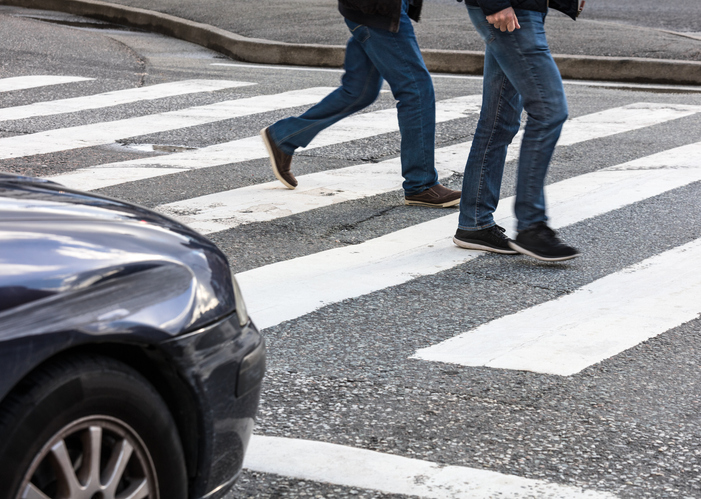
Why Pedestrian Hit and Run Accidents Are Rising in Fort Myers
Florida Statute §627.727 is the answer most Fort Myers families do not know they have. When a driver hits someone on foot and flees, that statute treats the unidentified driver exactly the same as an uninsured one — which means the UM coverage on any auto policy in the victim’s household can pay for the injuries, even if the driver is never found. That is not a technicality. In a Lee County pedestrian hit-and-run, it is often the only money on the table. We have worked these cases for more than thirty years out of our offices in Bonita Springs and Fort Myers, and the families who call us after a hit-and-run on foot are almost always surprised to learn that recovery is possible without an arrest.
What follows is a plain-English walkthrough of what Florida law actually says, the patterns we see in our practice, and the practical steps to take in the hours and days after a hit-and-run on foot.
What Florida law actually says about pedestrian hit-and-runs
There are four Florida statutes that do almost all of the work in these cases. They sit in two different chapters of the Florida Statutes, and most pedestrians have never heard of any of them.
Florida Statute §316.130 — the crosswalk yield rule. When a pedestrian is in a crosswalk on the driver’s side of the road, the driver has to slow down and stop. The statute also forbids a driver from passing another car that is stopped at a crosswalk. That second rule matters more than people realize, because most pedestrian strikes in two-lane situations happen when one driver yields and the driver behind goes around. Plain English: if the car in front of you stops near a crosswalk, you do not pass it, period. The statute also requires pedestrians to use crosswalks where they are available and to yield outside of them.
Florida Statute §627.736 — PIP for pedestrians. Personal Injury Protection is the no-fault medical coverage every Florida driver has to carry. The piece most pedestrians do not know is that PIP follows the person, not just the car. If you are walking on Cleveland Avenue and you are struck, the PIP on a vehicle in your own household pays your first $10,000 of medical bills regardless of who was at fault and regardless of whether the driver who hit you is ever found. In hit-and-run cases that is the first ten thousand dollars of medical care that is already paid for, before anyone identifies the driver.
Florida Statute §627.727 — uninsured motorist coverage. This is the statute that does the heavy lifting in a hit-and-run. Florida law treats an unidentified driver who flees the scene as the legal equivalent of an uninsured driver. If you carry UM on your own auto policy, or you live in a household where someone carries UM, that policy can pay your damages even though the driver was never caught. UM is the single most important coverage a Floridian can buy, and the one most people decline at the agent’s office because they think it will not happen to them.
Florida Statute §316.2065 — bicycle traffic regulations. A surprising share of “pedestrian” hit-and-runs we handle involve a person walking a bicycle across an intersection. Under Florida law a person riding a bicycle has the rights and duties of any other vehicle driver, and a person walking a bicycle is treated as a pedestrian. The legal status flips depending on whether the wheels were rolling at the moment of impact, and the difference can change which statute governs the case.
Where these pedestrian cases come from in Fort Myers
The phrase “hit and run” makes people picture a single situation, but in our practice the cases break out into recognizable patterns. We see five of them with regularity along Lee County corridors.
- The crosswalk strike at dusk on a four-lane road. US-41 / Cleveland Avenue between Page Field and the Edison Mall is the worst offender. A pedestrian steps into a marked crosswalk, the curb-side driver stops, and the inside-lane driver who cannot see the pedestrian behind the stopped vehicle keeps going. The inside-lane driver is the one who fled.
- The strip-mall parking lot back-out. A driver backs out of a space along Daniels Parkway or Six Mile Cypress Parkway, taps a pedestrian, and decides the impact was minor enough to keep going. The pedestrian is often older, the injury is often a wrist fracture or hip injury from the fall, and there is almost always a security camera on the storefront.
- The night-time impact on a road with no sidewalk. Long stretches of Pine Island Road and the back-county portions of Summerlin Road have no continuous sidewalk. A pedestrian walking on the shoulder is struck from behind in low light, and the driver claims later they thought they hit a deer or a piece of debris.
- The bicycle-walked-across-an-intersection case. A rider stops at a light, dismounts to walk the bike across, and is struck by a turning driver. Whether the case is governed by §316.130 (pedestrian) or §316.2065 (bicycle) turns on whether the wheels were rolling.
- The I-75 service road and exit ramp strike. We see these along I-75 near Alico Road and at the Colonial Boulevard interchange, usually involving a driver who has just left the interstate and is still traveling at highway speeds. These are the most serious in terms of injury, and the most likely to involve a driver who was impaired or driving without a license.
Pedestrian hit-and-run — why these cases are harder than they look
From the outside a hit-and-run case looks like a question of police work — find the driver, hold the driver accountable, collect from the driver’s insurance. In our practice, that is almost never the path that produces a recovery.
The first complication is identification. Lee County reports roughly one in four crashes involves a driver who left the scene. Many of those drivers are never identified, and many who are identified turn out to be uninsured, underinsured, or judgment-proof. A criminal charge under the Aaron Cohen Life Protection Act does not put a dollar in a family’s pocket. The civil case has to run on a different track.
The second complication is the order in which coverages have to be tapped. PIP pays first. Then health insurance. Then UM. Then any third-party policy if a driver is identified. Each of those carriers has its own deadlines, its own paperwork, and its own opportunities to deny or reduce a claim. The order matters.
The third complication is the comparative-fault piece. Florida uses a modified comparative negligence rule. If a pedestrian is more than fifty percent at fault, recovery is barred. Insurance defense lawyers know this and will work hard to push the percentage assigned to the pedestrian. We see arguments built around dark clothing, headphones, stepping out from between parked cars, being a step or two outside the painted crosswalk lines. None of these arguments end a case on their own, but each one is meant to chip the recovery down by a percentage point.
The fourth complication is medical. A pedestrian hit by a car at any speed almost always has a soft-tissue or orthopedic injury that does not show up cleanly on the first imaging study. Closed head injuries are common and often missed at the initial emergency room visit. The carrier will use any gap in treatment, or any “normal” early scan, as a reason to reduce the claim. The medical record has to be built carefully from the first visit forward.
What we learned from one family’s call
A case from last year illustrates a quieter version of the same problem. The family of an elderly woman living at a long-term-care facility off McGregor Boulevard noticed unexplained bruising on her upper arms during a Sunday visit. Finger-shaped marks. She had become withdrawn, frightened of certain shifts, and was not eating well. The family was not sure whether they were imagining a pattern.
They called our office on a Monday. We started the investigation that afternoon. Within a few days we had pulled enough through the facility’s own reporting obligations and outside records to confirm what the family suspected. The staff member responsible was terminated, and the resident was transferred to a safer placement closer to her daughter.
We resolved the civil claim through a confidential settlement that provided for her continuing care and the mental-health support she needed to feel safe again. The piece I want to stress is the timing. Families often wait, because they are not sure, because they do not want to make a false accusation, because they hope the next visit will look better. In our experience, the cases that resolve well are the ones where the family acted on what they were seeing and made the call.
What to do if you or a loved one was hit by a fleeing driver
If the impact has just happened, the order of steps matters. This is the list I give families who call our after-hours line.
- Call 911 first, then a family member, then us. Police have to be on scene and a report has to be opened the same day. A report opened later is one of the first things a carrier uses to argue the case is fabricated.
- Get the EMS evaluation and let them transport. I have noticed over the years that families who refuse the ambulance ride and drive themselves to urgent care the next morning end up with a gap in the medical record the carrier will hammer for the rest of the case. The ambulance ride is a documented chain of custody for your injuries.
- Photograph the scene before anything moves. Phone photos of where the pedestrian came to rest, any vehicle debris, glass on the road, paint transfer on clothing, the position of the crosswalk lines, the lighting conditions. A reconstruction engineer can do a great deal with a handful of good scene photos.
- Ask the responding officer for the case number and the name of the lead investigator. Hit-and-run investigations stay open for months. The investigator’s notes and any later vehicle identification are part of the civil case file.
- Find out who in the household has UM. Pull every auto policy in the home. UM follows the resident, not the car. A young adult living at home may be covered under a parent’s UM policy and never know it.
- Save the clothing and shoes. Do not wash them. Paint transfer, fabric tears, and impact patterns can corroborate the height and angle of the strike.
- Write down what you remember within twenty-four hours. Direction of the vehicle, color, any partial plate, any sound before impact, anything you saw out of the corner of your eye. Memory degrades fast, and contemporaneous notes are the kind of thing a jury reads back years later.
- Do not give a recorded statement to any insurance company before you have spoken with counsel. Even your own carrier. The questions seem friendly. They are not.
Key Takeaways
- An unidentified hit-and-run driver is treated the same as an uninsured driver under §627.727, which means your own UM coverage, or UM on any auto policy in your household, can pay for your injuries.
- PIP under §627.736 pays the first $10,000 of medical bills regardless of fault, and a pedestrian is covered by the PIP on a vehicle in their own home.
- Florida uses a modified comparative negligence rule. A pedestrian assigned more than fifty percent of fault recovers nothing, so do not concede fault to any carrier on a recorded call.
- For accidents on or after March 24, 2023, the deadline to file a negligence lawsuit is two years from the date of the crash. The clock is shorter for insurance notice deadlines.
- The order of insurance claims matters. PIP first, health insurance second, UM third, third-party liability last. Calling the at-fault carrier first is the most common opening mistake.
Frequently Asked Questions
Q1. If a driver hits me and takes off, can I still recover money if police never find them?
Yes, in most situations. Florida’s uninsured motorist coverage under §627.727 treats an unidentified hit-and-run driver the same as an uninsured one. If you carry UM on your own auto policy, or live in a household with UM coverage, that policy can pay for your injuries even though the driver was never caught. PIP under §627.736 also pays your first $10,000 of medical bills regardless of fault, and a pedestrian struck while walking is covered by the PIP on a vehicle in their own household.
Q2. What does Florida Statute §316.130 actually require a driver to do at a crosswalk?
When a pedestrian is in a crosswalk on the driver’s half of the road, or close enough from the other half to be in danger, the driver must slow down and stop. Drivers also cannot pass another vehicle that is stopped at a crosswalk, because the stopped car is often shielding a pedestrian the passing driver cannot see. A violation is a moving infraction with points on the license, but the bigger consequence is civil liability for any injuries that follow.
Q3. How long do I have to file a pedestrian injury claim in Florida?
For accidents that occurred on or after March 24, 2023, the deadline to file a negligence lawsuit is two years from the date of the crash. Wrongful death claims also run on a two-year clock. Insurance claim deadlines under your own PIP or UM coverage are shorter, sometimes as short as fourteen days for the first medical visit, so the sooner you start the process the better.
Q4. The driver who hit me had no insurance. Am I out of luck?
Often no. Uninsured motorist coverage under your own auto policy, or under any auto policy in your household, can step in and pay for injuries caused by an uninsured or hit-and-run driver. We also look at whether the at-fault driver was on the job, driving a borrowed vehicle, or driving a vehicle owned by someone else, because each of those facts can open a new source of recovery.
Q5. I was hit in a crosswalk but I was a little outside the painted lines. Does that ruin my case?
No, but it changes the analysis. Florida uses a modified comparative negligence rule. A jury can assign a percentage of fault to a pedestrian who was jaywalking or stepping out from between parked cars, and any recovery is reduced by that percentage. If a pedestrian is found more than fifty percent at fault, recovery is barred. The driver still owes a duty of due care, so being a step or two outside the lines rarely ends a case on its own.
Talk to a Fort Myers Pedestrian Accident Attorney
If you or a family member was struck by a driver who fled the scene anywhere in Fort Myers, Cape Coral, Estero, Bonita Springs, Naples, or Lehigh Acres, our office is ready to help you sort through the coverages and the timeline. Call 239-992-8259 for a free consultation. There is no fee unless we recover for you.
About the Author

David B. Pittman, Esq. founded Pittman Law Firm, P.L. and has spent more than thirty years handling personal injury cases in Fort Myers and across Lee County, with a sustained focus on pedestrian-injury and crosswalk cases. The firm’s Fort Myers presence handles a steady stream of serious-injury work along the Daniels Parkway, Six Mile Cypress, McGregor Boulevard, Cleveland Avenue, and Summerlin Road corridors, and along I-75 between Estero and Bell Tower.
David’s background: The Citadel, The Military College of South Carolina, for undergraduate; the University of South Carolina School of Law for his JD; an AV-Preeminent rating from Martindale-Hubbell; and membership in the Multi-Million Dollar Advocates Forum.
David has held a Florida real estate broker license for twenty-five years, a credential that shapes how the firm reads the property side of premises cases. The firm handles personal injury cases across Lee and Collier Counties, serving Fort Myers, Bonita Springs, Naples, Cape Coral, Estero, and Lehigh Acres, with offices at Windsor Place in Bonita Springs (main) and Fort Myers (satellite). Call 239-992-8259 for a free consultation.
Disclaimer: The information on this page is for general educational purposes only and is not legal advice. Reading this page does not create an attorney-client relationship with Pittman Law Firm, P.L. Every case turns on its own facts. If you have been injured, please contact our office or another qualified Florida attorney to discuss your situation. Attorney advertising. Prior results do not guarantee a similar outcome.