

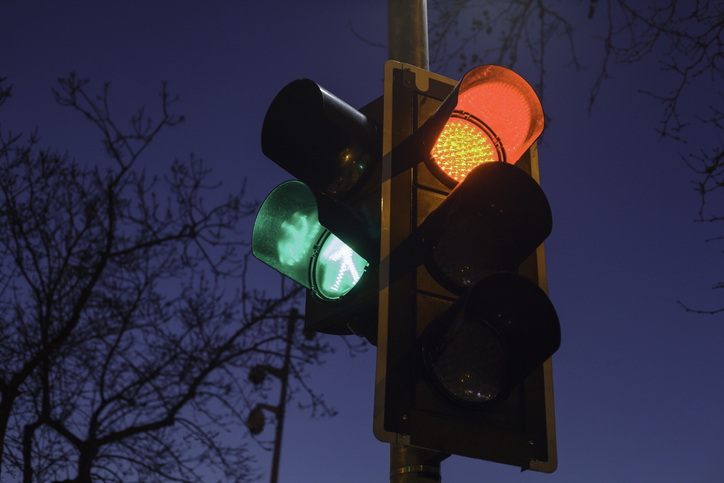
Do Red Light Cameras Really Reduce Accidents? A Fort Myers Look at the Data
Clients show up at our office on Bonita Beach Road with a Notice of Violation in one hand and an injury claim in the other, and the first thing out of their mouth is some version of, “Do these things actually work, or are they just a way for the city to collect money?” The data points both ways, and most of the louder voices on either side are skipping the parts they don’t like.
What follows is what the Fort Myers numbers actually show, what Florida law says about the cameras and about the crashes that happen at those intersections, and how our office handles a case when one of those cameras is rolling at the moment everything goes wrong.
What Florida law actually says about red light cameras and intersection crashes
Two statutes do most of the work here, and a third sits behind every injury case we file out of a camera intersection.
The Mark Wandall Traffic Safety Act is the authorizing statute for the cameras themselves. It lets cities and counties install automated enforcement at intersections, kicks the Notice of Violation out as a civil penalty rather than a moving violation, and gives the registered owner a short window to either pay or contest. The Florida Supreme Court blessed the program in 2018, and the appellate courts have turned back the constitutional attacks that have come up since. So as of May 2026, the cameras are still running in Florida, and a Notice of Violation from one of them does not put points on your license and does not raise your insurance by itself. That last point matters and gets misunderstood all the time.
The second statute is the one that controls the injury case if the camera caught the wreck. Section 768.81, Florida Statutes is Florida’s modified comparative negligence rule. After the 2023 reform, if a jury decides the injured driver was more than fifty percent at fault for the crash, that driver recovers nothing. Fifty percent or less, and the recovery is reduced by whatever percentage of fault the jury assigns. In a camera case, the camera video is sometimes the cleanest evidence of who entered the intersection on what color, which is exactly the kind of fact that moves a comparative-fault number five or ten points one way or the other.
The third statute is the clock. Section 95.11(4)(a), Florida Statutes sets the statute of limitations for a negligence claim at two years for crashes on or after March 24, 2023. The plain-English version: if you were hurt at the Colonial Boulevard and Summerlin Road intersection on, say, the day this article was last updated, you have until May 12, 2028 to file suit, and not a day longer. That is half the window Florida used to give. Waiting also costs you the camera footage, because the vendor only keeps the video for a limited period and the city is under no obligation to hold it for your civil case unless your lawyer asks them to.
A fourth provision worth knowing: §627.736, Florida Statutes, the Personal Injury Protection statute, gives you $10,000 in no-fault medical coverage that pays out regardless of who caused the crash, as long as you treat with a qualified provider within fourteen days. That last deadline catches more people than I would like. Miss it and the PIP money is gone.
Four crash patterns at Fort Myers camera intersections
Across the Fort Myers cases that have come through our office over the last few years, almost every red-light-camera fact pattern fits one of four shapes:
- The classic T-bone. Driver A blows through a stale red on Colonial Boulevard, and Driver B is already in the box on the green from Summerlin Road. The camera catches it from behind Driver A. These are the cases the cameras were designed to deter, and the video is usually conclusive on liability.
- The panic-brake rear-ender. Driver A sees the yellow turn red as they approach the camera intersection, slams the brakes harder than the law required, and Driver B behind them, who was reasonably following at a safe distance for a normal slow-down, can’t stop in time. Florida’s general rule is that the rear driver is presumed at fault, but the panic-brake fact pattern is one of the few real ways to rebut that presumption, and the camera video is what does it.
- The right-on-red footage dispute. Camera systems also catch some right-on-red violations, particularly turns made without a complete stop. We see these come up in pedestrian and bicycle cases along the Cleveland Avenue and McGregor Boulevard corridors, where someone in the crosswalk was clipped by a driver who rolled the right turn. The camera video, when we can pry it loose in time, often settles the argument.
- The “I was already in the intersection” defense. Driver A swears the light was still yellow when the front bumper crossed the stop bar. The camera video shows otherwise, or sometimes shows exactly what the driver said. Either way it ends the argument, which is why we ask for the footage on day one.
Red light camera injury cases — what makes them more complicated than they look
The footage cuts both ways. That is the part most folks don’t think about until they are sitting across the desk from a defense adjuster. A camera that vindicates an injured client in one case will hurt another client whose own lane discipline was less than perfect. I have seen the same video clip used by two different lawyers to argue two completely opposite percentages of fault. The 2023 comparative-negligence reform makes that fight more consequential, because the line between recovering reduced damages and recovering nothing now sits at fifty-one percent rather than one hundred.
The second wrinkle is preservation. The camera vendor — usually a private company contracting with the city — has its own retention schedule, and that schedule is not generous. By the time an injured client finishes initial medical treatment and gets around to calling a lawyer, the raw video can already be gone. Our office sends a preservation letter to the municipality and to the vendor within days of being retained on a camera-intersection case, and we follow it with a public-records request under Chapter 119 if the city is the custodian. That sequence has saved more than one case.
The third wrinkle is the rear-end shift. Because cameras provably increase rear-end crashes at the intersections where they are installed, the population of cases coming out of those intersections looks different than it did before the cameras went in. More of them are low-speed rear-enders with soft-tissue injuries, the kind insurance carriers love to fight on causation. Less of them are catastrophic T-bones, the kind that used to settle for policy limits within ninety days. That shift changes how you have to work up a file from the day the client walks in.
What to do if you were hit at a camera intersection in Fort Myers
The advice I give clients who call us from a camera intersection isn’t generic, because the cameras change a couple of the usual steps:
- At the scene, photograph the camera housing and the pole. Most camera setups have a small identifier or vendor mark visible from the ground. That tells us who to send the preservation letter to and shortens the path to the footage by a week.
- Get the exact intersection name and direction of travel in writing on the crash report. “Colonial Boulevard at Summerlin Road, eastbound on Colonial” is what we need. “Near Bell Tower” is not enough to subpoena a specific camera’s data.
- Treat within fourteen days, even if you feel fine the next morning. The PIP statute is unforgiving on that deadline. Adrenaline at the scene will hide a herniated disc for two or three days. I have watched clients lose ten thousand dollars in no-fault medical because they tried to walk it off.
- Do not give a recorded statement to the other driver’s insurer before talking to a lawyer. The carrier’s adjuster will frame the questions to maximize your share of comparative fault. After the 2023 reform that framing is more damaging than it used to be.
- Call us before the camera footage retention window closes. Some vendors hold raw footage for as little as 30 days. The cleaner the video evidence, the harder it is for a carrier to argue about who had the green.
Key Takeaways
- Red light cameras cut T-bone crashes by roughly 25 to 32 percent at the intersections where they are installed, and increase rear-end crashes by about 8 to 15 percent.
- Camera-generated Notices of Violation are civil penalties in Florida. They do not add points to your license and do not, by themselves, raise your insurance.
- Florida’s modified comparative negligence rule (§768.81, Florida Statutes) means a jury that puts you at 51 percent or more at fault sends you home with nothing. Camera video is often the cleanest evidence of who entered on what color.
- The statute of limitations for crashes on or after March 24, 2023 is two years (§95.11(4)(a), Florida Statutes). Camera footage retention runs much shorter than that, so practical deadlines come first.
- If you were hit at a Fort Myers camera intersection, preserve the footage, photograph the camera housing, treat within 14 days for PIP, and skip the recorded statement to the other carrier.
Frequently Asked Questions
Q1. Do red light cameras actually cut down on crashes in Fort Myers?
The data shows a trade-off. Right-angle (T-bone) crashes drop by roughly a quarter to a third at camera intersections, but rear-end collisions go up by about 8 to 15 percent. Because T-bones tend to put people in the hospital and rear-end fender benders usually do not, most safety researchers treat the swap as a net positive. Whether any single Fort Myers intersection lives up to that average depends on traffic volume, yellow-light timing, and signage.
Q2. Are red light camera tickets legal in Florida in 2026?
Yes. The Mark Wandall Traffic Safety Act authorizes them statewide, and the Florida Supreme Court upheld the program in 2018. Several constitutional challenges have come and gone since then. As of May 2026 the cameras are still operating in many Florida cities, including locations in and around Lee County.
Q3. Will a red light camera ticket put points on my license or raise my insurance?
A camera-generated Notice of Violation is treated as a civil penalty, not a moving violation. It does not add points to your driver record and does not, by itself, raise your auto insurance rate. If you ignore the notice and it escalates to a Uniform Traffic Citation handed to you by an officer, the rules change and points can attach.
Q4. If a red light runner hit me at a camera intersection, does the footage help my injury case?
Often yes, but you have to move quickly. The video and still images are kept by the camera vendor for a limited window, and the city is not obligated to preserve them for a civil suit unless asked. Our office sends a preservation letter to the municipality and the vendor within days of being retained, and that footage has settled liability arguments more than once.
Q5. How long do I have to file a claim after a Fort Myers intersection crash?
Under §95.11(4)(a), Florida Statutes, the deadline for most negligence claims arising from crashes on or after March 24, 2023 is two years from the date of the wreck. That is half of the four-year window Florida used to allow. Waiting can also cost you witnesses, surveillance footage, and the camera video itself, so the practical deadline is much shorter than the legal one.
Hurt at a Fort Myers intersection? Call our office.
If you were injured at a red-light-camera intersection anywhere in Lee or Collier County, the footage may be sitting on a vendor’s server with a clock ticking on it. I would rather hear from you tomorrow than next month. Call 239-992-8259 for a free consultation. There is no fee unless we recover for you.
About the Author

A more-than-thirty-year personal injury practice in Fort Myers and across Lee County has been the daily work of David B. Pittman, Esq., founder of Pittman Law Firm, P.L. The firm’s Fort Myers presence handles a steady stream of serious-injury work along the Daniels Parkway, Six Mile Cypress, McGregor Boulevard, Cleveland Avenue, and Summerlin Road corridors, and along I-75 between Estero and Bell Tower, representing injured clients across Lee and Collier Counties, with a particular focus on commercial-vehicle, complex-liability, and serious-injury cases.
David completed his undergraduate degree at The Citadel, The Military College of South Carolina, and his JD at the University of South Carolina School of Law. Martindale-Hubbell rates him AV-Preeminent; the Multi-Million Dollar Advocates Forum counts him as a member.
David has held a Florida real estate broker license for twenty-five years, a credential that shapes how the firm reads the property side of premises cases. The firm handles personal injury cases across Lee and Collier Counties, serving Fort Myers, Bonita Springs, Naples, Cape Coral, Estero, and Lehigh Acres, with offices at Windsor Place in Bonita Springs (main) and Fort Myers (satellite). Call 239-992-8259 for a free consultation.
The information in this article is general in nature and is not legal advice for any particular case. Reading it does not create an attorney-client relationship with Pittman Law Firm, P.L. Outcomes described are specific to the facts of those cases and do not guarantee any result in another matter. For advice on your own situation, contact our office. This is attorney advertising.