

Most Dangerous Intersections in Lehigh Acres for Car Accidents in 2025
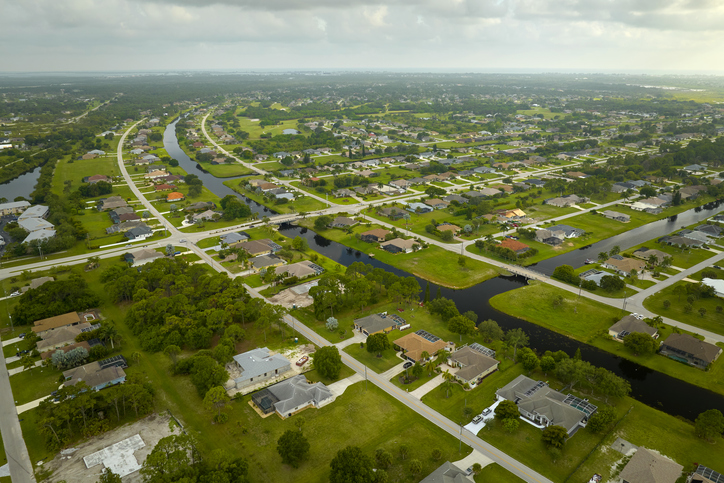
Lehigh Acres was platted in the 1950s on a grid that was never meant to carry the traffic it carries now. Long straight stretches with high posted speeds intersect smaller residential streets that lack signals, lack good sight lines, and in some cases lack adequate lighting. Add tens of thousands of new residents over the last decade plus the heavy commercial traffic feeding the I-75 corridor and construction trucks coming off SR-82, and you have a crash pattern that is predictable — the same corners keep appearing in police reports, year after year.
This piece walks through what Florida law actually says about intersection crashes, the scenarios our firm sees over and over in the Lehigh Acres reports, why these cases tend to be harder than they look on paper, and a case from our practice that illustrates the multi-vehicle problem we see in this area more than anywhere else.
What Florida law actually says about intersection crashes
Most of the people who call us have read a thing or two online before they pick up the phone. That is fine. But a lot of what is online is either out of date, written for a different state, or written by someone who has never actually tried a case. Here is what controls a Lehigh Acres intersection claim in 2026.
Two-year deadline to file. Section 95.11(4)(a), Florida Statutes, sets the statute of limitations for a negligence claim at two years from the date of the crash. Before the March 2023 tort reform, you had four years. Now you have two. Wrongful-death claims under a separate statute also run two years from the date of death. Miss it and the case is over, regardless of how clean the liability is. I cannot count how many calls we have had to turn down because someone waited and the clock ran.
Modified comparative negligence and the 50% bar. Section 768.81 was rewritten in 2023 as well. Florida is now what lawyers call a modified comparative negligence state — if a jury decides you were 50% or more at fault for the wreck, you recover nothing. In plain English, that means at every confusing intersection where both drivers share part of the blame, the fight over the fault percentages is the case. At 49% you still recover, just at a reduced amount. At 50% you go home empty-handed. The carriers know this and they push fault percentages hard.
PIP and the 14-day rule. Section 627.736 requires every Florida driver to carry $10,000 in Personal Injury Protection, which pays 80% of reasonable medical bills and 60% of lost wages without regard to fault. The trap is the 14-day rule — you have to be seen by a qualified medical provider within 14 days of the crash or the PIP coverage you have been paying for can be denied outright. I cannot stress this enough on intersection cases where the adrenaline masks the injury for a couple of days. Get checked.
Uninsured motorist coverage. Section 627.727 governs Uninsured/Underinsured Motorist coverage. Florida does not require bodily injury liability coverage on most personal vehicles, which means a meaningful share of the drivers using SR-82 and Lee Boulevard carry only the state-minimum PIP and property damage. When they run a light and put you in the hospital, your own UM policy is often the only meaningful source of recovery. I tell every client and every friend who asks me about insurance to buy UM and to buy a lot of it.
The crash report requirement. Section 316.066 requires a written crash report any time there is injury, death, or apparent property damage of $500 or more. On the ground that means call law enforcement to the scene every single time, even if the other driver is begging you to swap information privately. The report is the spine of every claim we work, and a missing report is the first thing the carrier points to when they deny.
The five Lehigh Acres scenarios we actually see
I am not going to publish a ranked list of intersections based on someone else’s traffic study. The crash data lags, the construction layout shifts every six months on SR-82, and the corner that was the worst in 2023 is not necessarily the worst this year. What I can tell you is the recurring fact pattern. After three decades of reading these police reports, here is what shows up over and over in Lehigh Acres intersection files.
- Left turns across high-speed traffic on Lee Boulevard. This is the single most common scenario we see. A driver on a side street tries to turn left across two or three lanes of fast eastbound or westbound Lee Boulevard traffic, misjudges the gap, and gets T-boned at speed by the through driver. The fault picture sounds clean — left turn, failure to yield — but it rarely is. We almost always look at whether the through driver was speeding, whether sight lines were blocked by landscaping or a stopped truck in the inside lane, and what the signal phasing was doing.
- Uncontrolled or signal-deficient corners on Sunshine Boulevard. Sunshine has stretches where a two-lane residential road meets a road carrying 55 to 60 mph traffic with no signal, just a stop sign on the side street. Drivers pull out, get hit broadside, and the question becomes whether the side-street driver had adequate sight distance and whether the through-traffic driver was within the posted speed.
- SR-82 construction-zone rear-ends. SR-82 has been under widening work in pieces for years. Lane shifts, temporary striping, surprise stoppages where the road narrows. Drivers traveling at 55 lock the brakes when they crest a small rise and find a stopped line of cars. We see chain-reaction rear-end cases on SR-82 more than on any other Lehigh Acres roadway.
- Right-angle crashes at four-way stops where one driver runs the sign. Plenty of the residential collector streets in Lehigh Acres meet at four-way stops with no signals at all. The pattern we see is one driver rolling through, the other driver crossing on the assumption everyone stops, and a serious side impact at 30 to 40 mph. These cases turn on independent witnesses and on the physical damage pattern, because both drivers will say the other one ran the sign.
- Hit-and-run at unlit intersections after dark. Lehigh has long, dark stretches between streetlights. After a late-evening crash where the at-fault driver is impaired or driving without a license, that driver sometimes leaves the scene. The case then turns on the client’s own Uninsured Motorist coverage under Section 627.727, and on whether law enforcement can identify the vehicle from debris, paint transfer, or a nearby camera.
Why intersection cases on the Lehigh grid are harder than they look
On paper, an intersection case sounds simple. Someone ran a light, or someone failed to yield, or someone rolled a stop sign. In our office we have learned to be cautious about the cases that sound simple, because the carrier on the other side has learned to be aggressive about the ones that sound simple.
The first complication is comparative fault. Since the 2023 amendment to Section 768.81, the defense carrier’s whole strategy is to push your client’s fault percentage as close to 50% as they can get it. At a confusing intersection like SR-82 and Daniels, with shifting lanes and dim signal heads, that is a real fight. We have had cases where the carrier opened at offering 35% to the client and we ended up arguing them down to single digits — but it took a reconstruction engineer, dashcam pulls from the surrounding businesses, and a clean witness statement.
The second complication is multi-vehicle layering. When four cars are involved in a Lee Boulevard chain reaction, you do not have one defendant — you have three or four, with three or four policies, three or four carriers, and three or four adjusters all pointing fingers at each other. Sorting out who was where, who hit whom first, and which policies stack takes real work. I have seen carriers run out the clock on multi-vehicle cases hoping the family will give up.
The third complication is the disappearing evidence. Lane striping gets repainted. The construction layout that caused the crash gets dismantled. The vegetation that blocked the sight line gets trimmed. We start documenting the scene the same week we get retained — photographs, drone footage where useful, measurements, and a request to the road authority to preserve relevant work-zone records before they get overwritten.
The fourth complication is the injury that does not look like a serious injury at the scene. Adrenaline masks soft-tissue and traumatic brain injuries for hours, sometimes days. A client who told the trooper she was fine and refused EMS becomes a client who cannot work two weeks later. That gap between the scene narrative and the medical reality has to be bridged with timely treatment and good documentation, which is why the 14-day PIP rule matters so much.
What we did on a Cape Coral intersection claim
I think about a multi-vehicle case from Cape Coral often when families call us about intersection crashes in Lehigh Acres, because the dynamics are nearly identical. A family lost a loved one in a high-speed multi-vehicle collision on a busy arterial in Cape Coral. Three vehicles were involved, the impact happened during the late-afternoon rush, and the speeds at the moment of impact were well above the posted limit.
The opposing carriers did what carriers do on multi-vehicle wrecks. They tried to muddy the liability picture. Each insurer pointed at the other two drivers, suggested our client’s loved one had contributed to the wreck, and slow-walked the claim hoping the family would either give up or accept a low number. We brought in a reconstruction engineer to map the impact sequence and the speeds, and we coordinated the probate side so the personal representative could pursue the claim without delay.
The family had real losses — the financial side of the household income that was suddenly gone, and the harder-to-quantify loss that the law calls non-economic damages. We documented both. Eventually we reached a fair multi-policy settlement that drew from each of the involved policies and gave the family the resources to move forward. It was not a quick case. Multi-vehicle wrongful-death cases never are. But it is the kind of case we are built to handle, and it is the same playbook we use when a Lehigh Acres family calls us about a Lee Boulevard chain reaction.
What to do if you are in a Lehigh Acres intersection crash
This is the action list I give every client and every friend who asks. It is shorter than the typical list you see online because most of what is on those lists does not actually matter. These five things do.
- Call law enforcement to the scene every time. Even if the other driver is begging you not to. The Section 316.066 crash report is the spine of your claim. If there is no report, the carrier’s first move is to deny.
- Take pictures before the cars move. The position of the vehicles at rest is gold for a reconstruction engineer later. Get the wide shot showing the intersection, the close shots showing the damage, and the photo of the other driver’s plate and insurance card. If there is debris in the road, photograph that too — the location of debris often tells you the actual point of impact.
- Get checked within 14 days. Not within 14 days of feeling bad — within 14 days of the wreck. Adrenaline will lie to you about how you feel. The 14-day PIP rule under Section 627.736 does not care that you felt fine on day two. Get a baseline medical visit and let your doctor decide whether you need follow-up.
- Look at the surrounding businesses for cameras. Most Lehigh Acres intersections have at least one gas station, convenience store, or small commercial building with exterior cameras. Footage rolls over fast — sometimes 72 hours, sometimes a week. Identifying which buildings might have caught your crash, the same day if possible, can change a case from a coin flip to a clear win.
- Talk to a lawyer before you talk to the other driver’s carrier. Recorded statements taken in the first week of a claim are how cases get sunk. The other side’s adjuster sounds friendly. They are not your friend. We talk to clients for free, no obligation, before they ever pick up the phone to the carrier.
Key Takeaways
- Florida cut the statute of limitations for negligence cases from four years to two in 2023 under Section 95.11(4)(a). A Lehigh Acres intersection crash claim filed late is a claim that does not exist.
- Section 768.81 now bars recovery for any plaintiff found 50% or more at fault. On confusing intersections like SR-82 and Sunshine Boulevard, the fault-percentage fight is often the whole case.
- The Section 627.736 PIP statute requires a qualified medical visit within 14 days of the crash. Adrenaline masks injuries — get checked even if you feel fine at the scene.
- Uninsured Motorist coverage under Section 627.727 is often the only meaningful recovery source when the at-fault driver carried minimums or fled the scene. Buy it and buy enough of it.
- Multi-vehicle Lehigh Acres crashes on Lee Boulevard, SR-82, and Sunshine Boulevard are not simple cases. Carriers will point fingers at each other to stall. Document the scene early and call a lawyer before you call the carrier.
Frequently Asked Questions
How long do I have to file a car accident lawsuit after a Lehigh Acres crash?
Under Section 95.11(4)(a), Florida Statutes, you generally have two years from the date of the crash to file a negligence lawsuit. The 2023 tort reform cut that window in half, from four years to two. Wrongful-death claims also run on a two-year clock from the date of death. Wait too long and the case is gone, no matter how strong the facts are.
What if I was partly at fault for the intersection crash?
Florida is a modified comparative negligence state under Section 768.81. If you are found 50% or more at fault, you recover nothing. At 49% or less, your recovery is reduced by your percentage of fault. At a confusing intersection like SR-82 and Sunshine, fault is rarely a clean 100/0 split, and how the percentages get argued matters a lot.
Does my PIP coverage pay for medical bills after a Lehigh Acres intersection crash?
Yes, up to $10,000 under Section 627.736. PIP pays 80% of reasonable medical bills and 60% of lost wages regardless of who caused the crash, but you have to be seen by a qualified medical provider within 14 days or PIP can be denied. Skip that 14-day window and the no-fault coverage you paid for disappears.
What if the at-fault driver had no insurance or fled the scene?
This is where Uninsured/Underinsured Motorist coverage under Section 627.727 saves people. UM steps in when the at-fault driver has no coverage, too little coverage, or cannot be identified after a hit-and-run. On a multi-vehicle crash on SR-82 or Lee Boulevard, layering UM on top of the at-fault policy is often the difference between full medical recovery and a partial one.
Do I have to file a crash report after a Lehigh Acres intersection collision?
Under Section 316.066, Florida law requires a written crash report for any wreck involving injury, death, or apparent property damage of at least $500. In practice, call law enforcement to the scene every time. The crash report becomes the spine of the claim, and the absence of one is the first thing the carrier will point to.
Talk to our firm before you talk to the carrier
If you or someone in your family was hurt at a Lehigh Acres intersection — Lee Boulevard, SR-82, Sunshine, Joel, Homestead, or anywhere else on the grid — call our office before you talk to the other driver’s insurance company. The first conversation with the carrier sets the tone of the entire claim, and once a recorded statement is on tape, it does not come off.
Call 239-992-8259 for a free consultation. There is no fee unless we recover for you. Our main office is at Windsor Place, 3525 Bonita Beach Road, Suite 107, Bonita Springs, and we have a satellite office in Fort Myers. We handle Lehigh Acres cases the same day they come in.
About the Author

Personal injury is the focus of David B. Pittman, Esq.’s practice across Southwest Florida, and has been since he founded Pittman Law Firm, P.L. more than three decades ago, with a sustained focus on serious-injury auto and complex-liability cases. The firm represents injured clients across Lee and Collier Counties — from the firm’s main office at Windsor Place on Bonita Beach Road through Fort Myers, Naples, Estero, Cape Coral, and Lehigh Acres.
Educationally, David is a graduate of both The Citadel, The Military College of South Carolina, and the University of South Carolina School of Law. Professionally, he holds AV-Preeminent status with Martindale-Hubbell and Multi-Million Dollar Advocates Forum membership.
David has held a Florida real estate broker license for twenty-five years, a credential that shapes how the firm reads the property side of premises cases. The firm handles personal injury cases across Lee and Collier Counties, serving Fort Myers, Bonita Springs, Naples, Cape Coral, Estero, and Lehigh Acres, with offices at Windsor Place in Bonita Springs (main) and Fort Myers (satellite). Call 239-992-8259 for a free consultation.
The information on this page is for general educational purposes and does not constitute legal advice or create an attorney-client relationship. Every case turns on its own facts. This is attorney advertising. Past results do not guarantee a similar outcome in any future case.