

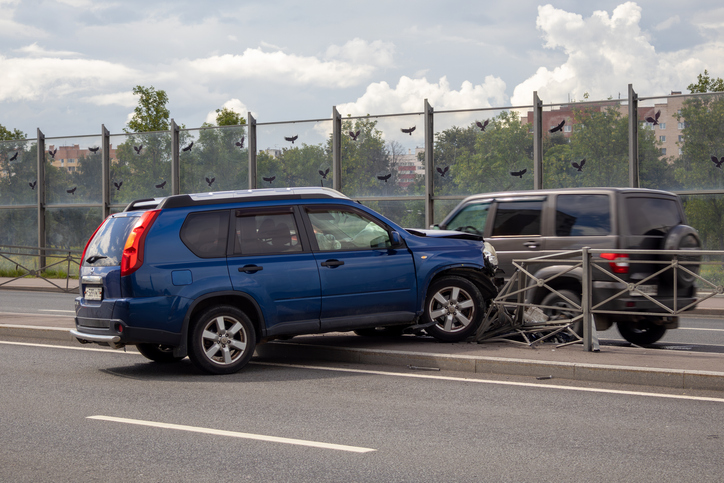
Is PIP Still Mandatory in Florida? What Drivers Need To Know If They Are Injured In An Accident
People stop me on Bonita Beach Road, they ask at church, they call the office on the way home from the body shop — all asking the same thing: is PIP still required, or did they finally get rid of it? I cannot remember another insurance rule that has confused the public this thoroughly, and I have been practicing personal injury law in Lee and Collier Counties for over thirty years.
Here is the short answer. As of today, yes — Personal Injury Protection is still mandatory for every Florida driver who registers a four-wheel vehicle. There have been repeal bills, headlines, and a veto. None of that has changed the law sitting on the books. If a repeal does pass, it will come with a long lead time, and your insurer will be required to notify you in writing well before the switch. Until then, drive without PIP and you are driving illegally — and exposing yourself in a way no injured person should ever be exposed.
What follows is the version I give clients in our conference room. Plain English, what the statutes actually say, the patterns we see, and a couple of things to do this week if you have not looked at your declarations page in a while.
What Florida law actually says about PIP and no-fault
Florida has been a no-fault state since 1971. The current PIP statute is §627.736, Florida Statutes. It requires every owner of a four-wheel motor vehicle registered in Florida to carry a minimum of $10,000 in PIP coverage. PIP pays — regardless of fault — 80% of reasonable and necessary medical bills, 60% of lost wages, and a $5,000 death benefit, up to the policy limit.
Two pieces of that statute deserve attention because they are where most of the trouble lives:
- The 14-day rule. §627.736(1)(a) says you must receive initial medical care within fourteen days of the crash. Miss that window and your PIP carrier owes you nothing. Not eighty percent of something. Nothing.
- The EMC determination. If a qualified provider documents that you have an “emergency medical condition,” you can access the full $10,000. Without an EMC, PIP caps at $2,500. The carriers fight hard on this distinction.
Layered on top of PIP is §627.737, the tort-exemption statute. In plain English: because PIP pays your first-dollar medical bills, the law restricts when you can sue the at-fault driver for pain and suffering. You have to clear what the statute calls the serious-injury threshold — permanent injury within a reasonable degree of medical probability, significant and permanent scarring or disfigurement, significant and permanent loss of an important bodily function, or death. If your injury clears that bar, the tort exemption falls away and you can pursue a full personal-injury claim against the at-fault driver and their insurance.
Two more statutes belong in this conversation because clients almost never hear about them from their adjuster:
- §627.727 — Uninsured Motorist coverage. Florida does not require drivers to carry bodily-injury liability. Read that sentence again. The driver who hit you may have nothing covering the damage done to your body. UM is the rider on your own policy that fills that gap. If you do not have it, you should — and if you signed a UM rejection form years ago to save a few dollars a month, that decision is worth revisiting.
- §768.81 — Modified comparative negligence. Since the 2023 reform, if a jury finds you more than 50% at fault for your own crash, you recover nothing. The old rule reduced your recovery by your percentage of fault even if you were 80% at fault. That is gone. This is the rule that makes the defense lawyer’s job, in many cases, to push your fault number above the 50% line.
- §95.11(4)(a) — Statute of limitations. Two years from the date of the crash for negligence claims. The 2023 reform cut it from four. Wrongful-death actions are also two. Miss the date, lose the case.
That is the architecture. PIP is the front door, the threshold is the gate to a tort claim, UM is the safety net under both, comparative negligence decides how the pie gets sliced, and the statute of limitations sets the clock.
The five PIP scenarios we actually see
After more than three decades of handling crashes from the I-75 corridor through Lee and Collier Counties to US-41 / Tamiami Trail and everywhere in between, the same handful of PIP situations come through our office over and over. Here are the five that account for the bulk of the heartburn:
- The 14-day miss. Client feels sore after a Bonita Beach Road rear-ender, decides to “see how it goes,” wakes up on day sixteen with a frozen neck and a herniated disc on the MRI. The PIP carrier denies the entire claim. We can still pursue the at-fault driver if the injury clears the threshold, but the easy first-dollar coverage is gone.
- The $2,500 cap. The treating doctor signs off on PIP forms but never documents an emergency medical condition. The carrier pays $2,500 and closes the file. The remaining $7,500 of the statutory limit sits there untouchable.
- The other driver has only PIP, no bodily injury. Florida lets people drive with no liability coverage for your body. When the bills are $80,000 and the at-fault driver has a $10,000 PIP policy and nothing else, the only money on the table is your own UM. Clients who declined UM at signup learn this on the worst day of their year.
- The “examination under oath” letter. Two months in, the PIP carrier demands an EUO and a stack of records. This is the carrier looking for a reason to deny. It is a procedural fight that needs an attorney, not a phone call to the agent.
- The provider lien problem. The chiropractor or imaging center bills under a letter of protection that, once a settlement comes in, eats half the recovery. We see this most often when the client was not represented during treatment and signed paperwork they did not read.
PIP cases — why they are harder than they look
From the outside, PIP looks simple. Your insurance pays. End of story. The reality is that PIP is one of the most heavily litigated lines of coverage in Florida, and the carriers have become very good at finding reasons not to pay.
A few of the complications that turn a five-figure claim into a fight:
- The fee-schedule reduction. Carriers are allowed to reimburse at a statutory fee schedule rather than the provider’s billed rate. That math turns an $8,000 hospital bill into a $2,400 PIP payment and a $5,600 balance the client thinks is paid but is not.
- The independent medical examination. §627.736(7) lets the carrier send you to a doctor of their choosing. If that doctor says further care is not reasonable, related, or necessary, the carrier cuts off PIP. Refuse to attend and you waive your benefits.
- The health-insurance interaction. If your health insurer pays a bill that PIP should have paid, the health insurer often asserts a subrogation lien on your eventual recovery. Nobody mentions this at the ER.
- The Fabre problem. Florida lets defendants point at non-parties — a road contractor, the driver’s employer, a phantom vehicle — and ask the jury to assign them fault. That fault, once assigned, reduces your recovery. Spotting Fabre defendants early is part of the work.
One we handled — when PIP was just the beginning
One we handled in Bonita Springs sits with me. Our client was a woman on foot at a job site near the I-75 corridor when she was run over by a backhoe. The operator was a commercial driver for a contractor on the project. He was looking the wrong direction, never checked his blind spot, and did not have a spotter on the ground. The machine caught her below the knees and dragged her several feet before he realized what had happened.
Her injuries were the kind that change a life. Crushing trauma to both lower extremities. Emergency surgery the night of the incident, then a second surgery to place rods and screws, then months of focused wound care for tissue that did not want to heal. PIP was burned through in the first week of hospital bills. Her health insurance covered some of the gap and then asserted its lien against any recovery. The at-fault driver carried bodily-injury limits that would not have paid a fraction of one surgery.
The case we built was not against the driver. The case was against the construction company. Under Florida law, a contractor operating heavy equipment around people on foot has duties — to train operators, to require spotters, to write and enforce a site safety plan. We showed that the company had cut every one of those corners. The matter resolved in the low seven figures.
I tell that story because PIP, by itself, was never going to be the answer. PIP was a $10,000 line item on a case that the law required us to build somewhere else — in the commercial liability of the company that put an untrained operator on the ground next to pedestrians. That is the kind of analysis that does not happen at the adjuster’s desk.
What to do if you have been hit and PIP is in play
From thirty years of watching how these cases unfold in our office, here is the action list. It is short on purpose. Most of the trouble we see comes from the first three items.
- Get medical attention within fourteen days. Sooner if you can. The day of the crash is best. If you went to the ER and got cleared, follow up with a primary-care or urgent-care provider that week. Document the symptoms. Soft-tissue and neck/back injuries do not always show up at the scene — they show up on day three or four.
- Ask the treating provider, in writing, whether you have an “emergency medical condition” under §627.736. Without that EMC documentation, your PIP is capped at $2,500. With it, the full $10,000 is available.
- Pull your declarations page and look at three lines. PIP — confirm it is there. Bodily-injury liability — confirm whether you have it and at what limits. Uninsured/underinsured motorist — confirm whether you have it, and whether it is stacked. If you do not know what stacking means, that alone is a reason to call your agent.
- Make a §316.066 crash report request. The investigating officer files a long-form report within ten days under §316.066. That report names every driver, every insurance carrier, and every witness. You can request it through the FLHSMV crash report portal. Get it.
- Do not give a recorded statement to the at-fault driver’s carrier without talking to a lawyer. Your own carrier — different story, your policy obligates you to cooperate. The other side’s carrier — they are calling to find reasons not to pay you. Politely decline and refer them to counsel.
- Track the calendar. Two years from the crash date, under §95.11(4)(a). Put it in your phone. Adjusters know the clock and will slow-walk a file past it if you let them.
Key Takeaways
- PIP is still mandatory in Florida. Until a repeal actually becomes law and takes effect, every four-wheel vehicle registered here needs $10,000 in PIP under §627.736.
- The 14-day medical-care rule and the EMC determination are the two PIP traps that cost injured people more coverage than anything else. Treat early, get the EMC in writing.
- Florida does not require bodily-injury liability coverage. Uninsured/underinsured motorist coverage under §627.727 is the only reliable backstop, and we recommend stacked UM whenever a client can afford it.
- The 2023 tort reform shortened the statute of limitations to two years and made comparative negligence a hard cutoff at 50%. Both rules now drive the defense playbook in PIP-related injury cases.
- PIP is a starting point, not a ceiling. Serious injuries often require a claim against the at-fault driver — and, in commercial-vehicle and premises matters, against the company behind the driver.
Frequently Asked Questions
Q1. Is PIP still required for Florida drivers right now?
Yes. As of today, Florida Statute 627.736 still requires every owner of a four-wheel vehicle registered in Florida to carry $10,000 in Personal Injury Protection. PIP pays 80% of reasonable medical bills and 60% of lost wages, up to the policy limit, regardless of who caused the crash. If a repeal becomes law, expect a long transition window — but until that happens, drive without PIP and you are driving illegally.
Q2. I was in a crash. Do I really have to see a doctor within 14 days?
Yes, and this is the rule that costs more injured people their PIP than anything else. Under §627.736(1)(a), if you do not receive initial medical care within 14 days of the crash, your PIP carrier owes you nothing — not the first dollar. Soft-tissue injuries often feel worst on day three or four, by which point people have already missed the window. Go get checked the day of the crash or the day after, even if you think you are fine.
Q3. If PIP covers my medical bills, can I still sue the other driver?
Sometimes. Florida’s no-fault system limits lawsuits for pain and suffering to people who meet the serious-injury threshold in §627.737 — permanent injury within a reasonable degree of medical probability, significant and permanent scarring or disfigurement, significant and permanent loss of an important bodily function, or death. Property damage and economic losses beyond PIP are not blocked by the threshold. Whether your injuries clear the threshold is something you want a lawyer to evaluate, not your adjuster.
Q4. Why is uninsured motorist coverage so important in Florida?
Because Florida does not require drivers to carry bodily injury liability — only PIP and property damage. That means the driver who hit you may have zero coverage for the harm done to your body. Under §627.727, UM coverage is the safety net that fills that gap. If you have it, your own carrier pays. If you signed a UM rejection form, you may have nothing once your $10,000 PIP runs out. We tell every client: take the UM, in stacked form if you can afford it.
Q5. How long do I have to file a Florida injury lawsuit?
Two years from the date of the crash for most negligence claims, under §95.11(4)(a) as amended by the 2023 tort reform. That is half the old window of four years. Wrongful death is also two years. Once that date passes, the claim is gone — adjusters know the calendar and will run it out on you if you let them.
If you have been hurt, call our office
If you or someone in your family has been injured in a crash anywhere in Lee or Collier County — from Bonita Springs to Fort Myers, Naples, Estero, Cape Coral, or Lehigh Acres — and PIP, UM, or a serious-injury claim is in play, call Pittman Law Firm, P.L. at 239-992-8259 for a free consultation. There is no fee unless we recover for you. We will review the policy declarations, the crash report, the medical records, and tell you straight where the case stands.
About the Author

Pittman Law Firm, P.L. operates across Southwest Florida under the direction of founder David B. Pittman, Esq., who has practiced personal injury law for more than thirty years. The firm represents injured clients across Lee and Collier Counties — from the firm’s main office at Windsor Place on Bonita Beach Road through Fort Myers, Naples, Estero, Cape Coral, and Lehigh Acres — with a particular focus on commercial-vehicle, complex-liability, and serious-injury cases.
David’s training began at The Citadel, The Military College of South Carolina, and continued at the University of South Carolina School of Law, where he earned his JD. He is rated AV-Preeminent by Martindale-Hubbell and is a member of the Multi-Million Dollar Advocates Forum, a recognition reserved for attorneys who have secured verdicts and settlements above the seven-figure mark.
David has held a Florida real estate broker license for twenty-five years, a credential that shapes how the firm reads the property side of premises cases. The firm handles personal injury cases across Lee and Collier Counties, serving Fort Myers, Bonita Springs, Naples, Cape Coral, Estero, and Lehigh Acres, with offices at Windsor Place in Bonita Springs (main) and Fort Myers (satellite). Call 239-992-8259 for a free consultation.
The information in this article is provided for general educational purposes and does not constitute legal advice. Reading this article does not create an attorney-client relationship with Pittman Law Firm, P.L. Every case turns on its own facts. If you have been injured in a crash, consult a Florida attorney about your specific situation. This communication may be considered attorney advertising under the Florida Bar’s rules.