

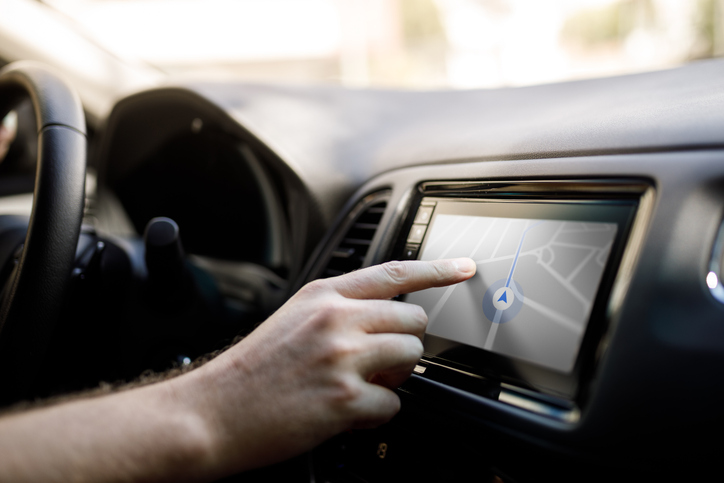
Is GPS Routing Making Fort Myers Roads More Dangerous? the answer
Before our office has even pulled the crash report, the other driver’s carrier is usually already looking for a way to explain why their insured’s eyes were off the road. The routing-app defense sounds plausible at first — “he was just checking directions.” Florida law does not care. A driver who looked away from traffic to read a turn-by-turn screen and then rear-ended you or ran a red light on Colonial Boulevard has breached the same duty of care as any other inattentive driver. The phone records, the app usage logs, and the vehicle infotainment history are all discoverable, and we subpoena them routinely.
The harder question is the one underneath it: is wayfinding technology itself making our roads worse? My answer, after watching this play out on Colonial Boulevard, US-41, McGregor Boulevard, and the Daniels Parkway corridor for the better part of two decades, is that the apps themselves are not the problem. The way drivers use them is. And the way Florida law sorts out responsibility when one of those drivers hurts someone has changed twice in the last few years, so the rules you remember from a 2018 fender-bender no longer apply.
What Florida law actually says about distracted driving claims
A driver who hits you while reading a turn-by-turn screen is liable on the same theory as any other negligent driver: they owed a duty of reasonable care, they breached that duty by taking their eyes off the road, and the breach caused your injuries. The wrinkle is how Florida apportions and limits that liability today.
Section 768.81, Florida Statutes — modified comparative negligence. Florida used to be a pure comparative state. If you were 90 percent at fault, you could still recover 10 percent of your damages. That changed in March 2023. Now a plaintiff who is more than 50 percent at fault recovers nothing. Plain English: if a jury looks at a Fort Myers intersection collision and concludes you were 51 percent to blame and the other driver was 49 percent to blame, you lose. If they split it 49-51 the other direction, you collect 49 percent of your damages. Insurance defense lawyers are very aware of this line and they push hard to get the plaintiff over it.
Section 95.11(4)(a) — two-year statute of limitations. The same 2023 reform shortened the negligence clock from four years to two. That window is shorter than most people realize, and phone-distraction cases get harder to prove the longer you sit on them. Wireless carriers do not keep granular data activity forever. Google Timeline and Apple route history can be cleared from a device. Two years sounds like a long time. It is not.
Section 627.736 — PIP. Florida is still a no-fault state on the medical side. Your own auto policy carries at least $10,000 in Personal Injury Protection that pays 80 percent of reasonable medical bills and 60 percent of lost wages regardless of who caused the crash. There is a catch most people miss: you have to seek initial medical treatment within 14 days of the crash or you forfeit the benefit entirely. I have watched people lose ten thousand dollars in coverage because they thought they could shake off neck pain for three weeks.
Section 627.727 — uninsured motorist. UM is the coverage I tell every Fort Myers client to buy and stack. If the driver who hit you is uninsured, underinsured, or fled the scene, your own UM steps in. In a serious-injury case that turns on a distracted-driver theory, UM is often the deeper pocket.
Section 316.066 — crash report. Florida law requires a crash report on any collision involving injury, death, or apparent damage of at least $500. The report is the foundation of your civil case. The investigating deputy’s narrative, the diagram, and any “Driver 1 was inattentive” notation become Exhibit A in the file we open the same day a new client calls.
The crashes we handle most in Fort Myers
After enough years on this work, the GPS-related cases sort themselves into a handful of recurring patterns:
- The head-down rear-end. A driver glances at the screen to confirm a turn, the car ahead brakes for a yellow at Daniels Parkway and Six Mile Cypress, and the trailing car never lifts off the gas. This is the most common version. Liability is rarely disputed. The fight is over the value of the injury and whether the carrier will pay it.
- The missed-turn swerve. The app says “turn now” thirty feet too late. The driver yanks across two lanes on Colonial Boulevard to make the cut and clips a car in the right lane. We have seen this on McGregor Boulevard, on Summerlin Road near the Health Park complex, and at the US-41 / Pine Island Road intersection. Lane-change-without-safety-clearance under §316.085 is the usual citation.
- The wrong-way or one-way reversal. Routing apps occasionally send drivers down a one-way segment in the wrong direction, particularly downtown near Hendry Street and around the riverfront. The driver who follows the screen and ignores the sign is liable. So is the driver coming the other way who saw it coming and did not slow down.
- The intersection blocker. The app says “stay right for 0.3 miles” and the driver freezes in the middle of a seven-lane intersection trying to read the instruction. T-bone collisions and angle crashes are the typical outcome.
None of these are exotic. We see at least one of them a week.
Why these claims fight back
The reason a phone-distraction case is not as simple as it sounds comes down to proof and timing. A driver who was looking at a screen will, with very few exceptions, tell the responding deputy that they were looking at the road. The collision report will say “inattentive” only if the deputy decided to write it that way, and many do not. The phone is back in the cupholder by the time the cruiser arrives.
To get past that, our office moves quickly on three fronts. We send a litigation hold letter to the at-fault driver and to their carrier within days, putting them on notice that their phone, the device’s location history, the vehicle’s infotainment log, and any cloud backup must be preserved. We send subpoenas to the carrier — AT&T, Verizon, T-Mobile — for the data-and-voice activity records covering a window around the time of the crash. We canvass for dashcam footage, doorbell cameras, and business security video. On a corridor like McGregor Boulevard there is almost always a camera somewhere.
The other complication is the comparative-fault fight I mentioned above. The defense will argue you were partly to blame: you stopped short, you changed lanes without signaling, you were going two miles over. Under the post-2023 50-percent bar, every point of fault they can pin on you matters. The work is not just proving the other driver looked away. It is proving that what they did so badly outweighed anything you did that no jury could put you over the line.
What to do if you were hit by a distracted driver in Fort Myers
Practical steps, in the order they actually matter:
- Call 911 from the scene and stay until a deputy arrives. Florida law requires a crash report on any injury or significant property damage collision under §316.066. The report is the spine of your case, and a deputy’s contemporaneous note that the other driver was looking at their phone is far more valuable than your memory of it three months later.
- Photograph the other driver’s phone position, the dashboard, and the infotainment screen if you can do it safely. I have had clients walk away with phone-photos showing a routing app still open on the at-fault driver’s center console. That photo settled the liability question in one short letter.
- Get medical attention within 14 days, even if you feel “mostly fine.” The PIP statute is unforgiving on this point. Soft-tissue injuries and concussions often present three to five days after a crash. Document what you feel, when you feel it, and what the urgent-care doctor at Lee Health or the orthopedist on Summerlin Road told you to do about it.
- Do not give a recorded statement to the other driver’s carrier. An adjuster will call within a day or two and ask for “just a quick statement.” The recording is going into a file that will be used to deny or reduce your claim. Politely decline and tell them you will be represented.
- Preserve everything on your own phone. Your route. Your call log. Any text messages from the scene. Defense lawyers will subpoena your data too, and you want your own record intact.
- Call a lawyer who actually tries these cases. The litigation-hold and carrier-subpoena work I described above does not happen on its own, and it does not happen well from a settlement mill.
I have walked clients through this exact sequence on US-41, on I-75 near Alico Road, and on the smaller cut-throughs the apps love to route people down when the interstate is jammed. The steps do not change. The technology around the crash does.
Key Takeaways
- A driver who hits you while looking at a routing app is liable on the same legal theory as any other inattentive driver, and the phone records, route history, and infotainment logs are all discoverable.
- Florida’s 2023 reform shortened the negligence statute of limitations from four years to two under §95.11(4)(a) — wait too long and the proof evaporates.
- Under §768.81, a plaintiff more than 50 percent at fault recovers nothing, so the comparative-fault fight is the whole ballgame in many distracted-driver cases.
- Get medical treatment within 14 days of the crash or you forfeit your $10,000 in PIP benefits under §627.736 — even if you feel “mostly fine.”
- Photograph the other driver’s phone and dashboard at the scene if you can do it safely; that one image often settles the liability question.
Frequently Asked Questions
Q1. Can I sue another driver in Fort Myers if they hit me while staring at their phone for directions? Yes. A driver who took their eyes off the road to read a routing app and then rear-ended you, sideswiped you, or ran a light has breached the same duty of care as any other inattentive driver. The phone records, the app usage logs, and the on-screen route history are all discoverable in a Florida civil case, and we routinely subpoena them. Under §768.81, Florida Statutes, you can still recover even if a jury assigns you some share of fault, so long as you are not more than 50 percent at fault.
Q2. What happens if I followed my GPS into a wrong-way turn and caused the crash? Following a turn-by-turn app does not give you a defense. Florida drivers are responsible for obeying posted signs, signals, and lane markings whether or not an app told them otherwise. That said, fault is rarely 100 percent on one side. If another driver was speeding, drunk, or distracted at the moment of impact, our office investigates whether their conduct was the larger cause of the collision and whether the 50-percent bar under §768.81 still leaves you a path to recovery.
Q3. How long do I have to file a Fort Myers car accident claim if the other driver was distracted by their phone? Two years from the date of the crash under §95.11(4)(a), Florida Statutes. That deadline was shortened from four years to two by the 2023 tort reform package and applies to crashes that happened on or after March 24, 2023. Wrongful death claims also run on a two-year clock. Phone records get harder to obtain the longer you wait, so do not assume two years is plenty of time.
Q4. Will my PIP cover medical bills if a distracted GPS user hits me? Yes. Florida’s Personal Injury Protection statute, §627.736, requires every registered driver to carry at least $10,000 in no-fault medical and lost-wage coverage that pays regardless of who caused the crash. PIP covers 80 percent of reasonable medical bills and 60 percent of lost wages, up to the policy limit. You must seek initial treatment within 14 days of the crash or you forfeit the benefit. PIP does not cover pain and suffering, and the $10,000 cap rarely covers a serious-injury hospital bill, which is why we look at the at-fault driver’s liability coverage and your own UM coverage next.
Q5. How do you prove the other driver was looking at their routing app at the moment of the crash? Several ways. Cell carrier records show data activity by the minute. Google and Apple route history is preserved on the device and in cloud backups and is subject to subpoena. Modern vehicle infotainment systems log when a destination was entered and when voice prompts fired. Body-cam footage from the responding deputy often catches an admission at the scene. And dashcam footage, when we can find it, often shows the driver’s head down before impact. Building this proof early matters because device data overwrites itself.
If you were hurt by a distracted driver in Fort Myers
If you or someone you love was hit by a driver who was looking at a phone or routing app anywhere in Lee or Collier County, our office is ready to take the call. We handle these cases on a contingency fee. There is no fee unless we recover for you. Call 239-992-8259 for a free consultation, and we will sit down with you in person at our Bonita Springs office or by phone, whichever works for your schedule. If your injuries make travel difficult, we will come to you.
About the Author

Personal injury law has been David B. Pittman, Esq.’s focus in Fort Myers and across Lee County for more than thirty years. He founded Pittman Law Firm, P.L. and remains its lead attorney, representing injured clients across Lee and Collier Counties, with a particular focus on commercial-vehicle, complex-liability, and serious-injury cases. The firm’s Fort Myers presence handles a steady stream of serious-injury work along the Daniels Parkway, Six Mile Cypress, McGregor Boulevard, Cleveland Avenue, and Summerlin Road corridors, and along I-75 between Estero and Bell Tower.
Academic record: undergraduate at The Citadel, The Military College of South Carolina, followed by a JD at the University of South Carolina School of Law. Professional record: AV-Preeminent at Martindale-Hubbell, member of the Multi-Million Dollar Advocates Forum.
David has held a Florida real estate broker license for twenty-five years, a credential that shapes how the firm reads the property side of premises cases. The firm handles personal injury cases across Lee and Collier Counties, serving Fort Myers, Bonita Springs, Naples, Cape Coral, Estero, and Lehigh Acres, with offices at Windsor Place in Bonita Springs (main) and Fort Myers (satellite). Call 239-992-8259 for a free consultation.
The information on this site is for general information purposes only and is attorney advertising. Nothing on this site should be taken as legal advice for any individual case or situation. Reading this page does not create an attorney-client relationship.