

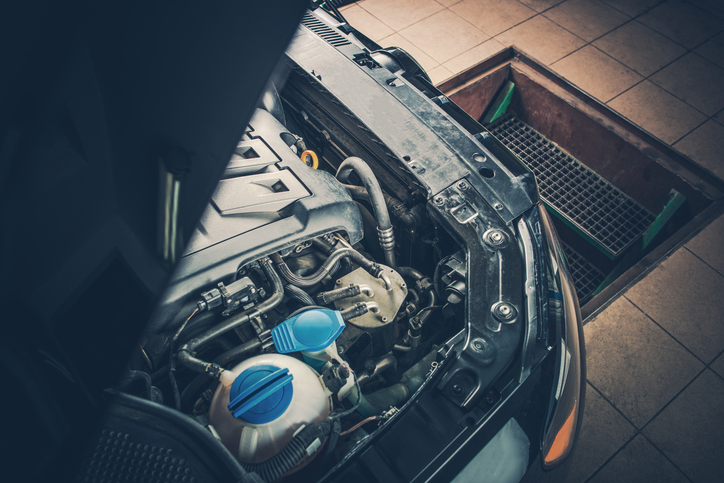
Can a Defective Car Cause Your Fort Myers Auto Accident?
Every few months a client calls from a tow yard off Cleveland Avenue or Summerlin Road with the same story. The car is sitting in the lot, the airbag failed to deploy, or the brakes went soft the moment they were needed, and the client wants to know whether the vehicle itself is part of the lawsuit. The short answer is yes — Florida product liability law lets us run a defect claim alongside the ordinary negligence case against any other driver involved. The longer answer is that the outcome almost always turns on what happens to the car in the first ten days.
This is not the most common kind of personal injury case we handle. It is one of the more useful ones to understand, though, because the steps a person takes in the first week after the crash decide whether the defect theory ever gets a fair hearing. Most of the time it does not, and the reason is almost always the same: the car got fixed, scrapped, or moved before anybody looked at it.
What follows is what Florida law actually says, the patterns we see in Fort Myers, the practical reasons these cases are harder than they look, an anonymized case from our office, and a short list of what to do if you think a defect contributed to your wreck.
What Florida law actually says about vehicle-defect crashes
A defective-car claim in Florida is two cases stacked on top of each other. There is the ordinary negligence case against any other driver involved. And there is a product liability case against the manufacturer of the vehicle or the failed component. Both run on the same clock and both get filtered through Florida’s comparative-fault rules. The four statutes that come up most often are these.
Florida Statute §95.11(4)(a) — two-year statute of limitations. Since the March 2023 tort reform, you have two years from the date of the crash to file a personal injury suit. The old four-year deadline is gone. On a defect case that two years is not very much time. Engineering inspections take months. Discovery from a vehicle manufacturer takes longer than that. Waiting eighteen months to call a lawyer is, in practical terms, waiting too long.
Florida Statute §768.81 — modified comparative negligence. Florida is now a 50-percent-bar state. If a jury decides you are more than 50 percent at fault for your own injuries, you recover nothing. The defense in a vehicle-defect case will almost always argue the driver was at fault for ignoring a warning light, missing a recall notice, or driving too fast for the road. We spend a lot of time rebutting that, because every percentage point matters.
Florida Statute §627.736 — Personal Injury Protection. PIP pays the first $10,000 in medical bills and lost wages no matter who or what caused the crash. That includes a tire that came apart, a brake line that ruptured, an airbag that did not deploy. PIP is the first dollar in the door and it does not wait for the defect investigation to finish. Use it.
Florida Statute §627.727 — Uninsured/Underinsured Motorist coverage. If a defective part is one cause and an underinsured driver is the other, your own UM policy is often the source that actually pays. We have settled defect cases for full UM policy limits while the product claim was still being worked up.
One more piece of plain-English unpacking. A product liability claim in Florida can be brought on three theories: design defect (the part was unsafe even when built correctly), manufacturing defect (something went wrong on the assembly line), and failure to warn (the maker knew about the risk and did not say so). Most cases we see are the first or the third. The second is the hardest to prove because you need the actual failed component, which is exactly why preservation matters so much.
Five defect patterns out of Fort Myers and Lee County
Across three decades of injury work in Lee and Collier Counties, I can tell you the defect cases that come through our office cluster into about five patterns. Not all of them turn into product cases. All of them are worth flagging early.
- Tire failure at highway speed. Tread separation or a sidewall blowout on I-75 near Alico Road, on Daniels Parkway, or on the long flat stretch of Pine Island Road. The tire often had a known recall the owner never saw, or had aged out past the six-year point that the rubber industry treats as a safe shelf life. We have seen the same defective tire model show up in three different client crashes inside a year.
- Brake-line or master-cylinder failure. Usually felt as a soft pedal for weeks before the actual loss. Common on older trucks and SUVs and a recurring problem on certain model years of full-size pickups. The client almost always tells us they “meant to get it looked at.”
- Airbag non-deployment or aggressive deployment. Either the airbag did not fire in a wreck severe enough to require it, or it fired so hard it broke the client’s wrist or fractured an orbital bone. The Takata inflator recall is still working its way through used cars sold in Florida and still showing up in our intake calls.
- Sudden-acceleration or pedal-misapplication events. Some are real defects, some are not. We do not assume either way until an engineering witness has looked at the event data recorder. The black box in a modern car usually settles the question.
- Electronic-system failures on newer vehicles. Power steering that cut out mid-turn. Adaptive cruise that did not brake when it was supposed to. Lane-keep assist that yanked the wheel the wrong way. These cases are getting more common as cars get more software, and they require a different kind of engineering witness than a 1998 tire blowout would.
What makes vehicle-defect cases hard to win
Three practical complications run through almost every one of these matters, and clients deserve a straight answer about each one before they file.
The first is evidence preservation. The single most common reason a strong defect case dies is the car got repaired or scrapped before anybody preserved it. The insurance carrier, your own or the other driver’s, has every incentive to total the vehicle and send it to auction. Once that happens the failed brake caliper, the delaminated tire, and the airbag module are gone. We send a preservation letter the same day we are retained and we tell the client not to authorize anything on the car until an engineering witness has inspected it.
The second is the resources on the other side. A product case against an auto manufacturer is not the same as a fender-bender case against another driver’s State Farm policy. The defendant will have national defense counsel, paid engineering consultants on retainer, and the patience to litigate for years. The client needs a firm that has the staying power and the willingness to fund the case all the way through. Our office does, and we are straight with clients when a particular set of facts is not strong enough to justify that kind of investment.
The third is the comparative-fault problem. If the client had any role in the wreck (a missed maintenance interval, a known check-engine light, a tire pressure warning ignored), the defense will push to put as much fault on the driver as it can. Under §768.81 every percentage point matters, and crossing fifty percent ends the case. A clean maintenance record, dealer service stamps, and a documented history of taking the car in when warning lights came on are the best protection a client can give themselves.
A rear-end claim we handled in Fort Myers
A client of ours was sitting at a red light on US-41 in Fort Myers when she was rear-ended hard by a driver who did not stop. The other car drove off before she could get a plate. By the time the ambulance arrived she had the kind of cervical pain that does not go away — the head-snap-forward kind that turns into months of physical therapy and a long arc of pain management.
The hit-and-run piece of that case is its own headache. With no at-fault driver to chase, we worked the claim through her own carrier under the UM portion of her policy. The client did exactly what we ask clients to do — she went to the ER the day of the wreck, she followed through on every physical therapy appointment, and she kept the receipts.
We recovered the full policy payout under her uninsured motorist coverage. It was not the kind of headline-grabbing seven-figure result we get on a catastrophic case, but it was the right outcome for the client, and it came together because she preserved the evidence and stayed in treatment. On the defect side of that fact pattern, if the rear-ending car had been recoverable we would have looked hard at the brakes and at any electronic-stability issue. With a fled-driver case you work with what you have, and what we had was a UM policy that delivered.
I think about that case often because it captures the boring truth of this work. The biggest predictors of a good outcome are the small steps the client takes in the first forty-eight hours, not anything dramatic the lawyer does six months in.
What to do if you think a defect contributed to your wreck
This is the observed-from-practice list. Not a checklist from a textbook — the things that actually move our cases when we get them in time, and the things clients have done that helped most.
- Get treated, then write down what the car was doing. ER first. Then, while it is fresh, write down everything the car did in the days and weeks before the wreck. Soft brake pedal. Pull to one side. Steering wheel shimmy at highway speed. Warning light that came on and went off. Smell of burning rubber from the front wheel well. The dealership service writer will not remember these things in eighteen months. You will, if you write them down now.
- Do not authorize any repairs. Tell your insurance carrier and the towing yard, in writing if possible, that the vehicle is not to be repaired, scrapped, or moved without your written consent. We send a preservation-of-evidence letter the day a client retains us, but a head start by the client is worth a lot.
- Photograph the failed part, in place if possible. The blown tire on the shoulder of Summerlin Road. The brake fluid trail on the pavement. The deflated airbag still in the steering wheel. Wide shots and close-ups. License plates of any witnesses if you can.
- Pull your maintenance records together. Dealership service printouts. Tire shop receipts. The oil change place. Anything that shows you took care of the car. This is what beats back the comparative-fault argument under §768.81.
- Look up the VIN on the NHTSA recall site. nhtsa.gov lets you enter your seventeen-character VIN and see every open recall on your specific vehicle. If your model is on the list and the recall covers the part that failed, that is the single most useful piece of evidence you can hand a lawyer at the first meeting.
- Get the crash report. Under §316.066 the responding officer files a Florida Long Form crash report. You can pull it from the FLHSMV portal a few days after the wreck. The narrative section sometimes flags a mechanical issue the officer observed at the scene.
- Call a lawyer who has worked these cases. Not for the marketing pitch. For the engineering and preservation work that has to happen in the first thirty days. Our office handles vehicle-defect cases as part of a broader serious-auto practice and we are happy to talk through whether yours fits.
Key Takeaways
- Vehicle-component failure is the primary cause in roughly two percent of crashes — uncommon, but the cases that exist are often catastrophic and worth taking seriously.
- The Florida deadline to sue is two years from the crash under §95.11(4)(a). Defect cases need most of that time for engineering work, so call early.
- Do not authorize repairs, scrapping, or even moving the car until an engineering witness has looked at it. This is the single most common reason these cases fail.
- PIP under §627.736 pays the first $10,000 in medical bills regardless of cause. Uninsured-motorist coverage under §627.727 often carries a defect case when the other driver fled or had thin coverage.
- Maintenance records, recall lookups on the VIN, and photographs of the failed part in place are the three pieces of evidence that move these cases the most.
Frequently Asked Questions
Q1. How often do defective vehicle parts actually cause Fort Myers crashes?
NHTSA’s long-running crash causation work pegs vehicle-component failure as the primary cause in roughly two percent of crashes, with tires, brakes, and steering the most common culprits. In Lee County we see it more often as a contributing cause sitting underneath driver inattention or speed — the brake that was already weak, the tire that had been quietly delaminating for months.
Q2. Who can be held liable if a defective part caused my Fort Myers crash?
Liability can land on the manufacturer of the finished vehicle, the manufacturer of the component (a brake supplier, tire maker, airbag inflator producer), the dealership that sold it, and sometimes the repair shop that worked on the part shortly before the failure. Florida product liability law lets us pursue more than one of those parties in the same case, and §768.81 controls how fault is apportioned among them.
Q3. What is the statute of limitations on a Fort Myers defective-car injury claim?
Under §95.11(4)(a), the deadline is two years from the date of the crash for any negligence-based injury claim arising on or after March 24, 2023. Product liability claims have their own twelve-year statute of repose for the product itself, but the two-year personal injury clock is the one most people miss. Call a lawyer well before the two-year mark — evidence preservation alone takes months.
Q4. Does PIP cover me if a defective part caused the wreck?
Yes. Florida PIP under §627.736 pays up to $10,000 in medical and lost wages regardless of who or what caused the crash, including a vehicle defect. PIP is the first stop for your ER visit and early treatment. The product liability claim sits on top of PIP and goes after the rest of the damages PIP did not cover.
Q5. Should I let my insurer or the dealership repair the car before I talk to a lawyer?
No. Repair, scrapping, or even moving the car to a different yard can destroy the evidence we need to prove the defect. The single most damaging thing a client can do in the first week is authorize repairs. Tell the carrier to hold the vehicle, photograph everything, and call us before any work is approved. We can send an engineering witness to inspect the failed component in place.
Talk to our Fort Myers office
If you were hurt in a wreck on I-75 near Alico Road, on Daniels Parkway, along McGregor Boulevard, or anywhere else in Lee or Collier County, and you suspect the car itself may have been part of the problem, the time to talk is now — not after the tow yard has done anything with the vehicle. Call 239-992-8259 for a free consultation. There is no fee unless we recover for you.
About the Author

A more-than-thirty-year personal injury practice in Fort Myers and across Lee County has been the daily work of David B. Pittman, Esq., founder of Pittman Law Firm, P.L., with a sustained focus on serious-injury auto and complex-liability cases. The firm’s Fort Myers presence handles a steady stream of serious-injury work along the Daniels Parkway, Six Mile Cypress, McGregor Boulevard, Cleveland Avenue, and Summerlin Road corridors, and along I-75 between Estero and Bell Tower.
David is a Citadel grad (The Military College of South Carolina, undergraduate) and a University of South Carolina School of Law grad (JD). Martindale-Hubbell rates him AV-Preeminent; he belongs to the Multi-Million Dollar Advocates Forum.
David has held a Florida real estate broker license for twenty-five years, a credential that shapes how the firm reads the property side of premises cases. The firm handles personal injury cases across Lee and Collier Counties, serving Fort Myers, Bonita Springs, Naples, Cape Coral, Estero, and Lehigh Acres, with offices at Windsor Place in Bonita Springs (main) and Fort Myers (satellite). Call 239-992-8259 for a free consultation.
Disclaimer: The information on this page is general in nature and is not legal advice for any particular case. Reading this page does not create an attorney-client relationship with Pittman Law Firm, P.L. Past results do not guarantee a similar outcome. This page may be considered attorney advertising under the rules of The Florida Bar.