

Can a Police Report Be Changed After an Accident in Florida and How It Can Affect Your Claim
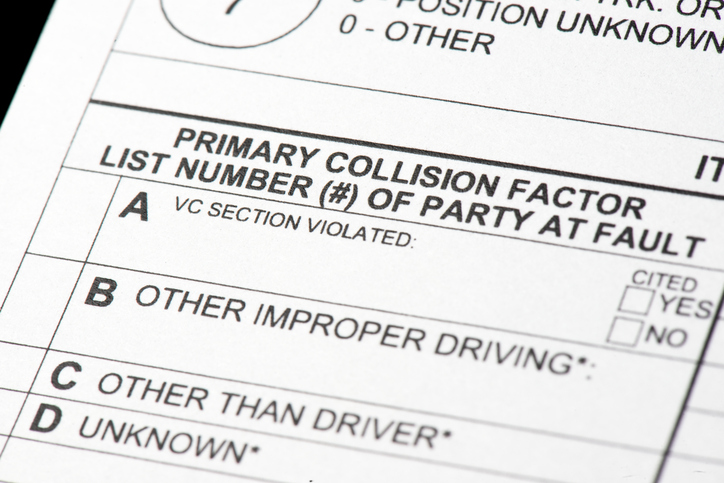
Under section 316.066, Florida Statutes, the officer who responds to your wreck has up to ten days to file the long-form crash report. That report lands in the Florida Highway Safety and Motor Vehicles database, where the insurance adjuster who will decide whether to pay your claim pulls a copy, often before you have finished your first round of physical therapy. If something in that report is wrong, the window to fix it is short — and under the 2023 tort reform, with a two-year filing deadline and a 50-percent comparative-fault bar, a report that pins even moderate blame on you now carries consequences it did not carry four years ago.
The answer to whether a Florida crash report can be amended is yes — sometimes easily, sometimes only with real work, and sometimes not at all. The more useful answer is that the report is rarely the final word on fault, but it is almost always the first word, and in a 2026 Florida accident claim the first word matters more than it used to. From three decades of personal injury work in Lee and Collier Counties, I can tell you the report is the document that frames every conversation that follows with the insurance adjuster.
What Florida law actually says about crash reports
Two statutes do most of the heavy lifting here. The first is section 316.066, Florida Statutes, which requires a long-form crash report any time there is injury, death, a vehicle towed from the scene, a commercial vehicle involved, or a hit-and-run. The officer has up to ten days to file. Florida’s crash report database, the public-facing portal run by the Florida Highway Safety and Motor Vehicles agency, is where the report ultimately lives, and it is where most adjusters pull a copy.
The second statute is the one most people miss. Section 316.066 also creates what Florida lawyers call the accident report privilege — the rule that statements you make to the officer for purposes of completing the report cannot be used against you at trial. That privilege is why a crash report itself is generally not admissible at a Florida jury trial to prove fault. It is a hearsay document. The officer was not there for the collision. The narrative is built from what witnesses told them after the fact.
That single fact surprises clients. The report does not decide your case in court. The report decides whether your case ever gets to court, because the insurance company reads the report long before any judge does, and the carrier’s first liability decision — pay, partial pay, deny — is made off that document.
There are two other Florida statutes that matter to this conversation. Under section 768.81, Florida Statutes, Florida now uses modified comparative fault. If a jury assigns you 51 percent or more of the blame for the wreck, you recover nothing. That rule was added in the 2023 tort reform. A police report that pins even a moderate share of fault on you is no longer just a negotiation problem; it is now an existential problem for the claim. And under section 95.11(4)(a), Florida Statutes, the statute of limitations on a negligence claim is now two years, cut in half from the prior four-year window. You no longer have time to let a flawed report sit unchallenged for a year while you focus on physical therapy.
The four types of crash report problems we handle
In thirty years of handling these files in Bonita Springs, Fort Myers, and Naples, the report problems break down into four buckets. They are not equal, and they are not fixed the same way.
- Pure factual error. The report lists the wrong make and model, the wrong street, the wrong intersection, the wrong direction of travel, or a transposed VIN. Most Lee County and Collier County agencies will correct these promptly with documentation — a photo of the dashboard plate, a repair invoice, a Google Maps screenshot of the actual intersection.
- Missing party or missing witness. A passenger who was clearly injured is not listed. A bystander who saw the crash from the sidewalk on US-41 is never interviewed. These are easier to supplement than to amend — the agency typically adds a supplement rather than rewriting the original.
- Narrative error. The officer’s prose section says you were “exiting the parking lot at a high rate of speed” when you were sitting at a dead stop. These are the hardest to fix. Officers rarely rewrite a narrative based solely on a driver’s request, and they will protect their reporting witness’s account unless there is hard objective evidence to the contrary.
- Fault assignment error. The report contains a contributing-cause code that does not match what actually happened, or a citation issued to the wrong driver. This is the bucket that costs people money. The fault code on a Florida crash report drives the adjuster’s first liability decision, and under the new 768.81 framework that first decision can sink the entire case.
Crash report errors — why these cases are harder than they look
I want to be straight with you about something. A lot of online advice on this topic makes it sound like fixing a Florida crash report is a simple administrative chore. File a form, attach a photo, done. In a small minority of cases that is true. In most of the cases that come through our office, it is not.
The reason is the calendar. Officers move on. A trooper who worked your crash on I-75 in Estero this month will work two hundred more before you ever call to ask about an amendment. Their memory of your specific scene fades fast, and Florida’s agencies will not let an officer rewrite a narrative from a six-month-old vague recollection. So the right move is rarely “ask the officer to change the report.” The right move is usually to build a parallel evidentiary record that travels with the report — supplemental statements, witness affidavits, photos with embedded GPS metadata, dash-cam pulls, doorbell camera footage from a nearby home, body-shop estimates that show impact direction.
The second reason these cases are harder than they look is the adjuster. Insurance adjusters in Florida are trained to anchor on the first liability assessment they receive. Once an adjuster has read a report that codes your client at fifty-percent fault, every later piece of evidence is filtered through that anchor. Moving an adjuster off an initial liability call is harder than getting the call right the first time, which is one reason we tell clients to involve our office before the report is even finalized whenever they can.
The third reason is the new two-year clock. Under section 95.11(4)(a) you no longer have a four-year window to let things develop. If the report has a problem, the supplemental record needs to be built in the first six months while witnesses still remember the wreck, while the dash-cam footage is still on the truck, while the dent in the guardrail at the I-75 exit is still photographable.
What to do if you spot an error in your Florida crash report
This is the sequence we walk Lee County and Collier County clients through, and it is built from observing what actually works at the Lee County Sheriff’s Office, Collier County Sheriff’s Office, Florida Highway Patrol Troop F, and the municipal agencies in Bonita Springs, Fort Myers, and Naples.
- Pull the report from the source. Use the Florida Highway Safety and Motor Vehicles portal at flhsmv.gov/resources/crash-citation-reports. The version on the portal is the version the adjuster will read.
- Read it twice, side by side with photos. Most people read the narrative once and react emotionally. Read it twice. Then read it with your scene photos open on a second screen. Mark every fact you can disprove with a photo or a document.
- Separate the factual errors from the narrative disputes. Factual errors get fixed. Narrative disputes get supplemented. Treating them the same is the most common mistake people make.
- For factual errors, contact the reporting agency in writing. Email the records division, attach your documentation, and ask for a supplemental or amended report. Keep it short, polite, and evidence-based.
- For narrative disputes, write your own statement and ask that it be attached. Keep it sworn and notarized. Stick to facts you observed personally. Do not argue with the officer’s account; just put yours next to it.
- Find your witnesses while you still can. If a bystander gave a phone number to the officer, call them within the first two weeks. People move. Phone numbers change. Memories blur. We have lost good witnesses to a thirty-day delay.
- Preserve the physical evidence. Do not authorize the body shop to scrap your vehicle yet. Do not delete dash-cam footage. Ask nearby businesses on US-41 or Tamiami Trail whether their security cameras caught the intersection, and get a written preservation request to them within seventy-two hours.
- Call a lawyer before the report ages out. The window to do useful work on a Florida crash report is the first sixty days. After that, the report calcifies in the adjuster’s file and every later correction has to fight uphill.
Key Takeaways
- A Florida crash report can be amended, but the path depends on whether the problem is a factual error (easier), a missing piece (supplement), a narrative dispute (parallel record), or a fault-assignment error (the most damaging).
- Under section 316.066, Florida Statutes, the report itself is generally not admissible at a Florida jury trial. It is, however, the document that drives the insurance adjuster’s first liability decision.
- Section 768.81’s modified comparative fault rule means that any error that pushes you above 50 percent fault now wipes out the claim entirely. The 2023 reform raised the cost of getting the report wrong.
- Section 95.11(4)(a) cut the negligence statute of limitations to two years. The window to build a corrective record around a flawed report is now the first six months, not the first two years.
- The most reliable fix is rarely a rewrite of the report. It is a parallel evidentiary record — supplemental statements, witness affidavits, photos, dash-cam, surveillance — that travels with the report into the adjuster’s file.
Frequently Asked Questions
How do I actually go about correcting a factual error in a Florida crash report?
Start with the reporting agency, not the courthouse. Pull the report from the Florida Highway Safety and Motor Vehicles crash report portal or directly from the responding agency. Identify the factual error, gather documentation that proves the correct fact (photos, dash-cam video, medical records, repair invoices, a witness statement), and submit a written supplemental request to the records division or the original reporting officer. Most Florida agencies have a short internal form. If the agency declines, your statement can usually be attached to the file as a supplement.
What did the 2023 Florida tort reform actually change for accident claims?
Two big shifts. First, the statute of limitations for negligence dropped from four years to two years under section 95.11(4)(a), Florida Statutes. Second, Florida moved from pure comparative fault to modified comparative fault under section 768.81. If a jury assigns you more than 50 percent of the fault, you recover nothing. That single rule is now the most important number in the file, and it is exactly the number a flawed police report can push around.
Can I get a copy of my own Florida crash report right after the wreck?
Yes. If you were directly involved in the crash, you can purchase the report through the Florida Highway Safety and Motor Vehicles crash report portal as soon as the responding agency uploads it. People who were not involved have to wait sixty days under Florida public records law. Section 316.066, Florida Statutes, also gives the responding officer up to ten days from the crash to complete and file the report.
Is the police report admissible as evidence in my Florida injury case?
Generally no. Under Florida’s accident report privilege and the hearsay rules, the report itself is not admissible at trial to prove fault. What the report does is drive everything that happens before trial: how the insurance carrier values the claim, who they tag as at fault, whether they pay or fight. That is why correcting an error early matters so much. By the time you are in front of a jury, the report’s framing has already shaped two years of negotiation.
What if the officer wrote down the wrong narrative and refuses to change it?
Disputed narrative items, like which driver had the green light or which way a vehicle was facing, are harder to amend than typos. Officers will usually correct objective errors (wrong VIN, wrong street, wrong time) but will not rewrite their narrative based on your account alone. The fix is to build a parallel record: a sworn supplemental statement from you, witness affidavits, dash-cam or surveillance footage, and a reconstruction analysis if the injuries warrant it. We do this in our office regularly, and that parallel record is what the adjuster ends up reading alongside the report.
Talk to our office before the report calcifies
If something in your Florida crash report does not match what happened on the road, the time to act is now — before the adjuster’s first liability call hardens and before the two-year clock under section 95.11(4)(a) eats into the file. I have spent thirty years working accident files across Lee and Collier Counties, and we have seen what an early correction can do for a case and what a delayed one cannot undo.
Call our office at 239-992-8259 for a free consultation. There is no fee unless we recover for you.
About the Author

David B. Pittman, Esq. runs a thirty-year personal injury practice across Southwest Florida as the founder of Pittman Law Firm, P.L. The firm represents injured clients across Lee and Collier Counties — from the firm’s main office at Windsor Place on Bonita Beach Road through Fort Myers, Naples, Estero, Cape Coral, and Lehigh Acres, with a particular focus on commercial-vehicle, complex-liability, and serious-injury cases.
David completed his undergraduate work at The Citadel, The Military College of South Carolina, and earned his JD at the University of South Carolina School of Law. He carries an AV-Preeminent rating from Martindale-Hubbell and is a member of the Multi-Million Dollar Advocates Forum, an organization that recognizes attorneys who have secured seven- and eight-figure results for their clients.
David has held a Florida real estate broker license for twenty-five years, a credential that shapes how the firm reads the property side of premises cases. The firm handles personal injury cases across Lee and Collier Counties, serving Fort Myers, Bonita Springs, Naples, Cape Coral, Estero, and Lehigh Acres, with offices at Windsor Place in Bonita Springs (main) and Fort Myers (satellite). Call 239-992-8259 for a free consultation.
The information on this page is general information and is not legal advice for any individual case or situation. Reading this page does not create an attorney-client relationship with Pittman Law Firm, P.L. Past results do not guarantee a similar outcome in any future case.