

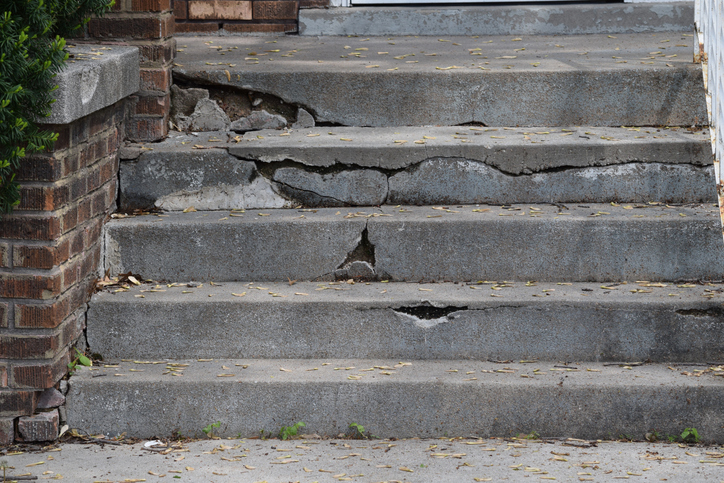
When to Hire a Fort Myers Premises Liability Lawyer
Whether you need a lawyer after a slip-and-fall or a premises injury depends on three things: what happened to your body, how the property owner is responding, and how clean the evidence is. If the injuries are real and the owner is already pointing fingers at you, you should call. If you tripped and walked away, you probably do not need us. Those are the two ends. Everything in the middle is worth a conversation, and the conversation is free.
I have handled premises liability cases in Lee and Collier Counties for more than thirty years. The cases that look small at the front door sometimes turn into the ones that really matter, and the ones that look open-and-shut sometimes fall apart in the second month. There is one more reason I take these calls seriously: I have been a licensed Florida real estate broker for twenty-five years on top of running this law firm, and that gives us an unusual lens on property cases. We have sat on the owner’s side of the table. We know what a reasonably prudent property owner is supposed to do, how sweep logs and inspection schedules actually work in the real world, and where corners typically get cut. When the defense tries to argue that a hazard was open and obvious, or that the owner had no way of knowing, we know which records to ask for.
What Florida law actually says about premises liability
Four statutes do most of the work in a Fort Myers premises liability case, and you should know what each one does in plain English before you make any decisions.
Section 768.0755, Florida Statutes — slip and fall on a transitory foreign substance. If you fell on a wet floor, a spilled liquid, a piece of produce, or any other “transitory” substance at a business establishment, this is the rule that governs your case. You have to prove the business had actual or constructive knowledge of the dangerous condition and should have done something about it. Constructive knowledge means either the hazard existed long enough that a reasonable inspection would have caught it, or it was a recurring problem the business knew was a recurring problem. That second piece is where surveillance footage and prior incident reports do the heavy lifting.
Section 768.81, Florida Statutes — modified comparative negligence. Since the 2023 reform, Florida bars recovery to anyone a jury finds more than fifty percent at fault for their own injury. Below that line, your award is reduced by your share of the blame. So if a jury thinks you bear thirty percent of the fault for not watching where you were walking and the case is worth one hundred thousand dollars, you take home seventy thousand. If they put you at fifty-one percent, you take home nothing. Defense lawyers know this rule and aim straight at it.
Section 95.11(4)(a), Florida Statutes — two-year statute of limitations. The same 2023 reform that brought in the fifty-percent fault bar also cut the negligence filing deadline from four years down to two. People still call our office assuming they have four years. They do not, not anymore. Two years from the date of injury, and the clock does not stop because the insurance company is dragging its feet on settlement talks.
Florida also classifies visitors into three categories — invitees, licensees, and trespassers — and the duty of care a property owner owes you depends on which category you fall into. A customer in a store is an invitee and is owed the highest duty. A social guest in someone’s home is a licensee. Trespassers are owed the least, with the exception of children and the attractive nuisance doctrine. Most cases we see involve invitees, but the classification fight comes up more often than you would think when the injury happens in a transitional area like an employee-only hallway or a back parking lot at night.
Six premises liability scenarios from our Fort Myers caseload
The legacy version of this article gave a generic list of premises liability case types. Here is what actually walks in our door in Fort Myers, and what makes each one its own animal.
- Grocery and big-box slip and falls. Cleveland Avenue, Colonial Boulevard, and the Pine Island Road corridor are dense with these stores. The fight is almost always over how long the spill was on the floor and what the sweep schedule looked like that day.
- Restaurant and bar floor cases. Tile entrances that get tracked wet during the rainy season, kitchen grease tracked into the dining room, and ice spills near the bar. Lighting is often part of the story.
- Parking lot injuries. Broken concrete wheel stops, unmarked pavement transitions, potholes, missing or burned-out lighting. We see a lot of these in the older strip-mall lots along McGregor Boulevard and around Six Mile Cypress Parkway.
- Inadequate security cases. Assaults, robberies, and shootings at apartment complexes, hotels, and parking garages where the owner ignored a documented pattern of prior crime. These are heavily fact-driven and turn on what the owner knew and when.
- Swimming pool and amenity injuries. Apartment and condo pool decks, hotel pools, and short-term rentals. Drain entrapment, missing fencing, broken gates, and chemical burns from improperly maintained water.
- Dog bites and animal attacks. Florida is a strict liability state for dog bites under Section 767.04, which is one of the more owner-friendly statutes for an injured person in the entire code. The owner is on the hook even if the dog has never bitten before, with limited defenses.
Four reasons premises cases are harder than they look
People assume that if they fell and there was a hazard, the case is straightforward. It almost never is. A few reasons.
Evidence disappears fast. Most retail surveillance systems overwrite footage on a thirty to sixty-day loop. Some are shorter. If the spill was on aisle six at 2:47 p.m. on a Tuesday, you need a preservation letter out within days, not months. Sweep logs and incident reports start vanishing the same way. Our office sends preservation demands within the first week of taking a case for exactly this reason.
The “open and obvious” defense. If the hazard was something a reasonable person should have seen and avoided, the defense will argue the owner had no duty to warn. That argument loses more often than insurance companies pretend it does, but only when you can show what the lighting, the floor surface, the customer’s line of sight, and any distractions actually looked like. Photos taken twenty minutes after the fall are gold.
The comparative fault attack. Watch for the defense to push your share of the blame up toward and over fifty percent. Were you on your phone? Carrying a child? Wearing flip-flops? Did you skip a posted warning cone fifteen feet away? Every one of those facts gets weaponized. The 2023 fifty-percent bar made this attack the central strategy in almost every defense playbook.
Layered ownership and management. A “premises” case often involves a property owner, a property manager, a tenant, a maintenance contractor, and a cleaning vendor — sometimes all five. Identifying which entity actually owed the duty, and which insurance policy responds, is its own piece of work before you can even start on the merits.
A dog-bite case that shows why the bodily injury claim is always bigger than the property claim
One case I think about often involved a young child who was over at a neighbor’s house for an afternoon visit. The neighbor’s dog was loose in the yard, unrestrained and with a history the family had downplayed. The dog went after the child without warning. By the time we got involved, the child had been through emergency plastic surgery for deep lacerations to the face and neck, was on a full course of post-exposure rabies shots, and was beginning what turned out to be a long stretch of psychological therapy for post-traumatic stress.
The medical picture was the obvious part. The harder, longer story was the permanent disfigurement and the way a child processes an attack like that over the years that follow. Florida’s strict liability dog-bite statute does not require the family to prove the owner knew the dog was dangerous, which mattered here. We pursued the owner’s homeowner’s policy and built the damages case around three things: the documented medical record, the surgical opinions on the realistic ceiling for scar revision, and the treating psychologist’s view on the long-term picture.
The case resolved well into seven figures. I am not going to put a precise number on it because the family asked for privacy, and they should have it. What I will say is that the recovery covered every cent of the medical care, funded the ongoing therapy, and left a structured piece in place for the scar revision work that will be done as the child grows. That is the kind of outcome strict liability is supposed to produce, and it does — if the case is worked properly from day one.
What to do if you were hurt on someone else’s property
This is what I tell people who call our office in the first few hours after a fall or an attack. None of this is generic. Each of these has saved a case I have personally handled.
- Report the incident in writing before you leave the property if you can. Ask for the manager. Ask for a copy of whatever incident report they fill out. If they will not give you a copy, write down the manager’s name, the time, and exactly what you said. I have had cases where the store later denied the fall ever happened.
- Photograph the hazard from multiple angles, with something for scale. A shoe, a coin, a phone. Get the floor surface, the lighting, the absence (or presence) of warning signs, and the surrounding area showing what a person walking up could see.
- Save the shoes and the clothes you were wearing. Do not wash them. The tread pattern and any substance on the soles can become real evidence about what was on the floor and whether your footwear was reasonable.
- Get medical attention the same day, even if you think you are fine. Adrenaline masks injuries. The first medical record is the anchor for everything that follows, and a gap of even a few days gives the defense room to argue you were not really hurt.
- Do not give a recorded statement to any insurance company before you have talked to a lawyer. The adjuster who calls the day after sounding friendly is doing their job, which is not the same thing as helping you. Tell them you will be in touch through counsel and end the call.
- Write down what happened while it is fresh, the same night. Not for anyone else. For you. Six months in, your memory will have moved, and you will be grateful you have your own contemporaneous notes.
Key Takeaways
- Florida’s 2023 reform cut the filing deadline for negligence cases to two years and added a fifty-percent-fault bar to recovery. Both rules apply to premises liability.
- Section 768.0755 controls slip and fall cases on business premises and requires proof of actual or constructive knowledge of the hazard.
- Surveillance footage and sweep logs are often destroyed within thirty to sixty days. A preservation letter in the first week is the single most useful thing a lawyer can send.
- Florida is a strict liability state for dog bites under Section 767.04, which makes those cases meaningfully easier to prove than other premises claims.
- The defense playbook in almost every case aims squarely at your share of the fault. Anything that looks like inattention, a shortcut, or a missed warning will be magnified.
Frequently Asked Questions
How long do I have to file a premises liability claim in Fort Myers?
Under Section 95.11(4)(a) of the Florida Statutes, you have two years from the date of the injury to file a negligence lawsuit. The 2023 legislative reform cut the old four-year window in half, so cases that used to feel like they had breathing room now do not. Call our office before that clock gets close.
Can I still recover if I was partly at fault for my own fall?
Yes, as long as a jury would not assign you more than fifty percent of the fault. Florida’s modified comparative negligence rule under Section 768.81 bars recovery for anyone who is more than half responsible for their own injury. If you are at or under fifty percent, your award is reduced by your share of the blame, not zeroed out.
What does the property owner actually have to prove they did?
For a slip and fall on a business floor, Section 768.0755 requires you to show the business had actual or constructive knowledge of the dangerous condition and should have corrected it. Constructive knowledge usually means the hazard existed long enough that a reasonable inspection would have caught it, or that it was a recurring problem the business knew about.
Should I give a recorded statement to the store’s insurance adjuster?
No. Not before you have talked to a lawyer. The adjuster is not your friend, and recorded statements are routinely mined for any phrase the carrier can use to argue you were inattentive, in a hurry, or that the hazard was open and obvious. Decline politely and call our office.
What if the property owner says they were unaware of the hazard?
That defense gets raised in almost every case, and it is rarely the end of the story. Maintenance logs, sweep sheets, prior incident reports, employee testimony, and surveillance footage often tell a different version. Our office moves quickly to preserve that evidence before it gets overwritten or recycled.
If you were hurt on someone else’s property in Fort Myers, call us
The two-year clock starts the day you are injured, and the evidence that wins these cases starts disappearing within weeks. If you were hurt at a store, a restaurant, an apartment complex, a hotel, or anywhere else along the Cleveland Avenue, McGregor Boulevard, Daniels Parkway, Colonial Boulevard, Pine Island Road, Summerlin Road, Six Mile Cypress Parkway, or I-75 near Alico Road corridors, call Pittman Law Firm, P.L. at 239-992-8259 for a free consultation. There is no fee unless we recover for you.
About the Author

Since founding Pittman Law Firm, P.L., David B. Pittman, Esq. has spent more than thirty years representing injured clients in Fort Myers and across Lee County, with a particular focus on commercial-vehicle, complex-liability, and serious-injury cases. The firm’s Fort Myers presence handles a steady stream of serious-injury work along the Daniels Parkway, Six Mile Cypress, McGregor Boulevard, Cleveland Avenue, and Summerlin Road corridors, and along I-75 between Estero and Bell Tower.
After The Citadel, The Military College of South Carolina, David took his JD from the University of South Carolina School of Law and built a personal injury practice that now carries AV-Preeminent recognition with Martindale-Hubbell and a membership in the Multi-Million Dollar Advocates Forum.
David has held a Florida real estate broker license for twenty-five years, a credential that shapes how the firm reads the property side of premises cases. The firm handles personal injury cases across Lee and Collier Counties, serving Fort Myers, Bonita Springs, Naples, Cape Coral, Estero, and Lehigh Acres, with offices at Windsor Place in Bonita Springs (main) and Fort Myers (satellite). Call 239-992-8259 for a free consultation.
The information on this page is provided for general information only and is not legal advice for any particular situation. Reading this page does not create an attorney-client relationship with Pittman Law Firm, P.L. Past results do not guarantee a similar outcome in any future case. This page may be considered attorney advertising under the Florida Rules of Professional Conduct.