

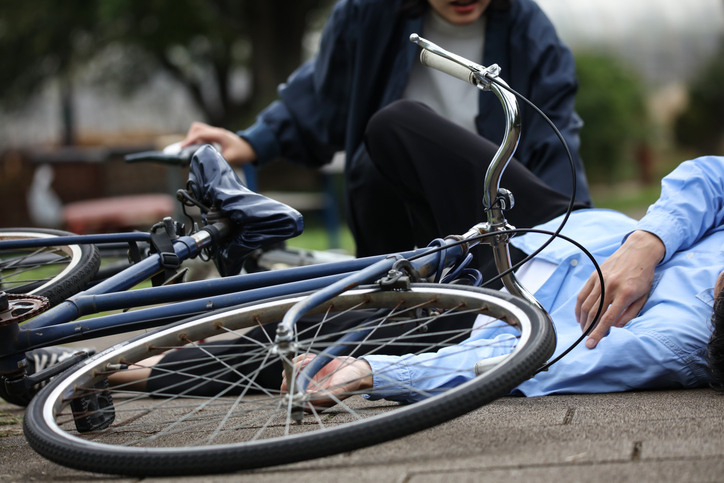
What to Do After a Bicycle Accident in Estero
By the time someone calls our office after a bicycle crash, the scene is already gone. What actually decides a bicycle case is whose insurance pays, how the household auto policies stack, and whether the rider got into a treating physician early enough that the injuries are documented before the carrier starts arguing pre-existing condition. The checklist of “take pictures, get names, call 911” is not wrong. It is just not where the case is won.
If you are reading this in the days after a crash on Three Oaks Parkway or Corkscrew Road, the most useful thing I can tell you is to focus on two things: a real medical workup, and a careful look at every auto insurance policy in your household. Everything else, including the photographs you wish you had taken, can be reconstructed.
What the data actually shows on Estero bicycle crashes
Estero is one of the more dangerous cycling corridors in our service area, and the pattern is consistent. The vehicle-cyclist collisions we see here cluster on a handful of roads: the bike lane on Corkscrew Road between I-75 and US-41, the Three Oaks Parkway corridor heading south toward Coconut Road, and the surface streets around Coconut Point Mall where drivers are looking at the shopping center instead of the lane next to them. The right-hook collision, where a driver passes a cyclist and then turns right across the bike lane, is the single most common fact pattern in this area. The driver almost always says they did not see the rider. The bike lane was in plain view.
The Insurance Institute for Highway Safety has tracked the rise of suburban bike-lane collisions for years, and the data lines up with what we see in our caseload. IIHS bicycle research consistently shows that intersection turning movements account for the majority of urban and suburban rider injuries, not riders going straight through clear roadway. That matters for your case because the legal duty in a right-hook is squarely on the driver, not the cyclist.
Florida law that actually determines your case
Five statutes do most of the work in a Florida bicycle case. You do not need to memorize them. You should know they exist.
Florida Statute 316.2065 says a cyclist on the roadway has the rights and duties of any other driver. In plain English, you are a vehicle. You get the same protection at a stop sign or in a lane that a car gets. The driver who hit you cannot argue that bikes do not belong on the road, because the legislature has already decided they do.
Florida Statute 316.083 is the three-foot passing rule. A motorist overtaking a bicycle must give at least three feet of clearance. Less than three feet is a traffic violation in itself, which is helpful evidence of fault even before we get to the collision dynamics.
Florida Statute 316.130 covers crosswalks. If you were walking the bike across a marked or unmarked crosswalk, the duty to yield is on the driver. This comes up often at the crosswalk entries along US-41 and at the trail crossings on Three Oaks Parkway.
Florida Statute 627.736 is PIP. This is the one most riders do not know about. Personal Injury Protection on your own household auto policy follows you when you are on a bicycle and a motor vehicle is involved. You do not have to be in the car. If you do not own a car but live with a relative who does, that relative’s PIP often covers you as a resident relative. PIP pays the first $10,000 of medical bills and lost wages while we work the liability side.
Florida Statute 627.727 is Uninsured and Underinsured Motorist coverage. UM is the most undervalued piece of car insurance in Florida. When the at-fault driver carries the bare minimum, or carries nothing at all, your UM steps into the driver’s shoes and pays your damages. In hit-and-run cases, UM is often the only recovery available. We have made entire cases on a client’s own UM policy that the client did not know they had.
Why your own UM coverage matters so much
Florida is not a mandatory bodily injury state. A driver can legally operate a vehicle in this state without any bodily injury liability insurance at all, as long as they have PIP and property damage. That means the driver who hooked into you on Corkscrew Road may have nothing to pay your medical bills with. Even when there is a liability policy, the minimum is so low that a single ambulance ride and an MRI can exhaust it.
Underinsured Motorist coverage solves that problem. If the at-fault driver’s policy is too small to cover your damages, UM kicks in on top of it. UM also follows you onto the bicycle the same way PIP does. The policy does not care whether you were behind the wheel of your own car or pedaling through the Grandezza entrance. What it cares about is that you, the insured, were injured by an at-fault motorist whose coverage was inadequate.
The first thing our office does on a bicycle case, after we get the client into proper medical care, is pull every auto insurance declaration page in the household. Yours. Your spouse’s. Your adult child’s. Your parents’ if you live with them. We look at liability limits, UM limits, whether UM is stacked, and whether anyone signed a UM rejection form. A UM rejection signed in a rush at an insurance agent’s office, with no real explanation, is often defective and can be set aside. That single piece of paperwork can be the difference between a five-figure case and a seven-figure case.
How we handled an Estero bicycle case
A rider in Estero was traveling east in the designated bike lane on Corkscrew Road, just past the entrance to Grandezza. A driver in a sedan came up alongside, then turned right into the community without ever looking at the lane to his right. The right front quarter panel caught the bicycle and threw the rider over the hood and into the swale. The driver told the responding officer the same thing they all tell the officer, which is that he never saw the cyclist.
The injuries were a Grade 3 AC joint separation in the shoulder and a mild traumatic brain injury, even though the rider was wearing a helmet. The shoulder needed surgical repair of the torn ligaments. The brain injury showed up later, in the form of headaches, light sensitivity, and word-finding trouble that did not resolve on their own. We got the client into a sports orthopedic surgeon for the shoulder and a neurologist running formal cognitive rehabilitation for the head injury.
On the coverage analysis, the at-fault driver carried a modest liability policy. We tendered that and recovered the full policy limit. Then we opened the UM side on the client’s own household policy, which the client had not realized covered them on the bicycle at all. The UM carrier resisted at first. We documented the AC joint repair, the cognitive deficits on the neuropsychological testing, and the wage loss from being out of work during rehabilitation. The UM carrier paid an additional settlement on top of the liability tender. The combined recovery covered the medical bills, the lost income, and a meaningful sum for the pain and the loss of the rider’s pre-injury fitness baseline.
The reason that case worked was not anything dramatic. It was the order of operations: medical care first, coverage analysis second, careful documentation throughout. The scene photos the client took at the crash were never used.
What to do after an Estero bicycle crash, in priority order
If you are reading this in the hours or days after a crash, here is the order I would actually recommend, based on what makes a difference to the case.
- Get checked by a real doctor, not just the ER. Emergency rooms are good at ruling out things that will kill you in the next twelve hours. They are not great at finding a torn rotator cuff, a small subdural, or a labral tear. Within a week of the crash, see an orthopedist if your bones or joints hurt, and a neurologist if you had any loss of consciousness or any post-crash confusion. The gap between the ER discharge and the next workup is where carriers like to argue the injury came from something else.
- Save the bike and the gear. Do not throw out the helmet, the gloves, the shoes, or the bike. Put it all in a garage and leave it. The damage pattern on the bike and the helmet often tells the engineering witness exactly how the collision happened, and it can rebut the driver’s version when the police report is light on detail.
- Pull every household auto policy. Yours and every other vehicle in the household. Take a picture of every declaration page. We will tell you which ones matter once we see them.
- Write a one-page narrative while it is fresh. Where you were going, the route you took, the lane position, whether the driver signaled, what you said, what they said, who stopped. Date it. Sign it. Put it in a drawer. Memories drift, and a contemporaneous narrative is more useful in a deposition two years later than any photograph you might wish you had taken.
- Be careful with the at-fault carrier. Their adjuster will call you, often within twenty-four hours, asking for a recorded statement. You are not required to give one. They are not on your side. A polite “I am not ready to discuss the incident; please put your request in writing” is the right answer until you have talked to a lawyer.
- Call a lawyer who handles bicycle cases, not just car cases. The coverage analysis on a bicycle case is different from a standard auto case, because PIP and UM apply to you as a household member rather than as a driver. A firm that handles riders regularly will know to look for the policies a standard auto practice might miss.
Key Takeaways
- The case is won by medical documentation and insurance-coverage analysis, not by what happened at the scene.
- Florida PIP on your household auto policy follows you onto the bicycle. So does UM. Pull every declaration page in the home.
- Right-hook collisions at intersections, especially on Corkscrew Road and Three Oaks Parkway, are the dominant Estero fact pattern, and the legal duty in a right-hook sits on the driver.
- Florida requires three feet of clearance when a car passes a cyclist under Section 316.083. A violation of the three-foot rule is independent evidence of fault.
- The statute of limitations on Florida negligence claims is now two years for incidents on or after March 24, 2023. Older incidents fall under the prior four-year window. Do not assume you have time.
Frequently Asked Questions
I was on my bike, not in a car. Does my auto PIP still pay my medical bills?
In most cases, yes. Under Florida Statute 627.736, the PIP coverage on your own household auto policy follows you as a pedestrian or cyclist when a motor vehicle is involved. You do not have to be sitting in the car for the coverage to apply. If you do not own a vehicle but live with a relative who does, that relative’s PIP often covers you as a resident of the household. This catches a lot of injured riders off guard.
The driver who hit me only had minimum liability limits. What can I do?
Florida’s minimum bodily injury liability requirement is low, and serious bicycle injuries blow past those limits fast. Your strongest second layer is usually your own Uninsured/Underinsured Motorist coverage under Section 627.727. UM stacks on top of the at-fault driver’s policy once that policy is tendered, and it pays for your medical bills, lost wages, and pain and suffering. We pull every household auto policy and look for stacked UM.
I wasn’t wearing a helmet. Does that kill my case?
No. Florida law only requires helmets for cyclists under sixteen. If you are an adult and were not wearing a helmet, you can still recover. The defense will try to argue your head injury would have been less severe with a helmet, but they have to prove that with medical evidence, not assumption. We handle that argument all the time.
How much time do I have to file a bicycle injury claim in Florida?
Florida shortened the statute of limitations on negligence claims to two years for incidents on or after March 24, 2023. Older incidents still fall under the prior four-year window. Insurance claim deadlines under your own policy are shorter, often within 14 days of treatment for PIP. Do not assume you have years. Call promptly.
The driver took off after hitting me. Now what?
A hit-and-run does not end your case. Your own UM coverage acts as the at-fault driver’s policy in a hit-and-run, provided the incident is reported to law enforcement promptly and you can show contact with a motor vehicle. We pull traffic-camera footage, doorbell video from nearby homes, and witness statements to corroborate the contact. Call 911 from the scene if you possibly can.
Talk to our office before you talk to the carrier
If you or a family member was hit on a bike in Estero, Bonita Springs, Fort Myers, Naples, Cape Coral, or anywhere else in Lee or Collier County, call our office at 239-992-8259 for a free consultation. We will review every household auto policy, walk you through the PIP and UM picture, and tell you straight whether you have a case worth pursuing. There is no fee unless we recover for you.
About the Author

David B. Pittman, Esq. founded Pittman Law Firm, P.L. and has spent more than thirty years handling personal injury cases in Estero and the surrounding Lee County corridor, with a sustained focus on cyclist-injury cases and the insurance-coverage complexities specific to riders. Estero cases tend to come from the Three Oaks Parkway and Coconut Road corridor, the Corkscrew Road communities near Grandezza, and the US-41 / Coconut Point Mall area.
David holds an AV-Preeminent rating from Martindale-Hubbell and belongs to the Multi-Million Dollar Advocates Forum. His undergraduate degree is from The Citadel, The Military College of South Carolina, and his JD is from the University of South Carolina School of Law.
David has held a Florida real estate broker license for twenty-five years, a credential that shapes how the firm reads the property side of premises cases. The firm handles personal injury cases across Lee and Collier Counties, serving Fort Myers, Bonita Springs, Naples, Cape Coral, Estero, and Lehigh Acres, with offices at Windsor Place in Bonita Springs (main) and Fort Myers (satellite). Call 239-992-8259 for a free consultation.
The information on this website is for general information purposes only. Nothing on this site should be taken as legal advice for any individual case or situation. This information is not intended to create, and receipt or viewing does not constitute, an attorney-client relationship. This is attorney advertising.