

Why I-75 Becomes More Dangerous After Midnight Near Fort Myers
Mile marker 128 at Alico Road through mile marker 131 at Daniels Parkway is the stretch of I-75 I see most often in our intake files. Between midnight and 4 a.m., that four-mile run concentrates five separate risk factors at once: bars closing in downtown Fort Myers, long-haul truckers at hour eleven of a day that started in Atlanta, tourists unfamiliar with where their exit is, wildlife crossing the median, and shift workers from Lee Health and the Alico industrial district running on too little sleep. None of those problems is unique to this corridor. They just all line up here in the same overnight window.
I want to walk through what the law actually says about a late-night I-75 crash in Lee County, the patterns we see again and again from our office, and the practical steps that protect a person in the first 48 hours. None of this is theoretical. Every paragraph below traces back to a real file in our cabinet.
What Florida law actually says about a late-night I-75 crash
Five Florida statutes do most of the heavy lifting after a midnight wreck on the interstate. None of them is hard to read once somebody walks you through it.
Modified comparative negligence — section 768.81 of the Florida Statutes. Since the 2023 tort reform, a claimant who is found to be more than 50 percent at fault for the crash recovers nothing. Before 2023 you could still recover even if you were 80 percent at fault, just reduced by your share. That is gone. In plain English: if a jury puts 51 percent of the blame on you, you go home with zero. The defense bar knows this, and they spend a lot of energy trying to push small percentages onto the injured driver to get over the line.
Two-year statute of limitations — section 95.11(4)(a) of the Florida Statutes. The same 2023 reform cut the deadline for filing a negligence lawsuit from four years to two. Anyone who Googles this question and lands on an article written before March 2023 will get the old number. People come into our office every month believing they have plenty of time, and they do not.
PIP — section 627.736 of the Florida Statutes. Florida is a no-fault state for the first $10,000 of medical and disability benefits. That sounds like a lot until you see what a single ambulance ride and one CT scan cost after an I-75 crash. PIP usually evaporates inside a week.
Uninsured and Underinsured Motorist coverage — section 627.727 of the Florida Statutes. This is the policy on your own car, and it is the single most undervalued line item on a Florida auto policy. It pays when the at-fault driver has no insurance, too little insurance, or has fled the scene. On I-75 after midnight, with a meaningful share of drunk drivers and a meaningful share of hit-and-runs, UM is often the only real source of recovery.
Florida crash report — section 316.066 of the Florida Statutes. The investigating trooper has a duty to prepare a long-form crash report whenever a wreck involves injury, death, or a vehicle that has to be towed. That report is the first document we ask for. The trooper’s narrative, the witness statements, and the diagram lock in a version of the facts before anyone has time to revise their memory. FLHSMV publishes the procedures the troopers follow.
The five scenarios we actually see on I-75 after midnight
Over the last several years, the late-night I-75 cases that come through our Fort Myers intake fall into five recognizable shapes. They are not equal in frequency, but they cover almost everything we work.
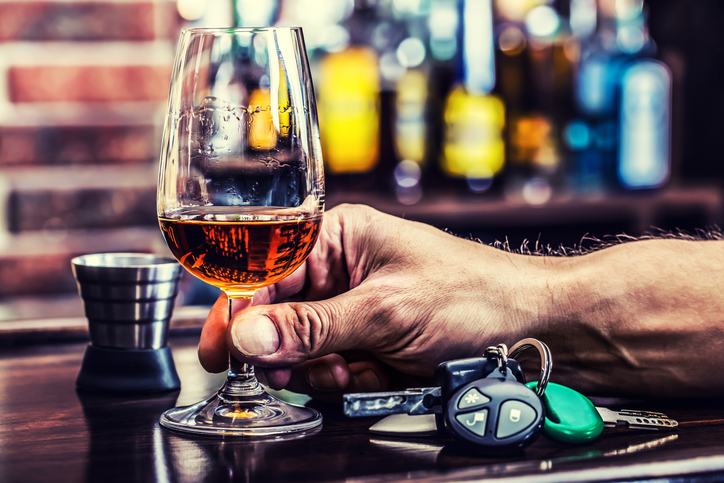
- The drunk driver coming home from downtown Fort Myers. Bars and restaurants along First Street and the Cleveland Avenue corridor close at 2 a.m. The drive home for many patrons puts them on I-75 between 2:15 and 3:30 a.m. NHTSA data show that the share of fatally injured drivers with a blood alcohol concentration of.08 or higher peaks in exactly that window. We see the rear-end at speed, the lane-departure crossover, and the wrong-way entry from the off-ramp.
- The fatigued long-haul trucker. A driver who left Atlanta after dinner is hitting the Alico Road stretch at roughly 1 a.m. Hours-of-service rules from the federal motor carrier safety regulator only do so much when a driver is paid by the load. The crashes here tend to be low-speed-differential rear-ends in the right lane, but at 65 to 70 mph the damage is enormous.
- The tourist or seasonal driver who does not know the road. Drivers unfamiliar with the Daniels Parkway and Six Mile Cypress Parkway exits will brake hard and late, often from the left lane, because they realize the exit is coming up only at the last sign. The cars behind them, doing the limit and assuming a steady flow, do not have time.
- The wildlife strike and the swerve. Wild hogs, deer, and the occasional alligator cross between the median and the woods along the Alico-to-Corkscrew stretch in the small hours. The crash that hurts people is rarely the strike itself. It is the swerve, the over-correction, and the secondary collision with the concrete barrier or a vehicle in the next lane.
- The drowsy local on the night shift. Nurses leaving Lee Health, hospitality workers leaving Sanibel and Fort Myers Beach, and warehouse workers from the Alico industrial district are all on I-75 in the same window. CDC research treats drowsy driving as functionally similar in impairment to alcohol at certain blood-alcohol thresholds. People who would never drive drunk drive drowsy without a second thought.
Knowing which scenario you are dealing with shapes the entire investigation. A trucker case means electronic logging device data, employer hiring files, and possibly a federal claim. A drunk-driver case means subpoenaing the bar tab and looking at dram-shop liability under section 768.125 of the Florida Statutes. A wildlife-swerve case means looking at fencing maintenance and FDOT records.
Why I-75 midnight cases are harder than they look
From the outside, a rear-end at 2 a.m. by a drunk driver looks like a straightforward case. It rarely is. A handful of practical complications make these files harder than a daytime city-street wreck.
Witness scarcity. On Cleveland Avenue at noon there are twenty witnesses to any collision. On I-75 at 2:30 a.m. between Alico and Daniels there may be one other driver and that driver may not stop. The case has to be built from physical evidence, the crash report, and reconstruction, not from a chorus of eyewitnesses.
Reconstruction depends on data that disappears. Modern vehicles store five seconds of pre-crash data in the event data recorder. That data can be lost when the vehicle is junked, sold for parts, or sent to an auction. We send a preservation letter the same week we are retained, and we do it before the insurer’s adjuster has decided what to do with the wreck.
The “phantom vehicle” defense. Defense counsel in I-75 cases will sometimes argue that an unidentified third driver caused the chain of events. Under Fabre v. Marin and section 768.81 of the Florida Statutes, the jury can assign a percentage of fault to that non-party, which reduces the recovery. Whether that argument has any basis or is pure smoke matters enormously, and it can only be answered by looking at the physical evidence early.
Toxicology timing. A blood draw on a suspected drunk driver has to be done within a window for the result to be admissible in the civil case. If the trooper does not get it, or the hospital declines to draw, the alcohol theory of the case gets harder to prove even when everyone at the scene knew.
Lighting and signage records. The lighting condition of a particular stretch of interstate on a particular night is a factual question. FDOT lighting outage logs exist, and they matter. Most plaintiffs never request them.
What to do if you are hit on I-75 after midnight
This is the action list I would give a member of my own family. Every item on it traces back to a file where the item either saved the case or, when it was missed, cost the client real money.
- Call 911 from the scene if you can, and ask the dispatcher for a Florida Highway Patrol unit specifically. A long-form crash report under section 316.066 of the Florida Statutes is required when there is injury or a tow. Do not let anyone talk you into a driver-exchange-of-information form for a wreck with injury.
- Photograph the vehicles before the wrecker arrives. The angle of impact, the debris field, the skid marks (or absence of them), and the position of the vehicles in the lanes are the facts that tell the story to a reconstruction engineer six months later. A wrecker hooked to a bumper changes the angle in 30 seconds.
- Get medically examined in person within 14 days. Section 627.736 of the Florida Statutes requires this to keep PIP benefits available. A telehealth visit does not satisfy the statute. An emergency room visit on the night of the crash does.
- Save the clothes, the shoes, and any helmet or eyewear you were wearing. Bag them, do not wash them. I have used physical evidence from a client’s clothing in three different cases to defeat a defense theory about where in the vehicle the client was sitting.
- Write down the timeline while it is still fresh. Not for the insurance company. For yourself. The smells, the sounds, the lights, the moment you first saw the other vehicle, what the other driver said when he got out. Six months from now you will not remember any of it. The note you wrote at 4 a.m. the night of the crash is one of the most useful documents we ever receive from a client.
- Stop talking to the other side’s adjuster. They will call within 24 hours. They will be friendly. They will ask if you are doing OK. Then they will record the answer and use it against you. Tell them politely that you will have your lawyer return the call.
- Call us, or call any qualified Lee County injury lawyer, before you give a recorded statement to your own carrier. You have a duty to cooperate with your own carrier. You do not have a duty to do it before you understand what you are saying.
Key Takeaways
- Section 768.81 of the Florida Statutes bars recovery if you are more than 50 percent at fault, which makes early factual investigation of an I-75 crash more important than it used to be.
- The deadline to file most negligence lawsuits in Florida is two years from the date of the crash under section 95.11(4)(a), cut from four years by the 2023 reform.
- PIP under section 627.736 caps at $10,000 and is usually exhausted within days of a serious interstate wreck. Uninsured or underinsured motorist coverage under section 627.727 is often the real recovery source.
- The Daniels Parkway, Six Mile Cypress Parkway, and Alico Road stretch of I-75 sees a recurring set of late-night patterns: drunk drivers leaving Fort Myers, fatigued truckers, unfamiliar tourists, wildlife swerves, and drowsy shift workers.
- The first 48 hours decide most of these cases. Photograph the scene, get the long-form Florida crash report, get a medical exam within 14 days, save your clothing, and stop talking to the other side’s adjuster.
Frequently Asked Questions
If I get rear-ended on I-75 near Fort Myers at 2 a.m. and the other driver was drunk, does Florida’s modified comparative negligence rule hurt my case?
It can, but usually not in the way people fear. Under section 768.81 of the Florida Statutes, as amended in 2023, a claimant who is more than 50 percent at fault for an accident recovers nothing. In a clean rear-end by an intoxicated driver, the at-fault percentage assigned to you is almost always small or zero. The real fight is whether the defense can stack small percentages on you, on a phantom vehicle, and on the road itself to push you over the 50 percent line. That is why early, careful investigation of an I-75 midnight crash matters so much.
How long do I have to file a lawsuit after an I-75 nighttime crash in Lee County?
Two years from the date of the crash in most negligence cases, under section 95.11(4)(a) of the Florida Statutes. Before the 2023 reform the window was four years, and many people still believe they have plenty of time. They do not. If the crash involved a death, a public entity, or an out-of-state trucking company, the deadlines and notice requirements can be even shorter. The safest practice is to talk to a lawyer in the first few weeks, not the last few months.
My PIP only covered the first $10,000 of medical bills after a late-night I-75 wreck. What happens next?
Section 627.736 of the Florida Statutes caps Personal Injury Protection at $10,000 in medical and disability benefits, and PIP runs out fast after a high-speed I-75 collision. After PIP, your health insurance typically picks up. The at-fault driver’s bodily injury coverage and your own uninsured or underinsured motorist coverage under section 627.727 of the Florida Statutes are usually the source of any meaningful recovery for pain, lost income, and future care.
The other driver fled the scene on I-75 and was never identified. Can I still recover anything?
Often, yes, through your own uninsured motorist coverage. Section 627.727 of the Florida Statutes was written for exactly this situation: hit-and-run drivers, drivers without insurance, and drivers whose limits are too low to cover the harm. We have resolved several Lee County hit-and-run cases on UM coverage that the client did not realize they had. The Florida crash report required by section 316.066 of the Florida Statutes is one of the documents the UM carrier will want to see early.
What should I do in the first 48 hours after a midnight I-75 crash if I am physically able?
Get a Florida crash report number (the long-form report required under section 316.066 of the Florida Statutes), get checked by a doctor in person within 14 days so PIP pays, photograph the vehicles and the roadway before anything is moved or repaired, write down everything you remember about the other driver’s behavior before the impact, and stop talking to the other side’s insurance adjuster. Those five things, done in the first two days, save more cases than any single legal strategy.
Talk to our office before you talk to the other side’s adjuster
If you or somebody in your family was hit on I-75 between Bonita Springs and Fort Myers, or anywhere on the Lee or Collier County stretch of the interstate, call our office at 239-992-8259 for a free consultation. The conversation costs nothing and there is no fee unless we recover for you. I will listen, tell you straight whether we think there is a case, and tell you what to do in the next 48 hours either way.
About the Author

The case load at Pittman Law Firm, P.L. has been built over more than thirty years of personal injury practice in Fort Myers and across Lee County under founder David B. Pittman, Esq. The firm’s Fort Myers presence handles a steady stream of serious-injury work along the Daniels Parkway, Six Mile Cypress, McGregor Boulevard, Cleveland Avenue, and Summerlin Road corridors, and along I-75 between Estero and Bell Tower, representing injured clients across Lee and Collier Counties, with a particular focus on commercial-vehicle, complex-liability, and serious-injury cases.
After undergraduate work at The Citadel, The Military College of South Carolina, David earned his JD at the University of South Carolina School of Law. He is AV-Preeminent at Martindale-Hubbell and a member of the Multi-Million Dollar Advocates Forum.
David has held a Florida real estate broker license for twenty-five years, a credential that shapes how the firm reads the property side of premises cases. The firm handles personal injury cases across Lee and Collier Counties, serving Fort Myers, Bonita Springs, Naples, Cape Coral, Estero, and Lehigh Acres, with offices at Windsor Place in Bonita Springs (main) and Fort Myers (satellite). Call 239-992-8259 for a free consultation.
Attorney advertising. The information on this page is general background on Florida personal injury law and is not legal advice for any particular case. Reading this page does not create an attorney-client relationship with Pittman Law Firm, P.L. The hiring of a lawyer is an important decision that should not be based solely on advertising. Past results do not guarantee a similar outcome in any future matter.