

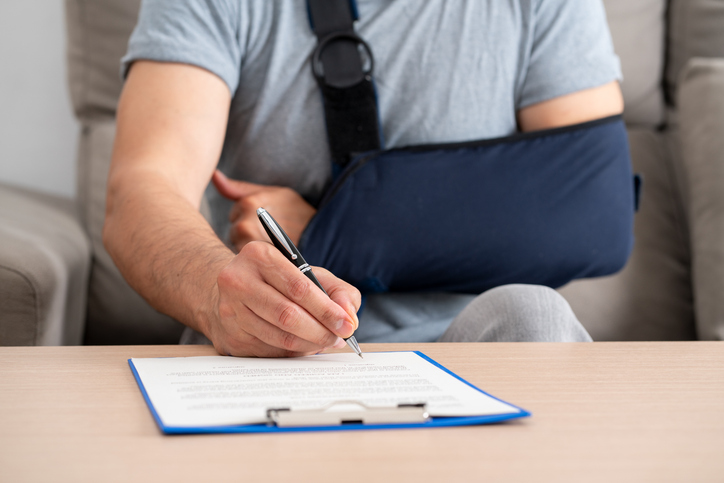
Warning: Why Insurance Companies Rush Personal Injury Settlements in Fort Myers
Here is what the adjuster does before you do: within seven to fourteen days of your crash on Colonial Boulevard or Daniels Parkway, a claims representative calls your phone with a number. The number sounds like real money to someone who is missing work and watching urgent care bills land in the mailbox. It is also almost certainly a partial picture of what your case is worth, because the carrier is reaching you before you have been back to the doctor twice, before the MRI is even scheduled, and before you have talked to anyone who has handled a case like yours before.
My answer has been the same for thirty years. A quick offer is almost always a partial offer, and a partial offer is almost always less than the case is worth. The carrier knows that. You usually do not, because you have never been through this before. Below is what Florida law actually says about how these claims work, the patterns I see in our Fort Myers cases, and the practical steps that protect your settlement value before you sign anything.
What Florida law actually says about personal injury settlements
Three statutes do most of the heavy lifting in a Fort Myers injury case, and any quick-settlement conversation has to be read against them.
Section 95.11(4)(a), Florida Statutes — the two-year deadline. For any negligence claim arising on or after March 24, 2023, you have two years from the date of the crash to file a lawsuit. The old four-year window is gone. In plain English, this means the carrier knows your clock is shorter than it used to be, and they have less reason to fear delay. The faster they settle, the less time you have to figure out what your case is really worth.
Section 768.81, Florida Statutes — modified comparative negligence. Since the 2023 reform, if a jury decides you were more than 50 percent at fault for your own injuries, you recover nothing. At 50 percent or below, your recovery is reduced by your share of fault. In plain English, this means the carrier is going to push hard on any argument that puts fault on you — failing to wear a seatbelt, glancing at the radio, the angle of your car at impact. A quick offer often hides a hefty comparative-fault discount baked in. You will not see the math until later.
Section 627.736, Florida Statutes — PIP, the $10,000 no-fault medical coverage. Every Florida driver’s policy is supposed to carry $10,000 in Personal Injury Protection. PIP pays the first $10,000 of medical bills regardless of fault, but it pays at 80 percent of the bill, not 100 percent, and you have to see a doctor within fourteen days of the crash to keep the coverage. In plain English, if you wait three weeks to get checked out because you thought you were fine, you can lose your PIP entirely. Carriers know that timeline and use it.
Section 627.727, Florida Statutes — uninsured and underinsured motorist coverage. When the at-fault driver has no insurance, or carries the bare Florida minimum, your own UM/UIM coverage steps in. That claim is filed against your own carrier. The same carrier you have paid premiums to for years will negotiate against you with the same playbook the other side uses. I have lost count of how many Fort Myers clients are surprised by that.
Five rush-settlement patterns we see in Fort Myers files
After thirty years of personal injury work in Lee and Collier Counties, I can tell you that quick-offer pressure does not arrive in one form. It arrives in five.
- The friendly first call. An adjuster reaches out within days, sounds warm, asks how you are feeling, and offers a recorded statement “just to wrap things up.” That statement is the foundation of everything the carrier will later use to reduce the offer.
- The “this offer expires Friday” letter. A written number arrives with a deadline. There is no actual deadline in Florida law. The deadline is a sales tactic.
- The medical-bills-only offer. The carrier offers to cover what your providers have already billed, and nothing more. No future treatment. No lost wages going forward. No pain and suffering. Once you sign, the rest of the case is gone.
- The pre-MMI offer. An offer lands before you have reached maximum medical improvement, which is the point your treating doctor says your condition has stabilized. Settling pre-MMI is the most expensive mistake I see in this practice, because nobody yet knows whether you need another surgery, another round of injections, or long-term care.
- The “we are not paying that” denial pivot. When the friendly approach does not work, the same adjuster turns cool, questions whether your injuries even came from this crash, and points to a ten-year-old chiropractor visit as a pre-existing condition. The script flips, but the goal is the same.
What makes a rushed settlement so dangerous to accept
The reason a rushed offer is dangerous is not the number itself. It is the release that comes attached to the check. A Florida release of all claims is final. Once you sign and the check clears, you cannot come back six months later when an MRI shows a herniation the urgent care doctor missed, or when your shoulder seizes up and the surgeon says you need a rotator-cuff repair.
Adjusters also use settlement software that values claims using inputs you never see. Two clients with the same diagnosis can get two different offers, depending on the venue, the carrier’s loss reserves on the file, the gap between the crash and the first medical visit, and whether a lawyer is on the case. That last input matters. Once a represented-by-counsel flag goes on a file, the reserves often move, and so does the offer.
Future medical care is the line item carriers most reliably understate. A neck injury that looks like soft tissue at week three can turn into a cervical fusion at month nine. A knee that is just sore in February can need arthroscopic work by July. None of that is in the rushed offer.
Lost income is the line item they understate second-most. Missed paychecks are easy. Reduced earning capacity over the next ten or fifteen years is not, and the carrier is not going to volunteer that calculation. A Fort Myers electrician who can no longer climb ladders is not the same earner he was before the crash, even if he goes back to work the next month at a desk job that pays less.
A Naples client we represented
I think about a Naples client of ours, a woman who was simply walking her own dog on a public sidewalk one morning. A neighbor’s dog escaped through an open garage door, crossed the lawn at full speed, and went straight for her arm. Deep puncture wounds and lacerations on her forearm and hand. Nerve damage that took months to declare itself. Permanent scarring on the back of her wrist that she still sees every time she puts on a watch.
Florida treats dog-bite liability as a strict-liability question under our state statute. In plain English, the owner does not get a free first bite. If your dog bites someone who is lawfully on a public place or lawfully on private property, you are responsible, full stop. That is the kind of legal framework that should make a settlement easy. It did not make this one easy.
The neighbor’s homeowner’s insurance carrier opened with a number that covered the emergency room visit, the sutures, the antibiotics, and a little bit on top. Nothing for the plastic surgery consult our client still needed. Nothing for the nerve damage her hand surgeon was still working up. Nothing for the scar she would carry the rest of her life.
The final recovery, through that homeowner’s policy, was several multiples of the opening number. The client did not have to file suit. She did have to wait, follow her doctor’s plan, and resist the early offer. That is the entire job in a sentence.
What to do if a Fort Myers adjuster pressures you to settle
These are not generic tips. They are the things I tell every client in this situation, because I have watched them work.
- See a doctor within fourteen days of the crash, even if you feel fine. That visit protects your PIP under section 627.736, and it also creates the first medical record linking the wreck to your symptoms. Adrenaline hides a lot for the first week.
- Do not give a recorded statement to the other driver’s carrier. You have no legal obligation to give one. Anything you say will be used to lower the offer or build a comparative-fault argument.
- Keep a one-line-a-day pain journal for the first ninety days. Date, pain level, what you could not do that day. I have used this approach with clients and noticed that juries and adjusters react to the specificity of a real journal in a way they do not react to a summary written months later.
- Save the gear and the wreckage photos. Helmet, jacket, child seat, dashcam footage, the photos you took at the scene on Cleveland Avenue or wherever the crash happened. Do not throw any of it out, and do not let the carrier “inspect and dispose of” the vehicle.
- Wait for maximum medical improvement before you sign anything. Ask your treating doctor when they think you will reach MMI and what they expect your future care to look like. Pre-MMI offers should be politely declined, in writing.
- Read the release line by line before you sign. A general release closes claims you may not even know you have. If the language says “any and all claims, known or unknown,” that is what it means.
- Get a second opinion on the offer. Most personal injury lawyers in Fort Myers will tell you for free whether the number is in the ballpark. If it is, take it and skip the fee. If it is not, you have your answer.
Key Takeaways
- A settlement offer in the first two to four weeks after a Fort Myers crash is almost always a partial picture of the case, because nobody yet knows the full medical story.
- Florida’s two-year deadline under section 95.11(4)(a) shortens your window to file suit, which makes the carrier’s quick-offer math more favorable to them than it used to be.
- Under section 768.81, any percentage of fault assigned to you reduces what you recover, and more than 50 percent means you recover nothing. Quick offers often hide a comparative-fault discount.
- Once you sign a release and the check clears, the case is closed. Future surgeries, future lost wages, and future complications come out of your pocket.
- Represented claims pay more on average than self-represented claims, and contingency arrangements mean there is no fee unless we recover for you.
Frequently Asked Questions
Q1. How fast will an adjuster usually call with a settlement number after a Fort Myers crash?
Often within seven to fourteen days, sometimes sooner. The number is almost always lower than what the case is worth, because the adjuster is reaching out before you have had time to see a doctor twice, miss a paycheck, or talk to a lawyer.
Q2. Does Florida’s two-year deadline change how I should handle a settlement offer?
Yes. Section 95.11(4)(a) gives you two years from the crash date to file suit for a negligence claim that happened on or after March 24, 2023. The shorter window benefits the carrier, which is one reason quick offers feel friendly and not aggressive.
Q3. Can I reopen a settlement if my back gets worse six months later?
No. A signed release closes the door on future medical bills tied to that crash, even bills you did not know were coming. That is why reaching maximum medical improvement before signing matters so much.
Q4. Will hiring a lawyer just eat up the recovery in fees?
In our office the answer is no. We work on a contingency arrangement, and there is no fee unless we recover. Most of our settlements net the client more after the fee than they would have netted on their own, because a represented claim shifts what the carrier is willing to pay.
Q5. What if the at-fault driver was uninsured or underinsured?
Section 627.727 lets you turn to your own uninsured or underinsured motorist coverage. The carrier handling that claim is your own insurance company, and they negotiate the same way the other side does. You need to read the policy carefully before you sign anything.
Talk to a Fort Myers personal injury lawyer before you sign
If a carrier has offered you a settlement after a crash in Fort Myers, Bonita Springs, Naples, Cape Coral, Estero, or Lehigh Acres, call our office before you sign anything. The conversation is free, and we will tell you straight whether the number is fair. Call 239-992-8259 for a free consultation. There is no fee unless we recover for you.
About the Author

More than thirty years of personal injury practice in Fort Myers and across Lee County stand behind every blog on this site. David B. Pittman, Esq. is the founder of Pittman Law Firm, P.L., representing injured clients across Lee and Collier Counties, with a particular focus on insurance-coverage and serious-injury cases. The firm’s Fort Myers presence handles a steady stream of serious-injury work along the Daniels Parkway, Six Mile Cypress, McGregor Boulevard, Cleveland Avenue, and Summerlin Road corridors, and along I-75 between Estero and Bell Tower.
Between undergraduate at The Citadel, The Military College of South Carolina and a JD from the University of South Carolina School of Law, David built the foundation for a personal injury practice that now carries AV-Preeminent status with Martindale-Hubbell and membership in the Multi-Million Dollar Advocates Forum.
David has held a Florida real estate broker license for twenty-five years, a credential that shapes how the firm reads the property side of premises cases. The firm handles personal injury cases across Lee and Collier Counties, serving Fort Myers, Bonita Springs, Naples, Cape Coral, Estero, and Lehigh Acres, with offices at Windsor Place in Bonita Springs (main) and Fort Myers (satellite). Call 239-992-8259 for a free consultation.
The information on this website is for general information purposes only. Nothing on this site should be taken as legal advice for any individual case or situation. This information is not intended to create, and receipt or viewing does not constitute, an attorney-client relationship. This is attorney advertising.