

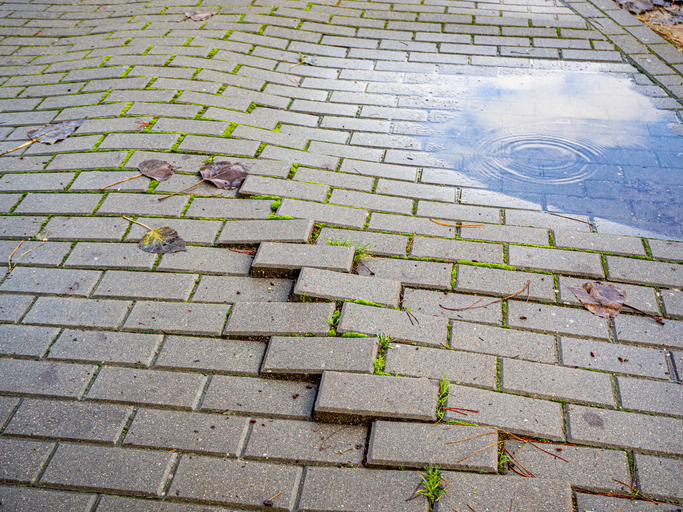
Why Uneven Pavement Causes Trip and Fall Accidents in Fort Myers
Most of the trip-and-fall calls I take don’t come from people who fell on slippery floors. They come from people who tripped on something the property owner had been ignoring for months — a piece of broken sidewalk outside a medical office, a sunken slab in a strip-mall parking lot, a curb that the landscaping crew had let weeds grow over. The pattern is so consistent that after thirty years of personal injury practice in Fort Myers and Bonita Springs, I can usually tell within five minutes on the phone whether a case is winnable.
One thing I should say up front, because it shapes how I think about these cases: for the last twenty-five years, in addition to practicing law, I have held a Florida real estate broker license. That isn’t a sales pitch — it’s relevant because property owners have specific maintenance obligations that we have lived on both sides of. We know what a commercial landlord is supposed to be doing. We know what a property manager’s inspection routine should look like. And we know when one isn’t.
What Florida law actually requires of a property owner
The starting point for almost every Fort Myers trip-and-fall case is whether the property owner knew, or should have known, that the pavement was dangerous. Florida calls those two pieces “actual knowledge” and “constructive knowledge,” and the burden is on the injured person to prove one of them.
Two Florida statutes do most of the work here. Section 768.0755 governs “transitory foreign substances” in business establishments — the spilled drink in a grocery aisle, the leaking refrigerator case. Section 768.0710 applies to negligent maintenance and structural conditions — cracked sidewalks, sunken concrete, loose tiles, missing handrails. For uneven pavement cases, 768.0710 is usually the right vehicle.
The factors a Florida court considers when applying these statutes are practical, not abstract:
- How long had the defect been there? A jagged piece of broken concrete that has been photographed by the postal carrier for six months reads very differently than one that appeared overnight.
- Did the owner inspect the property at all? If the answer is “no” — and on many older Fort Myers commercial properties, it really is no — that fact alone often gets a case past summary judgment.
- Had anyone complained? Prior tenant complaints, prior incident reports, prior notes from the cleaning crew — these are gold.
- Was the defect open and obvious? Defendants will always argue the injured person should have seen it. The law gives that argument some weight, but it is rarely the end of the case. Pavement defects hidden by shadow, by overgrown landscaping, or by foot traffic during business hours often defeat the open-and-obvious defense.
The “trivial defect” doctrine, and why it isn’t as clean as it sounds
You may have read that anything under an inch in height is automatically too small to sue over. Florida courts have leaned that way historically, but it has never been a bright-line rule, and the cases that get litigated are rarely so simple. I have settled cases involving defects measurably under an inch — and I have lost cases on defects clearly over an inch — because what matters in practice is the totality:
- The lighting at the time of the fall
- Whether the defect was visible to a person walking at a normal pace
- The contrast between the pavement and the defect (sun-bleached concrete with a dark crack reads very differently from a fresh seam in shaded asphalt)
- Whether the owner had repaired similar defects elsewhere on the property — which can show the owner already knew this kind of defect was dangerous
If a property manager has been told three times by tenants that a particular section of walkway is dangerous and never fixes it, the “trivial” argument tends to evaporate.
What we see most in Fort Myers
Lee County has a few features that drive a steady flow of these cases. The soil under the older sidewalks shifts more than people realize, especially after a heavy rain season. The freeze-thaw cycle is non-existent here, but the heat-and-rain cycle does similar work on concrete and asphalt — pavement that was poured in the early 2000s is now reaching the end of its serviceable life on a lot of commercial properties. Tree roots, particularly from the old ficus and oak plantings around medical offices and strip centers off McGregor, Cleveland, and Summerlin, do the rest.
Older medical plazas are the single most common setting in our file room. Patients walking with canes, walkers, or post-surgical limitations are using the same broken walkways as everyone else, but with much less margin for error.
What our case files show: a Summerlin Road medical plaza
One of our recent trip-and-fall clients was an older woman walking from her car into an appointment at a medical plaza off Summerlin Road. The walkway between the parking lot and the front door had a section of concrete that had broken and shifted upward — a jagged edge, easy to miss if you were keeping pace with traffic. She caught her foot on it and went down hard. She suffered a femoral neck fracture — the type of hip fracture that requires a partial hip replacement and weeks of inpatient rehabilitation. For an older patient, that injury is not just painful, it is genuinely life-altering.
We requested the property’s complaint logs. Tenants in two of the offices on that walkway had complained about that exact stretch of concrete more than once over the prior eight months. Nothing had been done. The property manager had no inspection log to produce, because there was no inspection routine. The case settled in the six figures, with the management company on the hook for negligent maintenance.
The client is back on her feet. Slower than she was, and she will tell you that herself, but back to her life. That outcome turned on documentation the property management company didn’t have — and complaints the tenants had thought no one was listening to.
What a property owner is supposed to be doing
This is the part where the real estate broker training matters more than the law degree. A reasonably operated commercial property — a strip mall, a medical office plaza, an apartment complex, a hotel — should have, at minimum:
- A documented inspection schedule. Most commercial property management agreements actually require one. The fact that the property manager isn’t following the agreement is often the case.
- A maintenance log. Repair requests in, repair work out, dated, with the person responsible identified. When this log doesn’t exist, a jury notices.
- A tenant-complaint intake system. Email, phone, portal — it doesn’t matter how it’s done, but it has to be done. Complaints in writing are the single biggest piece of evidence in these cases.
- Vendor accountability. Landscaping crews, paving contractors, parking-lot striping vendors — their work product and their reports back to the property manager should be on file.
When we ask for these records in a Fort Myers trip-and-fall case, what we get back is often empty. That isn’t bad luck on our part — it is the reason the case exists in the first place.
What to do if you fell on uneven pavement
If you are reading this in the day or two after a fall, here is the order I would walk a client through on the phone:
- See a doctor — that day if you can. Hip pain, knee pain, and wrist pain after a fall can be a broken bone presenting as bruising. The ER or an urgent-care visit creates the medical record everything else depends on.
- Go back and photograph the spot. If you are able to walk, return with someone else and take photographs of the defect from multiple angles, at the same time of day, with something for scale (a coin, a phone). If you can’t go yourself, send a family member.
- Find out who owns the property. The Lee County Property Appraiser’s site will tell you who owns it; the building directory or signage will usually identify the property manager. Both matter.
- Report the fall in writing. A short email to the property manager — date, time, location, what happened, that you sought medical care — locks the incident into their records before anyone has a chance to claim they didn’t know.
- Save what you were wearing. Particularly the shoes. Insurance carriers will sometimes argue the injured person was wearing inappropriate footwear; a pair of sturdy walking shoes in a closet is good evidence against that argument.
- Don’t give a recorded statement to the property’s insurer. They will call. They will be friendly. It is not your job to give them anything in the first 48 hours. Talk to a lawyer first.
Key takeaways
- Florida property owners can be held liable for trip-and-fall injuries when a dangerous defect existed long enough that a reasonable owner should have known and fixed it.
- The “under one inch is trivial” idea is a rule of thumb, not a bright line — lighting, foot traffic, prior complaints, and the owner’s inspection routine all matter.
- Older Fort Myers commercial properties — particularly medical plazas off McGregor, Cleveland, and Summerlin — see more of these cases than any other setting in our practice.
- Prior tenant complaints are the single most powerful piece of evidence in a trip-and-fall case; the absence of an inspection log is the second.
- Florida’s 2023 tort reform cut the statute of limitations to two years from the date of the fall. Government-property claims have separate, shorter notice rules.
Frequently Asked Questions
Is the property owner automatically responsible if I tripped on their sidewalk?
No. Under Florida law, you generally have to show two things: the pavement defect was dangerous (not trivially minor) and the property owner either knew about it or should have known about it. A jagged piece of broken concrete that has been there for months is very different from a hairline crack that appeared after last night’s storm.
What does “should have known” mean in a Florida slip-and-fall case?
It’s called constructive knowledge. The law asks whether a reasonably careful property owner, doing routine inspections, would have spotted the hazard in time to fix it. Prior complaints, the length of time the defect existed, and whether the owner has any inspection routine at all are the three biggest pieces of evidence.
How small a crack is too small to sue over?
Florida courts have historically treated defects under about an inch in height as “trivial” and not legally actionable, but it isn’t a hard rule. Lighting, foot-traffic patterns, the surrounding pavement, and whether the defect is hidden by shadow or debris all factor in. We have won cases under an inch and lost cases over an inch — the totality matters.
What if I fell on a public sidewalk owned by the city?
You can still file a claim, but the rules are stricter. Florida requires written notice to the government agency within a tight window — generally three years for the underlying claim under Section 768.28, but practical deadlines are much shorter because of the notice requirement. Get a lawyer involved fast in any case against a municipality.
How long do I have to file a trip-and-fall claim in Florida?
Two years from the date of the fall, for most private-property cases. Florida cut the negligence statute of limitations from four years to two in the 2023 tort reform. Government claims have their own notice rules. Don’t assume you have time. The CDC’s fall-injury data shows how common these cases are, particularly among older adults, and how often the timeline runs out before the injured person realizes the full extent of the harm.
If you were injured on uneven pavement
If you fell on cracked, sunken, or broken pavement at a Fort Myers medical plaza, shopping center, apartment complex, or hotel — or anywhere across Lee or Collier County — call Pittman Law Firm at 239-992-8259 or request a free consultation online. There’s no fee unless we recover compensation for you.
About the Author

David B. Pittman, Esq. has practiced personal injury law in Lee and Collier Counties for more than thirty years, and is the founder of Pittman Law Firm, P.L. The firm’s main office is on Bonita Beach Road, and its Fort Myers presence is where most of the firm’s premises-liability and trip-and-fall work originates — particularly the older commercial corridors along McGregor Boulevard, Cleveland Avenue, and Summerlin Road, where the property-maintenance pattern that drives these cases is most common.
David has held a Florida real estate broker license for twenty-five years, a credential that shapes how the firm reads the property side of premises cases. The firm handles personal injury cases across Lee and Collier Counties, serving Fort Myers, Bonita Springs, Naples, Cape Coral, Estero, and Lehigh Acres, with offices at Windsor Place in Bonita Springs (main) and Fort Myers (satellite). Call 239-992-8259 for a free consultation.
Pittman Law Firm represents injured clients across Lee and Collier Counties — Fort Myers, Bonita Springs, Naples, Estero, Cape Coral, and Lehigh Acres — with a sustained focus on personal injury and premises-liability cases. Free consultations are available at 239-992-8259.
The information on this page is for general information purposes only. Nothing here should be taken as legal advice for any individual case or situation. This information is not intended to create, and receipt or viewing does not constitute, an attorney-client relationship with Pittman Law Firm, P.L.