

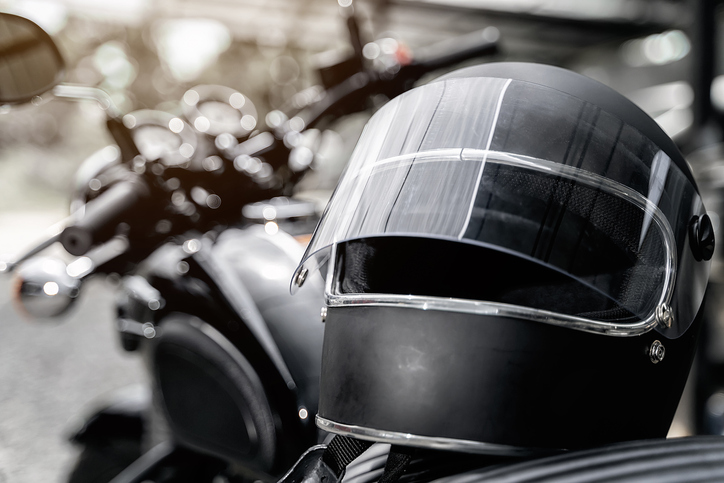
How Poor Visibility Leads to More Motorcycle Accidents in Fort Myers
Visibility is rarely the real issue in a Fort Myers motorcycle case. The driver who pulled across Cleveland Avenue in front of a motorcycle at noon on a clear day did not fail to see the rider because of fog. He failed to see the rider because he was not looking for one. Weather makes a bad situation worse, but the legal fight after a Fort Myers motorcycle crash almost never turns on whether the sun was out. It turns on Florida’s PIP exclusion, the helmet defense, and how much uninsured motorist coverage the rider had the foresight to buy.
So before we get into rain and fog and morning mist along Summerlin Road, I want to spend most of this article on the things that actually decide whether an injured rider gets paid. The visibility piece matters, and we will get to it. But the law is what carries the case.
What Fort Myers motorcycle crash data actually shows
The most common motorcycle crash we see in Fort Myers is not a single-bike weather wipeout. It is a left-turning car striking a rider going straight through an intersection. That is true on McGregor Boulevard, on Colonial Boulevard, at the I-75 interchanges near Daniels Parkway and Alico Road, and along the Six Mile Cypress Parkway corridor. The driver looks, sees no car, pulls out, and clips the bike. The legal phrase for it is failure to yield. The cause is what traffic engineers call “looked but failed to see.”
Weather and lighting move the numbers around, but they do not change the underlying problem. A motorcycle is a narrow target. A driver scanning for cars and trucks can miss a bike in broad daylight on a dry road. Add a wet morning along Pine Island Road, glare off the pavement on Cleveland Avenue at sunset, or one of those quick afternoon squalls that drops on I-75 between Estero and Fort Myers, and the same driver becomes even more likely to misjudge a bike’s speed or distance.
What that means for your case: if the other driver tells the trooper “I never saw the motorcycle,” that statement is almost always good for the rider, not bad. A driver who admits he did not see what the law required him to see is admitting he breached his duty.
Florida statutes that decide the outcome — not the weather
The PIP exclusion under Section 627.736
Here is the single most important fact for any Florida motorcycle rider. Under Florida Statute Section 627.736, motorcycles are excluded from the definition of “motor vehicle” for purposes of Personal Injury Protection. PIP is the $10,000 of no-fault medical coverage that pays the first dollars of every car-crash injury in Florida. Motorcycle riders do not get it. None of it.
That has real consequences. A driver rear-ended in a sedan on Daniels Parkway walks into the emergency room with PIP standing behind the bill. A rider hit at the same intersection on a bike does not. The first call after the hospital becomes a much harder one — health insurance, MedPay if it was purchased, the at-fault driver’s bodily injury liability if he has any, and the rider’s own uninsured motorist coverage. We spend a meaningful part of our intake call walking new motorcycle clients through what each of those buckets will and will not cover.
The helmet law under Section 316.211
Florida Statute Section 316.211 says any rider 21 or older who carries at least $10,000 in medical coverage may ride without a helmet. Under-21 riders must wear one. It is a legal choice for adults who meet the insurance threshold.
Legal does not mean strategically free. Defense lawyers will still try to bring the helmet question into a case under the comparative negligence statute, Section 768.81, arguing that the absence of a helmet made the head or neck injury worse than it otherwise would have been. Plain English: they want a percentage of fault assigned to the rider for not wearing one, even when the rider was legally entitled not to. We have seen this argument tried in Lee County cases, and it only works when the injury is genuinely a head injury. If the medical records show a broken wrist and road rash and nothing above the shoulders, the helmet defense goes nowhere.
Comparative negligence in 2026
Florida’s comparative negligence rule changed in 2023. Under the current version of Section 768.81, a plaintiff who is more than 50% at fault recovers nothing. Under 50%, the recovery is reduced by the rider’s percentage. So if a jury finds the rider 30% at fault for speeding and the driver 70% at fault for turning across the lane, the rider’s verdict gets cut by 30%. The practical effect is that every percentage point matters now in a way it did not before. Defense carriers will push hard for any fault they can hang on a rider — lane position, speed, lighting on the bike, gear. We push back with the physical evidence.
Why your UM policy is the rider’s real financial safety net
This is the conversation I wish every rider would have with his insurance agent before he ever gets on the bike. Florida only requires a driver to carry $10,000 in PIP and $10,000 in property damage liability. Bodily injury liability — the part that pays for someone else’s injuries — is not mandatory for most private drivers. Even when it is carried, the most common limit is $10,000 or $25,000.
That is a problem for a rider, because a motorcycle crash with even a moderate injury runs through $25,000 in medical bills in a single afternoon at Lee Health. ORIF surgery on a wrist, a few nights inpatient, and a course of occupational therapy will blow past the limit before the rider is back on his feet. When the at-fault driver’s policy is empty, the next place to look is the rider’s own uninsured motorist coverage under Section 627.727.
UM is a coverage you buy on your own auto policy. It pays you when the other driver does not have enough insurance, or any at all, to cover what he did to you. For a motorcycle rider it is the closest thing to a safety net the Florida insurance system offers. I tell every rider who calls our office for the first time, before we even talk about the crash, to pull the declarations page on every auto policy in the household and look at the UM limit. Stack it if you can. The premium for $250,000 of UM is not much more than the premium for $50,000, and the difference between the two on a serious motorcycle case can be six figures of actual recovery.
If you signed a UM rejection form when you bought the policy, that form has to meet specific statutory requirements to be valid. Carriers do not always get those forms right. That is one of the first things we look at on a new motorcycle file.
The Fort Myers motorcycle claim behind this
One we worked recently involved a Fort Myers rider headed home in the afternoon along one of the Cleveland Avenue stretches where the lanes get tight and the traffic stacks up around the strip-center driveways. A driver in the next lane over was looking at his phone — that came out later in the deposition — and drifted right into the rider’s lane. The rider had nowhere to go. He went down, slid across the pavement, and ended up under the rear quarter panel of the merging car.
He came out of it with serious road rash down one side, a fractured wrist that required an Open Reduction Internal Fixation — that is the surgery where the orthopedic surgeon goes in, sets the bones with hardware, and closes it back up — and a long course of occupational therapy to get the grip strength back. He needed his hand for work. The bike was a total loss.
The driver’s carrier opened the file with the usual position — they wanted to talk about whether the rider could have braked sooner, whether the bike was visible enough, whether the lane discipline was perfect. We had the physical evidence on our side. The scrape pattern on the bike, the damage to the car’s rear quarter, the position of the phone in the driver’s hand at the scene, and the rider’s helmet and jacket all told a single consistent story.
The carrier paid the full insurance payout — property damage on the motorcycle in full, every medical bill, and the rider’s pain and suffering and lost wages. The rider got the surgery, the therapy, and a recovery without having to argue about the bill for the rest of his life. That is what these cases look like when the evidence is locked down early.
What to do after a Fort Myers motorcycle crash
This is the part of the article where most motorcycle blogs give you a generic checklist. I want to give you the actual list our office uses, in the order it matters.
- Save the gear. Helmet, jacket, gloves, boots, eyewear. Do not throw anything out, do not let the hospital cut it off and toss it, and do not put it in the washing machine. The wear pattern on the leather and the impact marks on the helmet are physical evidence of what happened to your body. I have used the gear in mediations to shift offers up by a meaningful amount.
- Save the bike. Tell the tow yard not to release it for repair. Tell the body shop not to start work. The damage pattern is reconstructible — a reconstruction engineer can read crush, paint transfer, and scrape direction off a bike the same way he can off a car. Once the bike is repaired or scrapped, that evidence is gone.
- Photograph everything before you leave the scene if you are able. Position of the vehicles before they are moved, debris field, skid marks, traffic signals, the other driver’s phone if it is in his hand, any cones or construction signs nearby on Daniels Parkway or wherever you were.
- Get to a hospital, even if you feel mostly fine. Motorcycle adrenaline masks injuries for six to twelve hours. I have seen riders walk away from a crash and call us two days later when they could not lift a coffee cup. The gap between the crash and the first medical visit is one of the first things the defense carrier will use against you.
- Pull every auto policy in the household. Yours, your spouse’s, anybody you share a residence with. UM stacking can come from any resident-relative policy. We need the declarations pages, not just the summary cards.
- Do not give a recorded statement to the other driver’s insurance carrier. They will call within forty-eight hours. They are friendly and they sound helpful. Anything you say is being recorded and will be used to find a percentage of fault to hang on you. Let us handle the call.
Where visibility actually fits in
Now that the legal frame is set, the weather and lighting piece is easier to put in its place. Yes, fog along the early-morning stretches of Summerlin Road and the rural sections out toward Pine Island Road reduces sight lines. Yes, the first fifteen minutes of a Fort Myers rain shower lift oil to the surface of the pavement and make the road genuinely treacherous. Yes, the amber turtle-friendly street lighting in coastal areas is dimmer than ordinary white sodium light, and a driver coming off the beach at dusk will have a harder time picking out a bike in his peripheral vision.
A rider can stack the deck in his own favor: high-contrast jacket, reflective patches that catch headlights from any angle, headlights on day and night, lane position that maximizes the rider’s visibility to the driver most likely to turn across the lane, and an early entry into an intersection rather than threading between two cars. None of that excuses a driver who fails to look. But it reduces the percentage of fault a jury might assign to the rider under the comparative negligence rule, and that is real money in a real case.
Key Takeaways
- Motorcycles are excluded from PIP under Florida Statute 627.736. Riders do not get the $10,000 of no-fault medical coverage that car drivers get, and that changes how every motorcycle case is built.
- The helmet law under Section 316.211 lets riders 21 and older skip the helmet with $10,000 of medical coverage, but defense carriers still try to use the choice against riders under the comparative negligence statute when the injury is head-related.
- Your own uninsured and underinsured motorist coverage under Section 627.727 is the most important number on your policy. Florida does not require most drivers to carry bodily injury liability, so the at-fault driver may have nothing to pay you with.
- Save the gear and save the bike. The physical evidence on a damaged helmet, jacket, and motorcycle is some of the strongest proof of what happened to the rider’s body in a crash.
- “I never saw the motorcycle” is usually an admission that helps the rider, not the driver. Florida drivers owe a duty to keep a proper lookout for every road user, including a bike.
Frequently Asked Questions
If I get hit on my motorcycle in Fort Myers, does my PIP cover me?
No. Florida Statute 627.736 excludes motorcycles from the definition of motor vehicle for PIP purposes. That means the $10,000 in no-fault medical coverage a car driver gets does not apply to you. The first dollar of medical bills falls on your health insurance, your MedPay if you bought it, and ultimately the at-fault driver and your own uninsured motorist coverage.
Will not wearing a helmet hurt my case under Florida law?
Florida Statute 316.211 lets riders 21 and older skip the helmet if they carry at least $10,000 in medical coverage. It is legal. But defense lawyers still try to argue under the comparative negligence statute, 768.81, that a head or neck injury was made worse by the choice. That argument only works if the injury is actually head-related, and we push back on it hard when the medical records do not support it.
Why does my own uninsured motorist coverage matter so much on a bike?
Florida only requires drivers to carry $10,000 in property damage liability and PIP. Bodily injury liability is not mandatory for most private drivers. If the person who hits you carries the bare legal minimum, or nothing at all, your own uninsured and underinsured motorist coverage under 627.727 is often the largest pool of money available to pay for the surgery, the lost wages, and the long recovery.
The driver said he never saw me. Does that help or hurt my claim?
It usually helps. A driver who admits he did not see a motorcycle before changing lanes or turning across traffic is admitting he failed to keep a proper lookout, which is a duty he owes every other road user. The carrier still tries to blame the rider’s speed, lane position, or lighting, but the starting point is in our favor.
What should I do with my bike and gear after a Fort Myers motorcycle crash?
Save everything. Do not let the body shop start work, do not let the tow yard scrap the bike, and do not throw out the helmet, jacket, gloves, or boots. The damage pattern on the gear and the bike is some of the strongest evidence we have about how the crash happened. Photograph it all, keep the receipts for replacement gear, and get a lawyer involved before the insurance company picks up the wreck.
Talk to a Fort Myers motorcycle attorney before you talk to the carrier
If you or someone in your family was hurt in a motorcycle crash anywhere from McGregor Boulevard to I-75 near Alico Road, call our office before you give a statement to the other driver’s insurance carrier. The consultation is free. There is no fee unless we recover for you. Reach Pittman Law Firm, P.L. at 239-992-8259, or send us a message through our contact page. I will sit down with you, look at the police report and your policies, and tell you what we think before you sign anything.
About the Author

Personal injury law has been David B. Pittman, Esq.’s focus in Fort Myers and across Lee County for more than thirty years, with a sustained focus on serious-injury and uninsured-motorist motorcycle claims. He founded Pittman Law Firm, P.L. and remains its lead attorney. The firm’s Fort Myers presence handles a steady stream of serious-injury work along the Daniels Parkway, Six Mile Cypress, McGregor Boulevard, Cleveland Avenue, and Summerlin Road corridors, and along I-75 between Estero and Bell Tower.
David did his undergraduate work at The Citadel, The Military College of South Carolina, and earned his JD at the University of South Carolina School of Law. He is rated AV-Preeminent by Martindale-Hubbell and is a member of the Multi-Million Dollar Advocates Forum.
David has held a Florida real estate broker license for twenty-five years, a credential that shapes how the firm reads the property side of premises cases. The firm handles personal injury cases across Lee and Collier Counties, serving Fort Myers, Bonita Springs, Naples, Cape Coral, Estero, and Lehigh Acres, with offices at Windsor Place in Bonita Springs (main) and Fort Myers (satellite). Call 239-992-8259 for a free consultation.
The information on this page is for general information only and is not legal advice for any individual case. Reading this article does not create an attorney-client relationship with Pittman Law Firm, P.L. Past results do not guarantee a similar outcome in any future case.