

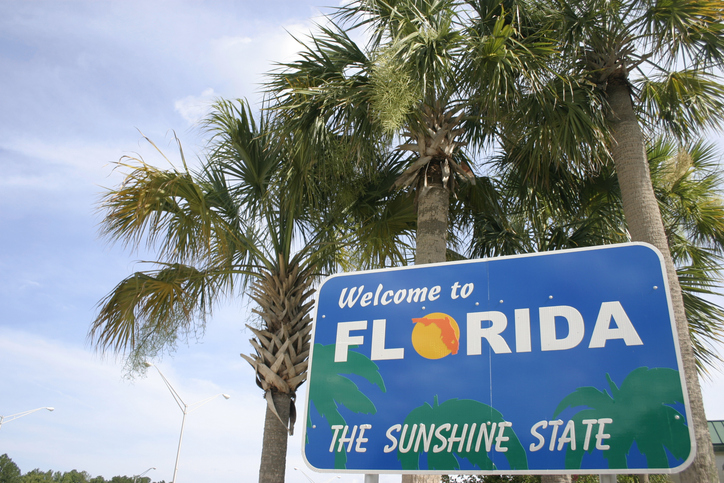
Southwest Florida Auto Accidents Spike 40% During Tourist Season
Forty percent. That is roughly how much crash volume rises in Southwest Florida from late January through early April compared to the off-season baseline. It is not just a feeling locals share when they fight I-75 traffic in February. The state data backs it. March 2023 alone produced more than 36,000 crashes statewide, and the phones in our Bonita Springs office track the same pattern every tourist season. When the snowbirds arrive, so do the accidents.
What I want to do in this article is set out what is actually happening on the roads, what Florida law says about who pays when an out-of-state driver hits a resident on US-41 or a Canadian snowbird rear-ends a local on the I-75 corridor through Lee and Collier Counties, and what we tell clients to do — and not do — in the first 72 hours after a tourist-season crash. The legal framework is not complicated, but a few details after the 2023 reforms catch people off guard.
What Florida law actually says about tourist-season auto cases
A crash on a Florida road is a Florida case, no matter where the at-fault driver is from. The body of law that controls it is the same one I worked with twenty years ago, with three significant changes since 2023 that you need to know.
The two-year deadline. Under §95.11(4)(a) of the Florida Statutes, you have two years from the date of the crash to file suit for personal injury. Before the 2023 tort reform that window was four years, and a lot of people — including a few referring attorneys outside Florida — still operate as if it is. It is not. Two years. The clock runs whether the driver who hit you went back to Indiana, Ohio, or Quebec.
Modified comparative negligence with a 50% bar. Florida used to be a pure comparative state — if you were 90% at fault, you could still recover 10% of your damages. The 2023 reform changed that. Under §768.81, if a jury assigns you more than 50% of the fault, you recover nothing. At 50% or under, your damages get reduced by your percentage. In plain English: if you were 30% at fault for the crash and your damages are $300,000, you recover $210,000. If you were 51% at fault, you recover zero. The line matters, and the insurance carriers know it matters — they push hard on comparative fault in tourist-season cases where confusion is easy to argue.
PIP, the no-fault $10,000. §627.736 requires every Florida-registered vehicle to carry Personal Injury Protection. It pays the first $10,000 in medical bills and lost wages, regardless of fault. It is the floor, not the ceiling. Once you have run through the $10,000 — which, with a single MRI and a few weeks of physical therapy, you will — you move to the at-fault driver’s bodily injury policy. If they do not have one, or do not have enough, you fall back on your own uninsured motorist coverage under §627.727. Florida does not require BI coverage — it requires PIP — so a meaningful share of the drivers on the I-75 corridor through Lee and Collier Counties carry no bodily injury liability at all. That is the single most surprising thing for out-of-state clients to hear, and it is the strongest argument I know for every Florida household to carry UM.
One more piece of housekeeping. §316.066 requires a long-form crash report when there is injury, death, or a vehicle that has to be towed. Make sure the responding officer is doing that report, not just the short driver-exchange form. We have salvaged more than one case by getting the long-form report ordered later, but it is a needless headache.
Four crash patterns we see every tourist season
Across thirty years, almost every tourist-season crash that walks into our office fits one of these four patterns. The legal analysis differs in each.
- The out-of-state driver who misses a turn on US-41 and brakes hard or U-turns into traffic. Rear-end and sideswipe. Liability is usually clean. The fight is over insurance limits and where to serve the driver.
- The snowbird, generally seventy-plus, who is unfamiliar with the area and misjudges a left turn at a busy Naples or Fort Myers intersection. Liability is contested more often than people expect, because the carrier will argue the local driver was speeding or distracted. Comparative fault under §768.81 becomes the whole ball game.
- The vacation rental-car driver who is fiddling with GPS or radio controls and rear-ends a stopped vehicle on I-75 near a Bonita Springs or Estero exit. Federal law (the Graves Amendment) shields the rental company from owner-liability, so you are pursuing the driver’s personal policy plus whatever supplemental liability they bought at the counter. Coverage is often thin.
- The impaired tourist who runs a stop sign or red light in a residential or semi-rural part of Lee or Collier County. These are the worst injuries we see all season. Punitive damages may be on the table under §768.72 if the conduct was egregious enough.
I tell every new client which bucket their case falls into on the first call, because it shapes everything that follows — which carrier we put on notice first, whether we order an accident reconstruction, how aggressively we recommend they treat with their own physician on PIP versus waiting for a settlement-funded provider.
What makes tourist-season cases harder than they look
Three complications come up in nearly every case in this category.
Witnesses leave. The driver behind you on I-75 who saw the whole thing is from Toronto and flies home on Sunday. Get statements at the scene if you can, or get them from the investigating officer’s witness list within the first week. We have a paralegal who does nothing but track down out-of-state witnesses in March and April, and even then the work gets hard fast.
Out-of-state insurance carriers play differently. A Florida-domiciled carrier knows our courts, knows our judges, and tends to evaluate cases on the facts. An out-of-state carrier covering a vacationing insured will sometimes treat a Florida claim like it does not really count — slower responses, lower opening offers, more pushback on medical causation. The fix is to demonstrate, early, that we are prepared to file suit in Lee or Collier County Circuit Court. The tone changes quickly after that.
The medical record gets messy because tourists do not stay. A visiting driver who is hurt seeks treatment at NCH or Lee Health, gets discharged, and flies home. Their follow-up care is in another state, with a different doctor, on a different chart. Stitching that record together for a demand package is genuinely hard, and the defense will exploit any gap to argue the injuries resolved or were not as severe as claimed. We tell out-of-state clients on day one: keep every appointment, keep every receipt, and send us your records monthly.
A case from Lehigh Acres
A few years back our office represented a woman from Lehigh Acres who was driving home through her own neighborhood when an impaired driver blew through a stop sign and hit her at near full speed in the intersection. She was wearing her seatbelt and the airbags deployed, but the angle of the impact whipped her hard. Severe whiplash, two herniated lumbar discs, and the kind of pain that does not let you sit through dinner with your grandchildren.
She did everything right. She let the ER do the initial workup, then followed up with an orthopedic physician within the week. He sent her through a series of epidural steroid injections — three rounds spaced out over several months — paired with focused physical therapy with a therapist who actually understood lumbar disc injuries instead of running her through generic exercises.
On the legal side, the impaired driver had minimum limits, which would not have come close to making her whole. We turned to her own uninsured motorist policy — coverage she almost did not buy when she renewed two years earlier — and pursued that carrier hard. We also developed the criminal record of the at-fault driver as supporting evidence for a punitive theory, which changes how a defense carrier evaluates a case even when punitives are not formally pled.
The case resolved successfully, with enough recovery to cover her medical bills, replace lost wages, and put real money aside for the future surgical care her surgeon said she may eventually need. She is still our client when something insurance-related comes up. That is how I like cases to end.
What to do if you are hit by a tourist or out-of-state driver
This is the action list I give to friends and family when they ask. It is short on purpose. Most of the long lists you read online were written by someone who has never tried a case.
- Call 911 and ask for a long-form crash report. Not a driver-exchange form. If there is any visible injury or a vehicle that needs to be towed, the officer is required under §316.066 to do the long form. Politely ask.
- Get the at-fault driver’s home-state address and phone, not just their Florida vacation rental. You will need to serve them there if they have already flown home by the time the demand goes out.
- Take photos of license plates from every angle. Rental car plates and out-of-state plates are easy to misread on a phone screen at the scene. Two photos beats one.
- Go to the ER or an urgent care the same day, even if you think you are okay. I have watched too many cases get cut in half because the client “walked it off” on Day 1 and could not link the symptoms back to the crash by Day 4. Same-day documentation is the single most useful thing you can do for your own case.
- Pull your own auto policy out and look for the line that says “Uninsured Motorist.” If it says “Rejected” or shows a small number, that is your call to your agent the same week. UM is what saves cases where the at-fault driver was a visitor with minimum limits.
- Do not give a recorded statement to the at-fault carrier. You are required to cooperate with your own carrier on the PIP side. You are not required to talk to theirs. Have an attorney on the line before you do.
- Call us — or any attorney you trust — before the two-year clock under §95.11(4)(a) eats into your runway. The first ninety days are when liability evidence is freshest, and they pass faster than anyone expects.
Key Takeaways
- Tourist season in Southwest Florida — roughly late January through April, with a second bump November through New Year’s — produces about 40% more crashes than the off-season, and the pattern has been consistent for years.
- Florida’s statute of limitations for personal injury dropped from four years to two years in 2023 under §95.11(4)(a). The clock does not pause because the at-fault driver lives out of state.
- Under §768.81 as amended, a plaintiff who is more than 50% at fault recovers nothing. At 50% or under, damages are reduced by the plaintiff’s percentage.
- Florida requires PIP under §627.736 but does not require bodily injury liability coverage. That is why uninsured motorist coverage under §627.727 is the single most important policy line for Florida households.
- Rental car companies are shielded by the federal Graves Amendment. Recovery in a rental-driver crash comes from the renter’s personal auto policy plus any supplemental liability they purchased at the counter.
Frequently Asked Questions
Q1. If a tourist from out of state hits me on I-75, do I sue them in Florida or in their home state?
You file in Florida. The crash happened on a Florida road, Florida law applies, and Florida courts have jurisdiction. The fact that the at-fault driver lives in Ohio or Ontario does not change where the case gets handled. We do, however, have to serve them at their out-of-state address, and that adds a step. The harder problem is collecting on the judgment if their insurance limits do not cover your medical bills, which is why we look at your uninsured motorist coverage early.
Q2. I was rear-ended by a rental car. Can I sue the rental company?
Not usually. A federal law called the Graves Amendment shields rental companies from being held liable just because they owned the vehicle. You sue the driver who rented the car, and you pursue that driver’s auto policy plus whatever liability coverage they purchased from the rental counter. If the rental company itself was negligent — for example, they rented to someone with a suspended license — that opens a separate door, but those facts are rare.
Q3. How long do I have to file a claim after a tourist-season crash in Florida?
Two years from the date of the crash, under §95.11(4)(a) of the Florida Statutes. That window was four years before the 2023 tort reform and dropped to two. Wrongful death is also two years. The clock does not pause because the at-fault driver flew home to Michigan in April. Get a consult early — proving fault gets harder once skid marks fade and witnesses scatter.
Q4. I was hurt in a crash but the police report says I was partly at fault. Can I still recover?
Probably, yes — as long as a jury would not put you at 51% or more. Under §768.81 of the Florida Statutes, as amended in 2023, a plaintiff who is more than 50% at fault recovers nothing. At 50% or less, your recovery is reduced by your percentage. So a $200,000 case where you were 20% at fault is worth $160,000. Police-report fault assignments are a starting point, not the final word — we challenge them with reconstruction work where the facts support it.
Q5. My PIP only paid $10,000 and my hospital bill was much higher. What happens now?
PIP under §627.736 is no-fault coverage, capped at $10,000 in medical and lost wages regardless of who caused the crash. Once that is exhausted, you pursue the at-fault driver’s bodily injury liability policy. If they are uninsured or underinsured, your own uninsured motorist coverage under §627.727 picks up the difference. This is why we ask, on the first call, whether you carry UM. It often turns a hopeless case into a real recovery.
Talk to our office about your case
If you or someone in your family was injured in a tourist-season crash anywhere in Lee or Collier County — on I-75, on US-41, in a Bonita Springs intersection, on a Naples side street, on a Fort Myers stretch you drive every day — call our office at 239-992-8259. The consultation is free. There is no fee unless we recover for you, and the first conversation will give you a straight read on what your case is actually worth and what the next steps look like.
About the Author

Pittman Law Firm, P.L. operates across Southwest Florida under the direction of founder David B. Pittman, Esq., who has practiced personal injury law for more than thirty years with a sustained focus on serious-injury auto and complex-liability cases. The firm represents injured clients across Lee and Collier Counties — from the firm’s main office at Windsor Place on Bonita Beach Road through Fort Myers, Naples, Estero, Cape Coral, and Lehigh Acres.
David’s training began at The Citadel, The Military College of South Carolina, and continued at the University of South Carolina School of Law, where he earned his JD. He carries an AV-Preeminent rating from Martindale-Hubbell and is a member of the Multi-Million Dollar Advocates Forum, recognitions that reflect three decades of trial and settlement work on behalf of injured Floridians.
David has held a Florida real estate broker license for twenty-five years, a credential that shapes how the firm reads the property side of premises cases. The firm handles personal injury cases across Lee and Collier Counties, serving Fort Myers, Bonita Springs, Naples, Cape Coral, Estero, and Lehigh Acres, with offices at Windsor Place in Bonita Springs (main) and Fort Myers (satellite). Call 239-992-8259 for a free consultation.
Attorney advertising. The information on this page is general in nature and is not legal advice for any individual matter. Reading this article or contacting Pittman Law Firm, P.L. does not by itself create an attorney-client relationship. Prior results do not guarantee a similar outcome.