

Do Tesla Brake Lights Work During Regenerative Braking? What Fort Myers Drivers Need to Know
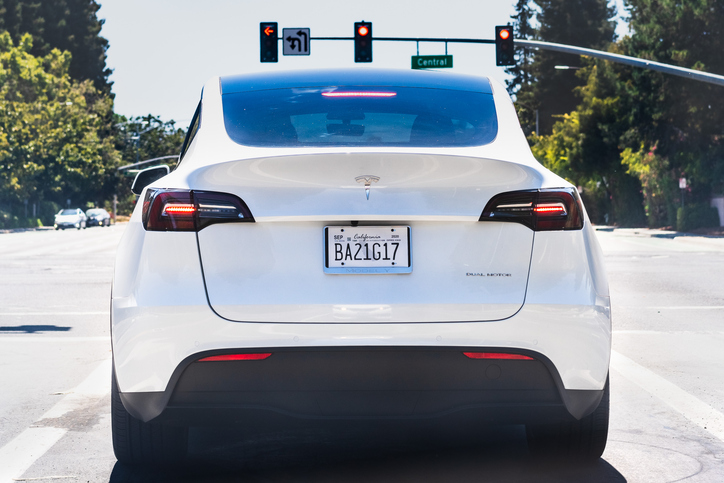
Federal Motor Vehicle Safety Standard 108 requires brake lamps to activate when a driver applies friction brakes. It does not require brake lamps to activate during regenerative deceleration alone. That gap in the federal standard is the reason a Tesla can slow from 45 mph to a dead stop on Cleveland Avenue without lighting a single red lamp — and the reason the trailing driver ends up facing Florida’s rear-end presumption after a wreck they could not have anticipated in the way they could with a conventional car.
I am not an electrical engineer. From three decades of personal injury work in Lee and Collier Counties, though, I have read enough Event Data Recorder downloads and heard enough Tesla owners describe their driving habits on the witness stand to have a clear view of how regenerative braking interacts with Florida fault law. What follows is what that work has taught me.
What Florida law actually says about rear-end crashes and brake lights
Florida has a longstanding presumption that the rear driver in a two-car rear-end crash is at fault. That presumption is not a death sentence for the trailing driver. It can be rebutted with evidence, but it sets the starting line. When a Tesla’s regenerative braking decelerates the car without firing the brake lights, the rebuttal argument gets stronger, and that is where the law starts to matter.
A few statutes do real work in these cases:
- §768.81, Florida Statutes, modified comparative negligence. As of the 2023 reform, a plaintiff who is found more than fifty percent at fault recovers nothing. If you are forty-nine percent at fault, your damages get reduced by forty-nine percent and you still recover. Read §768.81 here. In plain English, a rear driver who can show the Tesla in front slowed unannounced has a real argument that the percentage of fault should shift toward the Tesla driver.
- §95.11(4)(a), Florida Statutes, the statute of limitations for negligence is now two years from the date of the crash, for claims arising on or after March 24, 2023. Read §95.11 here. Older crashes still get four years. Plain English: wait too long and the case is gone, regardless of how strong the data log is.
- §627.736, Florida Statutes, PIP, the $10,000 no-fault medical benefit that every Florida-registered vehicle carries. You have fourteen days to see a qualifying provider or you lose PIP. Read §627.736 here. In plain English, see a doctor in the first two weeks after the crash even if you feel fine.
- §316.066, Florida Statutes, the crash report requirement. Officers must file a long-form report in any crash with injury, death, or property damage that renders a vehicle inoperable. Read §316.066 here. That report is the foundation of every claim we file.
The federal piece, FMVSS 108, the brake lamp standard, requires brake lamps to activate when friction brakes are applied. It does not currently require brake lamps to activate during regenerative deceleration alone. That regulatory gap is the entire reason this blog post exists.
Five regen rear-end fact patterns from our Fort Myers files
Across the regen rear-end cases that have come through our Fort Myers desk over the last three years, the fact patterns cluster into five repeating shapes:
- The one-pedal commuter on Daniels Parkway. Driver sets the regen to Standard, drives the entire commute without touching the brake pedal, and gets rear-ended at a light backup. The trailing driver swears the Tesla “just stopped.” The data log usually shows the regen was strong enough to fire the brake lamps, but only for the last two seconds, not the full deceleration.
- The downhill coaster on the I-75 ramps near Alico Road. Tesla cruising at speed on a gentle downhill, lifts off the accelerator, the car slows on regen, then settles at a constant speed. Brake lights turn off at the steady-state speed, even though the car is still well below the flow of traffic. Trailing driver closes the gap and clips the rear bumper.
- The cold-morning regen reduction. Fort Myers does not get cold often, but on a January morning at fifty degrees the battery is not warm yet and regen is reduced. The Tesla driver lifts off expecting normal one-pedal feel, the car does not slow as fast as expected, and the driver stabs the friction brakes. That stab fires the lights, but the trailing driver was reading the car’s body language and never expected a sharp stop.
- The full-battery commuter. When the battery is at 100% the regen has nowhere to put the energy, so it is disabled or sharply limited. The driver gets in a Tesla they have driven for two years and the lift-off feel is wrong on the first mile. We have seen one of these on Summerlin Road, headed toward Sanibel.
- The Autopilot-assisted slow. Adaptive cruise control reduces speed for a slower car ahead. Whether the brake lights fire depends on the deceleration rate the software chooses. Sometimes they do, sometimes they do not. The data log on this one is gold for either side, depending on which side has it.
Each of these has been a real client conversation. None of them are theoretical.
Why Tesla rear-end claims require more work than a standard file
The reason a Tesla rear-end crash takes more work than a Toyota rear-end crash comes down to four practical complications.
The data is rich but locked. Tesla stores Event Data Recorder information in the Media Control Unit and an external storage module. A reconstruction engineer can pull it, but only with the right tools and the right legal posture. If the car is totaled and sent to a salvage auction before we get a preservation letter to the right people, the data may be lost. Move fast.
The defense will argue the rear-end presumption is unrebuttable. Many adjusters, when our client is the trailing driver, default to “rear driver pays” and close the file. The whole point of pulling the EDR is to show what the lead Tesla actually did in the three seconds before impact, and whether the brake lamps fired during the entire deceleration or only the last fraction.
Repair costs are not what they were on the last Camry. A rear bumper assembly on a Model Y that has sensors and a camera embedded can run $8,000 in parts alone. Aluminum structural members do not bend back the way steel does. They get cut out and replaced. Property damage claims that look modest in photos become five-figure invoices the moment a manufacturer-authorized body shop opens the tailgate. Get the Tesla-authorized estimate, not the friend-of-the-family estimate.
PIP and UM coverage interact in messy ways. Many Tesla owners carry high liability limits because the car is worth more than the house, but they sometimes underbuy uninsured motorist coverage under §627.727. If you are hit by a Tesla driver who carries only $25,000 in bodily injury, your own UM is what feeds you when the medical bills run higher. We check UM coverage on every Tesla case, on both sides.
What to do if you are in a Tesla rear-end crash on a Fort Myers road
From the cases that have actually come through our office, the difference between a clean recovery and a frustrating fault dispute usually comes down to the first forty-eight hours. Here is what I tell clients on the phone:
- Photograph the rear of the Tesla. Take pictures of all three brake lamps and the high-mount stop lamp. If a bulb is burned out, that is a separate fault argument. Catch it now, because the body shop will replace the assembly before you ever see it again.
- Get the long-form crash report under §316.066. Wait the three to ten days it usually takes, then pull it from the Florida Crash Portal or through our office. The short-form exchange-of-information slip is not enough.
- See a doctor inside fourteen days. PIP is gone if you do not. I have had clients who felt fine on day three and miserable on day twenty, by which point they had already forfeited the $10,000 cushion that pays for the MRI.
- Do not sign a property-damage release until the body shop tears down the rear panel. What looks like a $4,000 bumper job often runs $12,000 to $20,000 once the sensors, aluminum reinforcement, and camera calibrations are added in. Sign too early and you give back the difference.
- Get the EDR preserved. If you are the trailing driver in a Tesla-versus-Tesla, or your client’s Tesla was the one rear-ended, the data on the lead vehicle is what wins or loses the case. We send a preservation letter the same day we are retained.
- Save the dashcam footage. Tesla’s built-in dashcam records the moments before and after a collision on a USB drive in the glovebox. That drive is the most useful piece of evidence I have seen come out of a passenger vehicle in the last decade. Pull it before anyone else touches the car.
None of this is theoretical advice. Every line above came from a client who learned it the hard way.
Key Takeaways
- Tesla brake lights do activate during regenerative braking, but only above a deceleration threshold, which means light regen at highway speed may not fire the lamps at all.
- Florida’s rear-end presumption is rebuttable. EDR data showing what the lead Tesla actually did in the three seconds before impact is the most useful piece of evidence in these cases.
- The statute of limitations for negligence is two years for crashes on or after March 24, 2023, under §95.11(4)(a). Older crashes still get four.
- See a qualifying provider within fourteen days under §627.736 or PIP is gone, regardless of how strong the liability case looks.
- Property damage on Tesla rear-end work runs higher than people expect. $12,000 to $20,000 is typical, and $28,000 is not unusual once a manufacturer-authorized body shop tears down the panel. Do not sign a release early.
Frequently Asked Questions
Q1. If a Tesla slows down using regen and the brake lights never come on, am I still at fault as the rear driver?
Probably yes, at least in part. Florida’s rear-end presumption puts the blame on the trailing driver, and the lead car’s brake lights are only one factor. Under §768.81, fault is apportioned by percentage, so even if the Tesla deceleration was unannounced, the question becomes how much that contributed and how much your following distance contributed. We have moved that needle in past cases by pulling the EDR and showing the lead car decelerated for a full two seconds before the lamps fired.
Q2. How do we prove what a Tesla actually did in the seconds before impact?
Through the Event Data Recorder and the vehicle’s onboard logs. A Tesla stores speed, accelerator position, brake pedal pressure, regen kilowatts, and steering inputs. We send a preservation letter early so the data is not overwritten, then bring in a reconstruction engineer to pull and read it. The built-in dashcam, stored on a USB drive in the glovebox, is often the second piece of the puzzle.
Q3. What is the deadline to file a Florida car accident lawsuit?
Two years from the date of the crash for negligence claims that arose on or after March 24, 2023, under §95.11(4)(a). Crashes before that date carry the older four-year window. Wrongful death claims have their own two-year deadline. Do not assume you have time; the deadline runs from the crash, not from when you finished treating.
Q4. Does Florida PIP cover my injuries after a Tesla rear-ends me?
Yes. Personal Injury Protection under §627.736 pays the first $10,000 of medical bills and lost wages regardless of fault, provided you see a qualifying provider within fourteen days. PIP does not cover pain and suffering. That is a separate claim against the at-fault driver’s bodily injury policy. Most clients hit by Teslas are surprised to learn the $10,000 runs out quickly once an MRI and physical therapy enter the picture.
Q5. Are repair costs really $12,000 to $20,000 on a Tesla rear-end?
Yes, often more. Tesla rear quarters house sensors, camera mounts, and structural aluminum that drive labor hours up. We have seen what looks like a fender-bender estimate at $28,000 once a manufacturer-authorized body shop tears down the panel. Document everything before any repair begins, get a Tesla-authorized shop to do the estimate, and do not sign a property-damage release until the full tear-down is done.
Talk to our office before you talk to the adjuster
If you have been rear-ended by a Tesla, or you were driving a Tesla and were rear-ended yourself, call our office at 239-992-8259 for a free consultation. The faster we can get a preservation letter on the vehicle data, the better your case looks two years from now. There is no fee unless we recover for you. We handle personal injury cases across Lee and Collier Counties, with the Fort Myers desk running the bulk of our auto-tech and electric vehicle crash work.
About the Author
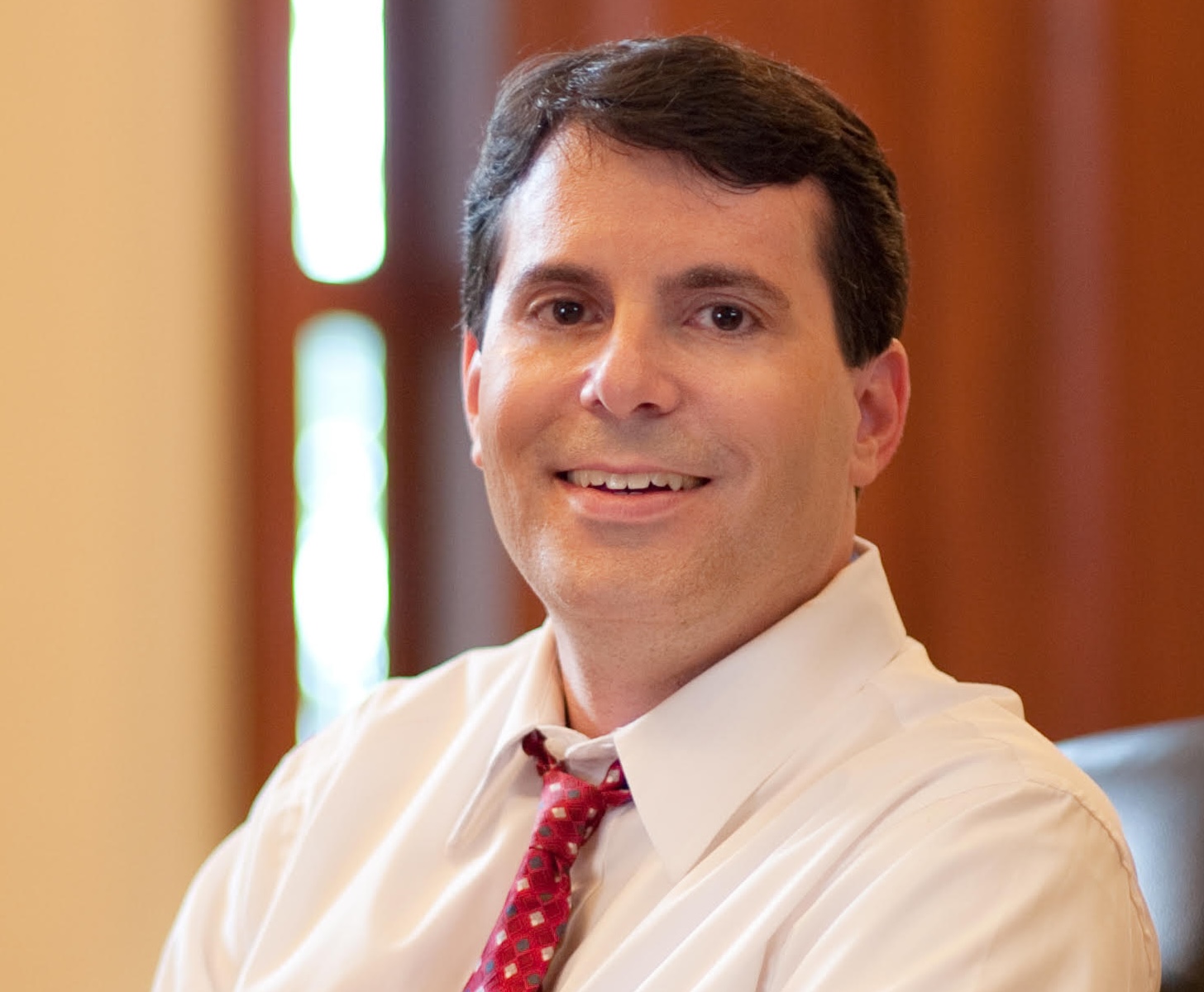
David B. Pittman, Esq. has spent more than thirty years on personal injury cases in Fort Myers and across Lee County. He founded Pittman Law Firm, P.L. and continues to lead it today, representing injured clients across Lee and Collier Counties, with a particular focus on commercial-vehicle, complex-liability, and serious-injury cases. The firm’s Fort Myers presence handles a steady stream of serious-injury work along the Daniels Parkway, Six Mile Cypress, McGregor Boulevard, Cleveland Avenue, and Summerlin Road corridors, and along I-75 between Estero and Bell Tower.
David’s path to law began at The Citadel, The Military College of South Carolina, and continued at the University of South Carolina School of Law. He carries an AV-Preeminent rating with Martindale-Hubbell and a membership in the Multi-Million Dollar Advocates Forum.
David has held a Florida real estate broker license for twenty-five years, a credential that shapes how the firm reads the property side of premises cases. The firm handles personal injury cases across Lee and Collier Counties, serving Fort Myers, Bonita Springs, Naples, Cape Coral, Estero, and Lehigh Acres, with offices at Windsor Place in Bonita Springs (main) and Fort Myers (satellite). Call 239-992-8259 for a free consultation.
The information on this website is for general information purposes only. Nothing on this page should be taken as legal advice for any individual case or situation. Receipt or viewing of this content does not create an attorney-client relationship. This is attorney advertising.