

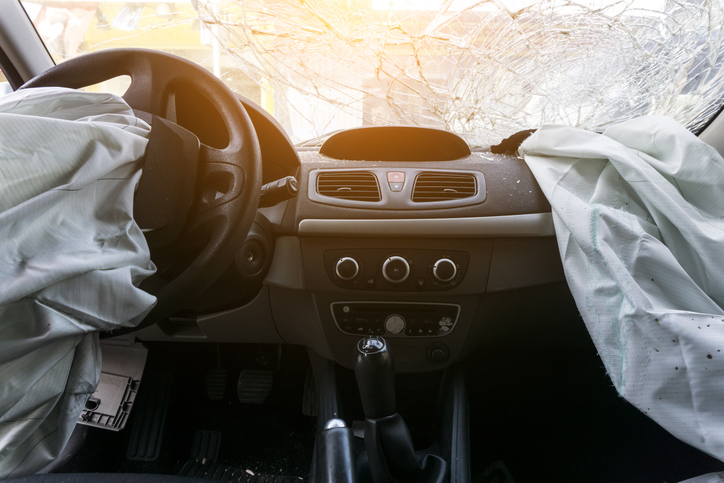
The Cost of Distracted Driving in Florida: Fort Myers Car Accident Data
Distracted driving is no longer the exception in Lee County — it is the baseline. On any given afternoon on US-41 through Fort Myers or on I-75 near Alico Road, the question is not whether a driver nearby has a phone in hand, but how long they have had it there. The Florida Highway Safety and Motor Vehicles data bears this out, and so does thirty years of looking at crash reports in our practice.
What I want to give you here is not a national infographic. It is what Florida law actually says — the statutes that control what you can recover and when — and what these crashes look like on our desk when the file comes in, including the patterns that decide whether a case is fought or quietly settled for policy limits.
What Florida law actually says about distracted driving
Florida has two main distracted-driving statutes worth knowing by name, plus a handful of related rules that decide what happens to your injury case after the crash.
Texting while driving — §316.305, FL Stat. Since July 2019, manually typing or reading messages on a wireless device while the car is in motion is a primary offense. That means a Lee County deputy can pull you over for nothing other than thumbs-on-the-phone. First offense is a $30 base fine, no points. Second offense within five years is a moving violation, $60 base fine, and three points on your license. Source: FLHSMV and the statute itself.
Hands-free in school and work zones — §316.306, FL Stat. In active school zones, school crossings, and designated construction zones with workers present, you cannot hold the device at all. Any offense is a moving violation, $60 base fine plus court costs, and three points. This is the rule most drivers along Daniels Parkway and Six Mile Cypress Parkway forget about during the school-year commute.
Modified comparative negligence — §768.81, FL Stat. This is the rule that quietly decides most distracted-driving cases. As of March 2023, if a jury finds the injured person more than 50 percent at fault, that person recovers nothing. Less than 50 percent and the award is reduced by the fault share. In plain English: if you were checking your own phone for two seconds and the other driver was looking down for four, the percentages assigned to each of you decide whether you get paid or walk away with nothing.
Two-year statute of limitations — §95.11(4)(a), FL Stat. The same 2023 reform that tightened comparative negligence also cut the time to sue from four years to two. The clock starts the day of the crash. I have lost count of how many people call us at month 22 thinking they have plenty of time. They do not.
PIP — §627.736, FL Stat. Florida is a no-fault state, which means your own auto policy pays the first $10,000 of medical bills and lost wages, regardless of who hit whom. The catch is the 14-day rule: you have to seek initial care within fourteen days of the crash or you lose PIP entirely. Distracted-driver crashes are exactly the situation where people delay care because they feel okay for a week and then their neck seizes up on day 16. That delay alone can sink the medical side of the claim.
UM — §627.727, FL Stat. Uninsured/underinsured motorist coverage on your own policy is the rule that saves people whose at-fault driver carries the Florida minimum or, worse, fled the scene. In a state where roughly one in five drivers carries no bodily-injury liability at all, UM is the coverage I tell every client to buy and never decline.
The five distracted-driver crash patterns we see in Fort Myers intakes
Distracted-driving cases do not all look alike. Here are the five recurring patterns we see in our Fort Myers intake:
- The classic rear-end on US-41 or Cleveland Avenue. Stopped traffic, brake lights all the way back, one driver looks down, no skid marks. The lack of pre-impact braking is the tell. Event data recorder pulls usually confirm what we suspect.
- The school-zone tap on Colonial Boulevard or near McGregor Boulevard. Twenty miles an hour, but the kid in the crosswalk does not bounce off a hood at 20 the way an adult does. These cases are catastrophic out of proportion to the speed.
- The I-75 lane-drift near Alico Road. Driver looks down at a navigation screen, drifts into the adjacent lane, sideswipes a car or, in the worst version, runs another car off the road. Fault is sometimes contested because there is no impact in the obvious place.
- The Pine Island Road or Summerlin Road tourist-season crash. Out-of-town driver, unfamiliar route, eyes on the phone navigation, runs a light or misses a stop. We see a clear seasonal spike in these from January through April.
- The hit-and-run distracted driver. Same as the rear-end pattern above, but the at-fault driver keeps going. That sounds like the worst scenario for a case — in practice, it is often the cleanest, because the UM coverage on the injured client’s own policy steps in and the fault fight goes away.
Why proving distraction in Lee County takes more than a traffic citation
Four practical complications come up over and over in our distracted-driver files:
1. Phone records are not automatic. Carriers do not hand them over because you ask nicely. You need a subpoena, which means you need a lawsuit filed, which means we are already past the soft-negotiation phase. We send preservation letters within days of taking the case so the carrier does not purge data on its normal retention cycle.
2. The driver almost never admits it. In thirty years of practice, I can count on one hand the number of times an at-fault driver volunteered to law enforcement that they had been on their phone. The admission, when it comes, almost always comes during a deposition, after we have already lined up the cell records to confront them with.
3. PIP exhausts fast. Ten thousand dollars sounds like a lot until the first emergency-room visit alone runs four. Once PIP is gone, the injured person is paying out of pocket or relying on health insurance with subrogation rights, and either path complicates the eventual settlement math.
4. The 50-percent cliff is brutal. Before March 2023, a client found 60 percent at fault still recovered something. Today, that same client recovers zero. The 2023 reform turned what used to be a sliding scale into a cliff edge, and defense lawyers know it. They push for that 51-percent finding on every distracted-driving case where the injured party also had a phone in the car.
A Fort Myers rear-end injury claim from our files
A case that has been on my mind. Our client was stopped at a light on US-41 in Fort Myers, the way thousands of people sit at lights on that road every day. Another driver, head down, never hit the brakes, and rear-ended our client hard enough to push the car a full length forward into the intersection. The at-fault driver then drove off. No license plate exchange, no insurance card, gone.
Our client did the right thing at the scene. Called law enforcement, stayed in the car, took photos. The emergency room that afternoon flagged a cervical strain that, on imaging a week later, looked a lot worse than the initial workup suggested. Months of physical therapy followed, then a pain-management course, then the slow process of figuring out what the long-term picture actually was.
Because the at-fault driver was gone, this was never going to be a third-party bodily-injury case in the usual sense. What it became was a UM claim against our client’s own carrier under §627.727. We recovered the full available policy payout. The point I make to clients from cases like this one: the policy you buy for yourself, before any crash happens, is almost always the policy that saves you when the other side disappears.
What to do if a distracted driver hits you
I tell clients to take these steps, in this order, and I tell them because I have watched what happens to the people who do not.
- Stay in the car if it is safe, and call 911. A formal crash report under §316.066 is the single most valuable piece of paper in your file later. Self-reported exchanges between drivers without law enforcement almost always favor the at-fault driver.
- Photograph the phone if you can do it without putting yourself in danger. Even a shot of the other driver still holding the device when they get out of the car has won cases. We have used photos like this to confront defense witnesses three years after the fact.
- Get medical care the same day, not next week. The 14-day PIP rule is unforgiving and the soft-tissue and concussion injuries we see in distracted-driver rear-enders almost always feel worse on day three than day one.
- Do not give a recorded statement to the other driver’s insurance company. They are not calling to help. Anything you say will be quoted back to you when the comparative-fault percentages get argued.
- Call a lawyer before you sign anything. First-offer settlements in distracted-driving cases routinely come in at 10 to 20 percent of what the case is actually worth, on the bet that the injured person does not yet know how badly hurt they are.
Key Takeaways
- Florida’s texting-while-driving law (§316.305) makes thumbs-on-phone a primary offense, but the fines are small — the real cost shows up in your injury case, not your traffic citation.
- The 2023 reform to §768.81 created a 50-percent cliff: more than half at fault and you recover nothing. Distracted-driving cases are exactly where defense lawyers push hardest for that finding.
- You have two years to sue under §95.11(4)(a), not four. Calling a lawyer at month 22 is usually too late to do the case justice.
- PIP under §627.736 pays the first $10,000 of medical bills and lost wages regardless of fault — but only if you seek care within 14 days of the crash.
- Uninsured motorist coverage (§627.727) is what saves you when the distracted driver is uninsured or flees the scene. Buy it, do not decline it.
Frequently Asked Questions
Q1. If I was rear-ended by a distracted driver in Fort Myers, what should I do in the first 24 hours?
Get medical care the same day, even if you feel only stiff. Call law enforcement to the scene so a crash report exists under §316.066, FL Stat. Photograph the cars, the lane markings, and the position of any phone in the other driver’s hand or cupholder. Tell your own carrier you were in a crash, but do not give a recorded statement to the other driver’s insurer before talking to a lawyer.
Q2. Can I still recover money if I was looking down at my phone too when the crash happened?
Probably yes, but the math changed in 2023. Under §768.81, FL Stat., as long as your share of fault is 50 percent or less, you can still recover, with your award reduced by your percentage. If a jury puts you at 51 percent or more, you recover nothing. That is why early fault investigation matters so much in distracted-driver cases.
Q3. How long do I have to file a Florida car-accident lawsuit after a distracted-driving crash?
Two years from the date of the crash for most negligence claims under §95.11(4)(a), FL Stat. The 2023 reform cut the old four-year window in half, and the clock does not stop while you negotiate with the insurance company. Wrongful-death claims have their own two-year limit.
Q4. What is PIP and why does it matter if the other driver was texting?
Personal Injury Protection under §627.736, FL Stat. pays the first $10,000 in medical bills and lost wages from your own auto policy, regardless of fault. You have to seek care within 14 days or you lose it. Distraction by the other driver does not change the 14-day rule, but it does strengthen the bodily-injury claim you bring on top of PIP.
Q5. How do you actually prove the other driver was distracted?
Several ways. Phone records by subpoena, which show outgoing and incoming activity to the second. Vehicle telematics and infotainment data that record screen taps and Bluetooth pairings. Witness statements, dashcam, and traffic-camera footage. And in serious crashes, an event data recorder pull that shows whether the driver braked at all before impact. We start preservation letters early so this evidence is not overwritten.
Talk to our office
If you or someone in your family was hurt by a distracted driver in Fort Myers, Bonita Springs, or anywhere in Lee or Collier County, call us at 239-992-8259 for a free consultation. I will sit down with you, look at the crash report, look at your medical picture, and tell you straight what we think the case is worth and what we would do next. There is no fee unless we recover for you.
About the Author

David B. Pittman, Esq. founded Pittman Law Firm, P.L. and has spent more than thirty years handling personal injury cases in Fort Myers and across Lee County, with a sustained focus on serious-injury auto and complex-liability cases. The firm’s Fort Myers presence handles a steady stream of serious-injury work along the Daniels Parkway, Six Mile Cypress, McGregor Boulevard, Cleveland Avenue, and Summerlin Road corridors, and along I-75 between Estero and Bell Tower.
After The Citadel, The Military College of South Carolina, David took his JD from the University of South Carolina School of Law and built a personal injury practice that now carries AV-Preeminent recognition with Martindale-Hubbell and a membership in the Multi-Million Dollar Advocates Forum.
David has held a Florida real estate broker license for twenty-five years, a credential that shapes how the firm reads the property side of premises cases. The firm handles personal injury cases across Lee and Collier Counties, serving Fort Myers, Bonita Springs, Naples, Cape Coral, Estero, and Lehigh Acres, with offices at Windsor Place in Bonita Springs (main) and Fort Myers (satellite). Call 239-992-8259 for a free consultation.
The information on this page is for general educational purposes and is not legal advice. Reading this article does not create an attorney-client relationship with Pittman Law Firm, P.L. Every case turns on its own facts. If you are considering a claim, speak with a Florida attorney about your specific situation. This is attorney advertising.