

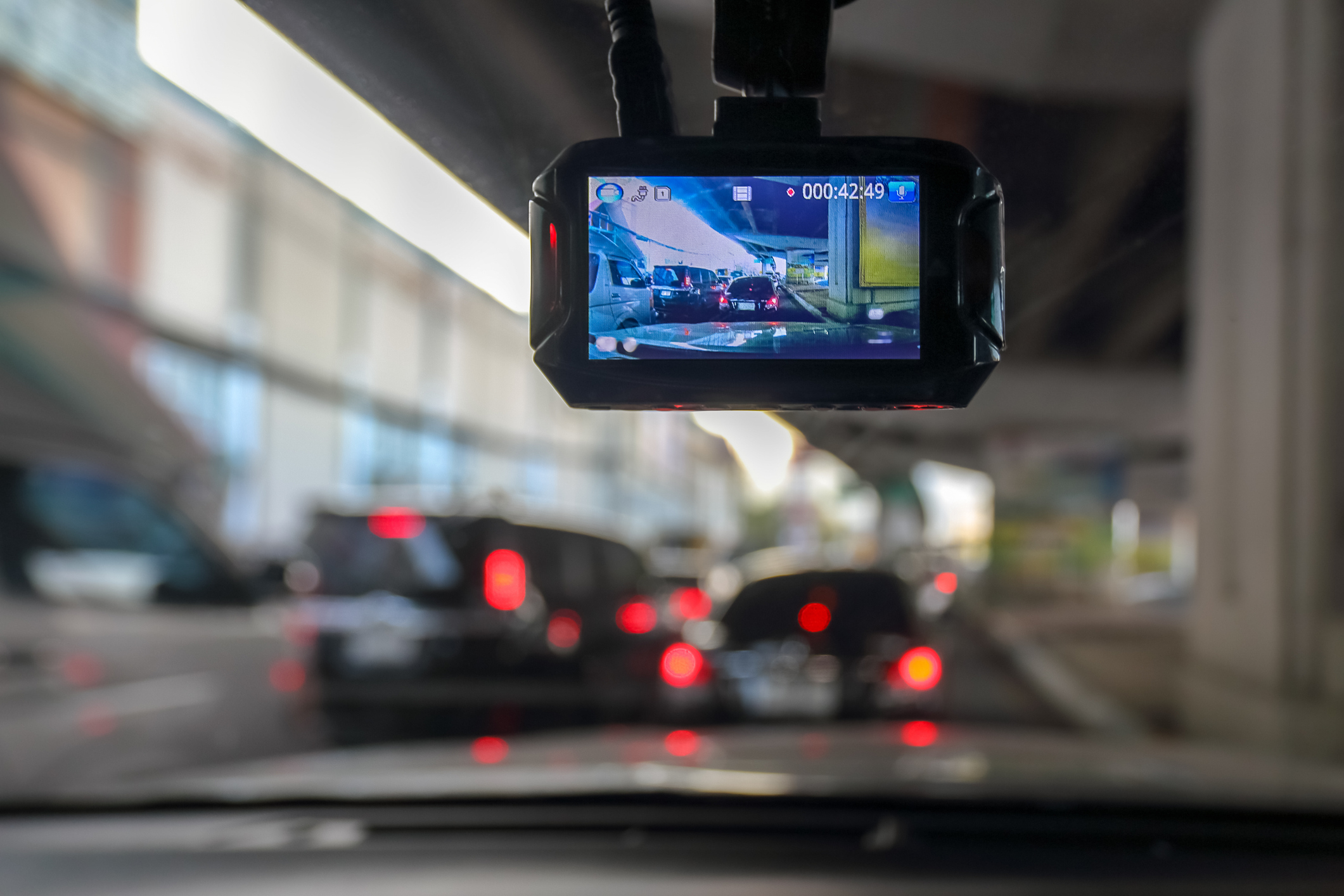
How Dash Cam Footage Can Save Your Fort Myers Auto Accident Case
A dash cam, set up right, is the single best piece of evidence a regular driver can hand me on day one of a case. I say that thirty years into representing crash victims across Lee and Collier Counties, and I mean it without qualification. A 1080p camera with a rear-facing channel has turned disputed Fort Myers rear-enders into clean liability cases, identified hit-and-run drivers who assumed nobody had footage, and stopped adjusters cold when they tried to rewrite what happened on Cleveland Avenue or Daniels Parkway. I have also watched a few clients hand themselves a problem with one — so it pays to understand the rules before you press record.
This piece walks through what Florida law actually says about dash cams, the scenarios where we see the footage do the most work, the practical traps I run into when we pull a card off a client’s camera, a recent Fort Myers case where the video carried the file, and a short action list for the moments right after a crash.
What Florida law actually says about dash cams
There is no Florida statute that bans dash cams. There are, however, a handful of provisions that quietly shape how you should use one.
Windshield placement — §316.2004. Florida law prohibits driving with anything that “materially obstructs, obscures, or impairs” the driver’s view. In plain English: tape it behind the rearview mirror, or down in the lower passenger-side corner. Do not stick it in the middle of the windshield at eye level. A trooper who already wants to write you a ticket can use a bad mount as the reason.
Audio recording — §934.03. Florida is a two-party consent state. If your camera has a microphone and a passenger is in the car, you need their consent to record their voice. Recording without consent is a third-degree felony. The fix is simple: in the camera’s settings, toggle audio off, and leave it off unless you have a specific reason and everyone in the car has agreed. Video of the road is fair game — there is no privacy interest in what is happening outside your windshield on Cleveland Avenue.
Two-year deadline to sue — §95.11(4)(a). The 2023 tort reform shortened the negligence statute of limitations from four years to two. Plain English: from the date of the crash, you have two years to file suit. Dash cam footage held on an old SD card in a kitchen drawer is no good to anyone if the deadline runs out first.
Comparative fault — §768.81. Florida is now modified comparative negligence. Plain English: if a jury decides you were 51% or more at fault for your own wreck, you recover nothing. If you were 30% at fault, your recovery is cut by 30%. Dash cam video is the cleanest way to push that percentage down — or, if it shows something unflattering, to take a look before the other side sees it.
PIP and UM — §627.736 and §627.727. Florida is a no-fault state, so the first $10,000 of medical care after a crash goes through your own PIP coverage regardless of who hit you. Dash cam footage matters most after PIP runs out, when fault drives every dollar above $10,000 — and it matters even more in hit-and-run cases, where uninsured motorist coverage under §627.727 only opens up if you can prove the phantom vehicle existed and made contact.
Where dash cam footage actually moves cases in Fort Myers
Not every dash cam clip changes the outcome. But these five patterns come up over and over in our Fort Myers files:
- The rear-end denial. Florida gives a rebuttable presumption of fault to the rear driver, but the adjuster will still try to claim you brake-checked or stopped in the road for no reason. A clear three seconds of you rolling at speed, then a bang, ends that argument before it starts.
- The phantom lane change. US-41 and Colonial Boulevard generate a steady supply of sideswipes where each driver swears the other one drifted. Dash cam video, even from a single front-facing camera, usually shows which vehicle’s nose crossed first.
- The hit-and-run on a busy corridor. McGregor Boulevard, Summerlin Road, Six Mile Cypress Parkway, Pine Island Road — every one of these has a Friday-night clientele that includes drivers who do not want to wait for the police. A camera with a wide-angle lens catches a plate often enough that we have built real cases out of nothing else.
- The commercial-truck merge. On I-75 near Alico Road, the heavy traffic between Fort Myers and Estero produces a steady stream of tractor-trailer lane-change crashes. A car’s dash cam looking up at the side of an 18-wheeler is the kind of evidence a defense carrier does not have a good answer for.
- The intersection light dispute. Daniels Parkway intersections are bad for this. When two drivers each tell the officer their light was green, the dash cam wins. The traffic-signal company’s data is not always available, and witness memory is not what people imagine.
The practical traps that cost clients footage
Footage helps, but it is not a magic wand. A few practical complications worth knowing about:
The card overwrites itself. Almost every consumer dash cam uses loop recording. A 64 GB card holding 1080p video at 30 frames per second runs roughly 8–12 hours before it starts deleting the oldest file. If you keep driving after a wreck, the G-sensor lock saves the impact segment, but the lead-up footage — the most useful part for proving fault — can start to rotate out within a day. We have had clients hand us cards from a week after the crash that no longer contained the crash.
The clock has to be right. Dash cams with internal clocks drift. After a battery pull or a firmware update, the timestamp on the video can be hours, even days, off. Defense attorneys will use that to argue the file is not authentic. If your camera has GPS, the GPS time signal usually fixes the clock automatically. If it does not, set the time the day you mount the camera, and check it once a month.
You may not love what you see. Plenty of clients hand us footage that shows them doing something less than ideal — running yellow, driving with one hand off the wheel, accelerating to clear an intersection. None of that necessarily kills a case. But under §768.81 it is a problem the lawyer needs to know about on day one, not at deposition. The first phone call is the right time for the video to come out, not the last.
Audio cuts both ways. Even if you got every passenger’s consent, in-cabin audio can include language, music, or commentary you would rather a jury not hear. The cleanest answer in most cases is to disable audio at install and stop worrying about it.
Edits destroy authenticity. Do not crop, blur, trim, or “enhance” anything. Hand the original file, or a bit-for-bit copy of the SD card, to your attorney. The moment you open the file in video software and save it back out, you have given the other side an opening to argue it is no longer the original.
What we did for a Fort Myers client
One we worked recently in Fort Myers is the kind of file that would have been a coin flip without a camera, and an easy recovery with one.
Our client was driving north on US-41 in the early evening, sitting at a red light, when she was struck hard from behind. The other driver did not stop. He pulled around her, took the next right turn, and was gone before she could open the door. She had a 1080p dash cam mounted behind her rearview mirror, and the rear-facing channel had captured the entire sequence — the impact, the driver’s silhouette through his windshield, and a partial plate as he passed her on the shoulder.
She did the right things in the moments that followed. She called 911, stayed in her vehicle until the officer arrived, and mentioned the dash cam in her first sentence to the responding deputy. The crash report under §316.066 noted the existence of the video. By the time she got to our office the next morning, her cervical spine was already locking up; she went on to spend four months in physical therapy and several more under pain management for chronic cervical strain, with one ER visit in the first week for radiating arm symptoms.
The footage did two things. It confirmed the hit-and-run, which is what unlocks uninsured motorist coverage under §627.727 — without a contact event proven by something other than the client’s own statement, the carrier will fight you for a year. And the partial plate gave Fort Myers Police enough to identify the at-fault driver, who turned out to carry the state minimum. We pursued his policy to the limits and then turned to our client’s UM coverage. The end result was a full policy payout that covered her medical bills, the lost work, and the pain-management course her treating physician had laid out.
Without the video, the carrier would have called this a single-vehicle event with a soft-tissue complaint and a story. With the video, it was a documented rear-end hit-and-run with an identified driver. Same client. Same injuries. Very different file.
What to do with dash cam footage in the first 48 hours after a crash
From watching this play out across more than a hundred files, here is the action list I give clients when a wreck involves a dash cam:
- Do not keep driving on the same SD card. The moment you are safely off the road, kill the camera. Even pulling the fuse is fine. Every mile you drive after the crash is footage rotating off the card.
- Pop the card and copy the whole thing. Not just the locked impact file — the entire card, including the unlocked loop files immediately before and after. Some of the best evidence is in the seconds before the G-sensor triggered.
- Make three copies. One on your laptop, one in a cloud folder you control, and one on a separate USB drive. Then hand the original card to your attorney.
- Tell the officer at the scene. A line in the crash report under §316.066 that says “driver advised vehicle equipped with dashboard camera” is a small detail that pays off later. It locks in the existence of the footage as of the crash date.
- Do not post it. Not on Facebook, not on TikTok, not in a group chat with twenty people in it. The first time the other side’s adjuster sees your footage should be after your lawyer has reviewed it, not in their morning scroll.
- Do not edit. No trimming, no cropping, no commentary track. The file your camera produced is the file your lawyer needs.
- Note where the camera was pointed. If it was a dual-channel unit, note which channel is front and which is rear, and where on the windshield each was mounted. Defense engineering witnesses occasionally need that to read the angles correctly.
- Call before the two-year clock starts eating into your preparation time. Under §95.11(4)(a) you have two years from the crash date to file suit. The video does not extend that deadline.
Key Takeaways
- Dash cams are legal in Florida. The audio side is regulated under §934.03 — keep the microphone off unless every passenger has agreed.
- Loop recording overwrites itself. Get the SD card out of the camera the same day as the crash, and copy the whole card to two other places.
- Florida’s 2023 tort reform changed two things you need to know: §95.11(4)(a) shortened the negligence statute of limitations to two years, and §768.81 bars recovery if you are 51% or more at fault. Both make early footage review more valuable, not less.
- In hit-and-run cases on US-41, McGregor Boulevard, or I-75 near Alico Road, dash cam video is often the difference between a paid uninsured motorist claim under §627.727 and a denied one.
- Never edit the file. Hand the original card to your attorney before anyone else sees the footage — including the adjuster, the other driver’s lawyer, or your own social media.
Frequently Asked Questions
Q1. Is it legal to run a dash cam in Florida?
Yes. Dash cams are legal in Florida for video. The catch is audio — Florida is a two-party consent state under §934.03, so recording in-cabin conversations without permission from everyone in the car is a felony. Most clients in Fort Myers should keep video on and audio off unless every passenger has agreed.
Q2. Where on the windshield am I allowed to mount it?
Florida Statute 316.2004 prohibits anything that materially obstructs the driver’s view. The safe spots are tucked behind the rearview mirror or low in the corner of the windshield on the passenger side. We have not seen a properly placed dash cam draw a ticket in Lee County, but a sloppy mount in the middle of the driver’s sightline can.
Q3. Can the other driver’s lawyer use my dash cam against me?
They can try. Florida is a modified comparative negligence state under §768.81, so if your own video shows you doing 55 in a 45 on Daniels Parkway, the other side will argue your percentage of fault. That is why we review the footage with the client before anyone else sees it and decide whether it helps or hurts.
Q4. How fast do I need to pull the footage off the camera?
Same day if you can. Loop recording overwrites itself. Even with a G-sensor lock, a second incident or a parking-mode event can fill the protected slots and start rotating files. Pop the SD card, copy the whole card to a laptop and to a cloud folder, then hand the original card to your attorney.
Q5. If the driver who hit me ran, is dash cam footage enough to find them?
Sometimes. A 1080p front camera at the right angle catches a plate. More often it catches a make, model, color, and a partial plate, which is enough for Fort Myers Police or Lee County Sheriff to work with. Even when the driver is never identified, the same footage proves the hit-and-run happened, and that is the key to opening uninsured motorist coverage under §627.727.
If you were hit in Fort Myers and have dash cam footage — call us before anyone else sees it
If you were injured in a car or truck wreck anywhere in Lee or Collier County and your vehicle was running a dash cam, the smartest call to make first is to a personal injury attorney, not to your adjuster. I will sit down with the footage, walk through what helps and what hurts, and tell you straight whether you have a case worth pursuing.
Call Pittman Law Firm, P.L. at 239-992-8259 for a free consultation. There is no fee unless we recover for you.
About the Author

Personal injury law has been David B. Pittman, Esq.’s focus in Fort Myers and across Lee County for more than thirty years, with a sustained focus on serious-injury auto and complex-liability cases. He founded Pittman Law Firm, P.L. and remains its lead attorney. The firm’s Fort Myers presence handles a steady stream of serious-injury work along the Daniels Parkway, Six Mile Cypress, McGregor Boulevard, Cleveland Avenue, and Summerlin Road corridors, and along I-75 between Estero and Bell Tower.
His undergraduate degree is from The Citadel, The Military College of South Carolina; his JD is from the University of South Carolina School of Law. Martindale-Hubbell rates him AV-Preeminent, and he is a member of the Multi-Million Dollar Advocates Forum.
David has held a Florida real estate broker license for twenty-five years, a credential that shapes how the firm reads the property side of premises cases. The firm handles personal injury cases across Lee and Collier Counties, serving Fort Myers, Bonita Springs, Naples, Cape Coral, Estero, and Lehigh Acres, with offices at Windsor Place in Bonita Springs (main) and Fort Myers (satellite). Call 239-992-8259 for a free consultation.
The information on this website is for general information purposes only. Nothing on this site should be taken as legal advice for any individual case or situation. This information is not intended to create, and receipt or viewing does not constitute, an attorney-client relationship.