

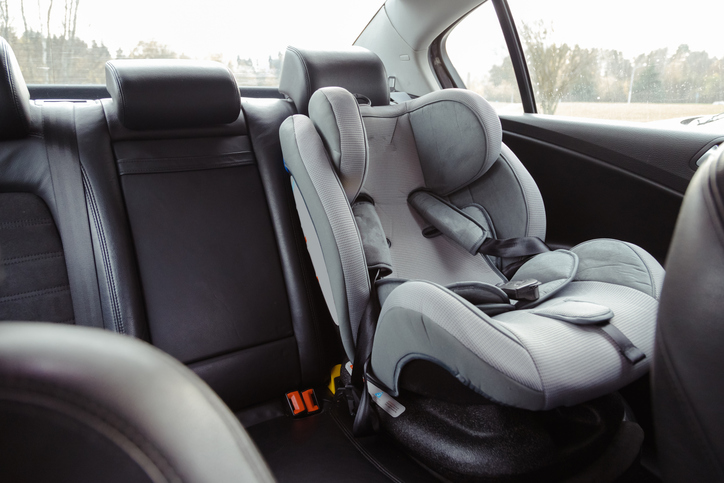
Is Your Child’s Car Seat Actually Safe? What Happens In a Car Accident?
The calls I dread most are the ones about children. A parent on the other end of the line, voice still flat with shock, asking what to do next. I have taken those calls from Bonita Beach Road, from US-41, from I-75 north of Naples, and from quiet residential streets where nothing should have happened in the first place.
It is an honor to represent those families. It is also the part of this job I take most seriously, and that includes how I write about it. So this is not a clickbait list of car seat mistakes. This is what a Florida personal injury attorney wants parents to actually understand about child car seats, Florida law, and what happens at our office when a child gets hurt in a crash.
What Florida law actually says about a hurt child
Florida has a doctrine that surprises a lot of parents the first time they hear it. It comes from Swindell v. Hellkamp and the cases that followed, and lawyers around here call it the Rule of 6. In plain English: if a child is under six years old, a Florida jury is not allowed to assign any percentage of fault to that child. Period. If a five-year-old chases a soccer ball into the road and a driver hits her, the law does not let the jury say the child was “partly responsible.” That is a deliberate choice the courts made because a young child does not yet have the judgment we expect from an older kid or an adult.
That matters enormously in car seat cases. When a child is hurt in a crash, the at-fault driver’s insurance company will look for any reason to push the dollars down. With a child under six, they cannot push that fault onto the child. So they look at the parent.
That move has a name too. It comes from Fabre v. Marin, a 1993 Florida Supreme Court case, and the rule is that a defendant can ask the jury to put a percentage of fault on someone who is not even a party to the lawsuit. We call that person a Fabre defendant. In a child car seat case, the Fabre defendant the insurer will try to point at is almost always the parent who installed the seat. The argument is that an improperly installed seat made the injury worse, so the parent should shoulder some of the blame. It is an ugly argument to make to a grieving mother or father, and the carriers make it anyway.
None of this means a parent should give up. The Rule of 6 still protects the child. The at-fault driver still owes a duty under Florida law. And there are answers to the Fabre defense, which I get into below.
The duty of care the other driver owed your child
Florida statutes spell out duties that get violated in almost every child-injury crash we handle. A few that come up over and over:
- The crosswalk duty. Under §316.130, Fla. Stat., a driver has to yield to a pedestrian in a crosswalk. Children in strollers and kids walking with parents are pedestrians too. If a driver clipped your stroller in a marked crossing on Bonita Beach Road or in a Naples shopping plaza, that statute is in play.
- The school bus stop-arm. Under §316.172, Fla. Stat., when a school bus has its stop arm extended, every approaching driver has to stop. Passing a stopped school bus is a per-se negligence finding in Florida, which makes that defendant’s position much harder.
- The backing-up duty. Under §316.1985, Fla. Stat., a driver who backs up has a duty to make sure the path is clear before moving. Parking-lot injuries to small children get framed through this statute all the time.
The car seat is one piece of the safety picture. The driver’s duty under these statutes is another, and it does not get erased just because a harness was an inch too loose.
The defense playbook in a child car seat case
If your child was hurt in a crash and the seat is part of the story, here is what the carrier’s lawyers are going to try. Knowing it ahead of time matters because some of what they ask for happens before a lawsuit is even filed.
Fabre on the parent. As above, the at-fault driver’s lawyer will try to put a percentage of fault on the installing parent. The answer to that is documentation. If you had the seat checked by a sheriff’s deputy or a hospital technician, get that record. If the seat was installed by the manufacturer of the vehicle in a Tesla-authorized service center or by a hospital safety program, get that record. If you have a photo on your phone showing the harness routed correctly the morning of the crash, save it.
The “sudden emergency” defense. The driver who hit you will sometimes argue that something unexpected forced the move and a reasonable driver could not have avoided the crash. Florida juries hear that argument with skepticism when the “emergency” was glancing at a phone or driving too fast for the conditions.
The “dart out” defense. In pedestrian and parking-lot cases involving children, the driver will argue the child suddenly appeared. With a child under six, the Rule of 6 takes the wind out of that argument. With an older child, it becomes a comparative-negligence fight, and the duties under §316.130 and §316.1985 are still in place.
The seat itself as a target. In serious cases, defense lawyers will hire a reconstruction engineer to argue the seat caused or worsened the injury. That is where independent inspection by our own consulting engineer matters. Do not throw the seat away. Do not let the adjuster pick it up before we have looked at it.
What changed in 2023 — and why the clock is shorter than it used to be
Florida’s 2023 tort reform shortened the statute of limitations on most negligence claims from four years to two for any cause of action that accrued on or after March 24, 2023. That is a meaningful change. A parent who would have had four years to bring a claim now has half that, and the carriers know it.
The same reform changed Florida’s comparative-negligence rule. Florida used to be a pure comparative-negligence state — even if you were ninety percent at fault, you could still recover ten percent of your damages. After the 2023 reform, Florida is a modified comparative-negligence state with a fifty-one percent bar. If a jury finds the plaintiff more than fifty percent at fault, the plaintiff recovers nothing.
For child injury cases, both pieces of the reform make early action important. The Rule of 6 still shields the child from any percentage of fault. But the modified comparative-negligence change makes the Fabre arguments against parents more dangerous than they used to be. Waiting also costs evidence: skid marks fade, video footage gets overwritten, witnesses move, and the seat itself ages. The first call is free, and even if we end up not taking the case, you will know where you stand.
A rear-end case that shows how these claims actually move
A young woman called our office after she was rear-ended by a driver who was looking at his phone. It was her first accident. The impact pushed her car forward into traffic, and she ended up with the kind of soft-tissue and spinal injuries that do not show up dramatically on a first ER visit but settle into chronic neck and back pain that does not let her sleep.
While she focused on getting better, our office worked the property-damage claim, dealt with her own carrier, dealt with the at-fault carrier, and pushed back on the standard early-low-ball offer that came in around the time the medical bills started showing up.
The case settled for an amount that covered her medical care, her time out of work, and a meaningful component for pain and suffering. The number itself is not the point. The point is that a person who had never been through this before did not have to learn the system at the same time she was trying to get her neck back. That is what our office is set up to do.
What to do if your child was hurt in a crash
I have used this short list with families calling from emergency rooms and tow yards across Lee and Collier Counties. It is the version I would want a friend to follow.
- Get the child seen, even if they look okay. Pediatric injuries — especially internal injuries and concussions — can present hours or days later. The ER record is the foundation of everything that follows.
- Keep the car seat. Bag it. Do not throw it out, do not let the adjuster take it, do not vacuum it. It is evidence. Save the harness slot the strap was in, the photos on your phone of the install, and the manual if you still have it.
- Photograph everything. The car, the seat, the inside of the vehicle, the road, any debris, any skid marks. Wide shots and close-ups. Do not rely on the police photos.
- Get the names and phone numbers of every witness. Officers do not always write all of them down. The witness who tells you “I saw the whole thing” at the scene is the one who has moved out of state by the time we need a statement.
- Do not give a recorded statement to the other driver’s insurer. You have no obligation to do that, and what you say in shock at hour two is the quote they will read back at you in deposition at month fourteen.
- Call our office before the carrier’s offer comes in. Early offers in child cases are almost always set up to close the file before anyone knows the long-term medical picture.
Key Takeaways
- Under Florida’s Rule of 6, a child under six cannot be assigned any percentage of fault — that protection survives any car-seat installation argument.
- The Fabre doctrine lets the at-fault driver’s carrier try to push blame onto the installing parent; documentation of the install is the answer.
- Florida’s 2023 tort reform shortened the negligence statute of limitations from four years to two and added a 51% comparative-negligence bar.
- Keep the seat after a crash, bag it, and do not let the adjuster take it before a lawyer reviews it.
- Free car-seat inspection programs are run by sheriffs’ offices, fire departments, and hospitals across Lee and Collier Counties — use them before there is a crash, not after.
Frequently Asked Questions
Q1. If my child was hurt in a crash and the car seat was installed wrong, does that ruin our claim?
Not on its own. Under Florida’s Rule of 6, children under six cannot legally be assigned any percentage of fault. The defense may try to point at the installing parent under the Fabre doctrine, but the at-fault driver still owes a duty to your child. Bring the seat, the manual, and any installation paperwork to the consultation.
Q2. Should I keep the car seat after a crash, even a minor one?
Yes. Keep it, bag it, and do not throw it away. NHTSA generally tells parents to replace a car seat after a moderate or severe crash, and the seat itself is physical evidence in an injury claim. Do not let the insurance adjuster take it before we have looked at it.
Q3. When can my child legally face forward in Florida?
Florida law sets a minimum, not a recommendation. The longer a child rides rear-facing within the seat’s height and weight limits, the better the spine and neck are protected. Many convertible seats now allow rear-facing well past age two. Follow the seat manufacturer’s limits printed on the shell, not your child’s birthday.
Q4. Does my child need a car seat in an Uber or Lyft in Florida?
Yes. Florida’s child restraint statute applies to the vehicle the child is in, regardless of whether the driver is a rideshare driver. A rideshare exception does not get a parent or a driver off the hook in an injury claim. Bring your own seat or use the rideshare’s car-seat option.
Q5. How long do I have to file a child injury claim in Florida after the 2023 reform?
Florida shortened the negligence statute of limitations from four years to two for causes of action accruing on or after March 24, 2023. There is a separate tolling rule for minors in some circumstances, but parents should not rely on it. Call our office early; waiting costs evidence.
Talk to our office about your child’s case
If your child was hurt in a crash anywhere along the I-75 corridor through Lee and Collier Counties, on US-41, or on any of the surface roads in Bonita Springs, Fort Myers, Naples, Estero, Cape Coral, or Lehigh Acres, call our office. The consultation is free. There is no fee unless we recover for you.
Pittman Law Firm, P.L. — 239-992-8259
3525 Bonita Beach Rd, Suite 107, Bonita Springs, FL 34134
About the Author

Pittman Law Firm, P.L. — a personal injury practice that has operated across Southwest Florida for more than thirty years — is led by founder David B. Pittman, Esq. The firm represents injured clients across Lee and Collier Counties — Bonita Springs, Fort Myers, Naples, Estero, Cape Coral, and Lehigh Acres — with offices in Bonita Springs and Fort Myers, and with a particular concentration in child-pedestrian injuries and family-injury claims.
David started at The Citadel, The Military College of South Carolina, then the University of South Carolina School of Law. He is AV-Preeminent at Martindale-Hubbell and a member of the Multi-Million Dollar Advocates Forum.
David has held a Florida real estate broker license for twenty-five years, a credential that shapes how the firm reads the property side of premises cases. The firm handles personal injury cases across Lee and Collier Counties, serving Fort Myers, Bonita Springs, Naples, Cape Coral, Estero, and Lehigh Acres, with offices at Windsor Place in Bonita Springs (main) and Fort Myers (satellite). Call 239-992-8259 for a free consultation.
Disclaimer: The information in this article is general in nature and is not legal advice for any particular case. Reading this article does not create an attorney-client relationship with Pittman Law Firm, P.L. Florida law changes, and the application of the law depends on the facts of each case. This is attorney advertising.