

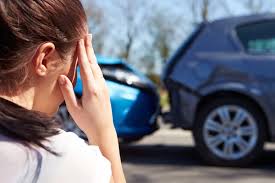
Witnessing a Car Accident in Fort Myers: Your Legal Rights and Responsibilities
Under §316.066 of the Florida Statutes, only the drivers involved in a crash have a legal duty to stop and report. A bystander who watches a rear-end pile-up on I-75 near Alico Road or a T-bone on Colonial Boulevard has no obligation to stay, call, or say anything at all. Florida law is permissive on this point. What the law does not tell you is that a single neutral witness who writes down what they saw in the first twenty minutes often determines whether an injured driver recovers a fair settlement or fights for two years over competing stories. That gap between what the statute requires and what the outcome requires is what this post is about.
I will walk through what Florida actually says about witness duties, the patterns I see in our office on real Fort Myers crashes, why witness cases are harder than they look, a recent matter that turned on a single eyewitness, and a short list of what to do if you ever find yourself standing on the shoulder of US-41 watching the airbags settle.
What Florida law actually says about witnesses to a crash
Three statutes do most of the work here. None of them is long, and each one has a plain-English meaning that often gets lost in summary articles.
§316.066, FL Stat. — the crash report requirement. The duty to report a crash falls on the drivers involved, not on a passing witness. If the property damage looks under the reporting threshold and nobody is hurt, the drivers may exchange information without an officer; if anyone is hurt or a vehicle has to be towed, an officer must respond and write a long-form report. A bystander does not have a reporting duty under this section.
§768.81, FL Stat. — modified comparative negligence. Since the 2023 reform, an injured Floridian who is more than 50% at fault for a wreck recovers nothing. That is a hard cliff that did not exist before. A witness account on US-41 saying “the silver pickup ran the red, the sedan had a green arrow” is the difference between the sedan driver being below the 50% line or above it. The statute is short; the practical weight of it is enormous.
§95.11(4)(a), FL Stat. — the two-year statute of limitations. Also from the 2023 reform: an injured driver now has two years from the date of the wreck to file suit. That used to be four. Memory degrades, and a witness account written in the first week is far more useful than one reconstructed two years later from a hazy memory of where the sun was.
One more statute matters if a witness chooses to help. §768.13, FL Stat. — Florida’s Good Samaritan Act — protects a person who renders aid in good faith at the scene of an emergency, as long as the help is not grossly negligent. In plain English: if a bystander stops, applies pressure to a bleeding wound, pulls someone from a smoking car, and the injured person later second-guesses the rescue, the statute shields the bystander. Reckless behavior is not protected. Reasonable, well-intentioned help is.
Five ways Fort Myers witness situations actually play out
Across thirty years of personal-injury work in Fort Myers, witness situations sort themselves into a handful of repeated patterns. We see these five constantly:
- The drive-by witness. Saw the wreck happen from two lanes over, pulled into a parking lot at Daniels Parkway, gave a name and number to the responding officer, and drove on. This is the most common, and it is also the most undervalued. A two-sentence account in a police report can be worth more than ten pages of accident reconstruction.
- The convenience-store witness. The wreck happens at the intersection by a gas station off Cleveland Avenue or Six Mile Cypress Parkway. The cashier or a customer pumping gas sees it. We usually get to this witness only if the officer thinks to ask the store for camera footage; otherwise the account vanishes within an hour.
- The neighbor witness. A pedestrian or driver hit on a residential block off McGregor Boulevard. A homeowner heard the impact, came out, saw the at-fault driver still in the car. These accounts are usually rock-solid because the witness lives there and is willing to give a written statement.
- The other-driver-stopped witness. Often the most reliable. A driver who was waiting at the same red light or stopped behind the wreck on Summerlin Road. They were not involved, but they watched the whole thing develop and have no stake in the outcome.
- The phone-camera witness. Increasingly common. A passenger in a third car records the aftermath, or a dashcam in a car two lanes back catches the impact itself. We have seen single dashcam clips reverse an adjuster’s liability decision in a single phone call.
The thread running through all five: the value of a witness is set in the first hour. A witness identified at the scene is gold. A witness located three months later by a private investigator is silver at best.
Why witness accounts are worth less the longer you wait
People assume a clean witness account closes the case. It often does the opposite, because the opposing carrier now has a reason to dig in.
The first complication is that adjusters call witnesses, too. Once an officer writes a name and phone number into a police report, both sides have access to that information. The at-fault driver’s carrier will call within forty-eight hours, sometimes within twenty-four. The adjuster will be polite, will record the call if the witness permits it, and will ask several questions that look factual on the surface but are designed to introduce ambiguity. “How fast would you say the green car was going? Could it have been forty? Could it have been forty-five?” The witness, trying, gives a range. That range then shows up in the carrier’s denial letter as evidence that the green-car driver was speeding.
The second complication is memory. Human memory of a sudden event is reliable for about seventy-two hours and then starts to drift. A witness who writes down what they saw in the parking lot fifteen minutes after the crash, in their own words, on a single sheet of paper, has built a record that holds up. A witness who waits a month and tries to reconstruct the sequence is asking for trouble on cross-examination.
The third complication is the comparative-negligence cliff. Because §768.81 is now an all-or-nothing rule at 50%, the defense in almost every contested case is to argue that the injured driver shares enough fault to cross that line. A neutral witness who can say “the light was green for the sedan” or “the pickup never slowed down” is the cleanest defense against that strategy. That is also why opposing carriers work so hard to soften witness accounts in the first few weeks.
How one twelve-minute stop on US-41 decided a case
Last year our office handled a rear-end wreck on US-41 in Fort Myers. Our client was at a complete stop in traffic on a weekday afternoon. The driver behind him hit him at speed, then pulled around and kept going. No exchange, no license plate caught by the client, nothing. By the time the responding deputy arrived, the at-fault driver was gone.
What saved the case was a witness. A woman two cars back in the same lane had watched the whole thing happen, written down a partial plate on the back of a receipt, and stayed long enough to give that piece of paper to the deputy. Without her, this was a hit-and-run with no defendant. With her partial plate, the deputy ran the combinations, found the registered owner, and the carrier eventually accepted that their insured had fled the scene.
The medical side of the case unfolded the way these often do. Our client developed chronic cervical strain, went through emergency room evaluation, then a course of physical therapy, then a pain-management referral when the symptoms did not fully resolve. The recovery was a full policy payout.
I think about that case because the entire result turned on a witness who could have driven on and did not. She spent maybe twelve minutes on the shoulder of US-41. Without those twelve minutes, our client had a chronic neck injury and no carrier to look to.
What to do if you witness a crash in Fort Myers
This list is short on purpose. Long lists are an internet tell. These are the five things I have watched actually matter, in the order they matter:
- Pull off the road safely first. A hundred feet past the wreck, hazards on, off the travel lane. On I-75 near Alico Road or on Pine Island Road this is non-negotiable; a witness who becomes a second crash is no help to anyone.
- Call 911 even if you assume someone else has. Half the time, nobody has. Tell the dispatcher the closest intersection or the nearest mile marker and how many cars are involved. Stay on the line.
- Write down what you saw, in your own words, on your phone notes, within fifteen minutes. Date, time, direction of travel, signal state if there was one, weather, the sequence as you remember it. Three short paragraphs are enough. Email it to yourself so there is a timestamp.
- Give the officer your name and a callback number before you leave. Do not give an opinion on fault. Give what you saw. The officer will ask short questions; answer short.
- If an insurance adjuster calls in the next week, decline the recorded statement. Offer to send a short written summary. There is no statute that requires a witness to give a carrier anything more than that absent a subpoena.
One observed-from-experience addition: if you took a photo with your phone, keep the original. Do not send compressed copies through text. The metadata on the original file is sometimes the single piece of evidence that establishes when and where the photo was taken, which an adjuster cannot then dispute.
Key Takeaways
- A bystander has no legal duty to stop or report under §316.066, FL Stat. The injured driver almost always benefits when bystanders stop anyway.
- §768.13, FL Stat. (Good Samaritan Act) protects a witness who renders reasonable aid in good faith at the scene.
- The 2023 reform of §768.81, FL Stat. installed a 50% comparative-negligence cliff. A neutral witness account is the cleanest defense against a carrier trying to push the injured driver over that line.
- Insurance adjusters often contact witnesses within forty-eight hours. A witness can decline a recorded statement and offer a short written summary instead.
- Under §95.11(4)(a), FL Stat., the injured party now has two years to file suit. A witness account written in the first week holds up much better than one reconstructed near the deadline.
Frequently Asked Questions
Q1. If I see a wreck on US-41 or I-75, am I legally required to stop?
No. Florida does not require a bystander to stop, stay, or give a statement after watching a crash. The drivers involved have that duty under §316.066, FL Stat. A witness does not. That said, the parties hurt in the wreck often have no other way to prove what happened, so staying for two minutes to give a name and a one-paragraph account is a meaningful kindness.
Q2. Does Florida’s Good Samaritan Act protect me if I try to help?
Yes, within limits. §768.13, FL Stat. shields a person who renders emergency aid at the scene in good faith, so long as the help is not grossly negligent. Pulling a driver from a burning car, applying pressure to a bleeding wound, or starting CPR are the situations the statute was built for. It does not protect reckless behavior.
Q3. An insurance adjuster called and said I have to give a recorded statement. Is that true?
Almost never. Unless a court subpoena has been issued, a witness is not obligated to give a recorded statement to any insurance carrier. A short, written account of what was seen is usually enough. If an adjuster keeps pressing, ask the question in writing and then forward it to the injured party’s attorney.
Q4. I took photos at the scene. Should I share them with the police, the lawyer, or the adjuster?
Photos go to the officer writing the crash report and to the injured party (or that person’s lawyer). They do not need to go to the at-fault driver’s adjuster on a first call. Photos are evidence, and evidence belongs in the hands of the people building the injured party’s claim, not the carrier looking for a reason to deny it.
Q5. How long does the injured driver have to file a claim, and how does my testimony fit in?
Under the 2023 reform of §95.11(4)(a), FL Stat., an injured Floridian has two years from the crash to file a negligence lawsuit. A witness account taken in the first week, while the memory is sharp, almost always survives that two-year window better than one written a year later. Putting it in writing early is the single most useful thing a witness can do.
If you were hurt in a Fort Myers crash, or if you witnessed one and want to know what to do next
Call our office at 239-992-8259 for a free consultation. There is no fee unless we recover for you. I have spent thirty years working car-accident claims along the Daniels Parkway, Six Mile Cypress, McGregor Boulevard, Cleveland Avenue, and Summerlin Road corridors, and we are glad to talk through what your account is worth, or what a wreck you were hurt in may be worth, before you say anything to a carrier.
About the Author

Three decades into his personal injury career in Fort Myers and across Lee County, David B. Pittman, Esq. continues to lead Pittman Law Firm, P.L., the firm he founded, with a sustained focus on serious-injury auto and complex-liability cases. The firm’s Fort Myers presence handles a steady stream of serious-injury work along the Daniels Parkway, Six Mile Cypress, McGregor Boulevard, Cleveland Avenue, and Summerlin Road corridors, and along I-75 between Estero and Bell Tower.
David started at The Citadel, The Military College of South Carolina, then the University of South Carolina School of Law. He is AV-Preeminent at Martindale-Hubbell and a member of the Multi-Million Dollar Advocates Forum.
David has held a Florida real estate broker license for twenty-five years, a credential that shapes how the firm reads the property side of premises cases. The firm handles personal injury cases across Lee and Collier Counties, serving Fort Myers, Bonita Springs, Naples, Cape Coral, Estero, and Lehigh Acres, with offices at Windsor Place in Bonita Springs (main) and Fort Myers (satellite). Call 239-992-8259 for a free consultation.
The information on this website is provided for general informational purposes only. Nothing here should be taken as legal advice for any individual case or situation. Reading this page does not create an attorney-client relationship with Pittman Law Firm, P.L. This is attorney advertising.