

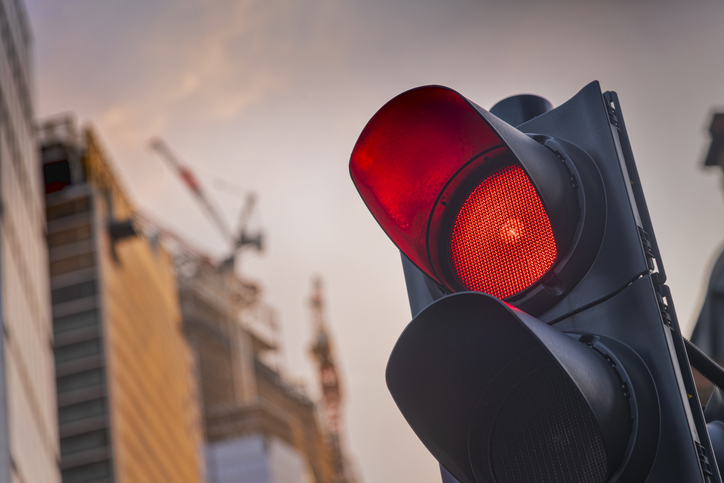
Why Running Red Lights Is Becoming Fort Myers’ Deadliest Car Accident Cause
Running a red light is not automatically an open-and-shut case. I know that sounds backwards. The carrier knows the other driver ran the light. We know it. The police report says it. But Florida’s modified comparative negligence rule — rewritten in March 2023 — means the carrier can still push your share of fault above 50 percent and walk away owing nothing. That fight happens on every serious red-light file that comes through our Fort Myers office, and it is why the first 72 hours after the crash matter as much as anything that follows.
What Florida law actually says about running a red light
The core rule lives in Florida Statute 316.075. The plain-English version is this: when the light is red, you have to come to a complete stop before the crosswalk or stop line, and you have to stay stopped until the light turns green. If your front bumper crosses the line on red, you’ve run the light, even if you thought you were going to make it on yellow.
Right turn on red is the rule that trips drivers up the most. It is legal in Florida after a full stop, unless a sign at the intersection takes that right away. The complication is what “full stop” means. A rolling stop where the wheels never actually quit turning is a violation. About four out of five red-light citations we see come out of right-on-red without a true stop.
For the civil case, three other statutes matter as much as 316.075:
- Comparative fault — §768.81, Florida Statutes, the 2023 reform. Florida is now a modified comparative negligence state. If a jury assigns you 51 percent or more of the fault, you recover zero. If you are 50 percent or under, your recovery gets reduced by your share. That single change is why intersection cases are fought so hard on percentages now.
- Time to sue — §95.11(4)(a), Florida Statutes. The 2023 reform cut the negligence statute of limitations from four years to two. Old advice you read online may still say four. It is two.
- No-fault medical — §627.736, Florida Statutes, the PIP statute. The first $10,000 of medical and lost wages comes out of your own auto policy regardless of who ran the light, but you have to be seen by a doctor within 14 days or you lose the benefit entirely.
The four scenarios we actually see at Fort Myers intersections
The vast majority of the red-light files that come across my desk fall into one of four patterns. They each play out differently in front of an insurance adjuster.
- The classic T-bone. Driver A has the green, Driver B blows the red, and Driver B’s bumper meets Driver A’s door at full speed. The injuries are severe because car doors are not built like front bumpers. There is no crumple zone for a side hit. We see traumatic brain injury, shoulder fractures, hip fractures, and ribcage damage on these cases more than any other category.
- The late-yellow chain. Two or three cars are stacked up trying to clear the intersection on a stale yellow. The light goes red mid-cluster, the cross-traffic light goes green, and someone in the cluster gets hit. The argument here is always about who entered the intersection on what color. Without camera footage, it is one driver’s word against another.
- The right-on-red pedestrian or cyclist. A driver makes a rolling right turn on red and clips a person in the crosswalk. We see this on the Daniels Parkway corridor and along Cleveland Avenue near the bus stops. The pedestrian had the walk signal. The driver was looking left for a gap in traffic and never looked right.
- The hit-and-run runner. The car that ran the light keeps going. We have worked these on US-41, on Colonial Boulevard, and out along Pine Island Road. The injured driver is left with a license plate fragment, a vehicle description, and a strong need for uninsured motorist coverage under §627.727.
Red-light cases — why they are harder than they look
An intersection crash with a clear violation should be the easiest case in personal injury. In practice it is one of the messier ones, and here is why.
The first complication is the comparative-fault argument. Since the 2023 reform, every defense carrier I have dealt with on a red-light case has tried to put some percentage of fault on the driver who had the green. Were you on your phone? Were you a few miles per hour over the limit? Could you have seen the other car coming and braked sooner? The carrier doesn’t need to win this argument to use it. They only need to push your share above 50 percent and you walk away with nothing. Most of my work on these files is making sure that argument has nowhere to go.
The second complication is evidence. The intersection at Daniels Parkway and Six Mile Cypress Parkway has cameras. The intersection at McGregor Boulevard and a residential side street probably does not. When there is no camera, the case turns on the police report, witness statements, and crash reconstruction. §316.066, Florida Statutes, requires a crash report on any injury accident, and that report is your foundation. We pull it the same week as the call.
The third complication is medical timing. Cervical injuries from a red-light hit often take a few days to show up. The adrenaline of the crash masks the pain, the client tells the officer “I’m fine,” and three days later they cannot turn their head. That officer report saying “no injury” then becomes the carrier’s favorite exhibit. The 14-day PIP rule under §627.736 makes this worse — wait too long to see a doctor and you forfeit no-fault medical coverage entirely.
The fourth complication is the runner. About a quarter of the red-light files we open involve a driver who did not stop after the collision. That moves the case onto the client’s own uninsured motorist policy, and now the firm is fighting the client’s own carrier instead of the at-fault driver’s. The carriers know most clients hate suing their own insurance company. They use that.
A hit-and-run on US-41 and how the UM claim resolved it
A client we represented was rear-ended on US-41 in Fort Myers by a driver who took off before anyone could get a plate. The client did the right things in the moment. He pulled over, called 911, took photos of the debris on the road, and waited for the responding deputy. He told the deputy he felt “shaken but okay.” Within three days he could not turn his neck without sharp pain radiating into his shoulder.
The case became a chronic cervical strain claim with ER care, a course of physical therapy, and a stretch of pain management. There was no at-fault driver to chase. The case lived or died on the client’s own uninsured motorist coverage. The carrier opened with a low offer and a request for a recorded statement that I told them they would not be getting. We documented the treatment, sequenced the medical records, and made the carrier deal with the realistic value of a chronic cervical injury in a client who needed his neck to do his job. We recovered the full policy limits on his own UM coverage.
The lesson I take from that case, and the one I share with new clients on hit-and-run intersection crashes, is that the most important policy in a runner case is usually one you already paid for. UM is the coverage I tell every Florida driver to carry, at the highest limit they can stand to pay for. The day you need it, you will not regret a dollar of it.
What to do if you were hit by a red-light runner in Fort Myers
This is the action list I give clients on the phone in the first call. None of it is generic. Each item is in here because I have watched a case turn on it.
- Photograph the intersection before you leave it. The position of the cars, the angle of the skid, the signal heads showing whichever color happens to be lit when you photograph them. If the runner is gone, photograph the debris field. Carriers reconstruct from that.
- Get the responding officer’s name and the crash report number before the scene clears. The report under §316.066 will be available in a few business days. You want to be the one who picks it up first.
- Do not say “I’m fine” on the body camera. Say “I’m not sure yet, I’m going to get checked out.” Cervical and concussion symptoms routinely surface 48 to 72 hours later. A “no injury” note in the report is hard to walk back.
- See a doctor within 14 days, not 30. The PIP statute is unforgiving on this. Miss the window, lose the $10,000 in no-fault medical.
- Save the damaged car and its data. Modern vehicles store the last few seconds of speed, brake, and throttle data in the event data recorder. If the car gets crushed at a salvage yard before that data comes out, you have lost it. Tell the carrier in writing not to total the vehicle until the EDR is pulled.
- Do not give a recorded statement to the other driver’s carrier. You are not required to and it almost never helps you. If your own carrier requires a statement under your policy, that is different — but even then, call a lawyer first.
- Pull intersection camera footage in the first two weeks. City and county systems overwrite on a 30 to 90 day cycle. Lee County DOT, the City of Fort Myers, and the private cameras at gas stations and shopping centers near the intersection all preserve different windows. Send preservation letters early.
Key Takeaways
- Running a red light under §316.075 means crossing the stop line on red, including a rolling right turn on red — and it counts as negligence per se in a civil case.
- Florida is now a modified comparative negligence state under the 2023 reform of §768.81. If a jury puts you at 51 percent or more, you recover zero.
- The negligence statute of limitations is two years, not four. The 2023 reform changed that. Old advice online is outdated.
- PIP under §627.736 requires medical treatment within 14 days of the crash, or you lose the $10,000 no-fault medical benefit entirely.
- If the driver who ran the light left the scene, your own uninsured motorist coverage under §627.727 is often the only meaningful source of recovery — carry as much of it as you can afford.
Frequently Asked Questions
Q1. What does Florida law actually say about running a red light?
Florida Statute 316.075 says a driver facing a steady red signal has to stop before the crosswalk or stop line and stay stopped until the light turns green. The moment your front bumper crosses that line on a red, you have run the light, even if the rest of the car is still behind it.
Q2. If I get T-boned by someone who ran a red light, is it automatically their fault?
Usually, but not always. Florida went to modified comparative negligence in 2023 under §768.81. A jury can still assign you some percentage of fault for speed, distraction, or failure to keep a lookout. If your share lands above 50 percent, you recover nothing. We have seen carriers try to pin 20 to 30 percent on the green-light driver to shave the payout.
Q3. How long do I have to file a Fort Myers red-light crash claim?
Two years from the date of the crash for most negligence claims under §95.11(4)(a), as of the 2023 reform. Waiting hurts you in other ways too. Intersection camera footage gets overwritten on a 30 to 90 day cycle and witness memories fade fast.
Q4. Does PIP cover my injuries if someone else ran the light?
Yes. Florida’s PIP statute, §627.736, pays the first $10,000 of medical and lost wages regardless of fault, but you have to get to a doctor within 14 days or you lose it. PIP is rarely enough on a serious red-light crash, so the next layers are the at-fault driver’s bodily injury coverage and your own uninsured motorist coverage under §627.727.
Q5. Are right turns on red still legal in Fort Myers?
Yes, after a full stop and only when no sign prohibits it. The full-stop part is where most drivers get into trouble. A rolling right turn that hits a pedestrian in the crosswalk is still a red-light violation and still negligence per se.
Talk to our office about your red-light crash
If you were hit by a driver who ran a red light anywhere in Fort Myers, Bonita Springs, Naples, Estero, Cape Coral, or Lehigh Acres, I would like to hear about it before the carrier locks in their version of the story. Call 239-992-8259 for a free consultation. There is no fee unless we recover for you.
About the Author

David B. Pittman, Esq. has practiced personal injury law in Fort Myers and across Lee County for more than thirty years, founding Pittman Law Firm, P.L. along the way, with a sustained focus on serious-injury auto and complex-liability cases. The firm’s Fort Myers presence handles a steady stream of serious-injury work along the Daniels Parkway, Six Mile Cypress, McGregor Boulevard, Cleveland Avenue, and Summerlin Road corridors, and along I-75 between Estero and Bell Tower.
Two South Carolina institutions shaped David’s path: The Citadel, The Military College of South Carolina for undergraduate and the University of South Carolina School of Law for his JD. He is AV-Preeminent at Martindale-Hubbell and a Multi-Million Dollar Advocates Forum member.
David has held a Florida real estate broker license for twenty-five years, a credential that shapes how the firm reads the property side of premises cases. The firm handles personal injury cases across Lee and Collier Counties, serving Fort Myers, Bonita Springs, Naples, Cape Coral, Estero, and Lehigh Acres, with offices at Windsor Place in Bonita Springs (main) and Fort Myers (satellite). Call 239-992-8259 for a free consultation.
This article is attorney advertising and is provided for general information only. It is not legal advice and does not create an attorney-client relationship. Outcomes depend on the facts of each case; past results do not guarantee future results.