

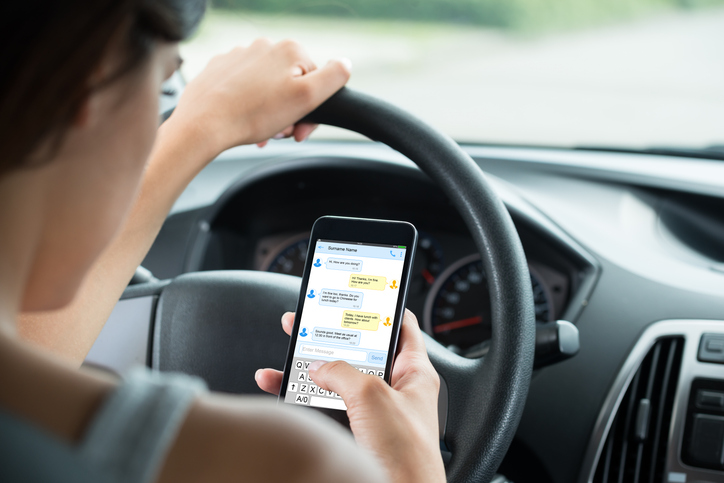
Why Distracted Driving Car Accidents in Naples Are Rising in 2025
One thing I hear all the time after a Naples distracted-driving crash: “The other driver was obviously on their phone, so this should be simple.” I understand why people think that. Phone use in hand is a Florida moving violation. It is hard evidence of negligence. But it is not an automatic win, and understanding the gap between those two things is what gets clients the recovery they deserve rather than the one the carrier is willing to offer.
Distracted driving in Naples is not climbing because drivers suddenly got worse. It is climbing because the dashboards got busier, the seasonal traffic got heavier, and the windows we have to prove what the other driver was doing are getting shorter. Our office has worked enough of these cases along US-41, Immokalee Road, and Pine Ridge Road to see the same patterns repeat. The point of this piece is to walk you through the Florida law that actually governs these crashes, the scenarios we keep seeing, why they are harder than they look on paper, and what to do if one happens to you.
What Florida law actually says about distracted driving crashes
There is no single Florida statute that says “distracted driving equals automatic liability.” The law works through the general negligence framework, and four statutes in particular shape almost every case we open in our office.
The first is §768.81, Florida Statutes, which governs comparative fault. In March 2023 the legislature changed this from pure comparative negligence to modified comparative negligence. In plain English: if a jury finds you more than 50% responsible for the crash, you recover nothing. If you are 50% or less at fault, your recovery is reduced by your share. Before 2023, a 70/30 split still paid the injured driver 30%. Today, it pays zero. This single change has done more to shape how we work up a Naples auto case than any other piece of legislation in the last decade.
The second is §95.11(4)(a), the statute of limitations for negligence. That same 2023 reform package shortened the deadline from four years to two for crashes occurring on or after March 24, 2023. People still walk into our office under the old four-year assumption. They are wrong, and on a couple of occasions I have had to deliver that news to someone who was already past the deadline. Calendar the date the day after the crash.
Third is §627.736, Florida’s Personal Injury Protection rule. Every Florida auto policy includes $10,000 of PIP, which pays your medical bills and a portion of lost wages on a no-fault basis. PIP applies whether the other driver was looking at TikTok or watching the road. It is the first dollar of medical coverage in almost every crash we handle, and there are 14-day reporting traps inside it that injured drivers routinely miss.
Fourth is §627.727, the uninsured and underinsured motorist statute. UM is the coverage you buy on your own policy to protect yourself against the driver who has no insurance, fled the scene, or carries only the Florida liability minimum. I have been telling clients for thirty years that UM is the most undervalued line item on a Florida auto policy. In a distracted-driving file where the at-fault driver carries a $10,000 minimum and your shoulder needed surgery, your own UM policy is the difference between justice and a stack of bills.
One more statute people forget about: §316.066 requires a written law-enforcement crash report when there is injury, death, or apparent damage over $500. That report and the responding officer’s narrative often anchor the distraction proof on day one, especially if the officer wrote down phone-in-hand observations or witness statements before memories blurred.
Naples distracted-driving files — the five patterns we actually deal with
If you put the last five years of our Naples auto files on a table and sorted by mechanism, the distracted-driving stack falls into roughly the same five buckets:
- The phone-down rear-ender at a light. The driver behind glances at a text, the light cycle changes, traffic stops, and they hit a stationary car at 25 to 35 mph. We see this most on US-41 between Pine Ridge and Vanderbilt Beach Road, where the lights are close together and people get impatient.
- The infotainment-screen drift. Newer vehicles have moved climate, audio, and even windshield-wiper controls into touchscreens. Drivers look down to change a setting and drift across the lane line. On Immokalee Road and on I-75 in season, this becomes a sideswipe at highway speed.
- The GPS overshoot. Out-of-town drivers, particularly during season, follow the navigation voice a beat too late, realize they need the exit they just passed, and cut across two lanes. Goodlette-Frank Road and the Pine Ridge interchange see a lot of this.
- The commercial-vehicle distraction. Delivery van or work truck pulling out of a commercial driveway with the driver still looking at a tablet route screen. The driver never sees the through-traffic vehicle. We will get to one of those in a moment.
- The driver-assist false-comfort case. The vehicle has lane-keeping and adaptive cruise, the driver settles into a passive posture, and when something unexpected happens they are mentally too far away from the wheel to react in time. The technology is not the villain; the assumption that it is doing more than it actually does is.
None of these is rare. All of them are preventable. And every one of them produces a different evidence problem for the injured client.
Three things that make a distracted-driving file harder than it looks
From the outside, a distracted-driving case looks straightforward. The other driver was on the phone. They hit you. End of story. In practice, three things make these files harder than a standard rear-end.
The proof window is short. Phone records exist, but the carriers require a subpoena, and most carriers purge detailed app-use data on a rolling 30 to 90-day cycle. Doorbell and storefront video along US-41 typically overwrites in 7 to 30 days. If you wait three months to call a lawyer, half the evidence is already gone. I do not say that to scare anyone — I say it because I have watched it happen.
The comparative-fault argument is always coming. Defense carriers learned the new 50% bar quickly. In almost every case I have opened since March 2023, the adjuster has tried to push some share of fault back onto my client. Were they speeding? Did they brake hard? Were they also on a call? You do not have to be perfect to recover, but you cannot afford to give the other side a 51% argument. That is why we document our client’s conduct as carefully as the defendant’s.
The insurance stack is rarely a single policy. A typical distracted-driving file in our office involves the at-fault driver’s liability policy, your PIP, your UM, sometimes a household resident’s UM, and on commercial cases the company’s commercial auto and umbrella layers. Each layer has its own notice deadlines and proof requirements. Miss one and you leave money on the table that you cannot reach later.
The Estero case behind this
One we handled recently sits at the corner of US-41 and the Coconut Point Mall driveways in Estero. Our client was driving north on US-41 with the right of way. A branded delivery van — national fleet, the logo was visible from a block away — pulled out of the shopping center lot directly into our client’s path. The driver later told the responding officer he had been looking at his tablet route screen, looking for the next stop. He never saw our client at all.
The impact was hard enough that our client braced against the wheel with their right arm. The immediate complaint at the scene was the shoulder. An MRI a week later confirmed a torn rotator cuff, and the orthopedic surgeon ultimately performed arthroscopic shoulder surgery followed by months of occupational therapy. This is the part of a case that is not about law at all. It is about somebody who could no longer reach overhead to get a coffee mug, who had to relearn how to sleep on their good side, who lost income while they were down.
Because the at-fault driver was on the clock for a national corporation, the file ran against the company’s commercial liability policy, not the driver’s personal insurance. We documented the tablet-distraction admission, the surveillance video from the shopping center, and the company’s own delivery-route data. The recovery was a high-value settlement against the corporate policy. The driver kept his job. Our client kept the use of their arm and the ability to work.
I describe that case because it lays out, in one file, almost everything I have been talking about: a clear distraction admission, a commercial defendant with deeper coverage than the driver, time-sensitive video, and a serious injury that needed real medical follow-through. None of it would have come together if the call to our office had come six months later.
What to do if a distracted driver hits you in Naples
The “what to do” lists you find online are usually generic. Here is what I have actually used with our clients in Lee and Collier Counties, and why each step matters.
- Get the law-enforcement crash report started at the scene. §316.066 requires it on any injury case. The officer’s first observations — phone in hand, tablet on lap, food in the cup holder — are often the cleanest evidence of distraction you will ever have. I have used these reports more times than I can count to anchor the first liability conversation with the carrier.
- Photograph the inside of the other car, not just the bumpers. If you are physically able, get a phone picture of the dashboard, the center console, anything visible through the window. Defense lawyers do not expect this and it has won me arguments on more than one file.
- Identify any witness who saw the other driver before impact. Distraction is rarely captured in the crash itself. It is captured in what someone saw five seconds earlier. A name and number, written down before that witness leaves the scene, is worth more than a paragraph of speculation later.
- Get a medical evaluation within 14 days. Florida PIP shuts off if you do not. I have watched clients lose $10,000 of guaranteed coverage because they tried to tough it out for three weeks.
- Save the receipts and the calendar. Lost wages, missed events, the day you could not pick up your grandchild — these become real damages but only if you write them down close to the time. Memories blur faster than people expect.
- Call a personal injury lawyer before you call the other driver’s carrier back. The other carrier’s adjuster will sound friendly. Their job is to lock in a recorded statement that minimizes your injury and shifts some share of fault to you. There is no benefit to giving that statement before counsel has reviewed the file.
Key Takeaways
- Florida’s 2023 reform of §768.81 means a driver found more than 50% at fault recovers nothing — distracted-driving cases now turn on protecting our client’s share of fault, not only proving the defendant’s.
- The negligence statute of limitations dropped from four years to two under §95.11(4)(a) for crashes on or after March 24, 2023. The old four-year rule is a trap people still fall into.
- PIP under §627.736 pays the first $10,000 of medical bills on a no-fault basis but requires a medical evaluation within 14 days of the crash.
- Phone records, telematics, and storefront video are all on short retention cycles. Most of the evidence in a distracted-driving file is gone in 30 to 90 days unless someone preserves it.
- Uninsured and underinsured motorist coverage under §627.727 is often the difference between a real recovery and a stack of bills when the at-fault driver carries only the Florida minimum.
Frequently Asked Questions
Q1. Is the other driver automatically at fault if they were on their phone when they hit me?
Phone use is strong evidence of negligence, but Florida law still asks a jury to weigh the conduct of every driver involved. Under Florida’s 2023 modified comparative negligence rule, if you are found more than 50% at fault you cannot recover at all, so even with a clearly distracted defendant we still build the file as if your share of fault will be argued.
Q2. How do you actually prove the other driver was distracted?
We move quickly to preserve the phone billing and app-use records by subpoena, pair them with the Florida crash report under §316.066, pull any nearby business or doorbell video before it loops over, and on commercial vehicles we request telematics, dash-cam, and onboard data. Time matters because almost all of that evidence is overwritten within 30 to 90 days.
Q3. Does PIP cover my injuries even if the other driver was clearly texting?
Yes. Under §627.736, your own Personal Injury Protection coverage pays the first $10,000 of medical bills and lost wages on a no-fault basis, regardless of who caused the crash. PIP is the starting layer; the at-fault driver’s liability policy and any uninsured motorist coverage on your own policy come into play after that.
Q4. How long do I have to file a lawsuit after a Naples car crash?
For crashes occurring on or after March 24, 2023, the statute of limitations for negligence in Florida is two years under §95.11(4)(a). It used to be four. People still walk into our office thinking they have four years and they do not, so the calendar needs to be watched from day one.
Q5. What if the distracted driver had no insurance or only the state minimum?
This is one reason we push every client we meet to carry uninsured and underinsured motorist coverage under §627.727. If the at-fault driver carries only the Florida minimum, your own UM policy is often the difference between covering a surgery and absorbing the bill yourself. We file UM claims against our clients’ own carriers regularly and there is nothing improper about it.
Talk to our office before you talk to their carrier
If a distracted driver hit you in Naples, Bonita Springs, Estero, Fort Myers, or anywhere in Lee or Collier County, the most useful thing you can do this week is have a conversation with a lawyer who has worked these files for thirty years. We will walk you through the evidence that needs to be locked down, the PIP deadlines, and what your own policy actually covers. Call 239-992-8259 for a free consultation. There is no fee unless we recover for you.
About the Author

David B. Pittman, Esq. has practiced personal injury law in Naples and across Collier County for more than thirty years, founding Pittman Law Firm, P.L. along the way, with a sustained focus on serious-injury auto and complex-liability cases. Naples cases run heaviest along US-41, Immokalee Road, Pine Ridge Road, and Vanderbilt Beach Road, and through the older commercial and resort properties along Gulf Shore Boulevard and 5th Avenue South.
His training track runs from The Citadel, The Military College of South Carolina, where he completed his undergraduate work, to the University of South Carolina School of Law, where he earned his JD. He holds an AV-Preeminent rating from Martindale-Hubbell and is a member of the Multi-Million Dollar Advocates Forum.
David has held a Florida real estate broker license for twenty-five years, a credential that shapes how the firm reads the property side of premises cases. The firm handles personal injury cases across Lee and Collier Counties, serving Fort Myers, Bonita Springs, Naples, Cape Coral, Estero, and Lehigh Acres, with offices at Windsor Place in Bonita Springs (main) and Fort Myers (satellite). Call 239-992-8259 for a free consultation.
The information on this website is for general information purposes only. Nothing on this site should be taken as legal advice for any individual case or situation. This information is not intended to create, and receipt or viewing does not constitute, an attorney-client relationship. This is attorney advertising.