

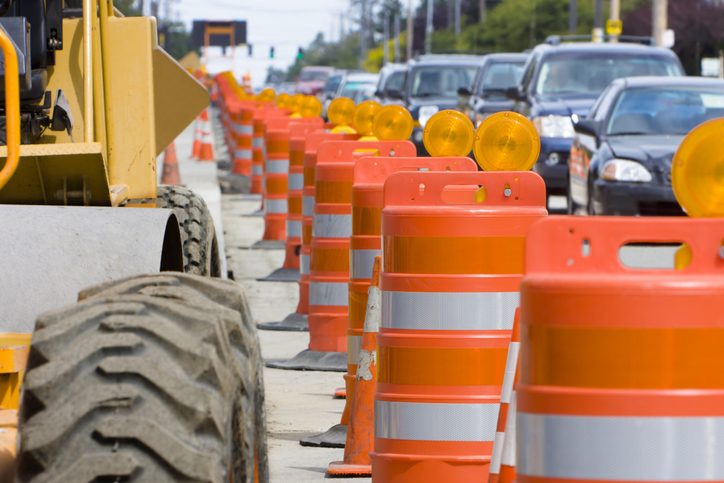
Why Construction Companies May Be Liable for Fort Myers Work Zone Accidents
Can the construction company be on the hook, or is this just between me and the other driver’s insurance company? That is what people ask us after a crash inside a work zone on Daniels Parkway, Six Mile Cypress, Colonial Boulevard, or I-75 near Alico Road. At any given moment a piece of those corridors is torn up, narrowed, repaved, restriped, or coned down to one lane. When something goes wrong inside one of those zones, the answer usually surprises people: often, yes, the contractor is on the hook — but you have to prove it the right way, on a short clock, with the right records.
I have handled enough of these to know that the contractor’s file is where the case is usually won or lost, and that file is not going to volunteer itself.
What Florida law actually says about work zone liability
Three Florida statutes do most of the heavy lifting in a work zone case. None of them are written in plain English, so let me unpack them.
§768.81, Florida Statutes — modified comparative negligence. Florida used to be a pure comparative negligence state, meaning even a driver who was 90% at fault could recover 10% of their damages. The 2023 tort reform changed that. Today, if a jury assigns you more than 50% of the fault, you recover nothing. At 50% or less, your award is reduced by your share. In a work zone case this matters because the insurer for the at-fault driver will try to blame you for “driving too fast for conditions” inside the cones. The contractor’s own negligence — bad signage, missing taper, no flagger — is what pulls your number down to something you can live with.
§95.11(4)(a), Florida Statutes — two-year statute of limitations. The same 2023 reform cut the negligence statute of limitations from four years to two. If you were hurt in a work zone on March 1, 2026, you have until March 1, 2028 to file suit. That sounds like plenty of time. It is not. Maintenance-of-traffic plans, daily contractor logs, and roadside camera footage often disappear inside ninety days. The clock is short and the evidence clock is shorter.
§627.736, Florida Statutes — PIP. Your own auto policy’s $10,000 in Personal Injury Protection pays the first round of medical bills regardless of fault, but only if you see a qualified medical provider within fourteen days. In a work zone crash where the injuries can take days to declare themselves — concussions, soft-tissue, rib injuries from belt loading — that fourteen-day window catches people off guard. Get checked early, even if you feel fine. The Florida Department of Highway Safety crash report form your officer filled out triggers the PIP clock; see flhsmv.gov for the standard crash-report copy.
Beyond the statutes, the Florida Department of Transportation enforces the Manual on Uniform Traffic Control Devices (MUTCD) and the FDOT-specific Index 102 standards for work zones. Those standards govern sign spacing (typically 200–1,000 feet apart depending on posted speed), taper length (the length of the diagonal that funnels you from two lanes into one), flagger placement, advance warning, and lighting. A contractor that pulled a permit and then ignored the MOT plan they signed has a serious problem in court.
The four scenarios we actually see in Fort Myers work zone cases
Patterns repeat. In thirty years, almost every work zone case our firm has handled fits one of these four shapes:
- The disappearing taper. Two lanes go to one, but the cones jump in too suddenly. There is no proper 500-foot taper, just a wall of orange. A driver doing the posted speed has no chance to merge cleanly. We see this on Daniels Parkway and on Colonial Boulevard, almost always at night.
- The dark zone. The crew left for the day, took their light tower with them, and left a lane shift in place. No reflective sheeting on the channelizers, no temporary lighting, no flagger. The first driver through after sundown is the test case.
- The orphaned barrel. A barrel or piece of equipment migrates into a live lane during the day — wind, a sideswipe, a forklift that nudged it — and nobody on the crew is watching the buffer area. The next driver to come through swerves and either rolls or hits oncoming traffic.
- The vanishing flagger. A two-way operation on a narrow road needs flaggers at both ends communicating by radio. When one flagger walks off station for a smoke break or a phone call, you get head-on closing speeds inside the work zone. We have seen the I-75 ramps at Alico Road run this way during overnight resurfacing.
Each of these has a paper trail. The contractor was supposed to inspect, log, and correct. If they did not, the log is either missing or it tells the story for us.
Work zone cases — why they are harder than they look
A regular two-car wreck has two drivers and two carriers. A work zone case can have eight defendants: the at-fault driver, the contractor, a paving subcontractor, a traffic-control subcontractor, the materials supplier whose truck dropped debris, FDOT or the local agency that approved the MOT plan, the contractor’s general liability carrier, and the contractor’s umbrella carrier. Each one points at the others. Each one runs its own clock.
Three practical problems come up every time. First, evidence preservation. The MOT plan, daily inspection sheets, sign-in logs, near-miss reports, and any internal incident write-ups are the case. They are also routinely destroyed or “lost” if nobody sends a preservation letter inside the first sixty days. Our office sends one in the first week.
Second, sovereign immunity. If a Florida government agency is named, §768.28 caps damages at $200,000 per person and $300,000 per incident absent a legislative claims bill, and you have to give written pre-suit notice. That math changes the strategy on who you sue first and how you frame the contractor’s role versus the agency’s role.
Third, the contractor’s defense witness. The big road-construction defendants almost always retain a former FDOT engineer as their consultant. He or she will testify that the cones were where they were supposed to be, the signs were lit, the flagger was in position. The way you beat that testimony is with photographs, dash-cam, and the contractor’s own logs — not by hiring a louder consultant of your own.
What a Naples truck case can look like
One we worked recently started as a T-bone in the early evening on Immokalee Road in Naples. Our client was northbound through a stretch where a commercial truck pulled out of a side access cut that ran along the construction shoulder. The truck never saw our client. The impact crushed the driver’s-side door pillar inward and pushed the vehicle across the median.
Our client walked away from the scene on his own power and told the deputy he was fine. By the next morning he could not remember the names of his grandchildren. The hospital workup found a traumatic brain injury and multiple rib fractures on the left side from the belt loading. He was a fifty-eight-year-old who had been running his own small business for two decades, and he could no longer reliably hold a phone conversation for more than ten minutes.
The neuropsychological testing is what made the case. Without it, the insurer’s position would have been “he looks fine, he walks fine, he talks fine.” With it, we had a baseline cognitive measurement, a six-month follow-up, and a treating neurologist who could explain to a jury what mild traumatic brain injury looks like on the inside.
The case settled in the multi-millions about three weeks before trial. The commercial trucking carrier had policy stacking that we found early, and the late settlement reflected the carrier finally accepting what the neuropsychological record showed. The lesson I take from that case, and tell every client now: if you hit your head, or even if the deputy notes that the airbag deployed and you “seemed dazed,” see a neurologist within the week. Not the ER discharge instructions. A real follow-up appointment.
What to do if you were hurt in a Fort Myers work zone
Here is the order our office walks every new client through. None of this is theoretical — each item came from a case where doing it (or failing to do it) changed the outcome.
- Photograph the work zone before anything moves. The taper, the sign spacing, the flagger station, the lighting. The contractor will be on site at sunrise rebuilding the layout. Your phone is the only record of what it actually looked like at the moment of the crash.
- Get the FDOT permit number off the project sign. Every active FDOT work zone has a sign posting the project number, contractor name, and project office phone. That single sign tells us who to send the preservation letter to. If you can’t get the sign, note the nearest mile marker.
- Ask for the crash report and the contractor name in the narrative. A Florida Long Form crash report under §316.066 usually identifies the contractor in the narrative if the responding deputy noticed work zone involvement. If it doesn’t, that is something we add in the supplemental request.
- See a doctor inside fourteen days. PIP under §627.736 is gone if you miss that window. I have watched good cases lose six figures of medical coverage because someone “felt okay” and skipped the follow-up.
- Do not give a recorded statement to the contractor’s insurer. They will call within forty-eight hours, sound friendly, and ask you to walk through what happened. Politely decline and route them to your lawyer. They are not on your side.
- Save the dash-cam, even if it didn’t capture the impact. The two minutes before the crash — the cones, the sign placement, the lighting — is what wins these cases. Pull the SD card and put it somewhere safe.
- Call a lawyer before the contractor’s adjuster does. The preservation letter is what protects the MOT plan, the inspection logs, and the contractor’s internal write-up. If those records get purged on routine retention before your lawyer sends a hold notice, the case gets much harder.
Key Takeaways
- Florida contractors must follow the MUTCD and FDOT Index 102 standards for work zone setup. When they don’t, and a crash results, they share liability with the at-fault driver.
- Under §768.81, you can still recover if you were 50% or less at fault. The contractor’s failures are often what keeps your fault share low enough to win.
- You have two years from the crash to file suit under §95.11(4)(a). The evidence clock — MOT plans, daily logs, video — runs much faster than that.
- PIP under §627.736 requires medical treatment within fourteen days. Get checked even if you feel fine, especially after any head impact.
- The case is usually won on the contractor’s own paperwork. Preservation letters in the first week protect it from getting lost.
Frequently Asked Questions
Q1. Can a construction company really be sued for a Fort Myers car accident?
Yes. If a contractor set up a work zone without the signs, taper lengths, lighting, or barriers that Florida’s traffic-control rules require, and that failure caused a crash, the contractor is a defendant in the same suit as the at-fault driver. We have brought claims against contractors, subcontractors, traffic-control companies, and the agency that approved the maintenance-of-traffic plan.
Q2. What if I was partly at fault for the work zone crash?
Florida is now a modified comparative negligence state under §768.81. If a jury finds you more than 50% at fault, you recover nothing. At 50% or less, your recovery is reduced by your share. In work zone cases the contractor’s negligence often pulls the driver’s share down, so it is worth a careful look even if an insurer is trying to blame you.
Q3. How long do I have to file a Florida work zone injury lawsuit?
Two years from the date of the crash under §95.11(4)(a), as reformed in 2023. The four-year window is gone. If a government agency is a defendant, you also have a six-month pre-suit notice requirement under §768.28, so the practical clock is even shorter. Call us early.
Q4. What evidence matters most in a work zone case?
The maintenance-of-traffic (MOT) plan, the daily inspection logs, the signed FDOT permit, the contractor’s internal safety reports, dash-cam or nearby business video, and photos of the actual sign layout the day of the crash. That evidence disappears fast. Our office sends preservation letters within days of being retained.
Q5. Will I have to pay anything up front to hire your firm?
No. We handle Fort Myers work zone cases on a contingency fee. The consultation is free and there is no fee unless we recover for you. Call 239-992-8259.
Talk to our firm about your Fort Myers work zone crash
If you were hurt in a construction-zone crash on Daniels Parkway, Six Mile Cypress, Colonial Boulevard, McGregor Boulevard, Cleveland Avenue, Summerlin Road, Pine Island Road, or I-75 near Alico Road, call our office at 239-992-8259. The consultation is free. There is no fee unless we recover for you. The preservation letter that protects the contractor’s records goes out within the first week of representation, so the sooner you call, the more of the file we can lock down.
About the Author

David B. Pittman, Esq. has spent more than thirty years on personal injury cases in Fort Myers and across Lee County. He founded Pittman Law Firm, P.L. and continues to lead it today, representing injured clients across Lee and Collier Counties, with a particular focus on commercial-vehicle, complex-liability, and serious-injury cases. The firm’s Fort Myers presence handles a steady stream of serious-injury work along the Daniels Parkway, Six Mile Cypress, McGregor Boulevard, Cleveland Avenue, and Summerlin Road corridors, and along I-75 between Estero and Bell Tower.
After The Citadel, The Military College of South Carolina, David took his JD from the University of South Carolina School of Law and built a personal injury practice that now carries AV-Preeminent recognition with Martindale-Hubbell and a membership in the Multi-Million Dollar Advocates Forum.
David has held a Florida real estate broker license for twenty-five years, a credential that shapes how the firm reads the property side of premises cases. The firm handles personal injury cases across Lee and Collier Counties, serving Fort Myers, Bonita Springs, Naples, Cape Coral, Estero, and Lehigh Acres, with offices at Windsor Place in Bonita Springs (main) and Fort Myers (satellite). Call 239-992-8259 for a free consultation.
The information on this page is general legal information about Florida personal injury practice and is not legal advice for any individual case. Reading this page does not create an attorney-client relationship with Pittman Law Firm, P.L. Prior results do not guarantee a similar outcome. This is attorney advertising.