

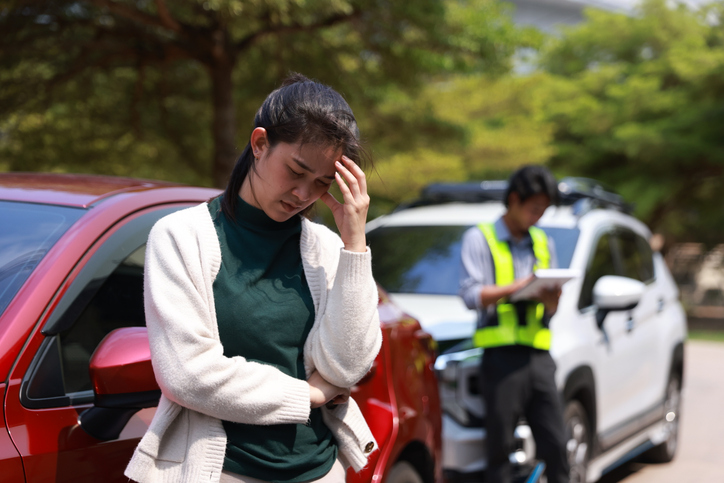
Who’s Really at Fault in Fort Myers Parking Lot Backing Up Car Accidents?
Florida’s backing statute, §316.1985, says the driver in reverse must confirm the path is clear before moving. That much is simple. What is not simple is the number the other side puts on the claim the moment the crash report lands in their file. The opening offer is almost always built on one assumption: whoever was in reverse loses, full stop. That assumption is wrong under Florida law, and it costs people money every month in parking lots up and down Cleveland Avenue, Bell Tower, Daniels Parkway, and Six Mile Cypress Parkway.
Parking lots on Cleveland Avenue, around Bell Tower, off Daniels Parkway, and along Six Mile Cypress Parkway generate a steady share of the auto cases we open every month. Most of them are not the clean “he backed straight into me” story the at-fault driver’s insurer wants the file to be. They are messier. Two cars moving at once. A fire lane being used as a shortcut. A camera that may or may not have caught the impact. A driver who left before anyone could write down a plate.
What follows is how Florida law actually treats these cases, the patterns we see in our practice, and what to do if a backing crash happens to you somewhere between McGregor Boulevard and I-75 near Alico Road.
What Florida law actually says about parking lot backing crashes
Florida has a specific backing statute, §316.1985, Florida Statutes. The text is short: a driver shall not back a vehicle unless the movement can be made with safety and without interfering with other traffic. In plain English, before you put the car in reverse, the burden is on you to confirm the path behind you is clear, and to stop if it is not. That duty does not vanish because you are on private property at a Publix or a Target.
The second statute that matters is §768.81, Florida Statutes — Florida’s modified comparative negligence rule. Under the 2023 tort-reform version, a jury assigns a percentage of fault to each driver, and the injured driver’s recovery is reduced by that percentage. The hard line is fifty percent. If a jury finds you 50% or more at fault, you recover nothing at all. That is a sharper rule than the old “pure” comparative negligence Florida used to follow, and it is the reason percentage arguments now decide cases that used to settle on liability alone.
The 2023 reform also shortened the negligence statute of limitations from four years to two years for crashes on or after March 24, 2023. So a parking-lot backing case from last summer has to be filed inside two years of the date of the crash. That clock runs whether you have hired a lawyer or not.
If the other driver was impaired, two more statutes come into play. §316.193 sets out the DUI rule — a BAC of 0.08 or higher, or impairment by any controlled substance to the point normal faculties are affected. And §768.736 carves out an important exception on punitive damages: when the at-fault driver was DUI, the statutory cap on punitive damages does not apply. I have had a parking-lot rear-end on a Friday evening on US-41 turn into a far larger case once the other driver’s bar tab came back in discovery.
You can read the actual statutes on the Florida Legislature’s site — §768.81 (comparative negligence), §316.193 (DUI), and §768.736 (punitive damages, intoxication exemption).
Five patterns from Fort Myers parking lot files
After three decades of these files, the patterns repeat. Here is what we open most often:
- Two cars backing out at the same time. A driver across the aisle starts to reverse out of a space at the same moment our client does. Neither one saw the other. Liability in these is rarely 100/0. The split usually lands between 40/60 and 50/50, and small facts — who began the reverse motion first, which car was further into the aisle — move the percentage by ten or fifteen points.
- Backing into a through lane. Our client is reversing out of an angled space along an aisle near Six Mile Cypress Parkway and a car traveling the aisle at lot speed hits the rear quarter. The presumption favors the through-traffic driver, but it weakens fast if the through driver was speeding, on a phone, or cutting across painted parking spaces to skip a row.
- Backing into a parked car. The hardest fact pattern to defend if our client did the backing, and the easiest case to bring if our client was the one parked. The narrow exception is when the parked car was over the line, in a no-park stripe, or sticking out into the aisle past the bumper stop.
- Pedestrian struck while backing. Florida’s parking-lot pedestrian rules give the person on foot a strong presumption of right of way. Backup cameras have helped, but they create their own problem — drivers who rely on the screen and stop scanning their mirrors. We see these on Cleveland Avenue near the larger retail lots more than anywhere else in town.
- Hit-and-run backing. The driver who caused the impact leaves before anyone gets a plate. We have run these to a full recovery through uninsured-motorist coverage more times than I can count. The cases where we cannot recover almost always trace back to the client not buying UM in the first place.
What makes these cases tougher than the initial offer suggests
The first thing the other side’s adjuster does on a parking-lot backing file is reach for the rule of thumb — the driver in reverse is at fault, end of story — and offer accordingly. Half the time that opening offer is twenty cents on the dollar.
The reasons the easy rule breaks down in real cases are practical. Parking lots are private property, so the posted speed limits and the painted lanes are advisory, not enforceable as traffic infractions. Police often do not draw the same kind of scene diagram they would on a public road. There is no FHP report, just a short Fort Myers Police exchange-of-information form. Surveillance footage from the store may auto-delete in 7 to 30 days, and the burden is on you, not the carrier, to write the store and ask in writing that it be preserved.
There is also a thirty-year pattern I have seen with these cases that does not show up on the carrier’s worksheet: the injuries are often worse than the property damage suggests. A low-speed rear impact in a parking lot can produce real cervical strain and herniated disc cases that need months of physical therapy and pain management. The carrier looks at a $1,800 bumper repair and assumes the medical claim is exaggerated. The medical records, when they come in, often tell a different story.
The Fort Myers rear-end claim behind this
A client of ours was rear-ended on US-41 in Fort Myers, in slow traffic close to a strip-center entrance, by a driver who pulled out, hit her hard enough to crumple the bumper and put her into the steering column, and then kept going. No plate. No witness who got a clear look at the car. She drove herself to the emergency room that evening with neck pain that the ER documented as a cervical strain.
What followed was the kind of work that does not show up in the police report. Months of physical therapy. Pain management for chronic cervical symptoms that did not resolve on the usual timeline.
The recovery, in the end, was the full available UM policy limit. The piece of that case I think about most is not the result. It is what would have happened if our client had not bought UM coverage in the first place. With no at-fault driver to pursue, there would have been no defendant. UM is not optional in my view — it is the only insurance that covers the driver who decides not to stay.
What to do if a parking lot backing crash happens to you
Action lists that work tend to come from watching what goes wrong on real files. Here is what I tell people, in the order I would do it myself.
- Do not move the cars first. Take a wide photo of both vehicles in final-rest position before anything moves, with the painted lines and the surrounding spaces in frame. The angle of the cars in that first photo is the single piece of evidence the carriers cannot argue away.
- Call the police even on the smaller crashes. A Fort Myers Police or Lee County Sheriff’s report, even an exchange-of-information report, locks the other driver into one version of events on the same day. I have watched stories change ninety days later when the only documentation is a phone-photo of a license.
- Find the cameras yourself. Walk the lot. Note any camera angle that could have caught the impact. Ask the store manager that day, in writing if possible, that the footage be preserved. Most retail systems overwrite in 30 days or fewer. If you do not ask, no one else will.
- Get checked out the same day, not the next week. Parking-lot crashes hurt more on day two than day one. A same-day urgent-care or ER visit creates the timeline the adjuster cannot collapse into “she made this up after she talked to a lawyer.”
- Do not give a recorded statement to the other driver’s carrier. They will call within 48 hours and ask. The answer is no, not until you have spoken with a lawyer. Recorded statements are designed to lock in admissions, not to gather your side of the story.
- Save the property-damage estimate. Even small bumper-repair invoices matter. The condition of the panel underneath the bumper cover often tells a different story than the cosmetic dent, and we want that record before the body shop puts it back together.
Key Takeaways
- The driver in reverse is not automatically at fault. Florida’s modified comparative negligence rule (§768.81, Florida Statutes) lets a jury assign a percentage to each driver, and small facts about who moved first and who had the aisle can shift the split by ten or fifteen points.
- The 50% line is the hard line. Under the 2023 reform, a driver assigned 50% or more of the fault recovers nothing. Percentage arguments now decide cases that used to settle on liability alone.
- The clock is two years, not four. For crashes on or after March 24, 2023, the negligence statute of limitations is two years from the date of the crash.
- Camera footage disappears. Retail surveillance systems overwrite in 7 to 30 days. Asking the store in writing to preserve the footage is on you, not on the carrier.
- Uninsured motorist coverage is the answer when the other driver leaves. If the at-fault driver flees a Fort Myers parking lot, UM on your own policy is the path to a recovery. Without it, there is no defendant.
Frequently Asked Questions
Q1. Is the driver backing up always at fault in a Fort Myers parking lot crash?
No. Florida law puts a duty on the driver in reverse to make sure the movement can be made safely, but fault depends on what actually happened. If the other car was speeding down a fire lane, on a phone, or cutting across painted parking spaces, a share of fault goes to that driver. Under §768.81, Florida Statutes, a driver who is 50% or more at fault recovers nothing, so the percentage split matters.
Q2. What should I do in the first hour after a parking lot backing crash on Cleveland Avenue or McGregor Boulevard?
Call 911 if anyone is hurt or if the damage looks above $500. Take photos of both vehicles before they move, the surrounding parking spaces, the painted lines, and any signage. Ask the store or property manager whether security cameras cover that part of the lot, and ask in writing that the footage be preserved. Get the other driver’s license, plate, and insurance card. Decline to discuss fault with the other driver or their carrier.
Q3. What if the other driver took off after backing into me?
A hit-and-run in a parking lot is treated the same as one on a public road for insurance purposes. Report it to the Fort Myers Police Department or the Lee County Sheriff’s Office and get a case number. Your own uninsured motorist coverage, if you carry it, becomes the first place to look for a recovery. We handled a case on US-41 in Fort Myers where the at-fault driver fled and our client’s UM coverage paid the full policy.
Q4. Do I have to call the police for a low-speed parking lot bump?
Florida requires a report when there is an injury or apparent property damage above $500. A modern bumper repair almost always crosses that line, so the safer answer is yes, call. A police exchange-of-information report locks the other driver into one version of events on the same day and is far more useful later than a phone-photo of a license.
Q5. When should I call a lawyer instead of just handling it with the insurance companies?
Call once you know you are hurt, once the other carrier disputes who was backing, or once you are pushed toward a quick recorded statement. Parking lot cases turn on small facts — which car moved first, who had the painted lane, what the cameras saw. Those facts get harder to recover the longer you wait. A consultation with our office costs nothing and there is no fee unless we recover for you.
Talk to our Fort Myers office
If you were hit in a parking lot anywhere from Cleveland Avenue to Daniels Parkway, or further south along I-75 near Alico Road, our office handles these cases every month. Call 239-992-8259 for a free consultation. There is no fee unless we recover for you.
About the Author

Three decades of personal injury practice in Fort Myers and across Lee County put David B. Pittman, Esq., the founder of Pittman Law Firm, P.L., in a position to write candidly about the cases that come into the office, with a sustained focus on serious-injury auto and complex-liability cases. The firm’s Fort Myers presence handles a steady stream of serious-injury work along the Daniels Parkway, Six Mile Cypress, McGregor Boulevard, Cleveland Avenue, and Summerlin Road corridors, and along I-75 between Estero and Bell Tower.
Before founding Pittman Law Firm, P.L., David completed his undergraduate work at The Citadel, The Military College of South Carolina and his JD at the University of South Carolina School of Law. He is AV-Preeminent at Martindale-Hubbell and a member of the Multi-Million Dollar Advocates Forum.
David has held a Florida real estate broker license for twenty-five years, a credential that shapes how the firm reads the property side of premises cases. The firm handles personal injury cases across Lee and Collier Counties, serving Fort Myers, Bonita Springs, Naples, Cape Coral, Estero, and Lehigh Acres, with offices at Windsor Place in Bonita Springs (main) and Fort Myers (satellite). Call 239-992-8259 for a free consultation.
The information on this website is for general information purposes only. Nothing on this site should be taken as legal advice for any individual case or situation. This information is not intended to create, and receipt or viewing does not constitute, an attorney-client relationship. This is attorney advertising.