

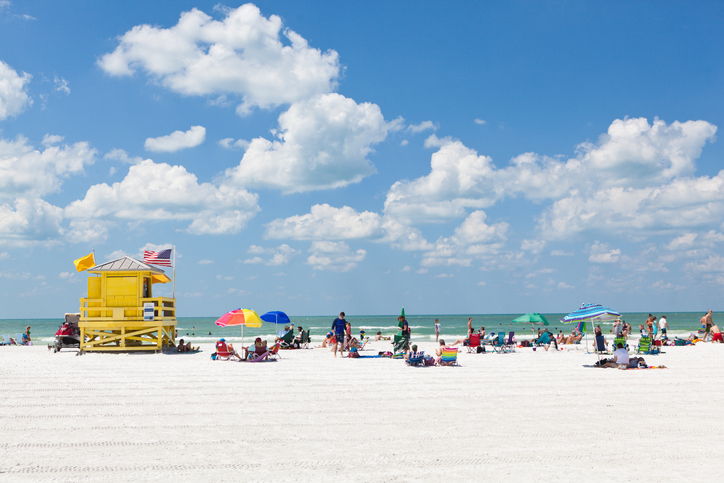
Who Pays for Your Florida Beach Accident? Know Your Rights [2026 Guide]
The first call the resort’s insurance adjuster makes is not to check on your health. It is to get a recorded statement from you while your account of what happened is still fresh — and unfiltered by anyone with legal experience. I have watched that call happen dozens of times. Thirty years into representing crash victims across Lee and Collier Counties, I can tell you the answer to who pays for a Florida beach injury almost always starts with a different question: whose sand were you standing on when this happened, and what kind of guest were you in the eyes of Florida law?
This guide walks through what Florida law actually says, the patterns we see again and again in our office on Bonita Beach Road, a case worth describing from our files, and what to do if you or a family member gets hurt anywhere from the Gulf-front stretch in Bonita Springs down through Naples or up along the beaches off the I-75 corridor in Lee and Collier Counties.
What Florida law actually says about beach injury claims
There are four statutes that do most of the heavy lifting in a Florida beach injury case. None of them is friendly to a self-represented claimant, and three of them changed in the last few years.
Section 768.81, Florida Statutes — modified comparative negligence. Before the 2023 reform, Florida ran on pure comparative fault. You could be ninety percent at fault and still collect ten percent of your damages. That world is gone. Today, if a jury finds you more than fifty percent responsible for your own injury, you recover nothing. If you are fifty percent or less at fault, your damages are reduced by your share. In plain English: if you wandered into a roped-off construction zone at a resort and got hurt by a hazard the property knew about, the defense will spend most of the case trying to put you over the 50 percent line so the verdict goes to zero.
Section 95.11(4)(a) — two-year statute of limitations. The same 2023 reform package cut the deadline to sue on a negligence claim from four years down to two. For any beach injury on or after March 24, 2023, you have twenty-four months from the date of the incident to file. That is a tight window when you are still in physical therapy or waiting on a final orthopedic opinion.
Section 627.736 — PIP. Personal Injury Protection is your no-fault auto coverage, capped at $10,000 in medical and lost wages. It generally does not pay for a slip on a wet boardwalk or a stingray strike. It does pay if you were a pedestrian struck by a car in the beach parking lot.
Five beach injury patterns from our office files
I have lost count of how many beach injury calls our office has fielded over thirty years. They almost always fall into one of five patterns:
- Resort and hotel falls. Cracked tile around a pool deck that bleeds onto a beach walkway, a broken board on a private dune crossover, a missing handrail on stairs cut into the seawall. Almost always a Gulf-front resort in Naples or Fort Myers Beach, and almost always a duty-of-care argument the resort tries to dodge by blaming the sand or the sun.
- Parking lot and crosswalk collisions. Pedestrians struck in beach access lots along US-41 and along the side streets feeding into Bonita Beach Park. These are auto cases that look like premises cases because they happened at the beach. PIP applies, UM coverage often becomes the real source of recovery.
- Rental equipment failures. Jet ski throttles that stick, broken bicycle brakes on a beach cruiser rented from a kiosk, frayed parasail line. Product and negligent-maintenance claims against the rental operator and sometimes the manufacturer.
- Inadequate security and assault claims. A guest assaulted in a beachfront parking garage with broken lighting, or near a beach bar with a documented history of incidents the property ignored. Premises-liability law in Florida lets you reach the property owner when the harm was foreseeable and not addressed.
- Drowning and near-drowning incidents. The hardest calls our office takes. The CDC reports drowning is the leading cause of injury death for children ages one through four. Lifeguard staffing decisions, posted warnings, rip-current notification, and the resort’s own emergency response all matter, and all become contested ground.
What makes beach injury claims harder to close than they look
On paper, a beach injury claim looks like any other premises case. Duty, breach, causation, damages. Four boxes to check. In practice, four complications come up over and over.
First, the public-private boundary on a Florida beach is a moving line. The wet sand below the mean high water line is public. The dry sand above it usually belongs to whoever owns the upland property, with exceptions for customary-use rights in some counties. A fall ten feet to the left of where it actually happened can change who you sue. Having spent twenty-five years as a Florida real estate broker on top of practicing law, I have seen what property owners are supposed to do under their lease, their master association documents, and their county code, and most of them do not do all of it.
Second, Florida’s Recreational Use Statute knocks down the duty of care that a private landowner owes the public when the landowner allows free access without charging admission. That is a defense the resorts and condo associations like to wave around, and it does not apply when the property is collecting any kind of fee, including a resort fee folded into a room rate.
Third, the sovereign-immunity caps in §768.28 distort settlement value on public-beach cases. Insurance carriers for municipalities know the maximum exposure is $200,000 per person, and they price their settlement offers accordingly. The way around the cap is a claims bill in Tallahassee — possible, expensive, and slow.
Fourth, the new two-year limitations window under §95.11(4)(a) eats cases. People wait for the surgery, wait for the second surgery, wait for the insurance company to stop returning calls, and then come see a lawyer at month twenty-two. That is not a position you want to be in.
What to do if you or a family member is hurt at a Florida beach
Over thirty years I have watched what helps a beach injury claim and what kills one. The action list below is short on purpose. These are the steps I have seen actually move the needle.
- Get the report made in writing on the same day. If it happened on a public beach, the county park ranger or beach patrol writes an incident report. If it happened at a hotel or resort, the front desk does. Get a copy or at minimum a report number. Verbal complaints to a beach attendant disappear. Written reports do not.
- Photograph the hazard before it changes. A broken board gets replaced. A pothole in a beach access lot gets patched. A missing warning sign gets quietly reinstalled. Take wide shots and close-ups, with a shoe or a phone in the frame for scale, and capture the date stamp metadata. Within forty-eight hours is the window.
- Name the witnesses. Full name, phone number, and email. Not “the older couple from Ohio.” We have lost more provable cases to vanished witnesses than to any other single problem.
- Go to the hospital, not just urgent care. Soft-tissue and head injuries get downplayed in walk-in clinics. The ER documents mechanism of injury in a way that carries weight in litigation.
- Save the gear and the footwear. Whatever you were wearing when it happened, do not throw out. Sandal tread, sand pattern, blood, and tear pattern are evidence. Bag it and label it.
- Do not give a recorded statement to the property’s insurance carrier. They will call within seventy-two hours, sounding friendly and routine. Decline politely. Refer them to your attorney. Anything you say goes in the file and gets read back to you at deposition.
- Watch the calendar. Two years under §95.11(4)(a). Three-year notice on a public-entity claim under §768.28, and the agency gets 180 days after that before you can file suit. Calendar both dates on day one.
Key Takeaways
- Florida’s modified comparative negligence rule under §768.81 bars any recovery if the injured person is more than 50 percent at fault. Defense carriers will work hard to push you over that line.
- The negligence statute of limitations dropped from four years to two in 2023. For most beach injuries, you have twenty-four months to file suit.
- Public-beach claims under §768.28 require a written notice of claim, a 180-day investigation period, and a statutory cap of $200,000 per person and $300,000 per incident.
- PIP under §627.736 generally does not cover beach falls and marine injuries. It does apply if you were a pedestrian struck by a car in the beach parking lot.
- Document the hazard on day one, get a written incident report, name your witnesses, and avoid recorded statements to the other side’s adjuster.
Frequently Asked Questions
Q1. Who can actually be on the hook for my Florida beach injury?
It depends on where you were standing when it happened. A resort or hotel controlling its own beachfront owes invited guests the highest duty of care under Florida premises law. A municipality or county running a public beach can also be held responsible, but you go after them under §768.28 with damage caps of $200,000 per person and $300,000 per incident. Equipment rental operators, contractors doing beach maintenance, and individual beachgoers who hurt you through reckless behavior can also be defendants. Most claims we handle involve more than one of these parties.
Q2. How long do I have to file a beach injury claim in Florida?
Under §95.11(4)(a) as rewritten in the 2023 tort reform, you have two years from the date of the injury to file most negligence lawsuits in Florida. The old four-year window is gone for incidents on or after March 24, 2023. If your claim is against a government body that runs a public beach, §768.28 adds its own three-year notice-of-claim window and a 180-day investigation period the agency gets before suit can be filed. The cleanest rule of thumb is to call a lawyer within weeks, not months.
Q3. Does PIP cover me if I am hurt at the beach?
Generally no. Florida’s no-fault PIP coverage under §627.736 ties to motor vehicles, not to slip-and-falls on a boardwalk or jellyfish stings on the sand. If you were a pedestrian struck by a car in the beach parking lot, PIP from the car owner (or your own auto policy) typically pays the first $10,000 of medical bills. For most beach incidents the medical bills run through your health insurance, the property owner’s liability policy, or both, until a settlement comes in.
Q4. What if I was partly to blame for what happened?
Florida operates under modified comparative negligence per §768.81. If a jury decides you were more than 50 percent at fault, you recover nothing. If you were 50 percent or less at fault, your damages get reduced by your share. So if a jury awards $300,000 and finds you 20 percent responsible for not watching where you were walking, you take home $240,000. The 50 percent bar is the change that came in with the 2023 reform, and insurance carriers know it. Expect them to push hard to pin half the blame on you.
Q5. Is a private resort beach treated differently than a public county beach?
Yes, and the difference matters from day one. A resort owes its paying guests the duty of an invitee, which is the highest standard in Florida premises law. A county or municipal beach is governed by §768.28, which means a written notice of claim, a 180-day waiting period, and statutory caps on what you can collect. You can still recover real money against a public body, but the procedure is unforgiving and missing a step can end the case before it starts.
Talk to our office
If you or someone in your family was hurt at a Florida beach — Bonita Beach, Fort Myers Beach, Vanderbilt Beach, Lovers Key, Barefoot Beach, or anywhere along the Gulf in Lee or Collier County — call our office at 239-992-8259 for a free consultation. There is no fee unless we recover for you. I will pick up the phone, and we will tell you straight whether you have a case worth pursuing.
About the Author

Personal injury law has been David B. Pittman, Esq.’s focus across Southwest Florida for more than thirty years. He founded Pittman Law Firm, P.L. and remains its lead attorney, representing injured clients across Lee and Collier Counties, with a particular focus on commercial-vehicle, complex-liability, and serious-injury cases. The firm represents injured clients across Lee and Collier Counties — from the firm’s main office at Windsor Place on Bonita Beach Road through Fort Myers, Naples, Estero, Cape Coral, and Lehigh Acres.
His undergraduate degree is from The Citadel, The Military College of South Carolina; his JD is from the University of South Carolina School of Law. Martindale-Hubbell rates him AV-Preeminent, and he is a member of the Multi-Million Dollar Advocates Forum.
David has held a Florida real estate broker license for twenty-five years, a credential that shapes how the firm reads the property side of premises cases. The firm handles personal injury cases across Lee and Collier Counties, serving Fort Myers, Bonita Springs, Naples, Cape Coral, Estero, and Lehigh Acres, with offices at Windsor Place in Bonita Springs (main) and Fort Myers (satellite). Call 239-992-8259 for a free consultation.
Attorney advertising. The information on this page is general legal information about Florida personal injury law and is not legal advice for any individual case. Reading this article does not create an attorney-client relationship with Pittman Law Firm, P.L. Prior results do not guarantee a similar outcome.