

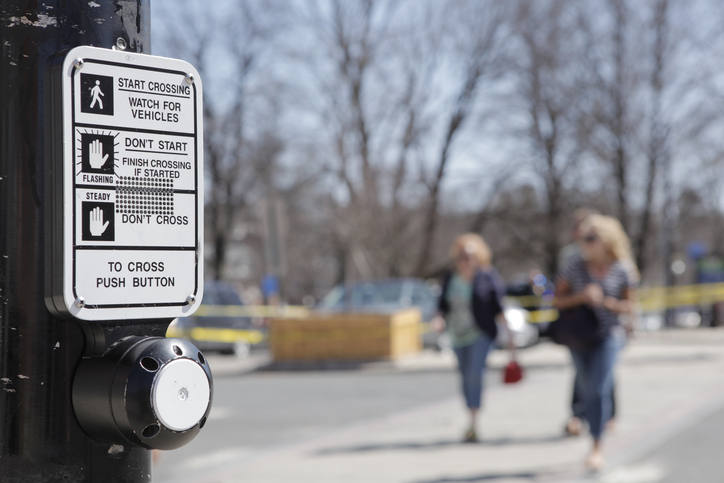
When Can a Pedestrian Be Held Responsible for a Car Accident in Fort Myers
The first thing an insurance adjuster tells a pedestrian hit by a car in Fort Myers is that it was mostly their own fault. Someone is sitting across from me with a cane, a brace, or a recent surgical scar, and they have already heard that version of events — that because they stepped off a curb at the wrong moment, or because they were not in a marked crosswalk, the case is over before it starts. That is almost never the whole story.
Florida law on pedestrian fault is more forgiving than people assume, and Florida juries are even more forgiving than the statute. A pedestrian can do something genuinely careless and still walk out of court with a meaningful recovery, because the driver almost always shares some piece of the blame. The trick is knowing which pieces of the law actually apply, what the carrier is going to argue, and how to set the case up early so the comparative-fault percentages land where they should. I have handled these cases in Lee and Collier Counties for more than thirty years, and the opening position the carrier gives you is rarely the position a jury would reach.
What Florida law actually says about pedestrian fault
Two statutes do most of the work in a Fort Myers pedestrian case, and a third one quietly decides who pays your medical bills while we figure the first two out.
The right-of-way rule lives at §316.130, Florida Statutes. The statute reads in both directions. Drivers have to yield to a pedestrian who is lawfully in a marked or unmarked crosswalk at an intersection. Pedestrians have to yield to vehicles when crossing outside of a crosswalk, when crossing against a signal, or when stepping off a curb so suddenly that a driver cannot reasonably stop. In plain English, the statute does not pick a winner. It hands each side a duty, and a jury later decides who lived up to theirs.
The same chapter, at §316.2065, treats cyclists as drivers of a vehicle for the purpose of the road rules. That matters in Fort Myers because a great many of the “pedestrian” calls we field on McGregor Boulevard and along the Daniels Parkway shoulder are actually bicycle cases. The fault analysis runs through the same comparative-negligence framework, but the duties on each side shift a little. A cyclist on the roadway has the duties of a driver. A driver overtaking that cyclist has the three-foot passing duty under §316.083, which means the car has to leave at least three feet of clearance when going around the bike. I have had carriers argue that a cyclist was 100% at fault for being on the road at all, and I have used §316.083 to put that argument right back in the carrier’s lap.
The quiet third statute is §627.736, the Florida PIP law. If a car in your household carries PIP, that coverage follows you as a pedestrian. It pays the first chunk of your medical bills and lost wages, up to $10,000, no matter who was at fault. People do not realize this. They assume that because they were on foot, their own auto policy is irrelevant. It is the opposite — PIP is often the first dollar of treatment paid in a Fort Myers pedestrian case, and the carrier pursuing the at-fault driver comes second. The companion statute, §627.727, governs uninsured-motorist coverage and is what saves the case when the driver who hit you is never identified or carries a useless little policy.
Five pedestrian-fault patterns from Fort Myers
Pattern matters more than statute in these cases. Most of the pedestrian-fault calls we get fall into one of five recurring fact patterns:
- The mid-block crossing on Cleveland Avenue. A walker is heading from a strip-center parking lot toward a bus stop on the other side. The nearest crosswalk is a block away. They look, they go, and a driver in the curb lane never slows down. The carrier opens with “your client was jaywalking.” A jury usually sees a driver who had time and lane room to react.
- The against-the-light walk in a Six Mile Cypress Parkway intersection. The pedestrian signal turned red while the walker was halfway across. A turning driver claims the walker “appeared out of nowhere.” Signal-timing data tells the real story almost every time.
- The dart-out from a parked car. A child or a ride-share passenger steps out from between two vehicles parked along Summerlin Road. This is the fact pattern where comparative fault actually bites, and the speed of the approaching driver is the deciding question.
- The driveway and parking-lot back-up. A driver reverses out of a private drive on McGregor Boulevard or out of a row in a Daniels Parkway shopping center and rolls over a walker behind them. Pedestrians have the right of way in most of those scenarios, but the carrier will still try to argue the walker should have made eye contact first.
- The cyclist on the shoulder of Colonial Boulevard or Pine Island Road. A bike on the roadway gets clipped by a driver who never gave the three feet the statute requires. Helmets, lights, and the side of the lane the rider was on all become part of the carrier’s comparative-fault argument.
I keep these patterns in my head as a shorthand because the carrier playbook is the same for each one. They open with a high pedestrian-fault number, they hold that number through the demand phase, and they only move when we put the right piece of evidence in front of them.
What makes pedestrian cases harder than they look in practice
The hard part of these cases is not the law. It is what happens in the first forty-eight hours after the crash, before anyone has called a lawyer.
The driver almost always gives a statement to the responding officer that puts the walker at fault. The walker, who is at the hospital with a fractured tib-fib or a head injury, gives no statement at all. The crash report then reads as a one-sided account. The signal-timing data at the intersection is on a thirty-day overwrite cycle on most City of Fort Myers and Lee County signals, and a great many private dash-cam recordings from passing cars roll over inside a week. By the time the walker is home from the hospital and ready to think about a lawyer, the best evidence in the case is gone.
That is the practical complication that makes these cases harder than the statute suggests. The law gives a walker plenty of room to recover. The clock on the evidence does not. We open these files on a same-week basis whenever we can, and we send preservation letters to the relevant traffic authority and to the businesses with parking-lot cameras within line of sight before the recordings cycle out.
The second hard piece is the medicine. Pedestrian-versus-vehicle injuries are not whiplash. They are tib-fib fractures, pelvic ring injuries, traumatic brain injuries, ligament tears in the knee that the orthopedist can describe down to the millimeter on the MRI. The damages model in a case like that has to be built carefully, with the treating physician on board, because the at-fault carrier is going to fight the future-care number and the lost-earning-capacity number harder than it fights the liability piece.
A cyclist case from Golden Gate Parkway
A case I think about often involved a cyclist riding on Golden Gate Parkway in Naples. He was doing what cyclists are supposed to do, riding with traffic, in the bike lane, on a clear weekday morning. A driver coming up behind him drifted right, never moved to give him the three feet of clearance the Florida statute requires, and clipped his rear wheel. The bike went down hard. He took the impact through his left knee on the pavement.
The MRI told us what the on-scene EMTs already suspected. He had torn both his ACL and his MCL. He went into orthoscopic surgery within the month and then spent the next twelve months doing physical therapy two and three times a week, working back toward something like the range of motion he had before the crash. He was a serious rider, and the bike itself was set up with the kind of components that do not come off the rack at a big-box store.
The carrier opened where they always open in a bicycle case. The cyclist should have been further to the right. The cyclist should have been on the sidewalk. The cyclist was lucky to be alive and ought to take what was offered. We worked the file the other way. We had the three-foot statute, we had the driver’s own statement to the officer about not seeing the bike, and we had a treating orthopedist who could walk a jury through exactly what an ACL/MCL tear does to a person’s life for the year after the surgery. The carrier moved. We secured a full recovery of his damages, including a line item for the replacement of his bicycle and the components he had built it up with. The full medical bills were paid. The therapy was paid. The bike was made whole.
I tell that story to walkers and cyclists who come into our office assuming they have no case because of where they were standing or which side of the lane they were riding. The carrier’s opening position is not the case. It is the carrier’s opening position.
What to do if you have been hit as a pedestrian or cyclist in Fort Myers
The actions that matter most are the ones taken in the first week. Some of these are obvious. Some are not.
- Get the medical workup before you do anything else. A head injury or a closed fracture can be missed at the scene, and PIP under §627.736 will pay for the workup whether you were at fault or not. Do not skip the imaging because you “feel okay” at the curb.
- Photograph the gear and the scene. If you were on a bicycle, save the bike — frame, helmet, lights, the whole setup. The damage pattern on a helmet or a pedal tells a reconstruction engineer the speed and angle of the impact. If you were on foot, photograph the shoes, the clothing you had on, and the location from the same angle a driver would have seen you.
- Get the names of the witnesses, not just their phone numbers. Phone numbers go stale faster than you would think. A first name plus a last name plus the employer of the witness is what we use to find them six months later when their statement actually matters.
- Do not give a recorded statement to the at-fault driver’s carrier. Not before you have spoken to a lawyer. Your own carrier, yes — your contract requires it. The other side’s carrier, no.
- Open the file early enough to preserve the signal data. If the crash happened at a Fort Myers or Lee County signal, the timing log on that intersection is recoverable for a short window only. The file has to be opened, and the preservation letter has to go out, well inside that window.
The walkers and cyclists who come out of these cases best are the ones who treated the first week as the part of the case that matters most, because it is.
Key Takeaways
- Florida’s comparative-fault rule means a walker who broke a rule can still recover, as long as their share of fault is 50% or less.
- Your own household PIP under §627.736 pays the first medical and lost-wage dollars whether you were at fault or not, even when you were on foot.
- The driver who hit you almost always shares some piece of the fault, and the carrier’s opening pedestrian-fault number is rarely the number a jury would land on.
- The best evidence in a Fort Myers pedestrian case — signal-timing data, parking-lot camera footage, dash-cam recordings from passing cars — has a short shelf life. The file should be opened the same week, not the same month.
- If the at-fault driver fled or was uninsured, your uninsured-motorist coverage under §627.727 is often the policy that makes the case.
Frequently Asked Questions
If I was jaywalking when a car hit me in Fort Myers, can I still recover anything?
Often, yes. Florida uses a modified comparative negligence rule, so a jury can assign you a share of fault and reduce your recovery by that share. As long as your share comes in at 50% or less, you still recover. Speak with an attorney before assuming jaywalking ends the case.
Does my own auto insurance pay my medical bills if I was hit while walking?
Usually, yes. Under §627.736, the PIP coverage on a car in your household follows you as a pedestrian. PIP pays up to $10,000 in medical and lost wages regardless of who was at fault, then we pursue the at-fault driver for the rest.
What if the driver who hit me drove off?
Your own uninsured motorist coverage under §627.727 can step into the shoes of the missing driver. If your household carries UM, that policy is often the difference between a small PIP recovery and a real settlement when the driver is never identified.
I crossed against the light, but the driver was speeding. Whose fault is that?
Both, almost certainly. Jurors are allowed to split fault between the pedestrian and the driver. A speeding driver who hits a walker against the light is rarely found 0% at fault, even when the walker should not have stepped off the curb.
How long do I have to file a pedestrian-injury claim in Florida?
For crashes after March 24, 2023, the negligence statute of limitations is two years. Older crashes ran on four years. Either way, the sooner we open a file, the sooner we can preserve dash-cam footage, signal-timing data, and witness memory before any of it disappears.
Talk to our office before you talk to their carrier
If you or someone in your family was hit while walking or riding in Fort Myers, on McGregor Boulevard, along Cleveland Avenue, across Six Mile Cypress Parkway, on Daniels Parkway, on Summerlin Road, on Colonial Boulevard, on Pine Island Road, or anywhere along I-75 near Alico Road, our office would be glad to look at the case for you. I treat the first conversation as a real conversation, not a sales pitch. We will tell you whether we think there is a case to be made, and we will tell you what we think the next step is, whether you hire us or not.
Call 239-992-8259 for a free consultation. There is no fee unless we recover for you.
About the Author

Pittman Law Firm, P.L. is based in Fort Myers and has handled personal injury cases for more than thirty years under founder David B. Pittman, Esq., with a sustained focus on pedestrian-injury and crosswalk cases. The firm’s Fort Myers presence handles a steady stream of serious-injury work along the Daniels Parkway, Six Mile Cypress, McGregor Boulevard, Cleveland Avenue, and Summerlin Road corridors, and along I-75 between Estero and Bell Tower.
Between undergraduate at The Citadel, The Military College of South Carolina, and a JD from the University of South Carolina School of Law, David built the foundation for a personal injury practice that now carries AV-Preeminent status with Martindale-Hubbell and membership in the Multi-Million Dollar Advocates Forum.
David has held a Florida real estate broker license for twenty-five years, a credential that shapes how the firm reads the property side of premises cases. The firm handles personal injury cases across Lee and Collier Counties, serving Fort Myers, Bonita Springs, Naples, Cape Coral, Estero, and Lehigh Acres, with offices at Windsor Place in Bonita Springs (main) and Fort Myers (satellite). Call 239-992-8259 for a free consultation.
The information on this website is for general information purposes only. Nothing on this site should be taken as legal advice for any individual case or situation. This information is not intended to create, and receipt or viewing does not constitute, an attorney-client relationship. This is attorney advertising.