

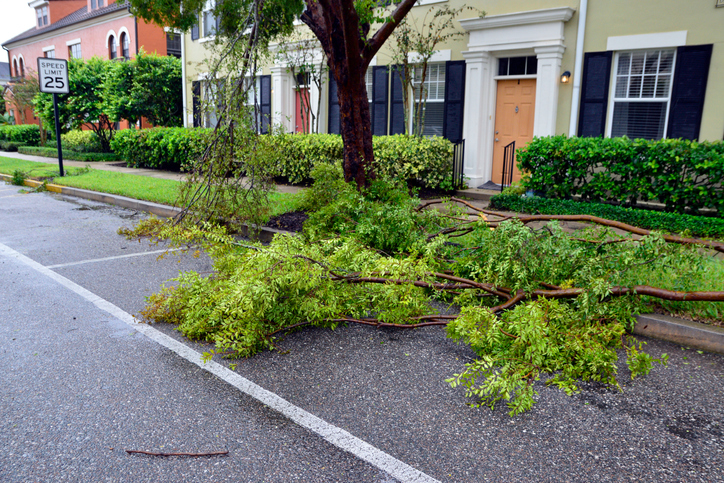
What to Do When a Fallen Tree Branch Causes Injury in Fort Myers
The first defense you will hear from a property owner — or their carrier — after a tree limb puts someone in the hospital is “act of God.” Hurricane came through. Nobody could have known. The tree looked fine from the street. In my experience representing injured Floridians across Lee County for over thirty years, that defense works about as often as the tree was actually healthy. A limb with a soft, rotten core breaks differently than a live one, and a tree professional looking at the cross-section can usually establish how long the decay had been visible. The “act of God” argument is often the opening move, not the last word.
Florida tree-branch cases are worth understanding before you need one. The law is not as simple as “the tree was on their property, so they pay.” The path changes depending on whether the tree sat on a neighbor’s lot, a hotel strip on McGregor Boulevard, or a public right-of-way maintained by the City of Fort Myers — and the deadlines are tighter than most people realize.
What Florida law actually says about fallen-tree-branch injuries
Tree-branch injuries in Florida sit inside premises liability, which means the property owner owes a duty of reasonable care to people lawfully on the property. The harder question is what counts as reasonable. The case law is fairly settled on one point: a property owner is responsible for hazards the owner knew about or should have known about with a reasonable inspection. A visibly dead tree, a trunk with a wide split, a colony of fungus at the base, large dead limbs hanging over a sidewalk — these are conditions a reasonably prudent owner is supposed to notice.
A handful of statutes do most of the work in these cases:
- Statute of limitations — two years. Under §95.11(4)(a), Florida Statutes, you have two years from the date of injury to file a negligence suit. The 2023 tort reform cut that window from four years to two. Plain English: if a branch came down on you on May 13, 2026, you have until May 13, 2028 to file in court or you lose the claim, period.
- Modified comparative negligence — the 50% bar. Under §768.81, Florida Statutes, a jury assigns a percentage of fault to each party. If your share is over 50%, you take home nothing. If it is 50% or less, your recovery is reduced by your share. Plain English: walking under a tree during a tropical storm warning will cost you a percentage; it will not automatically end the case if the owner had a known hazard.
- PIP does not apply. Under §627.736, Florida Statutes, Personal Injury Protection is tied to the use of a motor vehicle. A pedestrian struck by a falling branch is not in a PIP situation. Recovery has to come from the property owner’s liability policy or a homeowner’s policy.
- Sovereign immunity caps when a government is involved. If the tree was on city or county property — a park, a right-of-way between street and sidewalk, a county-maintained median — the recovery is capped at $200,000 per person and $300,000 per incident, and you must serve a written notice of claim and wait 180 days before suing.
Most of the practical fight in a tree-branch case is not about the statutes. It is about evidence: photos taken before the cleanup crew gets there, statements from neighbors who reported the tree months earlier, work orders showing the owner ignored a report, and a tree professional’s later opinion about how long the decay had been visible.
Four tree-branch fact patterns from Fort Myers practice
After thirty years of injury practice across Lee and Collier Counties, I can tell you tree-branch calls almost always fall into one of four patterns:
- The neighbor’s dead tree. A homeowner has a tree everyone on the street has been complaining about for two years. A branch finally drops and hits someone in the driveway. This is a textbook private-property negligence case if the prior complaints can be documented. The homeowner’s policy is the source of recovery.
- The commercial property — hotel, strip center, restaurant. A guest is walking from the parking lot to the entrance and gets struck by a limb the landscaping contractor was supposed to have trimmed. These cases often have two liable parties: the property owner and the contractor. We have seen this pattern on properties along Cleveland Avenue, Summerlin Road, and the older commercial strips off Colonial Boulevard.
- The right-of-way tree between curb and sidewalk. These are usually city-owned in Fort Myers, even though the homeowner mows around them. That changes the analysis entirely — you are now in sovereign-immunity territory with a notice requirement and a damages cap.
- The public park or trail. A walker on a Lee County trail or in a city park is struck by a limb. Same sovereign-immunity rules. The harder question is proving the city or county had notice of the hazard, which usually requires a public-records request for prior maintenance reports and citizen complaints.
Fort Myers tree-branch cases — why they are harder than they look
Three things make these cases more difficult than a straight slip-and-fall.
The evidence vanishes fast. Property owners and city crews move quickly to clear a downed limb because it is a continuing hazard. By the time we get the call, the branch is gone, the tree is trimmed or cut, and the photographic record of the rot is on its way to a mulch pile. We have started telling clients on the first call: before the cleanup happens, walk the scene with a phone camera and take wide shots, mid shots, and close-ups of the trunk, the break point, and the ground.
The “act of God” defense. Insurance carriers reach for this fast. Their argument is that a storm took the branch down and no inspection would have prevented it. The counter is almost always in the wood itself. A dead limb breaks differently from a live one. Decay shows on the inside of the break. A tree professional looking at the cross-section can usually tell whether the limb died years before or snapped fresh. The 2022 and 2024 hurricane seasons gave insurers a stock answer to nearly every claim, and we spend real time pushing past it.
Multiple owners on one tree. If the trunk straddles a property line, both owners share the duty. If the city owns the strip and the homeowner mows it, the city is the proper defendant but the homeowner may share fault for trimming work that destabilized the limb. Sorting it out takes property-line research at the Lee County clerk’s office and sometimes a look at the title history.
Having spent twenty-five years as a Florida real estate broker in addition to representing injured Floridians, I have seen first-hand what a property owner’s reasonable safety obligations actually look like in practice. Lease language, common-area maintenance clauses, and contractor agreements all matter in these cases — and most plaintiffs’ lawyers do not look at them.
What to do if a tree branch has injured you
The actions in the first 72 hours after a tree-branch injury matter more than most people realize. Here is the sequence we walk our clients through, in the order we walk them through it:
- Get to an ER, not an urgent care. Tree-branch injuries often involve head trauma, spinal compression, and lacerations that look minor on the surface. Urgent care will send you to an ER anyway, costing you a day and a duplicate bill. Lee Health and HealthPark on Summerlin Road are both reasonable choices.
- Photograph the scene before cleanup. Wide, mid, close. The break point on the trunk is the single most important shot. If you cannot do it yourself, ask a family member or a neighbor to do it before any crew arrives. The tree will be gone within 48 hours.
- Identify the property owner before you leave. Walk fifteen feet in either direction and note the parcel boundaries. If you are on a public sidewalk, note the cross-street. A strip between curb and sidewalk along a road like Daniels Parkway or Pine Island Road is almost always a city or county right-of-way, which changes the legal analysis. The Lee County Property Appraiser at leepa.org will tell you who owns what.
- Get the names of every neighbor who has complained about the tree. This is the single piece of evidence that turns a hard case into a winnable one. Prior written complaints are gold. So are emails to the HOA, code-enforcement calls, and 311 reports.
- Do not give a recorded statement to the property owner’s carrier. They will call within a week. Politely decline and route them to a lawyer. Anything you say will be transcribed, and the questions are designed to lock you into a story before you know what your injuries actually are.
- If it happened on city or county property, calendar two dates. The two-year statute of limitations for filing suit, and the three-year window to serve the sovereign-immunity notice. Miss either and the case is gone.
- Keep every medical bill, every co-pay, every mileage log. Plaintiffs underestimate the documentation side. The carrier will pay what you can prove and not a dollar more.
Key Takeaways
- You have two years from the date of injury to file a tree-branch negligence suit in Florida under §95.11(4)(a). Government claims have a three-year notice window and a $200,000 cap.
- Florida’s modified comparative negligence rule (§768.81) bars recovery if you are more than 50% at fault, and reduces it proportionally below that.
- The carrier’s first move is almost always an “act of God” defense. The counter is in the wood — a tree professional can usually show whether the limb was rotted long before the storm.
- Photographing the break point and the trunk before cleanup, and identifying prior written complaints from neighbors, are the two pieces of evidence that decide most cases.
- Right-of-way trees between curb and sidewalk in Fort Myers are usually city-owned, which puts the case under sovereign immunity even though the homeowner mows the strip.
Frequently Asked Questions
If a tree branch falls on me in a Fort Myers park, can I sue the city?
You can pursue a claim against the city, but the rules are different from a private-property case. Florida’s sovereign immunity statute caps recovery against a government entity at $200,000 per person and $300,000 per incident, and you must serve a written notice of claim before filing suit and wait 180 days for the city to investigate. The clock to serve that notice is three years from the date of injury. You also have to show the city knew, or should have known, the tree was hazardous and failed to act.
How long do I have to file a tree-branch injury claim in Florida?
Under §95.11(4)(a), Florida Statutes, the limitations period for ordinary negligence is two years from the date of the incident. That period was shortened from four years to two in the 2023 tort reform, so a great many people we talk to are working from the old four-year number and run out of time. Claims against a city or county follow the sovereign-immunity notice rules instead, which use a three-year notice window plus the 180-day investigation period.
My neighbor’s dead tree dropped a branch on me. Who pays?
If the tree was visibly dead or diseased and your neighbor either knew or should have known about its condition, the homeowner’s liability policy is usually the source of payment. Florida law gives a property owner a duty to inspect for hazards a reasonably prudent owner would catch. A tree with no leaves in May, peeling bark, hollow trunk, mushroom growth at the base, or large dead limbs over the property line is the kind of condition a jury will look at hard. If the tree looked healthy and a storm took it down, the answer can be the opposite.
What if I was partly at fault — say I walked under a tree during a storm?
Florida runs on modified comparative negligence under §768.81, Florida Statutes. As of the 2023 reform, if a jury finds you more than 50% at fault, you recover nothing. If you are 50% or less at fault, your recovery is reduced by your share. So walking under a swaying tree during a tropical storm warning will reduce your number; it does not automatically end the case if the property owner had a known hazard up there.
Will my PIP cover injuries from a tree branch?
Probably not. Personal Injury Protection under §627.736, Florida Statutes, is auto-insurance no-fault coverage that pays $10,000 in medical and lost-wage benefits for injuries arising out of the ownership, maintenance, or use of a motor vehicle. A branch falling on you while you are walking on a sidewalk is not a motor-vehicle injury and PIP will not apply. The recovery has to come from the property owner’s liability coverage, a homeowner’s policy, or in some cases a commercial general-liability policy.
Talk to Our Firm Before the Two-Year Clock Runs Out
If a fallen branch has put you in the hospital, the worst thing you can do is wait. The photographs go away, the tree gets cut, and the carrier’s adjuster is already building a file. Call our office at 239-992-8259 for a free consultation. There is no fee unless we recover for you. I will sit down with you, walk through what happened, pull the property records, and tell you straight whether the case is worth pursuing. Sometimes the answer is no. When the answer is yes, we move quickly.
About the Author

David B. Pittman, Esq. has practiced personal injury law in Fort Myers and across Lee County for more than thirty years, founding Pittman Law Firm, P.L. along the way. The firm’s Fort Myers presence handles a steady stream of serious-injury work along the Daniels Parkway, Six Mile Cypress, McGregor Boulevard, Cleveland Avenue, and Summerlin Road corridors, and along I-75 between Estero and Bell Tower, representing injured clients across Lee and Collier Counties, with a particular focus on commercial-vehicle, complex-liability, and serious-injury cases.
His undergraduate years were at The Citadel, The Military College of South Carolina; his law degree is from the University of South Carolina School of Law. He carries an AV-Preeminent rating at Martindale-Hubbell and Multi-Million Dollar Advocates Forum membership.
David has held a Florida real estate broker license for twenty-five years, a credential that shapes how the firm reads the property side of premises cases. The firm handles personal injury cases across Lee and Collier Counties, serving Fort Myers, Bonita Springs, Naples, Cape Coral, Estero, and Lehigh Acres, with offices at Windsor Place in Bonita Springs (main) and Fort Myers (satellite). Call 239-992-8259 for a free consultation.
The information on this website is for general information purposes only. Nothing on this site should be taken as legal advice for any individual case or situation. This information is not intended to create, and receipt or viewing does not constitute, an attorney-client relationship. Attorney advertising.