

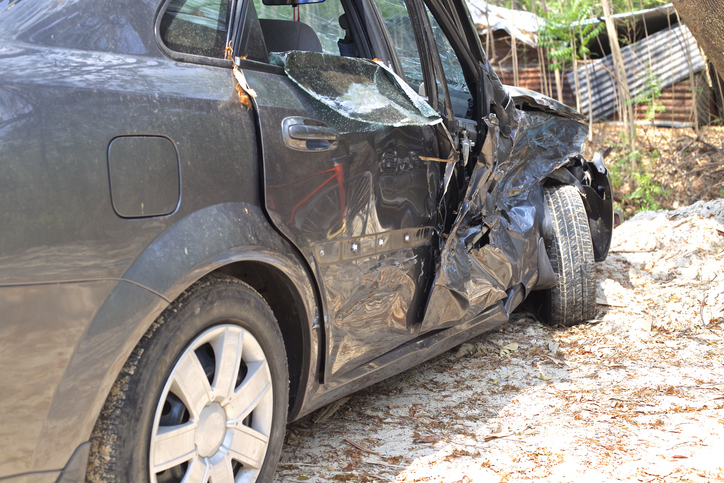
What Does It Mean To Mitigate your Own Damages After a Fort Myers Car Accident?
Most people have never heard the word “mitigation” before the adjuster uses it against them. The other driver ran the red light at Colonial Boulevard and Summerlin Road. The liability looks clean. Then, six or seven months into the case, the carrier’s lawyer surfaces a gap in the therapy records, a skipped appointment, a social-media photograph — and suddenly the conversation has shifted from what the crash cost you to what you did wrong afterward. That is the mitigation defense, and it catches Fort Myers claimants by surprise every week in our office.
Over thirty years of representing the injured in Lee and Collier Counties, I can tell you the mitigation defense is one of the most under-prepared-for issues a Fort Myers claimant runs into. This is the conversation I have on day one with every new client, and it is the reason we have such a low rate of claims reduced by mitigation arguments at our firm.
What Florida law actually says about mitigating damages
There is no single Florida statute titled “duty to mitigate damages.” It comes from a long line of Florida court decisions that treat mitigation as an affirmative defense — meaning the at-fault driver’s insurance company has to raise it and prove it. They have to show two things: that your loss could have been avoided with reasonable effort, and that you did not make that effort. Plain English: the burden is on the defense, but the defense gets a hearing if there is anything in your record they can point to.
The rule that matters most alongside mitigation is Florida’s comparative negligence statute. §768.81, Florida Statutes was rewritten in March 2023. Before the reform, Florida used pure comparative negligence — if you were 90% at fault, you could still recover 10%. Now Florida uses modified comparative negligence: if a jury finds you 51% or more at fault, you recover nothing. If they find you 30% at fault, your verdict is cut by 30%. Mitigation feeds directly into that math. A failure to mitigate is one of the ways the defense bumps your share up.
The deadline rules are just as important. §95.11(4)(a), Florida Statutes sets the statute of limitations for negligence claims at two years from the date of the crash, also a 2023 change down from four. §627.736, Florida Statutes governs Personal Injury Protection — the $10,000 in no-fault medical coverage every Florida driver carries — and it requires initial medical care within fourteen days of the crash. Miss the fourteen-day window and PIP is gone. §316.066, Florida Statutes sets the crash-report rules. None of those statutes use the word “mitigation,” but a defense lawyer will use every one of them as a yardstick for whether the injured driver acted reasonably.
The mitigation traps we see most in Fort Myers claims
Once you have handled enough of these files, the same patterns repeat. Here are the four mitigation problems I see most often in Fort Myers claims:
- The fourteen-day medical gap. Client feels stiff but not hurt, decides to “wait it out,” and shows up at urgent care on day eighteen. By then PIP is gone and the defense argues the soft-tissue injury must have come from something else. This is the single most common mistake I see, and it costs people real money.
- The skipped physical therapy course. The orthopedist writes for twelve weeks of PT. The client goes for four, feels better, stops showing up. Six months later the neck pain comes back worse than before, and the insurance company points at the dropped appointments as the reason the condition got chronic.
- The car nobody fixed. A driver gets rear-ended on Daniels Parkway, files a property damage claim, and then leaves the car sitting in a driveway off Pine Island Road for four months waiting on a settlement. Storage fees pile up, the bumper rusts where the paint cracked, and the value of the loss balloons. The carrier argues — fairly — that none of that secondary loss had to happen.
- The social-media problem. Client tells the adjuster they cannot lift anything over ten pounds. Their Instagram shows them carrying a paddleboard down the beach. We have had defense lawyers walk into a deposition with a stack of printed screenshots. Mitigation arguments do not even need to be that good if your own posts contradict the medical record.
Why mitigation cases are harder than they look
The thing nobody tells a new claimant is that “reasonable mitigation” is a moving target. The defense does not have to prove you ignored medical advice on purpose. They have to show a reasonable person in your shoes would have done more. That is a soft standard, and it leaves a lot of room for argument.
Two practical complications come up over and over. The first is that medical care costs money, and Florida’s PIP only pays 80% of approved medical costs up to $10,000 — which gets eaten quickly by an ER visit, imaging, and a couple of orthopedic consults. Clients without strong health insurance start skipping appointments because they cannot afford the copays. From a legal standpoint, the law does not give them much credit for the financial bind. From a practical standpoint, this is the place where our firm steps in to find letters of protection with providers who will treat on a lien and wait to be paid out of the settlement.
The second complication is work. A driver who returns to a physically demanding job before the doctor clears them — usually because the bills will not stop — risks aggravating the injury and giving the defense a pre-existing condition argument. The fix is a written work-status note from the treating provider at every visit. Without that paper trail, the defense fills the silence with a story about a claimant who was fine until they were not.
What a Fort Myers rear-end case can look like
A couple of years ago we represented a Fort Myers driver who was rear-ended on US-41 just south of Colonial Boulevard. The other driver did not stop. No license plate, no description, gone before our client could get out of her car. She drove herself home shaken up, took some ibuprofen, and tried to sleep it off.
By the next morning her neck had locked up so badly she could not turn her head to back out of the driveway. She made it to the emergency room within the fourteen-day window — barely — and the ER ordered imaging that showed a cervical strain. Her primary care doctor referred her to physical therapy and pain management for what turned into a chronic condition.
The challenge in her case was not the medical record. The challenge was the at-fault driver was never identified. We pivoted the claim to her own uninsured motorist coverage under §627.727, Florida Statutes, which is exactly the situation UM coverage exists for. Her own carrier opened the file as if they were the at-fault driver, and the carrier’s lawyer raised mitigation — they argued the chronic component would not have developed if she had gone to the ER the night of the crash instead of the next morning.
Two of the PT sessions had been at a clinic near McGregor Boulevard that the client had walked to because her car was in the shop. That detail mattered: it showed effort. The carrier ultimately paid the full policy limits on the UM coverage. The mitigation argument did not get traction because the record did not let it.
What to do in the first week after a Fort Myers crash
The action list below is not a generic checklist. Every item on it is something I have watched protect a case or, in its absence, sink one.
- See a doctor inside fourteen days. Not on day fourteen — well inside it. The earlier the visit, the cleaner the causation argument. Even if you feel mostly okay, an urgent care visit on day two creates a record that day-one symptoms existed.
- Ask every provider for a written work-status note. Light duty, no lifting over ten pounds, no driving for two weeks — whatever it is, get it on paper. If you go back to work against medical advice, the defense will argue you caused your own re-injury.
- Keep one folder — physical or digital — for everything. ER paperwork, PT sign-in sheets, mileage to and from appointments, prescription receipts, the body-shop estimate. I have used this approach with clients for years and have noticed that the ones who keep the folder settle for measurably more than the ones who try to reconstruct it from memory at the end.
- Stop posting on social media. Not “be careful what you post.” Stop. Lock the accounts. Tell your family not to tag you. The defense will look. I have seen cases turn on a single Facebook photo.
- Do not give a recorded statement to the other driver’s insurance company before you talk to a lawyer. The adjuster’s job is to find a reason to pay less. A casual “I’m feeling better, thanks for asking” turns into a mitigation argument later.
- Move your damaged car out of the elements. If the carrier is slow to inspect, document the storage location and any new damage with dated photos. Letting the car deteriorate while you wait can be used against you.
Key Takeaways
- Florida law requires accident victims to take reasonable steps to keep losses from getting worse — the duty to mitigate is real, and the defense can use it to cut a recovery.
- Under §768.81, Florida Statutes, anyone 51% or more at fault recovers nothing — and a failure to mitigate is one way the defense pushes that fault percentage up.
- The fourteen-day PIP rule under §627.736, Florida Statutes is the single most common mitigation trap in Fort Myers crashes. Get medical care inside that window.
- Skipped physical therapy, ignored work restrictions, and damaging social media posts cause more mitigation reductions than any other category of mistake.
- You have two years to file suit under §95.11(4)(a), Florida Statutes — half the window Florida used to give — so do not let the calendar run while you wait to feel better.
Frequently Asked Questions
Does Florida law really require me to mitigate my damages after a Fort Myers car crash?
Yes. Florida treats mitigation as a defense the at-fault driver can raise to reduce your recovery. If you ignore your doctor’s orders, skip prescribed physical therapy, or let property damage get worse, a jury can be told to subtract the avoidable portion of your losses. The defense has to prove the failure, but the safer move is to follow medical advice and document everything.
If I am partly at fault for the Fort Myers crash, can I still recover?
Under §768.81, Florida Statutes, you can recover as long as you are 50% or less at fault. The 2023 reform changed the rule from pure comparative negligence to modified comparative negligence, so a driver who is 51% at fault gets nothing. If you are 30% at fault, your recovery is reduced by 30%.
How long do I have to file a personal injury lawsuit after a Fort Myers car accident?
For crashes on or after March 24, 2023, you have two years from the date of the accident to file suit. That is §95.11(4)(a), Florida Statutes. The old four-year window was cut in half in the 2023 tort reform package. PIP medical treatment carries its own much shorter clock — fourteen days.
What happens if I wait more than fourteen days to see a doctor?
Under §627.736, Florida Statutes, you generally lose your $10,000 in Personal Injury Protection medical benefits if you do not receive initial care within fourteen days of the crash. That single deadline costs more Fort Myers claims than almost any other rule on the books.
Can the insurance company use social media to argue I failed to mitigate?
Yes, and adjusters do it routinely. A photo of you lifting a cooler at a Sanibel beach day or pushing a stroller down McGregor Boulevard can be used to argue you did not follow restrictions. We tell clients to lock their accounts and stop posting until the case closes.
Talk to a Fort Myers car accident lawyer before the mitigation defense gets traction
If you were hurt in a crash on US-41, Daniels Parkway, Six Mile Cypress Parkway, McGregor Boulevard, or anywhere else in Lee or Collier County, the smartest thing you can do is talk to a lawyer before you give the other driver’s adjuster anything in writing. Our firm has handled this kind of file for thirty years, and we know what an insurance company looks for when it wants to argue mitigation. Call Pittman Law Firm, P.L. at 239-992-8259 for a free consultation. There is no fee unless we recover for you.
About the Author

David B. Pittman, Esq. founded Pittman Law Firm, P.L. and has practiced personal injury law in Fort Myers and across Lee County for more than thirty years, with a concentrated focus on serious-injury auto and complex-liability cases. The firm handles a steady stream of serious-injury work along the Daniels Parkway, Six Mile Cypress, McGregor Boulevard, Cleveland Avenue, and Summerlin Road corridors, and along I-75 between Estero and Bell Tower.
David holds a degree from The Citadel, The Military College of South Carolina, and his law degree from the University of South Carolina School of Law. He holds AV-Preeminent status with Martindale-Hubbell and is a member of the Multi-Million Dollar Advocates Forum.
David has held a Florida real estate broker license for twenty-five years, a credential that shapes how the firm reads the property side of premises cases. The firm handles personal injury cases across Lee and Collier Counties, serving Fort Myers, Bonita Springs, Naples, Cape Coral, Estero, and Lehigh Acres, with offices at Windsor Place in Bonita Springs (main) and Fort Myers (satellite). Call 239-992-8259 for a free consultation.
Disclaimer: The information on this page is provided for general educational purposes and is not legal advice. Reading this article does not create an attorney-client relationship with Pittman Law Firm, P.L. Every case turns on its own facts. If you have been injured in a Southwest Florida crash, please contact our office to discuss the particulars of your situation. This is attorney advertising.