

What Are the Worst Roads in Southwest Florida During Rush Hour?
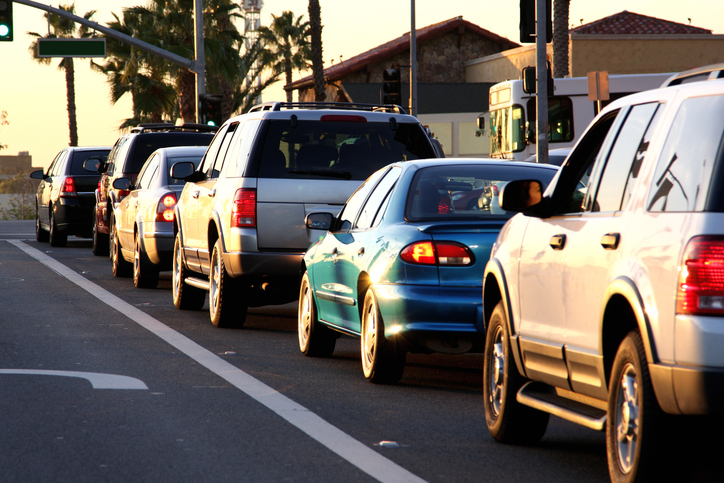
Most of our serious rear-end cases come in between 4:30 and 6:30 in the evening. Not midnight. Not 2 a.m. The afternoon rush, on the same seven corridors, cycling through our intake files year after year. The roads have not changed much. The volume of cars on them has. And the carriers have gotten better at using the 2023 tort reform to push fault percentages in the wrong direction for injured drivers.
I have spent decades watching the same roads send the same kinds of crashes through our office in Bonita Springs. The patterns are real, the carriers know about them, and the police reports tell on the intersections. What follows is the version of that conversation I have with clients, with the Florida law each piece sits on top of, written plainly.
What Florida law actually says about rush-hour crashes
Before we get into which roads carry the highest accident counts, three Florida statutes do most of the work in a Southwest Florida rush-hour case. Every one of them got harder for injured people after the 2023 tort reform.
Modified comparative negligence — §768.81, Florida Statutes. Plain English: a jury assigns a percentage of fault to everyone involved. If you come out at 50% or below, you can still recover, but your award is reduced by your share. If a jury puts you at 51% or higher, you recover nothing. Before 2023 the cutoff was 100%, meaning a plaintiff who was 80% at fault could still take home 20%. That is gone. Insurance companies learned the new rule quickly, and on rush-hour cases their adjusters routinely argue the injured driver was speeding, following too closely, or distracted, all of which are ways of pushing the fault percentage over 50%.
Two-year statute of limitations — §95.11(4)(a), Florida Statutes. The 2023 reform cut the deadline for filing a negligence lawsuit from four years to two. That covers nearly every rush-hour crash we handle. If you were hurt on I-75 on May 14, 2026, you have until May 14, 2028 to file suit. After that date, the door is closed, regardless of how strong your case looked the day after the wreck.
PIP and the 14-day rule — §627.736, Florida Statutes. Florida is a no-fault state, which means your own Personal Injury Protection coverage pays the first $10,000 of medical bills and a portion of lost wages no matter who caused the crash. The catch: you have to be seen by a qualifying medical provider within 14 days, or PIP cuts off and pays nothing. People walk away from rush-hour fender benders feeling fine, then wake up three weeks later with a neck that will not turn. By then PIP is gone. The 14-day rule is the single most expensive mistake I see in our office.
There are two more worth knowing about. Uninsured-motorist coverage under §627.727, Florida Statutes, which is optional in Florida but the most important coverage I can recommend anyone carry in this region given how many drivers on our roads are uninsured. And the crash-report requirement under §316.066, Florida Statutes, which kicks in any time there is injury, death, more than $500 in property damage, a commercial vehicle, or a hit and run.
The seven rush-hour roads we actually see come through our office
These are the corridors that show up most often on the crash reports I read. Order is rough — some weeks I-75 leads, some weeks US-41 does — but these seven cover the bulk of what walks in the door at our firm.
- I-75 corridor through Lee and Collier Counties. The stretch from Bonita Beach Road north to Daniels Parkway, and the segment near Alico Road, give us most of our serious rear-end and multi-vehicle pileup files. Speeds on the interstate are high, traffic compresses hard during the 4:30 to 6:30 evening window, and a single distracted driver at 70 mph stacks five cars in front of him. Most of our commercial-truck and jackknife cases also originate here.
- US-41 (Tamiami Trail). From Bonita Springs through Fort Myers and down into Naples, US-41 is the spine of Southwest Florida. Heavy left-turn movements, frequent traffic signals, and pedestrians crossing where they should not, especially after dark in season. We see a steady run of T-bone and pedestrian cases out of US-41.
- Daniels Parkway near RSW Airport. Hurried travelers, rental cars driven by people who do not know the road, and a complicated set of exits feeding Six Mile Cypress and I-75. Distracted-driving rear-enders dominate the case mix here.
- Colonial Boulevard. The stretch between US-41 and I-75, particularly near the shopping plazas, sees heavy left-turn and parking-lot-egress crashes. Plenty of low-speed wrecks, but low speed does not mean low injury — a 25 mph rear-end can still herniate a disc.
- Pine Ridge Road in Naples. Long signal cycles, abrupt merges from shopping-center driveways, and traffic backing up onto the through lanes. We see right-angle crashes and side-swipes from this corridor.
- State Road 82. Narrow lanes, limited shoulders, and rapid commercial development between Lehigh Acres and Fort Myers have turned this into one of the more dangerous corridors in the region. Head-on cases and run-off-the-road wrecks come off SR-82 with grim regularity.
- Midpoint and Cape Coral Bridges. Limited alternatives mean any incident on either bridge cascades into miles of stopped traffic, which then produces secondary rear-end collisions on the approaches.
Why rush-hour cases are harder than they look
Clients sometimes come in thinking a rear-end crash is a guaranteed win because “the other guy hit me.” A rear-end is a strong fact pattern, but it is not automatic, and the post-2023 comparative-negligence framework has made it materially harder to push insurers off their first offer. Here is what makes a rush-hour file work differently than people expect:
Sudden-stop defenses. Carriers raise a “sudden stop” theory in a high percentage of our rush-hour rear-end files, especially on I-75 and US-41. The argument is that the lead driver braked too hard for no good reason and shares responsibility. With the 51% cutoff in §768.81, that argument is now worth a lot more to the defense than it used to be.
Multi-vehicle pileups. On I-75 a single chain-reaction crash can involve six or eight vehicles. Sorting out who hit whom, in what order, and which impact caused which injury is engineering work, not eyeball work. We bring in reconstruction engineers, pull event-data-recorder downloads from the involved vehicles, and frequently subpoena commercial-truck telematics. Without that work the carriers will spread fault across every driver they can.
Soft-tissue skepticism. The most common rush-hour injury is a soft-tissue cervical or lumbar strain. They do not show up on plain X-ray, sometimes do not show on MRI for weeks, and adjusters treat them with reflexive suspicion. The fix is consistent, contemporaneous medical documentation, which is why the 14-day PIP rule matters so much.
Commercial-vehicle layers. A rush-hour crash on I-75 or SR-82 often involves a delivery truck, a contractor’s pickup, or a commercial tractor-trailer. Each one carries different coverages, different reporting obligations under Federal Motor Carrier Safety Administration rules, and different evidence-preservation considerations. The driver’s employer is often the real defendant, and getting the right preservation letter out in the first week can save the case.
$150,000 after a Fort Myers rear-end crash
We represented a Fort Myers client who was rear-ended in stop-and-go traffic. The other driver said our client had stopped short; our client said she was at a complete stop when the strike happened. The insurer opened with a low offer, pointing to what they called a minor impact. Our client had neck surgery. After we documented the mechanism of injury, preserved the vehicle event data, and pushed back on the carrier’s reconstruction, the case resolved for $150,000. That is what it takes — the documentation work, the preservation work, and the willingness to fight the “low-speed, minor injury” narrative the carrier built in the first thirty days.
What to do if you are in a rush-hour crash on one of these roads
This is the practical list I walk clients through, and it is built from watching what works and what does not in the first two weeks after a wreck.
- Call 911 from the scene, even for a “small” crash. Get a written report under §316.066. Without it, the at-fault driver’s carrier will rewrite the facts a week later.
- Photograph everything before vehicles are moved, if it is safe. Damage location, debris field, skid marks, traffic-signal phase, the position of every vehicle. I have settled cases on a single time-stamped photograph that showed where a vehicle came to rest.
- See a qualifying medical provider within 14 days, no exceptions. Even if you feel fine. PIP under §627.736 shuts off at day 15, and adjusters look for the gap.
- Do not give a recorded statement to the other driver’s insurance company. They will call within 48 hours and they will be pleasant. They are recording for one reason, which is to find a comparative-fault hook.
- Save the dashcam footage. If your vehicle or the other vehicle had a dashcam, that file is the single most valuable piece of evidence in the case, and most systems overwrite within seven to ten days.
- Get the crash report number and the responding agency. The Florida Highway Patrol handles I-75, the local police department handles in-city roads, and sheriff’s deputies handle unincorporated areas. Knowing which agency has the file shortens our investigation by days.
- Call a lawyer before you sign anything from either insurer. Including a “medical authorization” form. The form is broader than it looks and it can pull in records that have nothing to do with the crash.
Key Takeaways
- The seven rush-hour corridors that produce the most cases through our office are I-75, US-41, Daniels Parkway, Colonial Boulevard, Pine Ridge Road, State Road 82, and the Midpoint and Cape Coral Bridges.
- Florida’s 2023 reform of §768.81 means a jury finding of 51% or more fault wipes out your recovery entirely. Rush-hour rear-end cases are no longer automatic.
- Under §95.11(4)(a), you have two years from the crash date to file suit, half of what the law allowed before 2023.
- The 14-day medical-treatment rule in §627.736 is the most expensive deadline most people do not know about. Miss it and your PIP coverage disappears.
- Do not give a recorded statement to the other driver’s carrier before talking to a lawyer. That call is the single biggest comparative-fault trap on the rush-hour case file.
Frequently Asked Questions
Which Southwest Florida roads do you see the most rush-hour crash files come off of?
After thirty years of practice in Lee and Collier Counties, the recurring names in our case files are I-75 between Bonita Beach Road and Pine Ridge Road, US-41 through Fort Myers and Naples, Daniels Parkway near the airport, Colonial Boulevard, Pine Ridge Road, State Road 82, and the Midpoint and Cape Coral Bridges. Time of day matters as much as the road. Most of our serious rear-end and lane-change cases come in between 4:30 p.m. and 6:30 p.m.
If I am rear-ended on I-75 during rush hour, what does Florida law actually say about fault?
Florida runs on modified comparative negligence under §768.81, Florida Statutes. After the 2023 reform, if a jury finds you 51% or more at fault for the crash, you recover nothing. At 50% or below, your recovery is reduced by your percentage of fault. Carriers know this rule and will try to push some of the fault back onto you, even on a textbook rear-end. That is the single biggest reason to talk to a lawyer before you give a recorded statement.
How long do I have to file a personal injury claim after a Southwest Florida rush-hour crash?
Two years from the date of the crash, under §95.11(4)(a), Florida Statutes. That deadline was cut from four years to two in the 2023 tort reform, and it applies to most negligence cases including car, truck, motorcycle, and pedestrian crashes. Wrongful death is also two years from the date of death. Miss the deadline and the case is gone, no matter how strong the underlying facts are.
Does my PIP cover me if I am hurt on US-41 or Daniels Parkway?
Yes. Under §627.736, Florida Statutes, your own Personal Injury Protection policy pays the first $10,000 of medical bills and lost wages regardless of who caused the crash, but you have to be treated by a qualifying provider within 14 days of the wreck or PIP shuts off entirely. After thirty years of handling these files, that 14-day rule is the one most people miss, and it is the easiest one to lose money on.
Do I have to file a crash report after a rush-hour fender bender in Fort Myers or Bonita Springs?
If the crash involved injury, death, more than $500 in property damage, a commercial vehicle, or a hit and run, §316.066, Florida Statutes, requires a written report. The investigating officer usually files it for you on the scene. If officers do not respond, the driver has 10 days to file a self-report with the Florida Highway Safety and Motor Vehicles. Get a copy of that report before you talk to either insurer.
Talk to Pittman Law Firm About Your Rush-Hour Crash
If you were hurt on I-75, US-41, Daniels Parkway, Colonial Boulevard, Pine Ridge Road, State Road 82, or the Cape Coral or Midpoint Bridges, call our office. We will listen, tell you straight whether you have a case, and explain what the 2023 reform changes mean for your specific facts. There is no charge for the first conversation, and there is no fee unless we recover for you.
Call 239-992-8259 for a free consultation, or visit our offices at Windsor Place, 3525 Bonita Beach Rd, Suite 107, Bonita Springs, FL 34134.
About the Author

David B. Pittman, Esq. founded Pittman Law Firm, P.L. and has spent more than thirty years handling personal injury cases across Southwest Florida. The firm represents injured clients across Lee and Collier Counties — from the firm’s main office at Windsor Place on Bonita Beach Road through Fort Myers, Naples, Estero, Cape Coral, and Lehigh Acres — with a particular focus on commercial-vehicle, complex-liability, and serious-injury cases.
David trained at The Citadel, The Military College of South Carolina, and earned his JD from the University of South Carolina School of Law. He holds an AV-Preeminent rating from Martindale-Hubbell and is a member of the Multi-Million Dollar Advocates Forum, an organization whose members have secured verdicts and settlements above one million dollars on behalf of their clients.
David has held a Florida real estate broker license for twenty-five years, a credential that shapes how the firm reads the property side of premises cases. The firm handles personal injury cases across Lee and Collier Counties, serving Fort Myers, Bonita Springs, Naples, Cape Coral, Estero, and Lehigh Acres, with offices at Windsor Place in Bonita Springs (main) and Fort Myers (satellite). Call 239-992-8259 for a free consultation.
Disclaimer: This article is for general informational purposes and is not legal advice. Reading it does not create an attorney-client relationship with Pittman Law Firm, P.L. Every case turns on its own facts, and Florida law changes. For advice on your situation, contact a Florida-licensed attorney. Attorney advertising.