

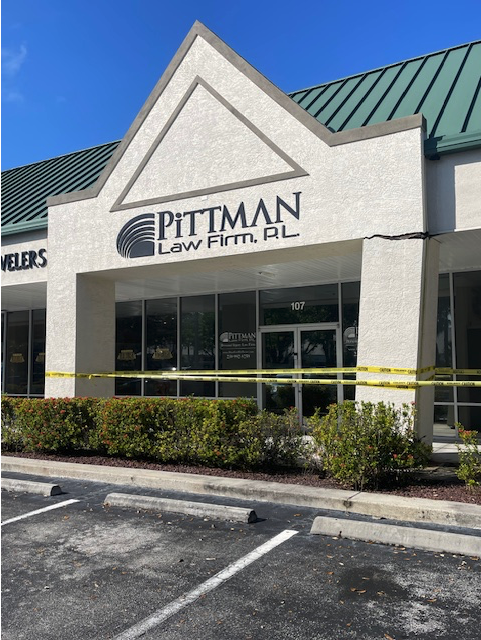
Understanding Why Drivers are Driving Into Buildings and Causing Accidents in Southwest Florida
It has happened in front of our own Bonita Springs office, more than once. A vehicle leaves a parking spot off Bonita Beach Road and goes through a storefront. Nobody plans for it. The people inside are looking at a menu, waiting for a prescription, buying groceries — and then the glass comes in. Across three decades of injury work in Lee and Collier Counties, I have worked enough of these cases to know that the fact patterns are remarkably predictable, the legal questions are more involved than most people expect, and the first 72 hours after the crash are almost always what decides the outcome.
What follows is the plain version. The legal pieces are real, and I cite them by section number so you can verify, but I also walk each one back into plain English so a person sitting in our conference room without a law degree can use it. That is the way I have always run our office, and it is the way I am going to write this piece.
What Florida law actually says about vehicle-into-building claims
A vehicle-into-building case in Florida is not its own special category. It is a negligence case. That means the same four pieces apply: duty, breach, causation, damages. What changes is who the defendants are. There is almost always the driver, and there is often the property owner or the parking-lot designer, and once in a while there is a vehicle manufacturer or a repair shop. Each of them has a different duty, and the law looks at each one separately.
The first statute that drives every personal injury case we file is §768.81, Florida Statutes. Plain English: Florida uses modified comparative negligence. A jury can assign a percentage of fault to each party, including the injured person. If the injured person is found 50% or more at fault, the recovery is zero. If the injured person is found 30% at fault, the recovery is reduced by 30%. This matters in storefront cases because defense lawyers love to argue that the customer should have seen the car coming, should not have been standing where they were standing, or should have moved faster. We rebut that. But you should know the rule going in.
The second statute is §95.11(4)(a), Florida Statutes. Plain English: you have two years from the date of the crash to file a negligence lawsuit. Two, not four. The Florida legislature cut the statute of limitations in half in 2023, and a lot of older content online still has the four-year number. If you are reading a blog post from 2019 telling you that you have four years, you are reading bad information. We have already had calls from people who waited because they read a stale article. Do not be that person.
The third is §627.736, Florida Statutes — Florida’s Personal Injury Protection, the PIP law. Plain English: if you have a Florida auto policy, your own carrier owes you up to $10,000 in medical and lost wages no matter who caused the crash. Most people are surprised to learn PIP follows you even when you are a pedestrian inside a Walgreens that gets driven into. The vehicle is the trigger, not the location. We confirm this on every storefront file.
The fourth is §627.727, Florida Statutes — Uninsured Motorist coverage. If the at-fault driver carries a minimum policy, which in Florida is often $10,000 in property damage liability and no required bodily injury at all, your own UM coverage is often the bigger pocket. We work the UM angle early and aggressively because we have seen too many catastrophic-injury cases where the driver’s liability policy ran dry in the first week and the family was looking at the wall.
The five building-strike patterns we see in Southwest Florida
Across thirty years, the building-strike cases we work in our office fall into a handful of repeating patterns. Here are the five we see most often:
- Pedal confusion in a head-in parking spot at a strip plaza. The driver pulls in, intends to brake, presses the accelerator instead, and goes through the storefront. The parking-lot geometry is the silent culprit on a lot of these — head-in spaces aimed straight at plate glass with no bollards.
- Medical episode behind the wheel. A driver loses consciousness, has a cardiac event, or has a seizure. The vehicle continues on its trajectory until it stops, often against a structure. These cases turn entirely on whether the medical event was foreseeable.
- Impaired driver into a restaurant or bar. Late-night crashes into restaurants along US-41 and McGregor Boulevard. The driver almost always has a measurable blood alcohol content. Dram-shop questions come up if the driver was over-served at another establishment that night.
- Driver fleeing law enforcement or another driver. A pursuit or road-rage chase ends with a vehicle going through a building. These bring in third-party liability questions, including agency and negligent entrustment when the fleeing vehicle belongs to someone else.
- Younger driver, excessive speed, lost control. Less common but always severe. A vehicle leaves the roadway at a curve or intersection, crosses a sidewalk, and ends up in a residence or office. We see these along the I-75 corridor through Lee and Collier Counties more than people would guess, especially at the Bonita Beach Road and Corkscrew exits.
Each pattern has its own defense playbook, and each one has its own evidentiary footprint. The first 72 hours after the crash are the window where the right photos, the right witness statements, and the right vehicle data get preserved or lost. We move quickly.
Building-strike cases — why these are harder than they look
From the outside, a car-into-a-building case looks open and shut. The car was driving. The building was sitting still. The driver must be at fault. In practice, none of these cases are simple. Here is why.
First, the driver is often elderly or has a medical condition. The sudden-medical-emergency defense in Florida can wipe out a case if the defense can show the event was unforeseeable. We have to pull medical records, DMV records, and prior incident history to figure out whether the event was truly out of nowhere or whether the driver had been warned. We have seen both.
Second, the property owner’s role is contested on every file. The store will argue the driver is 100% at fault, full stop. We will argue the parking-lot design, the absence of bollards, and the documented prior incidents shift a meaningful percentage of fault to the property owner or the parking-lot designer. Under §768.81, every percentage point matters.
Third, the damages are often a mix of impact injuries and crush injuries, which are different from the soft-tissue and whiplash injuries that dominate ordinary car crashes. The medical proof is more complicated. The treating physicians are sometimes hard to line up for trial. We have to put more work into the medical narrative on these files than on a routine rear-end case.
Fourth, the property damage claim and the personal injury claim run on different tracks. The building’s insurer will pursue the driver for the structure. The injured person’s lawyer has to make sure the personal injury claim is not crowded out or undervalued because the building damage gets resolved first. I have seen carriers try to tender the policy limit to the building owner before the bodily-injury claim is filed. We block that.
What to do if a vehicle has come into a building you were in
Some practical recommendations from cases we have actually worked. These are not theoretical. Each item is here because I have watched it matter.
- Get a medical evaluation the same day, even if you feel fine. Crush injuries and internal injuries from building strikes often present a day or two later. The emergency room visit creates the medical record that becomes the foundation of the case. I have had clients tell me they walked away and felt the back injury two days later in the kitchen. By then, the gap in treatment is something the defense will use.
- Photograph the scene before it gets cleaned up. Bollards, or the absence of bollards. Tire marks. The angle of the vehicle. The position of the parking spaces. The building’s prior repairs. Property owners get the storefront patched fast.
- Get the names of every witness, especially store employees. Employees rotate. Within six months, the person who saw the whole thing has moved to another store in Estero or Cape Coral or out of state. Phone numbers, not just first names.
- Do not give a recorded statement to the driver’s insurer. Their adjuster will call you within 48 hours. Politely decline and refer them to a lawyer. Anything you say will be played back to you in deposition.
- Ask whether there have been prior incidents at the same location. County records and prior NBC-2 or News-Press coverage often turn up a pattern. A pattern is the heart of the premises-liability claim against the property owner.
- Preserve your own auto insurance information. Your PIP and your UM coverage may apply even though you were inside a building. We have explained this to a lot of surprised clients.
Key Takeaways
- Vehicle-into-building claims in Florida are negligence claims governed by §768.81 (modified comparative negligence) and a two-year window under §95.11(4)(a). Older posts citing four years are out of date.
- Your own PIP under §627.736 often applies even when you were a pedestrian inside a structure when the vehicle came through. Confirm coverage early.
- The property owner can share fault when the parking-lot geometry, the absence of bollards, or the history of prior incidents made the strike foreseeable.
- Sudden-medical-emergency defenses succeed only when the event was truly unforeseeable. Pulling the driver’s medical and DMV history early is how that defense gets unwound.
- The first 72 hours decide a building-strike case. Photographs, witness contact information, and a same-day medical visit are the three things that matter most.
Frequently Asked Questions
If a driver crashes into a building and I am inside, who can I bring a claim against in Florida?
Usually the driver and the driver’s auto insurer are the first stop, but the property owner can share fault too if the parking lot or storefront had no bollards, poor markings, or a known prior history of pedal-error crashes. Florida law lets a jury split fault between multiple parties, so both claims often run in parallel.
How long do I have to file a personal injury lawsuit after a storefront crash in Florida?
Two years from the date of the crash for negligence claims, under §95.11(4)(a), Florida Statutes, as reformed in 2023. Older case law and older blog posts will still say four years. They are out of date. Do not rely on them.
Does PIP cover my injuries if I was a customer hit inside a Bonita Springs or Fort Myers store?
Possibly. Florida’s PIP statute, §627.736, covers you as a pedestrian struck by a motor vehicle even if you were inside a building when the vehicle came through the wall. It is up to $10,000 in medical and lost wages, no-fault. We have to look at your own auto policy and any resident relative’s policy to confirm coverage.
What if the driver who hit the building was elderly and had a medical episode?
A sudden, unforeseeable medical event can be a defense in Florida, but the bar is high. The driver has to show the event was truly unforeseeable. If the driver had been told by a doctor not to drive, or had prior fainting episodes, that defense usually falls apart. We pull medical records and DMV history early to figure out which side of the line the case sits on.
Can the property owner be held liable for the building strike itself?
Yes, in the right facts. Florida premises liability looks at whether the owner created or allowed a foreseeable hazard. A storefront with head-in parking three feet from a plate-glass window and no bollards, in a strip plaza with a documented history of similar incidents, is a textbook foreseeability argument. We have run these cases against landlords, tenants, and parking-lot designers.
Talk to Pittman Law Firm before the 72-hour window closes
If you or a family member was hurt when a vehicle came into a building, the calls we get most often are from people who waited too long to ask a lawyer a simple question. Call our office at 239-992-8259 for a free consultation. There is no fee unless we recover for you. We answer the phone in Bonita Springs, and we take calls from Fort Myers, Naples, Estero, Cape Coral, and Lehigh Acres every week.
About the Author

Personal injury is the focus of David B. Pittman, Esq.’s practice across Southwest Florida, and has been since he founded Pittman Law Firm, P.L. more than three decades ago. The firm represents injured clients across Lee and Collier Counties — from the firm’s main office at Windsor Place on Bonita Beach Road through Fort Myers, Naples, Estero, Cape Coral, and Lehigh Acres, with a particular focus on commercial-vehicle, complex-liability, and serious-injury cases.
Two schools made the lawyer: The Citadel, The Military College of South Carolina, and the University of South Carolina School of Law. The recognition followed: AV-Preeminent at Martindale-Hubbell, membership in the Multi-Million Dollar Advocates Forum.
David has held a Florida real estate broker license for twenty-five years, a credential that shapes how the firm reads the property side of premises cases. The firm handles personal injury cases across Lee and Collier Counties, serving Fort Myers, Bonita Springs, Naples, Cape Coral, Estero, and Lehigh Acres, with offices at Windsor Place in Bonita Springs (main) and Fort Myers (satellite). Call 239-992-8259 for a free consultation.
The information on this page is provided for general informational purposes only and is not legal advice. Reading this page does not create an attorney-client relationship with Pittman Law Firm, P.L. Every case is different, and prior results do not guarantee a similar outcome. This is attorney advertising.