

Progressive’s Settlement Playbook in Florida Car Accident Cases: What Their Tactics Actually Look Like
A client gets rear-ended on I-75 or US-41, the police report goes in, and before they have even finished icing the bruise on their forehead a Progressive adjuster is on the phone offering a number. The number sounds friendly. The voice on the other end sounds friendly. The speed of that first call is not a customer service feature — it is a strategy, and it follows a pattern we have watched play out for decades in Lee and Collier Counties.
I am writing this so you can see the pattern from the inside before you say yes to anything. I see the same moves repeated case after case, and most of them are easier to handle once you know what to look for.
What Florida Law Actually Says About Progressive Settlements
A settlement is a contract. What goes into that contract, and what you are entitled to ask for, is set by a handful of Florida statutes that most accident victims have never read. Here are the ones that matter.
Modified comparative negligence — §768.81, Fla. Stat. Florida changed this rule in the 2023 tort reform. Today, if a jury decides you were more than 50 percent at fault for your own crash, you recover nothing at all. Below that line, your recovery is reduced by your percentage of fault. In plain English: if a jury says you were 20 percent responsible and your damages are $100,000, you take home $80,000. If they say you were 51 percent responsible, you take home zero. Progressive’s adjusters know this rule cold, and a lot of their early arguments are aimed at pushing your fault number up toward that 50 percent line.
Statute of limitations — §95.11(4)(a), Fla. Stat. The same 2023 reform cut Florida’s negligence deadline from four years to two. You now have two years from the date of the crash to file suit on most car accident claims. Progressive is fully aware of that calendar. Some of the slow-walk delay tactics we see are aimed at running you up against that two-year wall so your only choice is to take the number they put on the table.
PIP — §627.736, Fla. Stat. Florida is a no-fault state for medical bills up to the first $10,000. Your own Personal Injury Protection coverage pays 80 percent of reasonable medical bills and 60 percent of lost wages, up to that cap, regardless of who caused the crash. You cannot waive PIP into a Progressive bodily-injury settlement, but the carrier will sometimes argue your medical bills are smaller than they really are because part of them ran through PIP first.
Uninsured motorist — §627.727, Fla. Stat. If the other driver had no coverage or had only the state minimum, your own UM policy may be the real source of recovery, and that may also be a Progressive policy. UM is a separate fight from the third-party bodily injury claim, with different rules and a different adjuster, and we routinely see clients who did not realize they had UM at all.
Crash report — §316.066, Fla. Stat. Florida requires a written crash report for most accidents involving injury or significant property damage. The report’s narrative and the investigating officer’s fault diagram are usually the first thing the adjuster reads. If something in that report is wrong, it needs to be corrected through a supplemental report, not argued about later.
The Six Progressive Scenarios We Actually See
Every Progressive bodily-injury file we have opened in the last few years has fit into one of these six patterns. Recognizing the pattern early is half the battle.
- The 48-hour offer. A small number — often three or four thousand dollars — floated within two days of the crash, before any imaging has been read. The implied message is that signing now ends the stress. What it actually ends is your right to ask for anything else, ever.
- The recorded statement fishing trip. A friendly call where the adjuster asks how you are feeling. Any version of “I’m doing okay” goes into the file and gets quoted back at you eight months later when your neck still hurts.
- The pre-existing condition pivot. Once your medical records arrive, the carrier finds a five-year-old chiropractic visit and tries to assign your current pain to that old episode. This one runs straight into the eggshell plaintiff rule, but only if your treating doctor has documented the difference between before and after.
- The IME ambush. A request that you sit for an examination by a doctor Progressive has chosen. The doctor is not your doctor and is not treating you. We have read hundreds of these reports. They almost always conclude that your injuries are minor and resolving.
- The social-media trawl. A photo of you at a grandchild’s birthday, smiling, becomes proof that you are not really hurt. Adjusters read public posts, and so do defense attorneys if the case files into suit.
- The slow walk to the statute. Repeated requests for one more document, one more authorization, one more supervisor approval, while the two-year clock under §95.11(4)(a) keeps ticking. By month twenty, you are negotiating from a much weaker spot than you were at month four.
Progressive Cases — Why They Are Harder Than They Look
The early offer is the easy part to spot. The harder problem is what happens after you say no to it. Progressive will keep the file open, sometimes for a year or more, and the longer it sits the more pressure builds on the victim side. Medical bills accumulate. PIP runs out at the $10,000 mark. Lost wages stack up. Health insurance starts asking why a workers’ comp or auto carrier is not paying. Meanwhile the carrier is collecting interest on every dollar it has not paid out yet.
There is also a quieter problem with Progressive files in Florida. Because the 2023 reform tightened comparative negligence and cut the limitations period in half, defense counsel has more grounds to push fault arguments and more options to wait out the clock. We have seen adjusters reach for fault percentages that would have been laughed out of a 2020 negotiation. The math has changed, and not in the victim’s favor.
Independent medical examinations are another place where the file shifts under you. The doctor performing the exam is being paid by Progressive’s defense panel. That does not by itself make the report worthless, but it does mean the report needs to be read against the treating physician’s chart, and any conclusion the IME draws about causation has to be tested against the actual imaging. We have had IME reports concluding “no objective findings” on cases where the MRI showed a herniated disc the radiologist had already flagged. Those reports get answered, in writing, with the actual films attached.
How we handled an Estero truck case
A case from our practice that I think about often involved a fatal rear-end crash on the I-75 corridor near Estero. A passenger car was stopped in traffic when a commercial semi struck it from behind at highway speed. The driver of the car did not survive. The family came to our office a few weeks later — the kind of intake that is never easy and that I take personally every time.
The carrier’s first move was the one we expected. They wanted to value the case on basic economic loss numbers and close it. We refused. We brought in a forensic accountant to build out the real picture of what the decedent would have earned over the rest of a working life, and what the loss of companionship and household services meant for the spouse and the children left behind. We also dug into the trucking company’s internal records and found gaps in their safety protocols that should not have been there.
That second piece is what moved the number. When you can show a jury not just what happened in the seconds before impact but what the corporate defendant failed to do in the months and years before that day, the negotiating posture changes. The case resolved with a significant recovery for the family and an acknowledgment, in writing, that the safety failures had to be addressed.
What to Do If Progressive Has Already Called You
This is the practical part, drawn from what I have actually watched help clients in real files. None of this is theoretical.
- Do not give a recorded statement on the first call. Tell the adjuster you are still being seen by a doctor and you will follow up in writing once you know more. That is not rude. That is accurate.
- See a doctor the same day or the next day, even if you feel functional. Whiplash, concussion, and disc injuries often present a few days late. A gap in treatment becomes the carrier’s main argument later. I have used this advice with clients for years and it pays for itself every time.
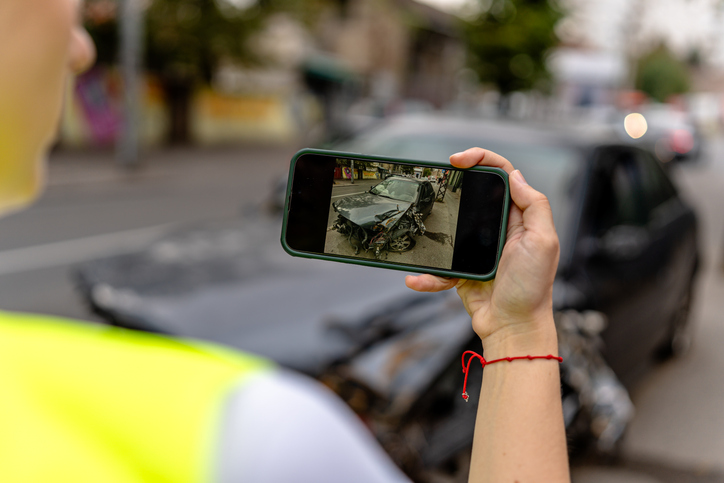
- Save the wreckage photos and the property damage estimate. A crushed rear end on a sedan tells a jury a different story than a paragraph in a police report. Take pictures of the inside of the car too — the deployed airbags, the deformed headrest, the blood on the seat belt if there is any.
- Lock down your social media. Not because you have done anything wrong, but because a smiling photo with no context becomes a weapon. Set accounts to private. Ask family to stop tagging you. Do not post about the crash, the injury, the doctor, or how you are feeling.
- Keep a one-line-a-day pain and function journal. Just enough to capture what hurt that day and what you could not do because of it. A juror reading “December 4 — could not lift my two-year-old grandson without stabbing pain in my lower back” understands that file in a way no medical record alone will convey.
- Find out what coverage you actually have before you settle anything. PIP, UM, MedPay, umbrella.
- Do not sign a medical authorization that lets Progressive pull your entire lifetime medical history. They are entitled to records related to the body parts you are claiming, not a complete file going back to childhood.
- Call a lawyer before the second call from the adjuster, not after the third. The earlier we get involved, the less cleanup there is.
Key Takeaways
- A Progressive offer made within 48 hours of the crash is almost never the case’s real value, and signing the release ends your right to ask for more.
- Florida’s 2023 reform changed two big rules — modified comparative negligence at the 50 percent line and a two-year statute of limitations — and both work against unrepresented victims.
- Pre-existing condition arguments lose against the eggshell plaintiff rule when the treating doctor has documented the change the crash actually caused.
- An IME is not independent in any meaningful sense — never attend one without your attorney having read the request and prepared you for it.
- The earlier we get involved, the more options you have. Calls in the first week are the easiest ones to handle well.
Frequently Asked Questions
Q1. How fast does Progressive typically reach out after a Florida car accident?
In our practice the first Progressive call usually lands within 24 to 72 hours, sometimes the same afternoon. The adjuster will ask for a recorded statement and may float an early number. Slow that conversation down until you have been seen by a doctor and you understand what you are actually dealing with.
Q2. Do I have to give Progressive a recorded statement after a crash?
If Progressive insures the other driver, no — you are not required to give a recorded statement at all. If Progressive is your own carrier, your policy may require cooperation, but that is not a blank check. We sit in on those calls so the questions stay focused on the crash, not on speculation about your future.
Q3. How long do I have to file a Florida car accident lawsuit against Progressive?
Under §95.11(4)(a), Fla. Stat., the deadline is now two years from the date of the crash for most negligence claims. The 2023 tort reform cut that window from four years down to two. Wrongful death runs on a two-year clock from the date of death. Miss the deadline and the case is over.
Q4. Why is Progressive blaming my pre-existing condition for my injuries?
Insurers reach for that argument constantly because it works when no one pushes back. Florida law uses the eggshell plaintiff rule — the at-fault driver takes the victim as they find them. If the crash worsened an older injury, the carrier still owes for that worsening, and your treating doctor’s records are how we prove it.
Q5. Should I accept Progressive’s first settlement offer in Florida?
Almost never. A first offer is the floor, not the ceiling, and once you sign a release the file is closed for good. We walk every client through what PIP paid, what is outstanding, what future care looks like, and what a fair number actually is before anyone signs anything.
Talk to Our Office Before You Sign Anything
If a Progressive adjuster has already called you, or if you have a written offer sitting on the kitchen table, talk to us before you sign. The consultation is free, and there is no fee unless we recover for you. Our main office is at Windsor Place, 3525 Bonita Beach Road, Suite 107 in Bonita Springs, with a satellite office in Fort Myers. We work files across Lee and Collier Counties — Bonita Springs, Fort Myers, Naples, Estero, Cape Coral, and Lehigh Acres. Call 239-992-8259 any time.
About the Author

David B. Pittman, Esq. founded Pittman Law Firm, P.L. and has spent more than thirty years handling personal injury cases across Southwest Florida, with a sustained focus on serious-injury auto and complex-liability cases. The firm represents injured clients across Lee and Collier Counties — from the firm’s main office at Windsor Place on Bonita Beach Road through Fort Myers, Naples, Estero, Cape Coral, and Lehigh Acres.
He attended The Citadel, The Military College of South Carolina, and went on to the University of South Carolina School of Law. He holds an AV-Preeminent rating at Martindale-Hubbell and is a member of the Multi-Million Dollar Advocates Forum.
David has held a Florida real estate broker license for twenty-five years, a credential that shapes how the firm reads the property side of premises cases. The firm handles personal injury cases across Lee and Collier Counties, serving Fort Myers, Bonita Springs, Naples, Cape Coral, Estero, and Lehigh Acres, with offices at Windsor Place in Bonita Springs (main) and Fort Myers (satellite). Call 239-992-8259 for a free consultation.