

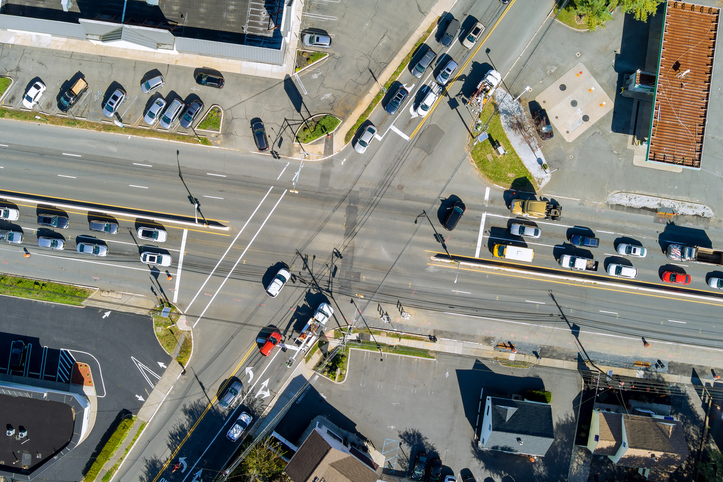
Top 5 Worst Intersections in Lehigh Acres For Accidents
People want to know whether the corner they got hit at has a reputation, whether other drivers have been hurt there, and whether that matters to their case. It does matter, and not in the way most folks expect. A bad intersection rarely excuses a negligent driver — but it establishes the context our office uses to push back when an insurer tries to blame the victim for “driving through a familiar area.”
What follows is a working attorney’s read on the five Lehigh Acres intersections that send the most cases through our doors, what Florida law actually says about how these crashes get resolved, and what to do in the first few hours if you are the one in the ambulance. The road geometry stories you have read elsewhere are not wrong, exactly. They are just incomplete.
What Florida Law Actually Says About Intersection Crashes
Before we get to the corners, let me walk you through the four statutes that decide whether you get paid after one of these crashes. Most clients have never heard of any of them until our first conversation, and that is fine — but the law is what governs the outcome, not the police report and not the body shop estimate.
Modified comparative negligence — §768.81, Florida Statutes. The Legislature rewrote this in 2023. If a jury decides you were 50% or less responsible for the crash, you still recover, but the damages get reduced by your share. If they decide you were 51% or more responsible, you recover nothing. At intersections this matters enormously, because almost every intersection case involves a fault fight — somebody ran a light, somebody turned across a lane, somebody misjudged a gap. The carrier’s job is to push your share above 50%. The full statute is on the Florida Legislature site at leg.state.fl.us.
Statute of limitations — §95.11(4)(a). Two years from the date of the crash. This also changed in 2023. The old four-year window is gone for negligence cases, and I still get calls from people who think they have plenty of time because their cousin told them four years. They do not. Read the language for yourself at leg.state.fl.us.
Personal Injury Protection — §627.736. Florida is a no-fault state. Your own auto policy pays the first $10,000 of medical bills and lost wages regardless of who caused the crash. The catch nobody hears about: you must be seen by a doctor within 14 days of the crash, or you forfeit the benefit entirely. I have seen people lose $10,000 of coverage because they waited three weeks to see if the neck pain would go away on its own. Statute language at leg.state.fl.us.
Uninsured Motorist — §627.727. Lehigh Acres has a higher share of uninsured drivers than most parts of Lee County, in my office’s experience. When the other driver carries nothing, your own UM policy is often the only source of money for a serious injury. If a customer-service rep talked you out of UM coverage to save twelve dollars a month, ask us about that — sometimes the rejection paperwork was not done correctly and the coverage can be reopened. Full statute at leg.state.fl.us.
The Five Intersections We Actually See
These are listed roughly in order of how often they show up on our intake calls — not by raw crash counts from the Lee County data, which is a different ranking. Some intersections produce a lot of fender-benders that never need a lawyer. Others produce fewer crashes but worse injuries. Our intake pattern reflects the second group.
1. Gunnery Road and Lee Boulevard
Probably the most-mentioned intersection in our intake notes. Two wide arterials meeting at an oddly timed signal, with strip plazas and gas stations on three of the four corners. The crashes we see here are mostly two flavors: someone running the yellow into a red, and someone trying to make a left across two oncoming lanes during the late-cycle gap. Both flavors generate serious side-impact injuries because the speeds on Lee Boulevard are higher than the posted limit in practice.
2. Homestead Road and Alabama Road
A four-way stop sign environment where drivers from the surrounding neighborhoods treat the stops as rolls. School-zone hours make it worse. Most of the cases I see from this corner involve a side-impact at low-to-moderate speed where one driver assumed the other had already cleared. Low speed does not mean low injury — a 25 mph T-bone on a sedan still produces concussions and rib fractures.
3. SR-82 and Daniels Parkway
This is the one that produces our worst injuries. SR-82 runs at 55 mph and most drivers run it faster. The crashes here are catastrophic when they happen — high-speed angle impacts, ejections, rollovers. We get more wrongful-death and traumatic-brain-injury calls from this intersection than from any other in eastern Lee County. The Florida Highway Patrol covers it because of the SR designation, which actually helps the investigation quality.
4. Sunshine Boulevard and SR-82
The cousin of the Daniels intersection, half a mile up the road. Same speed differential problem — Sunshine drivers entering or crossing 55 mph SR-82 traffic. We see a lot of left-turn-across-traffic cases here, the ones where a driver waits for “their gap” and misjudges by half a second. Under §768.81 the carrier will argue the turning driver was 60% or 70% at fault and try to zero out the case. They are often wrong, but you need real reconstruction work to push back.
5. Jaguar Boulevard and Pine Cove Drive
This one looks residential and quiet, which is exactly why it is dangerous. Drivers cruise the posted 30 mph as if it were 45. Visibility is bad in spots because of yard vegetation. The cases we see here are usually broadside crashes at intersections with no stop sign in one direction, and cyclists or pedestrians struck while crossing. Eastern Lehigh Acres has very little sidewalk infrastructure, so people walk in the road shoulder.
Lehigh Intersection Cases — Why They Are Harder Than They Look
From the outside, an intersection crash looks simple — somebody had a red light, somebody else had a green, the police figure it out, the insurance pays. In practice, almost none of that is true.
The first complication is that Lee County Sheriff’s deputies (and FHP on the state roads) write the at-scene report based on what they see, what the drivers say, and sometimes a witness. They are not crash reconstructionists. The report becomes the starting position for the insurance carrier, and if it is wrong about who had the light, your case starts uphill. We pull traffic-signal timing data, nearby business security camera footage, and 911 audio in the first two weeks on these cases because that material disappears fast.
The second complication is the comparative-fault fight. Under the 2023 amendment to §768.81, the defense lawyer’s whole job is to push your fault share above 50%. They will argue you were going three miles over, that you should have seen the other car earlier, that your sun visor was down. Sometimes they put a Fabre defendant on the verdict form — a non-party they blame to dilute the at-fault driver’s share. Most clients have never heard of this and it surprises them at trial. Better to know going in.
The third complication is medical. Intersection T-bones produce a specific cluster of injuries — concussion, rotator cuff tears from the seat belt, rib fractures, sometimes a delayed-onset back injury that does not show up for two weeks. The PIP 14-day rule under §627.736 cuts against you here. If you wait to “see how you feel,” you can lose coverage and weaken the medical record at the same time.
A truck client we represented in Naples
One case from our practice that I think about when people ask about intersection crashes did not happen in Lehigh — it happened on Immokalee Road in Naples — but the dynamic was identical to what we see at SR-82. A commercial truck T-boned our client’s vehicle. The impact pattern was the kind of high-energy side strike that an arterial-meets-arterial signalized intersection produces.
Our client came out with a traumatic brain injury and multiple rib fractures. Most carriers will pay the orthopedic bills and try to leave the brain injury out. We make sure the brain injury is in the record from the first month.
The case settled in the multi-millions just before trial. The truck carrier had taken the position early that our client bore the majority of the fault for the geometry of the collision. The neuropsychological documentation, combined with the reconstruction work we did on the signal timing, moved them off that position. I tell this story because the same fight happens on Lehigh Acres intersection cases — different road, same playbook from the defense.
What To Do If You Were Just Hit at a Lehigh Acres Intersection
This is the part of the article that usually reads like a generic checklist on other lawyers’ websites. Here is what I actually tell my own family to do, in order:
- Insist on a police response, even for a “minor” crash. §316.066 governs crash reports, and a deputy-written report carries more weight than a driver self-report. If they tell you they are too busy, ask politely for a supervisor. At a Lee Boulevard or SR-82 intersection there is almost always a serious enough mechanism of injury to warrant a response.
- Photograph the signal heads from the driver’s seat of both vehicles before you move. If you cannot do it safely, ask a passenger or a witness. Signal-phase evidence is the single most useful piece of proof in an intersection case and it is gone the moment the light cycles again.
- Get the names and phone numbers of every witness yourself. The deputy gets the ones who stay. The ones who give a statement and leave before the deputy arrives are often the most useful witnesses, and they are gone forever if you do not catch them at the scene.
- See a doctor within 14 days, even if you “feel fine.” §627.736 PIP eligibility hinges on that 14-day window. Adrenaline masks soft-tissue and brain injuries for days. I have used this rule with clients for thirty years and watched the ones who waited regret it every time.
- Write down what you remember within 48 hours. Not a sworn statement — just a private note for yourself. Speed, weather, what you saw, what you heard, what the other driver said. Memories of a traumatic event compress within a week. The contemporaneous note is gold a year later in deposition.
- Do not give the other driver’s carrier a recorded statement. They will call you, often within 24 hours, and they will be very polite. Politely decline. Talk to us first. There is no fee for the conversation.
Key Takeaways
- Lehigh Acres intersection crashes are decided by Florida’s modified comparative negligence rule (§768.81) — keep your fault share below 51% or you recover nothing.
- The negligence statute of limitations is now two years under §95.11(4)(a), not four. Older articles citing the four-year rule are out of date.
- PIP under §627.736 pays the first $10,000 of medical and lost wages, but only if you see a doctor within 14 days of the crash.
- Uninsured motorist coverage under §627.727 is the single most useful policy line in eastern Lee County because of the uninsured-driver rate.
- Insist on a deputy-written crash report under §316.066 — driver self-reports are much harder to use later.
Frequently Asked Questions
If I was hurt at one of these Lehigh Acres intersections, do I still have a case if I was partly at fault?
Under Florida Statute §768.81 as amended in 2023, you can still recover damages as long as a jury assigns you 50% or less of the fault. If they put you at 51% or more, you recover nothing. We see this fight constantly at intersections like Gunnery and Lee, where both drivers tell a slightly different story about who had the green.
How long do I have to file a lawsuit after a crash on SR-82 or Daniels Parkway?
Two years from the date of the crash, under §95.11(4)(a) Florida Statutes as revised by the 2023 tort reform. That clock used to be four years and a lot of people still believe it is. Do not rely on the old rule. Call our office well before the two-year mark so we have room to investigate.
Will my PIP cover me if I am rear-ended at Sunshine Boulevard and SR-82?
Florida PIP under §627.736 pays the first $10,000 of your medical bills and lost wages regardless of who caused the crash, but you have to see a doctor within 14 days or you lose the benefit entirely. We have watched clients miss that window because they “felt fine” for two weeks and then woke up unable to turn their head.
What if the other driver had no insurance?
This is where Uninsured Motorist coverage under §627.727 saves people. Your own UM policy steps into the at-fault driver’s shoes. In Lehigh Acres specifically we see a lot of unlicensed and uninsured drivers, and UM is often the only real source of recovery. If you declined UM when you bought your policy, ask us about reopening that issue.
Do I have to file a crash report myself?
Under §316.066 Florida Statutes, law enforcement files the long-form report when they respond. If officers do not respond, or if it is a minor crash they decline to write up, you have to file a driver report within 10 days. We tell every client to insist on a police response at any intersection crash in Lee County. A self-reported crash with no officer on scene is a much harder claim to prove.
Talk To Our Office Before You Talk To Their Carrier
If you have been hurt at a Lehigh Acres intersection — Gunnery and Lee, SR-82 and Daniels, Sunshine and SR-82, Homestead and Alabama, Jaguar and Pine Cove, or any of the other busy corners on the east side of Lee County — call our office at 239-992-8259 for a free consultation. There is no fee unless we recover for you. The first conversation is the most useful one, and it is the cheapest legal advice you will ever get.
About the Author
David B. Pittman, Esq. is a thirty-plus-year personal injury attorney across Southwest Florida and the founder of Pittman Law Firm, P.L. The firm represents injured clients across Lee and Collier Counties — from the firm’s main office at Windsor Place on Bonita Beach Road through Fort Myers, Naples, Estero, Cape Coral, and Lehigh Acres — with a particular focus on commercial-vehicle, complex-liability, and serious-injury cases.
Educationally, David is a graduate of both The Citadel, The Military College of South Carolina, and the University of South Carolina School of Law. Professionally, he holds AV-Preeminent status with Martindale-Hubbell and Multi-Million Dollar Advocates Forum membership.
David has held a Florida real estate broker license for twenty-five years, a credential that shapes how the firm reads the property side of premises cases. The firm handles personal injury cases across Lee and Collier Counties, serving Fort Myers, Bonita Springs, Naples, Cape Coral, Estero, and Lehigh Acres, with offices at Windsor Place in Bonita Springs (main) and Fort Myers (satellite). Call 239-992-8259 for a free consultation.
The information on this website is for general information purposes only. Nothing on this site should be taken as legal advice for any individual case or situation. This information is not intended to create, and receipt or viewing does not constitute, an attorney-client relationship. This is attorney advertising.