

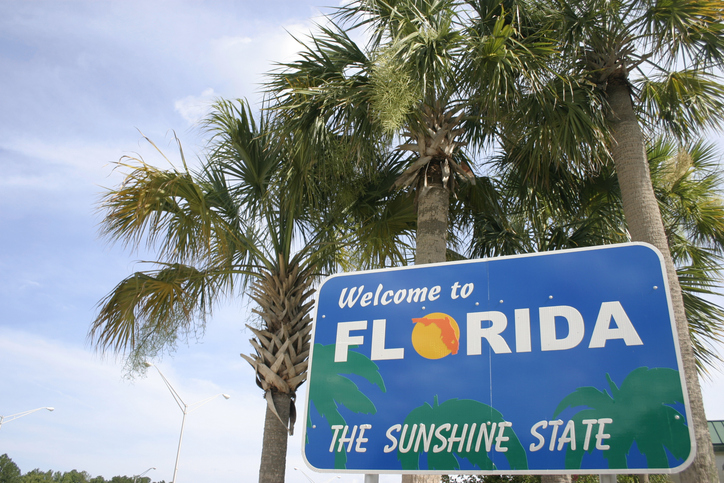
Driving Rules Tourists Get Wrong in Naples, Florida: A Lawyer’s Guide
Every January through April, the same thing happens on I-75. A snowbird flies into Southwest Florida International, picks up a rental at the airport, points it toward Naples, and within an hour is sharing the road with construction trucks, retirees turning left across three lanes of US-41, and a college kid on a rented scooter who has never seen Vanderbilt Beach Road at five o’clock on a Friday. By the time someone calls our office, they have usually already given a recorded statement to a rental-company adjuster and signed something they should not have signed.
I want to use this post to do something a little different from the usual tourist-driving article. Instead of repeating the obvious — wear your seatbelt, mind the speed limit — I want to walk through what Florida law actually says about visitors driving here, what we see go wrong in our case files, and the handful of practical moves that protect a tourist who gets hurt on a Naples road.
What Florida law actually says about tourists behind the wheel
Five statutes do most of the heavy lifting in a tourist crash case. None of them are written in plain English, so let me unpack each one.
Florida Statute §768.81 — modified comparative negligence. In 2023 Florida flipped from pure comparative fault to a modified rule. If a jury finds you fifty percent or less at fault, you can still recover, but the verdict is reduced by your share. If a jury finds you fifty-one percent or more at fault, you recover nothing — zero. That single change moved a lot of tourist cases from winners to losers, because rental-car drivers in unfamiliar territory are an easy target for fault-shifting.
Florida Statute §95.11(4)(a) — two-year statute of limitations. The same 2023 reform package cut the negligence deadline from four years to two. Two years from the day of the crash, and then the courthouse door closes. Tourists are the people most likely to miss this — they go home, mean to deal with it later, get distracted by their own life, and call us at month twenty-three with a file we cannot save.
Florida Statute §627.736 — Personal Injury Protection. Florida is a no-fault state for medical bills up to ten thousand dollars. Your rental car, in most cases, carries PIP that covers you regardless of fault, but you have to seek treatment within fourteen days or you forfeit the benefit. Fourteen days. That is the rule that catches visitors who fly home sore and decide to see their own doctor in two weeks.
Florida Statute §627.727 — Uninsured Motorist coverage. Florida does not require drivers to carry bodily-injury liability coverage, which is unusual. That means a meaningful share of the cars on Immokalee Road and Pine Ridge Road are driven by people who can’t write you a check if they hit you. Uninsured Motorist coverage on your own policy, or on the rental contract, is what fills that gap. Most tourists waive it at the rental counter without understanding what they are waiving.
Florida Statute §316.066 — the crash report requirement. If anyone is hurt, if anyone dies, or if it looks like more than five hundred dollars of property damage, Florida law requires a written crash report. Get the report. The report number is the single most useful thing a tourist client can hand us when they call.
The five tourist-driving scenarios we actually see
We have handled personal injury cases in Lee and Collier Counties for decades. The patterns repeat. Here are the five we see most often in our Naples files.
- The US-41 left-turn crash. A visitor turns left out of a strip-mall driveway onto Tamiami Trail North during season, misjudges the speed of an oncoming car, and gets T-boned. Fault often falls on the turning driver under Florida right-of-way rules, even when the through driver was speeding.
- The Vanderbilt Beach Road rear-end at a flashing yellow. Tourists treat flashing yellow arrows like solid green. Florida treats them as “yield on left turn.” The car behind you, who knows the rule, is not stopping.
- The 5th Avenue South pedestrian/golf-cart mix. Visitors on foot, visitors in low-speed vehicles, and locals in regular traffic share the same downtown streets. Drivers who are not used to scanning for pedestrians and golf carts cause a lot of these.
- The Goodlette-Frank Road merge. Coming off Pine Ridge, drivers from out of state often miss the lane discipline and cut across two lanes at the last moment. The crashes that come out of this look minor on the dash cam and feel awful in the neck the next morning.
- The rental-car single-vehicle event. Tourist hits a curb on Golden Gate Parkway in a sudden rainstorm, the rental company calls within forty-eight hours, and an adjuster pressures the driver into a recorded statement before they have called anyone.
Tourist crash claims — why these cases are harder than they look
From the outside, a tourist case looks straightforward. You came here on vacation, somebody hit you, you have medical records, you go home and the insurance company writes a check. It does not work that way. Three things make tourist cases harder than locals’ cases, and a tourist who does not know about them tends to lose money on all three.
Coverage stacking is confusing on purpose. A typical tourist crash in Naples can involve the at-fault driver’s liability insurance, the rental company’s supplemental coverage, the credit card’s collision coverage, the tourist’s own home-state auto policy, and sometimes a homeowner’s umbrella from back home. Each carrier wants the others to pay first. Sorting it out is half the case.
Medical treatment gets fragmented. A tourist sees an urgent care in Naples, flies home, sees their family physician in Cleveland, gets an MRI in Indianapolis, and physical therapy in their hometown. By the time we are organizing records, we are pulling from four states and three different medical systems. That fragmentation is the single biggest reason tourist injury claims get undervalued — adjusters argue that the gaps in treatment mean the injury was not serious. We have to rebuild the medical timeline ourselves.
Distance favors the insurer. When you live in a different time zone, you are not driving to the orthopedist’s office in Fort Myers to get the report corrected, you are not sitting in front of the adjuster, and you are easier to wear down. Insurers know that. Hiring a local firm that can show up in person for the medical records, the deposition, and the courthouse filings closes that gap.
What we did on an Immokalee truck claim
A case I think about often involved a commercial truck that ran a light and T-boned our client’s vehicle on Immokalee Road. The impact was on the driver’s side. Our client walked out of the emergency room that same night with a concussion diagnosis and what looked like a few cracked ribs. The full picture took months to come into focus.
The ribs turned out to be multiple fractures, several of them displaced. The concussion turned out to be a real traumatic brain injury — the kind that does not show up on a CT scan in the ER but shows up six weeks later when the client cannot find words in a conversation with their spouse, cannot follow a recipe they have made a hundred times, and cannot sit through a movie.
The trucking company’s carrier opened low. They always do. Their first move was to argue that our client was distracted at the intersection. We had the data from the truck’s onboard recorder, two independent witnesses, and a reconstruction engineer who walked the jury through the geometry of the impact. The carrier moved twice before mediation and twice more during it. The case settled in the multi-millions shortly before trial. The number mattered, but what mattered more to the family was that the settlement was structured to fund the long arc of brain-injury care — therapy, vocational support, the things that do not show up in a one-time check.
What to do if you are in a Naples crash as a visitor
Here is the practical sequence I give to family and friends when they drive down for the season. None of this is fancy. All of it has saved a case at least once.
- Call 911 and get the crash report number on a card before you leave the scene. Under §316.066 you are entitled to the report. Get the number, write down the responding officer’s name, and ask which substation the report will be filed at.
- Photograph everything before any car moves. Both vehicles, the intersection, skid marks, the traffic signal, the position of debris, your own visible injuries, and the other driver’s license and insurance card. Phone cameras are good enough.
- Get the other driver’s full information, but do not argue fault at the scene. Anything you say about who is at fault — even an apologetic “I’m so sorry” — becomes evidence under §768.81. Be polite, be brief, exchange information.
- See a doctor in Naples or Fort Myers within fourteen days. Do not wait to get home. The PIP fourteen-day rule under §627.736 is a hard line. If you fly home with a sore neck and see your family physician three weeks later, you may have given up the no-fault medical benefit you already paid for.
- Do not give the rental company or any other insurer a recorded statement before talking with a lawyer. The first call from the adjuster is the most consequential conversation in the case, and it is happening when you are still rattled, still in pain, and not yet at home. Tell them you will follow up in writing, and end the call.
- Save the rental contract, the credit-card receipt, and every piece of paper from the trip. Coverage often stacks from sources you forgot you had. We have found six-figure coverage on a credit card more than once.
- Call a Southwest Florida lawyer before you fly home. A local lawyer can pull the crash report, send the preservation letters to the carrier, and start the medical-record pipeline before you board the plane. Doing it from home, three time zones away, is harder.
Key Takeaways
- You have two years from the crash to file an injury lawsuit in Florida under §95.11(4)(a), not four.
- If you are more than fifty percent at fault under §768.81, you recover nothing — which is why what you say at the scene matters.
- Florida’s no-fault PIP under §627.736 covers up to ten thousand dollars in medical bills, but only if you seek treatment within fourteen days.
- Coverage usually stacks from multiple sources — rental contract, credit card, your home-state policy, the at-fault driver — and sorting it out is half the value of the case.
- Get the crash report under §316.066, photograph everything, and call a Southwest Florida lawyer before you fly home.
Frequently Asked Questions
Can I drive in Florida with my home-state or foreign driver’s license?
Yes. Florida honors a valid driver’s license from any U.S. state and from most foreign countries while you are visiting. If your license is not printed in English, carry an International Driving Permit alongside it, because the IDP is a translation, not a license. Rental car companies will want to see the original license plus, for most foreign drivers, a passport and a major credit card.
What happens if I am in a crash in Naples while driving a rental car?
Florida law requires a crash report under §316.066 if there is any injury, a death, or property damage that appears to be more than $500. Call 911 from the scene, get the report, take photographs, and do not give a recorded statement to any insurer before talking with a lawyer. Your rental contract’s insurance terms and any coverage on your personal auto policy or credit card can all stack — sorting that out properly is where most tourists lose money.
Does my home-state auto insurance cover me when I drive in Florida?
Usually yes for liability, but Florida is a no-fault state with its own Personal Injury Protection rules under §627.736. Your own policy’s PIP-equivalent medical coverage and Uninsured Motorist coverage under §627.727 may follow you here, but the details vary by carrier. Read your declarations page before you travel, and if you are renting a car, ask the agent in plain words what their policy actually pays for if you are hit by an uninsured driver.
How long do I have to file an injury claim if I am hurt as a visitor in Florida?
Two years from the date of the crash for negligence cases under §95.11(4)(a), per the 2023 reform that shortened the deadline from four years to two. That clock runs even if you live in another state or another country. Going home and dealing with it later is the single most common mistake we see tourist clients make.
What if I was partly at fault for the crash?
Florida uses modified comparative negligence under §768.81. If you are found 50 percent or less at fault, you can still recover, but your recovery is reduced by your percentage of fault. If you are more than 50 percent at fault, you recover nothing. Insurers know this rule cold and will try to pin as much fault on the tourist as they can — which is why what you say at the scene, and what you say in that first phone call from the adjuster, matters.
Hurt on a Naples road during your visit? Call our office.
If you or someone in your family was injured in a crash anywhere in Lee or Collier County — whether you live here or you were down for the season — our office is glad to walk through the file with you at no charge. I have spent more than thirty years handling personal injury cases for Southwest Florida residents and visitors. Call 239-992-8259 or reach out through our contact page for a free consultation. There is no fee unless we recover for you.
About the Author

The case load at Pittman Law Firm, P.L. has been built over more than thirty years of personal injury practice in Naples and across Collier County under founder David B. Pittman, Esq., representing injured clients across Lee and Collier Counties, with a particular focus on commercial-vehicle, complex-liability, and serious-injury cases. Naples cases run heaviest along US-41, Immokalee Road, Pine Ridge Road, and Vanderbilt Beach Road, and through the older commercial and resort properties along Gulf Shore Boulevard and 5th Avenue South.
Academically: The Citadel, The Military College of South Carolina for undergraduate; the University of South Carolina School of Law for the JD. Professionally: AV-Preeminent at Martindale-Hubbell and a member of the Multi-Million Dollar Advocates Forum.
David has held a Florida real estate broker license for twenty-five years, a credential that shapes how the firm reads the property side of premises cases. The firm handles personal injury cases across Lee and Collier Counties, serving Fort Myers, Bonita Springs, Naples, Cape Coral, Estero, and Lehigh Acres, with offices at Windsor Place in Bonita Springs (main) and Fort Myers (satellite). Call 239-992-8259 for a free consultation.