


The Truth About Artificial Intelligence Insurance Claims Processing in Fort Myers
Since Hurricane Milton, I have had a steady stream of clients come into our Fort Myers office with denial letters that arrived eleven minutes after they uploaded their claim. A client will hand me that letter and ask whether a person on the other end actually read it. The answer, more often than not, is that I do not know — and neither does the carrier’s adjuster, because the file moved through a software pipeline before a human ever touched it.
I have been practicing personal injury and insurance-coverage work in Lee and Collier Counties for over thirty years. I have watched the carriers shift from paper files to phone trees to email portals to, now, automated review pipelines that decide a lot of the case before anyone with a license reads a page of it. The technology is not going away. What our clients need to understand is what the rules actually say, where the pressure points are, and what to do when a denial shows up that does not feel right.
What Florida law actually says about AI-driven claim handling
Florida law has not been rewritten yet to address artificial intelligence head-on. Several bills are moving — HB 527 is the most often-cited — that would require a qualified human professional to make the final call on a denial. None of those have become law as of this writing. So what governs your claim today is the existing statutory framework, and that framework still has real teeth if you know where to look.
Three statutes do the heavy lifting on insurance denials in personal injury cases:
- Section 627.736, Florida Statutes — PIP. Every Florida auto policy carries $10,000 of Personal Injury Protection. In plain English, that is no-fault medical coverage that pays 80% of reasonable medical bills regardless of who caused the crash. Carriers run PIP bills through automated review software now, and we routinely see medical charges cut for “not medically necessary” when no doctor ever reviewed the file. That cut is appealable.
- Section 627.727, Florida Statutes — Uninsured Motorist. If the at-fault driver had no insurance or not enough, your UM coverage steps in. In plain English, UM is the policy you bought from your own carrier to protect you against the other driver’s lack of coverage. We see software-generated UM offers all the time that bear no resemblance to the actual injuries.
- Section 768.81, Florida Statutes — Modified comparative negligence. Since the 2023 tort reform, if a jury finds you more than 50% at fault for your own injuries, you recover nothing. In plain English, a Florida jury now has to weigh both sides of a crash and assign a percentage; if your number is 51 or higher, the case goes to zero. Carriers have figured out that an AI-generated liability score that puts the claimant over 50% is an easy way to walk away from a file.
The two-year clock under section 95.11(4)(a) matters here too. Before the 2023 reform, you had four years to file a negligence suit. Now you have two. I have seen clients spend a year and a half going in circles with an AI-driven claims pipeline, get a final denial, and walk in our door with six months left on the clock. That is not a comfortable place to start.
AI denial patterns we see coming through our office
The patterns repeat. These are the AI-related denial scenarios that walk through our door most often in Fort Myers:
- The instant denial. A claim is filed online and a denial letter shows up within minutes or hours. The adjuster name on the letter is sometimes a real person and sometimes a generated signature. The wording is identical to denial letters our other clients received on completely different facts.
- The line-item PIP haircut. The carrier accepts coverage but cuts the medical bills line by line — chiropractic, imaging, physical therapy — based on a software code review rather than a doctor’s evaluation. The cuts are often the same percentages across hundreds of unrelated patients.
- The lowball UM offer. A client with real, documented injuries gets an opening offer that looks like it was calculated by a vending machine. When we ask how the number was reached, the carrier cannot explain it.
- The fault-flip. The other driver clearly caused the crash, but an AI liability score assigns enough fault to our client to push them over the 50% line under section 768.81. The story behind that score is buried in the claim file.
- The catastrophic-claim delay. Where the injuries are severe, the file gets bounced from automated queue to automated queue. Months pass. The clock under 95.11 keeps running. By the time a human at the carrier looks at it, the family is desperate.
Why opacity is the carrier’s real advantage
The problem with an AI-driven denial is not that a computer touched the file. The problem is that the reasoning is opaque. A traditional adjuster denial gives you something to push against — an adjuster’s note, a stated reason, a specific policy provision. A software-driven denial often gives you a paragraph of boilerplate that tells you nothing about how the decision was actually made.
That opacity creates three practical problems in a Florida personal injury case. First, you cannot effectively appeal a decision you cannot understand. Second, the carrier can claim, accurately, that it was following an internal model and shift accountability to the model itself. Third, when discovery comes around, the carrier will fight tooth and nail to keep the underlying algorithm out of the case as a trade secret. All three of those have to be worked around case by case.
The other complication is that an AI pipeline produces a paper trail that looks neat from the outside. Timestamps line up. Letters go out on schedule. Internal codes match policy language. To a homeowner reading the denial letter, it looks like a careful review. It is not. We have asked carriers in deposition how a particular denial was generated and gotten answers that boil down to “the system did it” — and then watched the carrier’s representative struggle to identify a single human being who reviewed the file before the letter went out.
That is a place to put pressure. Florida’s good-faith claim handling rules still apply. A carrier that cannot identify a qualified human reviewer behind a denial is in a weaker position than a carrier that can. We use that.
What we learned from a low-tech case that applies directly here
A few years ago a woman from the Bonita Springs area was walking near a job site when a backhoe operator backed over her. He had not checked his blind spots, the construction company had not posted a spotter, and the operator had received almost no documented training on that piece of equipment. Her lower extremities were crushed. She underwent several emergency surgeries — internal fixation with rods and screws — followed by months of focused wound care to keep the leg.
The carrier’s first response was the kind of pipeline-driven offer that has become routine. Liability was disputed, the medical bills were flagged for line-item review, and the early settlement number was a small fraction of what the medicals alone were going to cost.
We focused the case on the construction company’s commercial liability — the lack of a spotter, the absence of operator training records, the failure to follow its own written safety policy. Once the pipeline had to make room for an actual file with real testimony, real records, and a real demand backed by the medicals, the carrier’s posture shifted. The case resolved in the low seven figures. The client got the surgical follow-up and home modifications she needed, and the construction company’s carrier learned that running a serious-injury case through an automated review queue is not a defense to the underlying conduct.
What to do if you get an AI-driven denial in Fort Myers
Some of this is general, some of it comes from watching specific clients either help or hurt their own cases over the years. The advice below is what I would tell a family member who walked in with one of these letters:
- Keep the letter, the envelope, and the timestamp. Take a photo of the postmark. If the denial came by email, do not delete it and do not reply. Save the full email with all headers.
- Pull your declarations page before you call anyone. The dec page tells you what coverage you actually bought — PIP, UM, bodily injury limits, medical payments. Carriers sometimes deny under one section while ignoring a coverage that would have paid.
- Write down the timeline. Date of loss, date you reported it, date you got each communication, name of every person you spoke to. I have used this approach with clients for years and the ones who do it consistently have stronger files than the ones who don’t.
- Do not argue with the adjuster on the phone. Anything you say can be summarized in the claim file in a way that does not match what you meant. If you have to call, take notes during the call and follow up in writing with what you understood the conversation to be.
- Watch the two-year clock. Section 95.11(4)(a) does not pause while you fight the carrier. The day your accident happened is the day the clock started. If you are six months in and still in administrative loops with no real progress, that is the time to bring in a lawyer.
- Ask the carrier, in writing, who reviewed the file. Ask for the name and license of the person who made the denial decision. The response — or the lack of one — tells you a lot about the strength of the carrier’s position.
Key Takeaways
- Florida law does not yet ban AI-driven claim denials, but existing statutes — PIP under 627.736, UM under 627.727, comparative negligence under 768.81 — still govern the carrier’s conduct and give you real grounds to push back.
- The two-year statute of limitations under section 95.11(4)(a) keeps running while you fight the carrier. Long back-and-forth with a software pipeline can quietly eat your filing window.
- Software-generated PIP bill reductions, lowball UM offers, and fault-flips that push a claimant over the 50% line under modified comparative negligence are the three patterns we see most often in Fort Myers.
- An AI denial that cannot be tied to a named human reviewer is a weaker position for the carrier than it looks, and we use that opacity to our client’s advantage.
- Save every letter and envelope, pull your declarations page, write down your timeline, and call a lawyer before you respond in writing to the carrier.
Frequently Asked Questions
Can my insurance company deny my claim using only an AI algorithm in Florida?
Today, Florida law does not flatly prohibit it, which is part of why the legislature has bills pending to require a qualified human reviewer on every denial. That said, an insurer still has to comply with Florida’s claims-handling statutes and good-faith duties. If a denial letter cannot point to a specific policy provision, a real claim file, and a human adjuster who actually looked at your loss, that is a problem we can use.
How do I know if AI was used to deny my claim?
Most homeowners and accident victims have no idea. The denial letter rarely says so. We ask for the full claim file, the adjuster notes, and any reports the carrier relied on. If the timeline shows a denial issued minutes after upload, or if the same letter went out on dozens of unrelated claims with identical wording, those are tells. Florida’s Department of Financial Services has flagged that consumers usually do not know AI was involved.
Does an AI denial change the statute of limitations on my case?
No. Section 95.11(4)(a) sets a two-year clock on most negligence cases that accrued after the 2023 reform. The clock keeps running while you fight with the carrier. Do not let a long back-and-forth with an insurer eat your filing window. We see that happen, and once the deadline passes the case is gone no matter how strong it was.
What should I do right after I get an AI-driven denial?
Keep the letter. Keep the envelope. Write down the date and time it arrived. Pull your policy declarations page. Then call a lawyer before you respond in writing to the carrier. Most of the early damage to a claim happens when an insured tries to argue with the adjuster on the phone and gives the carrier ammunition to use later.
If I have PIP and UM coverage, does any of this AI denial issue affect me?
Yes. PIP claims under section 627.736 and UM claims under section 627.727 are both being run through automated review pipelines now. We have seen PIP medical bills cut with no human ever reading the records, and UM offers generated off a software model rather than a real evaluation of the injuries. Both are appealable and both are worth pushing back on.
Talk to a lawyer about your AI-driven denial
If you have received a claim denial in Fort Myers, Bonita Springs, Naples, or anywhere in Lee or Collier County and the reasoning does not make sense to you, call our office. We will review the denial letter, your declarations page, and the claim timeline with you. Call 239-992-8259 for a free consultation. There is no fee unless we recover for you.
About the Author
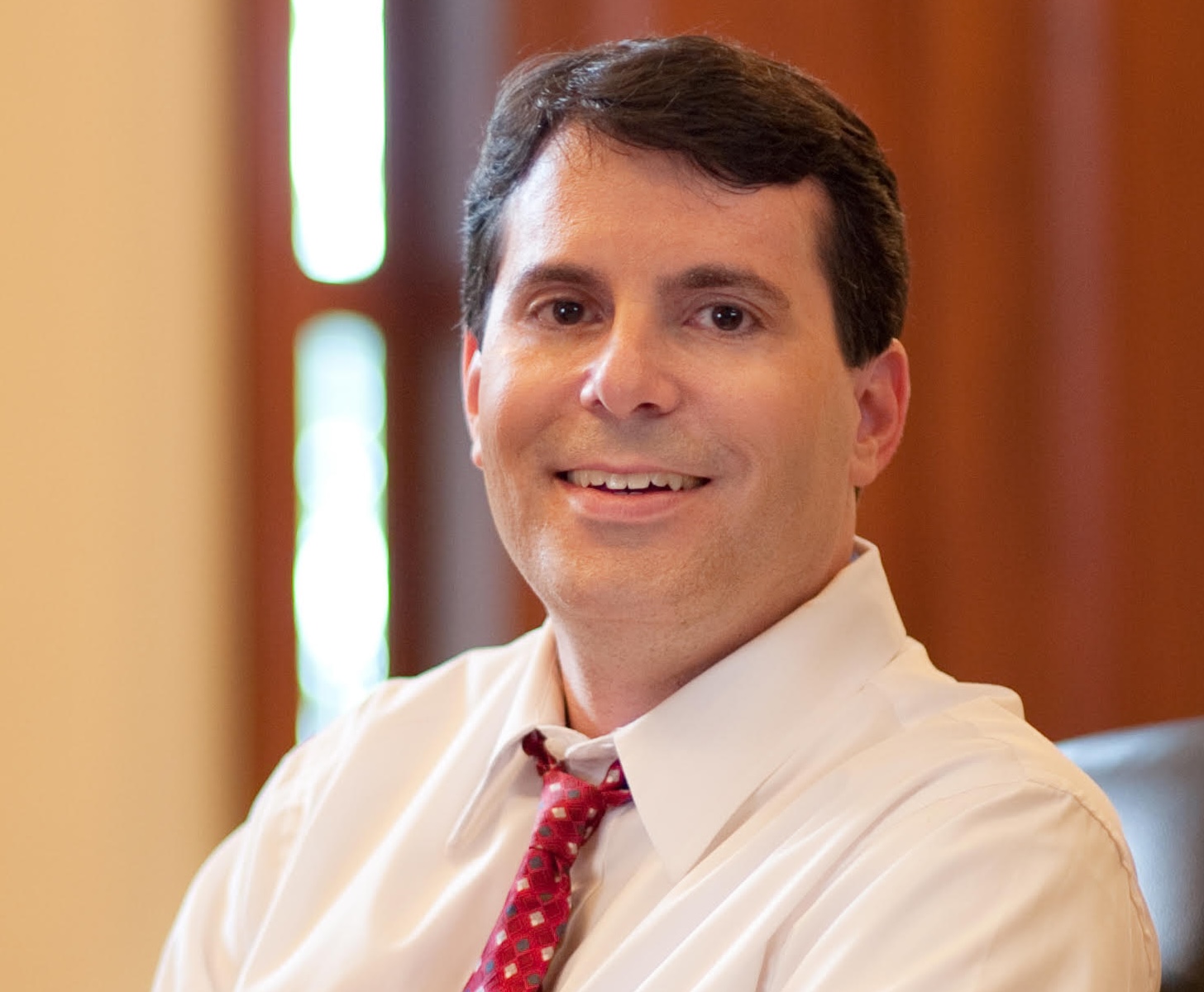
Founded by David B. Pittman, Esq., Pittman Law Firm, P.L. has handled personal injury work in Fort Myers and across Lee County for more than thirty years, representing injured clients across Lee and Collier Counties, with a particular focus on insurance-coverage and serious-injury cases. The firm’s Fort Myers presence handles a steady stream of serious-injury work along the Daniels Parkway, Six Mile Cypress, McGregor Boulevard, Cleveland Avenue, and Summerlin Road corridors, and along I-75 between Estero and Bell Tower.
David earned his undergraduate degree at The Citadel, The Military College of South Carolina, and his law degree at the University of South Carolina School of Law. He is rated AV-Preeminent by Martindale-Hubbell and belongs to the Multi-Million Dollar Advocates Forum.
David has held a Florida real estate broker license for twenty-five years, a credential that shapes how the firm reads the property side of premises cases. The firm handles personal injury cases across Lee and Collier Counties, serving Fort Myers, Bonita Springs, Naples, Cape Coral, Estero, and Lehigh Acres, with offices at Windsor Place in Bonita Springs (main) and Fort Myers (satellite). Call 239-992-8259 for a free consultation.
Disclaimer: This article is for general information only and is not legal advice. Reading it does not create an attorney-client relationship with Pittman Law Firm, P.L. Every case is different and outcomes depend on the specific facts. Past results do not guarantee a similar outcome. This is attorney advertising.