

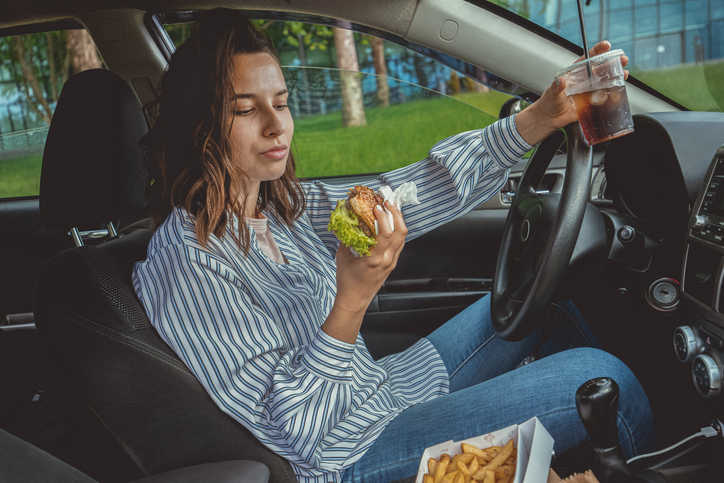
The Dangers of Driving While Eating: How It Can Cause Fort Myers Car Accidents
People know texting behind the wheel is a problem. They do not always register that unwrapping a breakfast burrito on Daniels Parkway during the 7:45 a.m. push falls into the same category of risk. I have worked enough of these cases out of our Fort Myers office to know the pattern. The driver was not drunk. The driver was not asleep. The driver was eating, and a stopped car or a slowing car or a kid on a crosswalk just stopped registering for the two seconds it took for everything to go wrong.
I want to walk through what Florida law actually does with this kind of crash, what we see on the ground in Lee County, and the things you can do if it has already happened to you.
What Florida law actually says about eating while driving
There is no Florida statute that says, in so many words, you may not eat behind the wheel. What we do have is a body of law that captures the conduct on the back end, after a crash happens.
Careless driving is the most common citation. Under §316.1925, any driver who fails to operate a vehicle in a careful and prudent manner can be cited. If a deputy on Cleveland Avenue pulls behind a driver who has just rear-ended a sedan and sees a half-eaten sandwich on the passenger seat and ketchup on the steering wheel, that citation is on the table. The citation alone doesn’t end the case, but it does give us evidence in the civil claim.
From there, three Florida statutes do most of the heavy lifting in any eating-while-driving collision case:
- §768.81, Modified comparative negligence. Since the 2023 tort reform, if a jury finds you 50 percent or more at fault for your own injuries, you recover nothing. That is a significant change from the prior law, and it makes the fault analysis the whole ballgame. If the other driver was eating and you were eating, both of you are exposed on this question.
- §95.11(4)(a), Statute of limitations. Two years from the date of the crash. The pre-2023 four-year window is gone. If you remember nothing else from this article, remember that.
- §627.736, Personal Injury Protection (PIP). Your own auto policy pays the first $10,000 of medical care, regardless of who caused the crash, as long as you treat within 14 days. People skip the ER because they “feel okay,” then the soreness sets in, and then they are outside the 14-day window and the PIP carrier is denying treatment.
For hit-and-run scenarios, §627.727 (Uninsured Motorist coverage) usually becomes the main source of recovery, and §316.066 governs the crash report. Both matter, and I will come back to the hit-and-run angle below.
Five eating-while-driving scenarios we see in Fort Myers
If I pulled the last five years of intake notes out of our Fort Myers files, the same fact patterns would show up again and again on the eating-while-driving cases. None of these are hypotheticals.
- The drive-thru rear-ender. Driver picks up coffee at one of the Cleveland Avenue chains, pulls back into traffic, gets one sip in, looks down at the lid, and runs into the back of a stopped pickup at a red light. Low-speed impact, but enough force to cause a cervical strain that lingers for months.
- The Daniels Parkway commute crash. Eastbound morning rush, driver eating a wrapped breakfast item with one hand, missed the brake lights on the slowing vehicle ahead, plowed in at 35 miles per hour.
- The I-75 near Alico Road slow-and-go. Stop-and-start traffic on the interstate, driver decides to dig into a takeout bag in the passenger seat, looks up, no time to react. We have seen this exact fact pattern in cases ending in multi-vehicle pileups.
- The Six Mile Cypress Parkway lane drift. Driver fumbling with a burger wrapper, drifts across the lane line and clips a vehicle in the next lane. Both vehicles end up on the shoulder, and the fault dispute starts immediately.
- The delivery-driver collision. Rideshare or food-delivery driver eating between orders, often while reading the next ping on the phone. Two distractions at once, and the carriers behind that driver almost always argue about whether their commercial-use exclusion applies.
The McGregor Boulevard and Summerlin Road corridors produce a slightly different version of these — slower speeds, more pedestrians and cyclists, more crosswalk strikes. A driver eating with one hand and operating a turn signal with the other is a driver who is not looking at the marked crosswalk.
Three things that make eating-while-driving claims harder to win than they look
On paper, the liability is obvious. The other driver was eating, they hit me, end of story. In practice, three things make these claims harder than they appear.
The defense always tries to flip some fault onto the injured driver. After the 2023 reform, that pressure got worse. If they can talk a jury into 50 percent on you, your recovery is zero. I have seen carriers send adjusters to look at our client’s drive-thru receipts on the theory that “well, you were eating too.” The fact analysis matters, and we do not let those arguments slide.
The injuries on these cases are often soft-tissue. Cervical strain, lumbar strain, a torn rotator cuff that doesn’t show on the first MRI. Insurance carriers undervalue soft-tissue claims as a matter of policy, and they lean hard on the “minor impact, minor injury” argument. The medical record has to be built carefully, and the treating doctors have to document what they are actually seeing. Skipping the ER, gapping treatment, or “trying to walk it off” for three weeks all create defenses we then have to fight.
The proof problem. Drivers do not volunteer “I was eating a burger.” We have to reconstruct it. That means scene photos, the contents of the at-fault car, the EDR data, the drive-thru receipt, the body-cam audio of what the driver told the responding deputy, and sometimes a subpoena to the delivery platform. None of that happens by accident. It happens because somebody asked for it before the evidence was gone.
What a Fort Myers hit-and-run case can look like
One we worked recently is a good illustration of how these wrecks unfold. The client was northbound on US-41 in Fort Myers, sitting through a normal late-afternoon traffic light cycle. The driver behind her never slowed. By the time witnesses got their bearings, that driver had already pulled around her, hopped the median, and was gone. A classic hit-and-run.
The client’s car was driveable, so she didn’t take the ambulance. She went home, told herself the soreness was just adrenaline, and tried to sleep it off. The next morning her neck was locked up. She went to the emergency room, then to her primary, then into a physical-therapy course of treatment, and eventually into a pain-management workup for what turned out to be a chronic cervical strain that did not want to resolve.
Because the at-fault driver was never identified, the only realistic source of recovery was the client’s own carrier under her Uninsured Motorist coverage. The client did not pay a cent in medical bills out of pocket once PIP and the UM settlement were applied. The lesson I drew from that one is the same lesson I draw from most of our hit-and-run files: the client’s own policy is often the case, and the carrier will not volunteer that to you.
What to do if a driver who was eating hits you in Fort Myers
The action list below is what I tell people on the first call. It is not a generic checklist. Each item is there because I have watched the absence of it hurt a real client.
- Get medical attention within 14 days, even if you “feel okay.” The PIP statute does not care about your stoicism. Miss the window and the no-fault medical benefit can be denied outright.
- Take photos of the inside of the other car, not just the outside. If you can safely document the food, the cup, the wrapper, the open container of fries in the cupholder — do it. That photo is worth more than a thousand words in a deposition six months later.
- Ask the responding deputy to note what was in the vehicle. Body-cam captures the conversation. If the other driver volunteers “I was reaching for my drink,” that admission is on the record.
- Save the receipts and the dash-cam footage. Your own drive-thru receipts establish your timeline. The at-fault driver’s drive-thru receipts, if we can subpoena them, establish theirs. Dash cams are everywhere now, and the footage frequently disappears after seven to thirty days of buffer.
- Don’t give a recorded statement to the other side’s adjuster before you have talked to a lawyer. Those statements are taken to be used, not to help you. The friendly adjuster on the phone is doing a job, and the job is not your recovery.
- Pull your own policy declarations page and read the UM line. If the other driver fled or was uninsured, your own UM coverage is the recovery vehicle. If you don’t carry UM, that is a separate conversation you should have with your agent before your next renewal.
Key Takeaways
- Eating behind the wheel is not its own crime in Florida, but it can support a careless driving citation under §316.1925 and a strong civil claim.
- Under §768.81, hitting 50 percent fault means zero recovery. Carriers will push fault onto you. Don’t help them.
- The negligence statute of limitations is two years under §95.11(4)(a). The old four-year window does not apply to post-2023 crashes.
- PIP under §627.736 pays the first $10,000 of medical care if you treat within 14 days. Skip the ER, lose the benefit.
- For hit-and-run wrecks like the US-41 case above, Uninsured Motorist coverage under §627.727 is often the main source of recovery — even though it is your own carrier paying.
Frequently Asked Questions
Q1. Is eating behind the wheel actually illegal in Florida?
Florida does not have a stand-alone statute that bans eating while driving. It is treated as a form of distracted driving, and if you cause a wreck while juggling a sandwich and a coffee, a careless driving citation under §316.1925 is on the table. In a civil injury case, your conduct still factors into the fault analysis under Florida’s modified comparative negligence rule.
Q2. If the other driver was eating when they hit me, how do I prove it?
We look at scene photographs, the food and wrappers in the at-fault car, body-cam and dash-cam footage, drive-thru receipts with time stamps, the 911 audio, and witness statements. Cell phone records sometimes show the driver was also using a delivery or ordering app. Crash reports under §316.066 are a starting point, not the finish line.
Q3. I was eating when I got rear-ended on Cleveland Avenue. Can I still recover?
Probably yes, but the analysis matters. Under §768.81, if a jury places you at 50 percent or more at fault, you recover nothing. Eating a granola bar while stopped at a red light is a very different fact than reading a takeout receipt while moving. We work the fault analysis hard so the other driver does not push it onto you.
Q4. How long do I have to file an injury claim after a Fort Myers crash?
Two years from the date of the crash for most negligence claims, under §95.11(4)(a) as amended in 2023. Older articles still floating around online say four years. They are out of date. Waiting is the single most common avoidable mistake we see.
Q5. The at-fault driver took off. Am I out of luck?
Not at all. Florida’s PIP under §627.736 covers your first $10,000 of medical bills regardless of who caused the wreck. If you carry Uninsured Motorist coverage under §627.727, that becomes the main source of recovery for a hit-and-run. We have closed full-policy-limits UM cases for clients whose at-fault driver was never identified.
If you have been hurt, call us
If a distracted driver hurt you anywhere in Fort Myers, Cape Coral, Estero, Bonita Springs, Naples, or Lehigh Acres, I want to hear about it before you sign anything from the other side’s carrier. The first conversation is free, and we will tell you straight whether we think you have a case worth pursuing. Call 239-992-8259 for a free consultation. There is no fee unless we recover for you.
About the Author

Pittman Law Firm, P.L. is led by founder David B. Pittman, Esq., who has practiced personal injury law in Fort Myers and across Lee County for more than thirty years, with a sustained focus on serious-injury auto and complex-liability cases. The firm’s Fort Myers presence handles a steady stream of serious-injury work along the Daniels Parkway, Six Mile Cypress, McGregor Boulevard, Cleveland Avenue, and Summerlin Road corridors, and along I-75 between Estero and Bell Tower.
His undergraduate years were at The Citadel, The Military College of South Carolina; his law degree is from the University of South Carolina School of Law. He carries an AV-Preeminent rating at Martindale-Hubbell and Multi-Million Dollar Advocates Forum membership.
David has held a Florida real estate broker license for twenty-five years, a credential that shapes how the firm reads the property side of premises cases. The firm handles personal injury cases across Lee and Collier Counties, serving Fort Myers, Bonita Springs, Naples, Cape Coral, Estero, and Lehigh Acres, with offices at Windsor Place in Bonita Springs (main) and Fort Myers (satellite). Call 239-992-8259 for a free consultation.
The information on this website is for general information only. Nothing on this site should be taken as legal advice for any individual case or situation. Reading this article does not create an attorney-client relationship with Pittman Law Firm, P.L. Attorney advertising.