

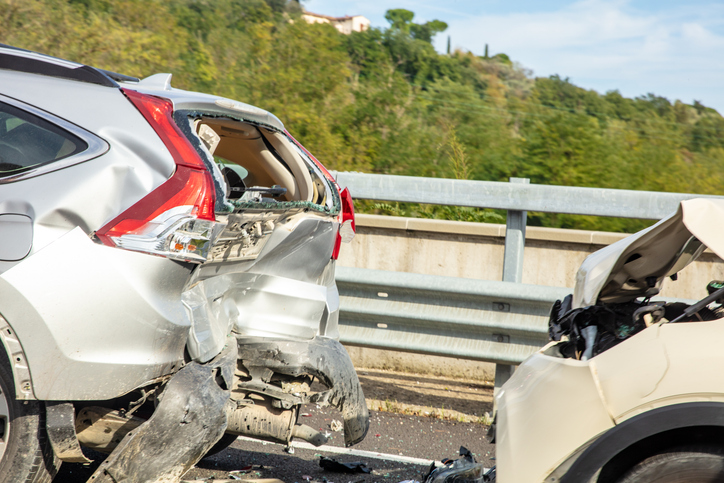
Rear-End Collision Lawyer: Do You Really Need One After a Red-Light Accident?
Here is what most people believe about rear-end crashes: the driver in the back is at fault, the insurance company writes a check, and the case is done. Here is what I see in our office on Bonita Beach Road: a client who accepted an early offer, signed the release, and called back three weeks later when the MRI came back showing a herniated disc they did not know about.
Rear-end claims on I-75 and US-41 look simple from the outside. They are not. The rear-driver presumption in Florida is rebuttable. The 2023 tort reform changed who recovers and how much. The fourteen-day PIP window closes faster than people think. And the adjuster who calls you the next morning is working a file — not doing you a favor. This post lays out the four statutes that actually govern these cases and the five patterns we see most in Lee and Collier Counties, so you know what you are dealing with before you sign anything.
What Florida law actually says about rear-end collisions
There are four statutes that drive almost every rear-end claim we handle. None of them are written to be reader-friendly, so let me unpack them in plain English.
§768.81, Fla. Stat. — Modified comparative negligence. Florida changed this in 2023. Under the old rule, you could be 90% at fault and still recover 10% of your damages. Under the new rule, if a jury finds you 50% or more at fault, you recover nothing. Zero. That single change rewrote how insurance carriers approach rear-end cases — every adjuster is now hunting for ways to put 50% on the injured driver. Sudden stop, brake lights out, distracted, drifting between lanes. (Read §768.81.)
§95.11(4)(a), Fla. Stat. — Statute of limitations. The same 2023 reform cut the deadline for filing a negligence lawsuit from four years to two years. Crashes on or after March 24, 2023 are on the two-year clock. We have already started seeing cases come in the door where the two-year mark is weeks away and nothing has been preserved. (Read §95.11.)
§627.736, Fla. Stat. — PIP, or Personal Injury Protection. Florida is a no-fault state. Your own auto policy covers the first $10,000 in medical bills and lost wages regardless of who caused the wreck — but only if you see a medical provider within 14 days. Miss the 14-day window and you forfeit your PIP. I have watched clients lose ten thousand dollars in coverage because they “wanted to see if it would get better on its own.” (Read §627.736.)
§627.727, Fla. Stat. — Uninsured Motorist coverage. If the driver who hit you carried the state minimum or no insurance at all, your own UM policy is usually the only meaningful source of recovery. UM is optional in Florida and the carrier has to offer it in writing — most people do not know they declined it until we pull the policy. (Read §627.727.)
That is the framework. Everything else — what the adjuster offers you, whether liability gets disputed, how the carrier evaluates your injuries — runs through those four statutes.
Five rear-end crash patterns we see on the I-75 and US-41 corridors
Rear-end cases sort themselves into a handful of recurring patterns. After three decades of handling these along the I-75 corridor through Lee and Collier Counties and the US-41 / Tamiami Trail stretch, this is what shows up in our office:
- The classic red-light tap. Lead car is stopped at a signal, rear driver is on a phone or in the radio, never lifts off the gas. Low property damage, real soft-tissue injury that takes weeks to surface. The adjuster will try to use the photos of the bumper to argue you cannot possibly be hurt.
- The chain-reaction crash. Three or four vehicles stacked at a red light. The car that started the chain is the primary at-fault party, but every driver in the chain has to be evaluated. Liability gets argued across three insurance carriers.
- The “they stopped short” defense. The rear driver tells the adjuster the lead driver slammed the brakes for no reason. That is the carrier’s favorite story because if it sticks, comparative fault gets assigned to the lead driver and the value of the claim drops.
- The uninsured rear driver. More common than people think. The at-fault driver has no policy, lapsed coverage, or the state-minimum $10,000 in property damage and no bodily injury liability. The claim becomes a UM claim against your own carrier — and your own carrier is no longer your friend the moment that happens.
- The commercial vehicle rear-end. A box truck, a delivery van, a tractor-trailer rear-ends a passenger car at a signal. Federal Motor Carrier rules come into play, the policy limits are usually high, and the carrier sends a defense team out within hours. These are the cases that demand a lawyer the moment you are released from the hospital.
Why the “open and shut” rear-end closes on the wrong side
The popular wisdom — rear driver always loses, case closes itself — is wrong often enough that I will not let a client handle one alone if they have any meaningful injury. Here is what makes them harder than they look.
The rear-driver presumption is rebuttable. Florida courts presume the rear driver was negligent, but the defense can rebut that presumption by showing the lead driver made a sudden unexplained stop, had inoperative brake lights, or cut in front and braked. Once the defense puts evidence on the record, comparative fault is in play and §768.81 becomes the whole ballgame.
Soft-tissue injuries are real but easy to undervalue. Whiplash, cervical strain, lumbar herniation, concussion without loss of consciousness — these injuries do not always show up on the initial CT scan. The carrier knows that, and the early offer is calibrated to the ER report, not to the MRI you might need three weeks later. If you settle on the ER report, you are done.
Pre-existing conditions become the carrier’s whole argument. Any prior chiropractic visit, any prior back complaint, any prior MRI in the system — the defense will use it to argue the wreck did not cause your current pain. Florida follows the eggshell-plaintiff rule (a defendant takes the victim as found), but the carrier will fight you on it anyway, and you need the medical records and a treating physician willing to address causation.
Signal-timing and intersection data has a shelf life. If liability is contested at a red light, we want the signal-phase data from the municipality and any nearby business camera footage. Most signal logs roll over in 30 to 90 days. Convenience store cameras overwrite in 7 to 30. By the time most people decide to hire a lawyer, the evidence we would have used is already gone.
The 14-day PIP rule traps people who try to tough it out. See a doctor within fourteen days or lose your $10,000 in PIP. I cannot count the number of clients who walked away from the scene saying they felt fine and woke up two weeks later barely able to turn their head.
A case that started as a soft-tissue rear-end and got more complicated
A case from our practice that sits with me did not start as a rear-end claim at all — it started as a routine abdominal surgery at a Lee County hospital. The client came through the procedure, went home, and within a few weeks was back at the doctor with worsening pain and a low-grade fever that would not break.
The legal piece focused on the operating room’s instrument count. Every surgical team in the country is supposed to count sponges, needles, and instruments before closing — it is one of the oldest patient-safety protocols in medicine and the count is supposed to be documented in the chart. In our case, the count was either skipped or falsely recorded as complete. That is not a difficult-judgment case. That is a hospital protocol failure.
The matter resolved in a confidential settlement that addressed the second surgery, the chronic pain the client was left with, and the lost time from work. I bring it up here because it is a useful reminder that the catastrophic-sounding “what could possibly go wrong” cases are sometimes the most preventable ones — and that the same principle applies to rear-end claims. Most of what hurts you happens after the wreck, not during it.
What to do if you have been rear-ended at a red light
This is the list I give callers who phone our office in the first 48 hours after a rear-end. It is not generic advice — every item is something I have watched matter in a real file.
- Get the crash report. Florida requires a written report on any crash involving injury, death, or apparent property damage of $500+ under §316.066 (read §316.066). If law enforcement responded, the report number is your single most important piece of paper. Order it.
- See a doctor within 14 days, period. Not “if it still hurts in a week.” Not “if I cannot sleep.” Within 14 days. PIP is a use-it-or-lose-it benefit and the carrier will not bend the rule.
- Photograph everything before the cars are towed. Both bumpers, both license plates, the position of the cars in the lane, the signal head, the intersection name on the street sign, and any visible debris field. Phone photos with embedded timestamps and GPS are worth more than a hundred pages of testimony.
- Save the names of any witnesses. Not just the driver who stopped — the person in the right-turn lane, the pedestrian on the corner. Get a phone number. Witnesses move and disappear; the road does not get re-photographed.
- Do not give a recorded statement to the other driver’s carrier. You are not legally obligated to. They will call within 48 hours and ask if “now is a good time for a quick statement.” It is never a good time. Tell them you have not made any decisions about representation and will call them back. Then call us.
- Do not post about the wreck on social media. The defense pulls Instagram and Facebook on every contested file. A photo of you at a grandchild’s birthday three weeks later, smiling through the pain, will be cropped and used to argue you were not injured.
- Keep the bills and the receipts. Every prescription co-pay, every chiropractor visit, every Uber ride to a follow-up appointment when you could not drive. We have to prove these out — your shoebox of receipts is the case.
- Get a copy of your own policy declarations page. Especially the UM section. We need to know what you carry on your side of the ledger before we know how to handle the other side’s offer.
Key Takeaways
- The Florida rear-driver presumption is rebuttable — every contested rear-end claim now turns on §768.81 modified comparative negligence, and 50% at fault means zero recovery.
- Crashes on or after March 24, 2023 are on a two-year statute of limitations under §95.11(4)(a). Do not wait.
- See a doctor within 14 days or lose your $10,000 in PIP under §627.736. There is no flexibility on that deadline.
- Your own uninsured-motorist policy under §627.727 is usually the only meaningful coverage when the at-fault driver has no insurance — and a third of the drivers we encounter on Lee County roads carry the bare minimum or nothing.
- Signal-timing data and business surveillance footage at the intersection roll over in 30 to 90 days. The evidence you would use to win a contested rear-end has a short shelf life.
Frequently Asked Questions
Q1. I was rear-ended at a red light and the other driver admitted fault. Do I still need a lawyer?
Admitted fault at the scene does not bind the insurance carrier. Once the adjuster opens the file, the position often shifts — pre-existing condition, low-speed impact, soft-tissue exaggeration, late treatment. If you have real injuries, anything beyond a one-visit urgent-care trip, you should at least have a phone call with an attorney before you give a recorded statement or sign a medical release.
Q2. How long do I have to file a rear-end collision claim in Florida?
Under the 2023 tort reform, the statute of limitations for negligence dropped from four years to two years (§95.11(4)(a), Fla. Stat.). Crashes on or after March 24, 2023 fall under the two-year rule. Wrongful death is still two years. Do not wait — evidence walks off, witnesses move, and signal-timing data at intersections gets overwritten on a rolling basis.
Q3. What if the driver who hit me had no insurance?
You turn to your own uninsured motorist (UM) coverage under §627.727. If you carry UM, your carrier steps into the shoes of the at-fault driver and pays up to your UM limits. If you stacked UM across multiple vehicles, the limits stack. We see uninsured drivers regularly on I-75 and US-41 — your own policy is often the only real source of recovery.
Q4. The rear driver is always at fault, right?
Not always. Florida law presumes the rear driver was following too closely, but the presumption can be rebutted — sudden unexplained stop, a third vehicle pushing the middle car into the lead car, malfunctioning brake lights, an abrupt lane change with no signal. Once shared fault is on the table, §768.81’s modified comparative negligence kicks in: if a jury finds you 50% or more at fault, you recover nothing.
Q5. How much does it cost to hire your firm for a rear-end case?
We work on a contingency fee. You pay nothing up front, and there is no fee unless we recover for you. The consultation is free, by phone or in person, at our Bonita Springs office on Bonita Beach Road or at the Fort Myers satellite.
Talk to our office before you sign anything
If you have been rear-ended at a red light anywhere in Lee or Collier County — on I-75, US-41, or one of the local arterials — call our office at 239-992-8259 before you give a recorded statement, sign a medical release, or accept an early settlement. The consultation is free. There is no fee unless we recover for you.
About the Author

David B. Pittman, Esq. is the founding attorney of Pittman Law Firm, P.L., handling personal injury cases across Southwest Florida since the firm’s founding more than thirty years ago. The firm represents injured clients across Lee and Collier Counties — Bonita Springs, Fort Myers, Naples, Estero, Cape Coral, and Lehigh Acres — with offices in Bonita Springs and Fort Myers, and a particular focus on commercial-vehicle, complex-liability, and serious-injury cases.
David studied undergraduate at The Citadel, The Military College of South Carolina, then law at the University of South Carolina School of Law. Martindale-Hubbell rates him AV-Preeminent; the Multi-Million Dollar Advocates Forum lists him as a member.
David has held a Florida real estate broker license for twenty-five years, a credential that shapes how the firm reads the property side of premises cases. The firm handles personal injury cases across Lee and Collier Counties, serving Fort Myers, Bonita Springs, Naples, Cape Coral, Estero, and Lehigh Acres, with offices at Windsor Place in Bonita Springs (main) and Fort Myers (satellite). Call 239-992-8259 for a free consultation.
The information on this page is general legal information about Florida law and is not legal advice for any individual case. Reading this article does not create an attorney-client relationship with Pittman Law Firm, P.L. Past results do not guarantee future outcomes. This page may be considered attorney advertising under the Florida Bar rules.