

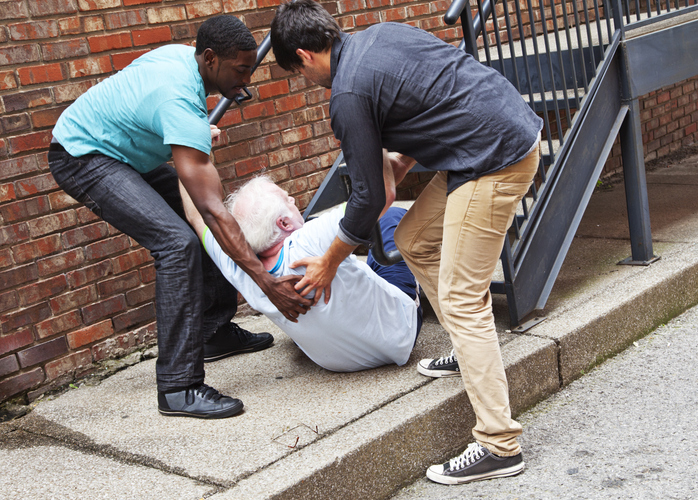
Protect Your Rights: Why Quick Reporting of Slip and Fall Accidents Matters in Fort Myers
Here is the answer I give at the start of every slip and fall call: the report you file the day you fall is worth more than almost anything else you will do in the months that follow. Video loops erase in days. Cleaning logs get backdated. The manager who saw the puddle transfers to another store. Report the fall before you leave the property, and you lock down the timeline before the store’s version of events has time to harden. Wait, and you are asking a jury to take your word against theirs.
I have practiced personal injury law in Lee and Collier Counties for more than thirty years, and the calls that come into our Fort Myers office break into two groups. The first group calls the same afternoon, from the urgent care parking lot, with a copy of the incident report photographed on their phone. The second group calls four months later, after the bruising has faded and the store has remodeled the aisle where they fell. The first group has a case. The second group, more often than not, has a hard story to tell a jury.
For the last twenty-five years, in addition to practicing law, I have held a Florida real estate broker license, and that broker work has shaped how we read property cases. When you have signed off on commercial leases, walked properties before closings, and sat in on common-area maintenance arguments between landlords and tenants, you stop seeing a wet floor as just a wet floor. You start asking who was supposed to inspect that aisle, on what schedule, and what the lease said about it. Most plaintiffs do not think to ask those questions in the first week. The lawyers on the defense side are already asking them by Monday morning.
What Florida law requires of a property owner
Three statutes do most of the work in a Fort Myers slip and fall case. They are short, but they have teeth.
Florida Statute §768.0755 covers transitory foreign substances on business floors, the spilled drink, the leaked refrigerator water, the smashed grape in the produce aisle. The statute says that when a person slips and falls on one of those substances inside a business, the injured person has to prove the business had actual or constructive knowledge of the hazard. Plain English: you either show the manager knew about the spill and ignored it, or you show that it had been on the floor long enough that a reasonably attentive employee should have spotted it. Five minutes is usually not enough. Two hours, with footprints tracked through it, usually is.
Florida Statute §768.0710 handles the other big category, structural and maintenance conditions. Cracked sidewalks, raised pavement seams, broken steps, missing handrails, a piece of decking lifted out of place. These cases do not turn on whether a clerk knew about a spill; they turn on whether the property owner failed to maintain the premises in a reasonably safe condition. The standard is general negligence, and it gives a plaintiff more room to work with than §768.0755 does.
Florida Statute §768.075 sets out the duties property owners owe to invitees, licensees, and trespassers. An invitee is someone the owner has invited onto the property for the owner’s benefit, the shopper, the patient at a medical plaza, the hotel guest. Invitees get the highest duty of care, and that is the category most of our clients fall into. The owner has to inspect, warn, and repair. Failing any of those three is where liability comes from.
One more deadline you cannot afford to misunderstand. For falls on or after March 24, 2023, the statute of limitations is two years. Before that date, it was four. We still get calls from people who assume they have four years and find out, the hard way, that they are reading the wrong version of the rule.
Factors a court considers
When a Florida judge or jury looks at a slip and fall, the analysis is rarely about one fact. It is about a stack of them. The ones we see come up most often:
- How long the hazard was present, measured in minutes, hours, or days, and what evidence proves that timeline.
- Whether the property owner had prior complaints, prior incident reports, or prior repair requests for the same condition.
- What the inspection and cleaning schedule was on paper, and whether the staff actually followed it that day.
- Lighting, signage, and visibility, whether a reasonable person looking where they were going would have spotted the danger.
- What the injured person was doing in the moments before the fall, including phone use, conversation, and footwear.
- Whether the area was open to customers at all, or whether the plaintiff had wandered past a barrier.
None of those is, by itself, a verdict. Together they tell a jury whether the owner was being reasonably careful or whether the plaintiff was the unlucky one who happened to walk through a problem the staff had been ignoring for weeks.
The trivial-defect doctrine — why it is not as clean as it sounds
Defense lawyers in Florida love to invoke the trivial-defect doctrine. The rough idea is that a defect under about one inch in height, a slightly raised sidewalk seam, a small chip in a curb, has historically been treated by Florida courts as not actionable, because pedestrians are expected to deal with minor surface variations. You will see motions to dismiss that lead with a tape-measure photograph and a ruler.
It is not a bright line. Florida appellate courts have repeatedly said that the measurement is one factor among many, not a hard cutoff. A three-quarter-inch lip in bright daylight in front of a sign that says “Watch Your Step” is a very different case than a three-quarter-inch lip in a dim stairwell, in a high-traffic area, that has generated three prior complaints. Totality of the circumstances controls. We have settled cases where the defect was well under an inch because the lighting and the prior-complaint history did the lifting.
I bring this up because clients sometimes call our office, describe the height of the lip they tripped over, and decide on their own that the case is too small. That is not your call to make in the first phone call. Let the lawyer look at the whole picture.
What we see most in Fort Myers
The geography of Fort Myers tells you where the falls happen. The retail corridors along Cleveland Avenue and Colonial Boulevard produce a steady volume of transitory-substance cases, drinks dropped in big-box stores, leaks from coolers, rain tracked across polished tile inside vestibules where no mat was put down. McGregor Boulevard, with its older buildings and tree-root-lifted sidewalks, produces a different kind of case, the structural and uneven-surface falls that fall under §768.0710. Daniels Parkway and Six Mile Cypress Parkway, where the medical plazas cluster, produce parking-lot falls and walkway falls involving older clients on their way to or from appointments.
If you live east of I-75 near Alico Road, the parking lots and outdoor walkways at the newer retail centers see their share of curb cases, especially after summer rain. Cape Coral and Pine Island Road produce another wave of grocery and restaurant claims. Each of these has its own quirks, but they all run through the same three statutes.
A medical plaza fall that turned on a maintenance file
One I think about often involved an older client who tripped on a jagged broken section of concrete in a walkway at a medical plaza off Summerlin Road. She was on her way back to her car after a routine appointment. The break in the concrete was substantial, several inches across, with a raised, uneven edge that had been chipped further by months of foot traffic. She caught the lip with her toe and went down hard on her hip.
The injury was a femoral neck fracture, the kind of break that runs through the thinnest part of the upper thigh bone just below the hip joint. It required a partial hip replacement and weeks of inpatient rehabilitation. For an older patient, that is not a routine recovery. It changes how you walk, how you sleep, and what you can do unassisted, sometimes permanently.
When I dug into the maintenance file, we found something that did not surprise us at all. There had been prior complaints to the property management company about the same stretch of walkway, and there was a stack of work orders that had been opened and closed without the repair actually being done. The owner of the medical plaza had a management contract that put responsibility for common-area walkway maintenance squarely on the management company. The lease language is exactly the kind of thing our broker work taught us to read carefully.
We settled the case in the six figures, with the management company on the hook for the bulk of it. The client got her medical bills paid, her future care funded, and an acknowledgment that what had happened to her was not just bad luck.
What a property owner is supposed to be doing
This is where the broker side of our practice comes in. When I sit across the table from a defense lawyer in a premises case, I am not guessing at what a reasonably prudent property owner does. I have signed property management agreements. I have walked properties at the close of escrow. I have sat in rooms where landlord and tenant argued, sometimes for hours, about whose responsibility it was to maintain the parking lot lighting or the rear walkway.
A reasonably run commercial property in Florida is doing, at a minimum, the following. Daily visual sweeps of common areas, with someone on staff actually walking the property and not just glancing out a window. Documented inspection logs that get initialed by whoever did the walk-through, with date and time. A written work-order system that opens a ticket on the day a hazard is reported and tracks it to repair. Clear lease language assigning common-area maintenance to a specific party so nobody can point fingers when something breaks. Adequate lighting on all walkways used after dark. Signage on temporary hazards, wet floors, recently waxed surfaces, areas under repair, before any customer reaches the area, not after.
When the defense produces an inspection log with three weeks of blank entries, or a work-order system that shows the same hazard reported six times without a repair, the case starts shifting before anyone says a word. Twenty-five years in real estate teaches you to spot which of those records are real and which are reconstructed after the fact.
What to do if you fell
If you are physically able to do these things at the scene, do them in this order. They are short, practical, and they have made the difference in cases I have handled.
- Tell a manager, in person, before you leave the property. Ask for a written incident report. Ask for a copy or a photograph of the report on your way out.
- Take photos of the spot where you fell, with a coin or your shoe in the frame for scale. Take wide shots that show the whole aisle or walkway. Then take a photo of the surrounding signage, or the lack of it.
- Look up. If there is a security camera pointed at the area, photograph it. Note the make and model if you can. Your lawyer will be sending a preservation letter that week.
- Get names and phone numbers of any witnesses before you leave. People who saw the fall but did not stop to give a name are gone for good. The ones who walked over to help are usually willing to share contact information if you ask in the moment.
- Go to a doctor that day or the next morning, even if you think you are fine. Hip fractures, head injuries, and torn rotator cuffs do not always announce themselves on day one. A medical record dated to the fall is a foundation stone of the case.
- Keep the shoes you were wearing and the clothes you fell in. Do not wash them. Defense counsel sometimes argues your footwear was the problem, and the easiest way to handle that is to be able to produce the actual shoes.
- Call a lawyer before you give a recorded statement to anyone. The store’s risk department will call you, sometimes within forty-eight hours, and a recorded statement before you have legal advice is a place a lot of cases go to die.
Key Takeaways
- Florida’s statute of limitations on slip and fall claims dropped from four years to two for falls on or after March 24, 2023. If you are unsure which version applies, call a lawyer the same week the fall happens, not the same year.
- The statute that controls your case depends on what caused the fall. Spilled liquids and other transitory substances run under §768.0755 and require proof of actual or constructive knowledge. Structural defects run under §768.0710 and use a general negligence standard.
- The trivial-defect doctrine is not a hard one-inch rule. Lighting, prior complaints, signage, and the totality of the circumstances all factor in. Do not write off a case on your own based on a tape measure.
- Under Florida’s modified comparative negligence rule, a plaintiff who is more than fifty percent at fault collects nothing. Less than fifty percent reduces the recovery but does not eliminate it.
- The single most useful thing you can do in the first hour after a fall is get a written incident report from the property and a same-day medical visit. Those two pieces of paper carry more weight than people realize.
Frequently Asked Questions
Q1. How quickly do I really need to report a slip and fall in Fort Myers?
Before you leave the property if you can stand up. Ask for a manager, ask them to write an incident report, and ask for a copy on the way out. The store’s security video is often on a short loop, sometimes only a few days, and once it rewrites itself, what really happened becomes a swearing contest. A written report the same day is the single best piece of paper you can hand a lawyer the next week.
Q2. What is the deadline to file a slip and fall lawsuit in Florida?
For falls that happened on or after March 24, 2023, you have two years from the date of the fall under Florida’s revised statute of limitations. Older falls may still fall under the prior four-year window. Two years sounds like a long time when you are still in physical therapy. It is not. We have turned away cases where the client called us four months before the deadline and there was simply not enough time to investigate properly.
Q3. What does Florida Statute 768.0755 actually require me to prove?
If you slipped on a transitory foreign substance, water, grease, a grape, dish soap, you have to prove the business knew about it or that the condition had been there long enough they should have known. That is what “actual or constructive knowledge” means. A puddle that dripped from the ceiling for three hours is a different case than a puddle that formed sixty seconds before you walked through it, and a Florida jury is going to want evidence on which one happened.
Q4. What if I was partly looking at my phone when I fell?
Under Florida’s modified comparative negligence rule that took effect in March 2023, a jury can still award damages as long as you are not more than fifty percent at fault. If they assign you twenty percent, you collect eighty percent of the damages. If they assign you fifty-one percent, you collect nothing. Straight disclosure to your lawyer about what you were doing matters more than people think, because defense counsel will find it on video anyway.
Q5. Do I need a lawyer if the store already offered to pay my medical bills?
I would at least talk to one before signing anything. Early offers from a store’s risk department or insurer almost always come with a release that closes the case on every dollar, including future surgery, lost wages, and pain and suffering. We have seen six-figure hip cases offered a few thousand dollars in the first week. A free consultation costs you nothing and tells you whether the number on the table is in the right zip code.
Talk to our family about taking care of yours
If you or someone you love has been hurt in a slip and fall anywhere in Lee or Collier County, call our office at 239-992-8259 for a free consultation. There is no fee unless we recover for you. Two years moves faster than you think, and the evidence the case turns on is mostly in the property owner’s hands. The sooner we are involved, the more of it we can lock down.
About the Author

The firm is led by David B. Pittman, Esq., who founded Pittman Law Firm, P.L. and has practiced personal injury law in Fort Myers and across Lee County for more than thirty years, with a sustained focus on personal injury and premises-liability cases. The firm’s Fort Myers presence handles a steady stream of serious-injury work along the Daniels Parkway, Six Mile Cypress, McGregor Boulevard, Cleveland Avenue, and Summerlin Road corridors, and along I-75 between Estero and Bell Tower.
Between undergraduate at The Citadel, The Military College of South Carolina and a JD from the University of South Carolina School of Law, David built the foundation for a personal injury practice that now carries AV-Preeminent status with Martindale-Hubbell and membership in the Multi-Million Dollar Advocates Forum.
David has held a Florida real estate broker license for twenty-five years, a credential that shapes how the firm reads the property side of premises cases. The firm handles personal injury cases across Lee and Collier Counties, serving Fort Myers, Bonita Springs, Naples, Cape Coral, Estero, and Lehigh Acres, with offices at Windsor Place in Bonita Springs (main) and Fort Myers (satellite). Call 239-992-8259 for a free consultation.
Attorney advertising. The information in this article is general in nature and is not legal advice for any specific situation. Reading this article does not create an attorney-client relationship with Pittman Law Firm, P.L. Prior results do not guarantee a similar outcome.