

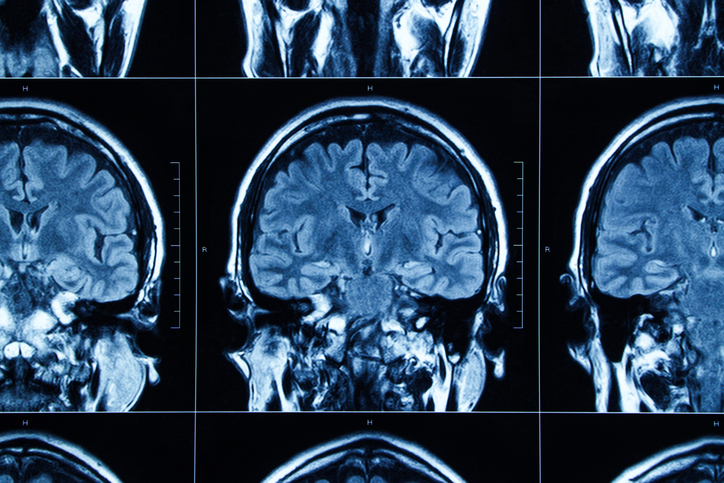
MRI and CT Scan Errors: When Is It Medical Malpractice or Negligence In Fort Myers?
Published radiology research has put the miss rate at roughly three out of ten when films with known pathology are re-read blind. Most of those misses are minor. The ones that land in our Fort Myers office are not — they are the cases where the missed finding changed a treatment plan, delayed a cancer diagnosis, or closed a surgical window that cannot be reopened. A patient sits across from us holding two folders: one radiologist looked at an MRI or a CT and said it was fine, and a year later another doctor looked at the same films and saw something obvious.
What separates a winnable case from a heartbreaking one is whether the facts line up with what Florida law actually requires you to prove, and whether you move quickly enough to preserve the case. Radiology cases are some of the most evidence-driven files we handle. The films exist. The report exists. The standard of care exists in writing. In three decades of representing crash victims in Lee and Collier Counties, that is the version of the answer I give people, and it is the one that saves time for everybody.
What Florida law actually says about missed scans
Florida medical malpractice is governed by Chapter 766 of the Florida Statutes, and it is one of the most procedurally demanding areas of personal injury law in this state. Three pieces of that statute drive almost every radiology case we take.
The first is the standard of care. Section 766.102 defines it as the level of care a reasonably prudent similar health care provider would have used under the same circumstances. For a radiologist reading a CT scan, that is not a question of perfection. It is a question of whether another qualified radiologist, looking at the same study, would have seen what the first one missed. Plain English version: it is malpractice when a reasonably careful radiologist would have caught the finding, not when a perfect one would have.
The second is the deadline. Florida Statute 95.11(4)(b) sets the limitations period at two years from the date you discovered, or with reasonable diligence should have discovered, the injury. There is also an outside four-year cutoff measured from the date of the misread, with extensions for fraud and intentional concealment up to seven years, and separate rules for children. Plain English version: the clock often does not start the day of the scan; it starts the day another physician tells you the first read was wrong. But once it starts, it runs fast, and we have seen good cases die because someone waited fifteen months to make a phone call.
The third is the pre-suit investigation. Under Florida Statute 766.203, no medical malpractice case can be filed in Florida without a verified written opinion from a qualified medical witness in the same field as the defendant. For a missed-MRI case, that means another radiologist has to be willing to put their license on the line and say, in writing, that the original read fell below the standard of care. Plain English version: before we ever send a demand letter, we have to put your films in front of another radiologist and pay for them to do a fresh read. No second read, no case.
Six missed-scan patterns we see in Fort Myers radiology files
The radiology files that come into our Fort Myers office tend to fall into a handful of repeating patterns. They are worth naming because patients sometimes do not realize that what happened to them has happened to thousands of other people.
- The missed lung nodule on an unrelated chest CT. A patient gets a chest CT for a different reason, often a car wreck or a workup for shortness of breath, and a small nodule sits on the films unreported. A year or two later it is lung cancer and it has spread.
- The missed fracture in an emergency department read. A patient comes into a Fort Myers ER after a fall or a crash. Films are read overnight by a remote radiologist working a high-volume shift. A subtle scaphoid, hip, or spinal fracture gets missed. The patient is sent home, the injury is reinjured, and the surgical repair becomes much harder.
- The missed colorectal mass on abdominal imaging. A patient with abdominal complaints gets a CT abdomen. A bowel-wall thickening or mass shows on the films but does not make it into the report, and no one orders the colonoscopy that would have caught it. We see this one too often.
- The missed bleed on a head CT. A patient comes in for headache, dizziness, or a minor head strike. A small subdural or subarachnoid bleed is present but unreported. The patient is discharged and re-presents days later in much worse shape.
- The missed disc herniation or cord compression on an MRI. A spinal MRI is read as degenerative changes only. The actual finding is a herniation pressing on the cord or a nerve root. The patient is sent through months of conservative care before the right diagnosis is made, and by then there is permanent deficit.
- The misread mammogram or breast MRI. A finding gets characterized as benign when a careful read would have called for biopsy. Months pass. The cancer is found at a later stage and treatment is much harder.
These patterns are not unusual. They are the everyday work of a busy radiology department. The point is not that every miss is a lawsuit; it is that when one of these misses leads to a measurable bad outcome, Florida law gives you the right to ask a jury whether it should have happened.
What makes radiology malpractice harder to win than it looks
From the outside, a missed cancer on a CT scan sounds like the easiest medical malpractice case a lawyer could ask for. The films are right there. Either the cancer was visible or it was not. In practice, radiology cases are among the more demanding files in our office, and the patients who call us deserve to hear why up front.
The defense always has a story. A defense radiologist will say the finding was subtle, that the slice thickness was suboptimal, that the patient moved, that the clinical history given to the radiologist did not flag the area of concern, or that the lesion was on the edge of the imaged field. Sometimes those defenses are credible. Sometimes they are not. The job of your lawyer is to know enough about how a CT or MRI is acquired and read to tell the difference.
Causation is the other hard piece. Florida law requires you to prove not only that the radiologist missed something they should have seen, but that the miss made a real, measurable difference in your outcome. If a lung cancer was Stage I at the time of the missed scan and Stage III by the time it was diagnosed twelve months later, that is the case. If oncologists are willing to say the same treatment would have followed either way, the case is much harder, no matter how clear the miss was.
There is also the cost of the work. A radiology case that gets to trial generally requires at least two outside physicians — a radiologist to address the standard of care on the read and a treating-field physician (oncologist, surgeon, neurologist) to address what the delay cost. Our firm fronts those costs. The patient pays nothing out of pocket, and nothing at all unless we recover.
A Cleveland Avenue case that shows the pattern
One case I think about often involved a Fort Myers patient who walked into a clinic off Cleveland Avenue with what every careful physician would have recognized as classic colorectal cancer symptoms. The workup that should have followed — the basic, standard-of-care workup, the one every internal medicine resident is taught in their first year — did not happen. No colonoscopy. No referral. No further imaging. The patient was sent home with reassurance.
Twelve months went by. The symptoms got worse. The patient saw a different physician, the right tests finally got ordered, and the diagnosis came back: colorectal cancer that had advanced through a full stage during the year the first clinic did nothing. What could have been a relatively straightforward surgical case became invasive surgery, chemotherapy, and radiation, with a recovery that took the rest of the patient’s working life.
We retained a radiologist and a gastroenterologist as witnesses, and they walked through exactly which steps the first provider skipped and exactly how the missed year changed the staging. The case resolved in the high six figures. It did not give that patient their year back, and it did not undo the treatment they should never have had to undergo, but it covered the medical bills, the lost income, and the long-term care needs that the delay created.
That is the kind of file these cases tend to be. They live or die on the medical records, on the imaging itself, and on whether you can find two physicians willing to tell a jury what the standard of care required.
What to do if you think a scan was misread
When a patient calls our Fort Myers office worried that a CT or MRI was missed, this is the list I walk them through. Some of it is obvious. Some of it is the kind of thing I have only learned to recommend after watching a few cases get harder than they needed to be.
- Get the actual films, not just the report. Request a CD or a digital download of the original DICOM imaging from the facility that performed the study. The written radiology report is the radiologist’s interpretation; the films are the evidence. A second radiologist cannot help you if all you have is the report.
- Get a real second read from an unrelated facility. Take the films to a different radiology group, often one tied to a different hospital system. Ask for a fresh read with no access to the prior report. The single most useful sentence in any of these files is “this finding was present on the original study and should have been reported.” That sentence only comes from a clean second read.
- Request every record, in writing, from every provider involved. The referring physician’s chart, the imaging center’s records, the radiologist’s report, the technologist’s notes, and the hospital’s records if it was an inpatient or ER study. Under federal law, the provider has to respond. Send the request by authorized mail or through a patient portal that timestamps it.
- Write down your timeline while it is fresh. Dates of symptoms, dates of visits, who said what, when you were told the scan was clean, when you were told it was not. I have used this approach with patients and noticed that the timeline they write in the first week is far more accurate than the one they try to reconstruct six months later.
- Do not sign anything from the original provider’s risk-management office. If a hospital or imaging center reaches out to “resolve” the matter, do not sign authorizations, releases, or settlement paperwork without a lawyer reading it first. Those documents are usually broader than they look.
- Watch the calendar. The two-year clock under Florida law does not wait. The day a second physician tells you the first read was wrong is the day to call a lawyer, not the day to think about calling one.
Key Takeaways
- Florida medical malpractice law does not require a perfect radiology read; it requires a reasonably careful one, judged against what another qualified radiologist would have done.
- You have two years from the date the misread is discovered to file, with an outside four-year cap (longer for fraud or for minors) under Florida Statute 95.11(4)(b).
- No Florida medical malpractice case gets filed without a sworn opinion from another physician in the same field — Florida Statute 766.203 makes that mandatory.
- Causation matters as much as the miss itself; the delay has to have changed your outcome in a way the medical evidence can support.
- The case lives in the films and the chart; getting the original DICOM imaging and a clean second read is the single most important first step.
Frequently Asked Questions
Q1. How often do radiologists actually miss things on MRIs and CT scans?
Published radiology research has put the miss rate at roughly three out of ten when films with known pathology are re-read blind. Most of those misses are minor, but the ones that matter are the ones that change a treatment plan or delay a cancer diagnosis. A missed finding is not automatically malpractice in Florida; it becomes a claim when a reasonably prudent radiologist would have seen what your radiologist did not.
Q2. What is the deadline for filing a Florida medical malpractice claim over a missed scan?
Florida Statute 95.11(4)(b) gives you two years from the date you discovered, or reasonably should have discovered, the injury, with an outside limit of four years from the act itself. Cases involving fraud or intentional concealment can extend that, and minors have their own protections. The two-year discovery clock starts as soon as a second physician tells you the first scan was misread, so do not wait.
Q3. Do I need a doctor to support my claim before I can file?
Yes. Florida Statute 766.203 requires a verified written opinion from a qualified medical witness in the same field before suit can be filed. That means before we ever serve a Notice of Intent on the radiologist, we get the films re-read by another radiologist and obtain a sworn opinion that the standard of care was breached. We pay for that work up front.
Q4. Can I sue the imaging center and the radiologist, or just one of them?
Both can be on the hook. The radiologist is responsible for reading the films. The imaging center can be responsible for protocol selection, technologist work, equipment maintenance, and for the contract structure that put a particular reader on your study. We look at every link in the chain and name the parties whose conduct fell below the standard.
Q5. What should I do right now if I think a scan was misread?
Get the actual imaging files on a disc, not just the written report, and get a second read from a different facility. Request your full chart from every provider involved, in writing. Write down a timeline of what you were told and when. Then call a Florida medical malpractice lawyer before the two-year clock gets short. The films and the chart are the case.
Talk to our Fort Myers medical malpractice team
If you or someone in your family had a CT, MRI, or other diagnostic study that you now believe was misread, our office can review the files at no cost to you. We will get the films, arrange the second read, and tell you straight whether we think there is a case. Call Pittman Law Firm, P.L. at 239-992-8259 for a free consultation. There is no fee unless we recover for you.
About the Author

Personal injury is the focus of David B. Pittman, Esq.’s practice in Fort Myers and across Lee County, and has been since he founded Pittman Law Firm, P.L. more than three decades ago. The firm’s Fort Myers presence handles a steady stream of serious-injury work along the Daniels Parkway, Six Mile Cypress, McGregor Boulevard, Cleveland Avenue, and Summerlin Road corridors, and along I-75 between Estero and Bell Tower. David and his team represent injured clients across Lee and Collier Counties, with a particular focus on commercial-vehicle, complex-liability, and serious-injury cases, including medical negligence files like the missed-imaging matters described above.
Educationally, David is a graduate of both The Citadel, The Military College of South Carolina, and the University of South Carolina School of Law. Professionally, he holds AV-Preeminent status with Martindale-Hubbell and Multi-Million Dollar Advocates Forum membership.
David has held a Florida real estate broker license for twenty-five years, a credential that shapes how the firm reads the property side of premises cases. The firm handles personal injury cases across Lee and Collier Counties, serving Fort Myers, Bonita Springs, Naples, Cape Coral, Estero, and Lehigh Acres, with offices at Windsor Place in Bonita Springs (main) and Fort Myers (satellite). Call 239-992-8259 for a free consultation.
The information on this site is for general information only and is not legal advice for any individual case. Reading this page does not create an attorney-client relationship with Pittman Law Firm, P.L. Past results do not guarantee similar outcomes. This is attorney advertising.