

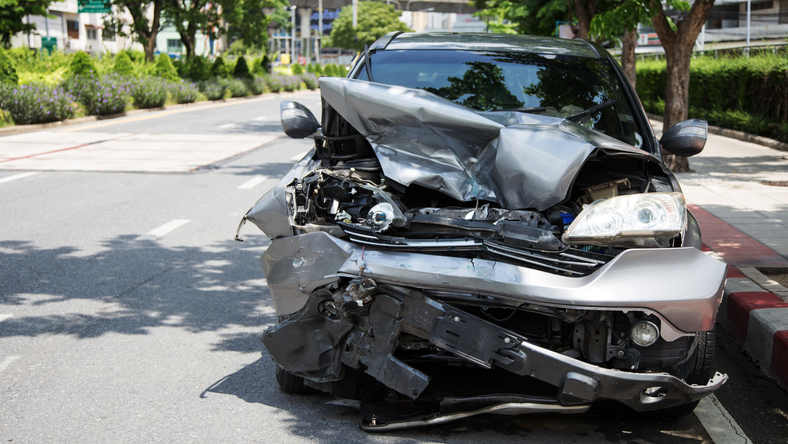
There is no number until we know four things about the case: what the injuries actually are, what the medical record looks like, how fault sorts out under Florida’s 2023 statute, and how much insurance coverage sits on the other side of the wreck. Without those four pieces, anyone quoting you a settlement value is selling something. With those four pieces, I can usually give a client a real range within a couple of weeks.
I have watched cases that looked small at the scene grow into significant recoveries, and I have watched cases that sounded huge at the front door shrink because the at-fault driver carried a $10,000 policy and lived in a rented apartment. Value is not what the wreck felt like. It is what we can prove and what we can collect on.
What Florida law actually says about case value
Florida personal injury law went through a real reshuffle in 2023, and the rules below are the ones that matter most when we work out what a case is worth.
Modified comparative negligence — §768.81, Florida Statutes. Florida used to be a pure-comparative-fault state, meaning a 90-percent-at-fault driver could still recover ten cents on the dollar. That changed in March 2023. Today, if a jury finds you 51 percent or more at fault, you recover nothing. At 50 percent or below, your recovery is reduced by your percentage of fault. In plain English: if your case is worth $200,000 and the jury says you were 25 percent at fault, you collect $150,000. At 51 percent at fault, you collect zero. That single number — your fault percentage — can swing six figures.
Two-year filing deadline — §95.11(4)(a), Florida Statutes. The 2023 reform also cut the statute of limitations on negligence claims from four years to two. If your wreck happened on or after March 24, 2023, you have two years from the crash to file suit. Miss that date and the case is over, no matter how badly you were hurt.
PIP — §627.736, Florida Statutes. Florida is a no-fault state for the first layer of medical bills. Your own Personal Injury Protection policy pays 80 percent of reasonable medical care and 60 percent of lost wages up to $10,000, regardless of who caused the crash. PIP does not pay for pain and suffering. To step past PIP and pursue the at-fault driver’s policy for pain, suffering, and the full medical picture, your injuries have to clear the serious-injury threshold — permanent injury within a reasonable degree of medical probability, significant and permanent scarring, loss of an important bodily function, or death. There is also a 14-day rule: you have to see a doctor within 14 days of the crash, or you lose PIP entirely.
Uninsured Motorist coverage — §627.727, Florida Statutes. If the at-fault driver is uninsured, or carries the state minimum on a serious-injury case, your own UM coverage steps in. Florida does not require UM, but every adjuster I respect tells clients to carry it. I tell people the same thing. Pull your declarations page tonight and look for the letters UM.
Crash report — §316.066, Florida Statutes. A long-form crash report from the responding officer is the spine of most of our files. It records the position of the vehicles, the statements at the scene, witness contact information, and the citation if one was issued. Get the report number before you leave the scene.
Seven factors that actually move the number in Lee and Collier Counties
The value of a Florida car accident case comes down to a short list. I will give it to you the way I lay it out for clients across a conference table.
1. The injuries themselves. This is the biggest single driver, and nothing else is close. A soft-tissue strain that resolves in eight weeks is a different case from a herniated disc that needs an epidural, which is a different case from a fusion surgery, which is a different case from a traumatic brain injury. Value tracks injury severity almost linearly until you reach catastrophic injury, where the math changes again because of life-care planning.
2. The medical record. The injury has to be in the chart. Adjusters and defense lawyers will not pay for pain that is not documented. Gaps in care — say, six weeks where you stopped going to physical therapy because work got busy — get used against you. The medical record is the case.
3. Lost wages and earning capacity. Missed paychecks are recoverable. So is a long-term reduction in what you can earn. A roofer with a permanent shoulder restriction is a bigger wage-loss case than an office worker with the same injury, because the roofer’s ability to make a living took the harder hit.
4. Pain, suffering, and loss of normal life. This is the category that turns small cases into meaningful cases and large cases into life-changing cases — but only when the serious-injury threshold is met. Without permanent impairment in the record, this category is capped.
5. Comparative fault. See §768.81 above. The same wreck with the same injuries can be worth $300,000 against a 100-percent-at-fault driver and $0 against a driver a jury finds 60-percent-at-fault to you.
6. Insurance coverage on the other side. You can only collect what the at-fault driver’s policy covers, plus your own UM, plus any other available coverage layers (employer coverage if it was a work vehicle, umbrella policies, dram-shop in some bar cases, and so on). A $1,000,000 case against a $25,000 policy with no UM is, in the real world, a $25,000 case unless there are other defendants or coverage layers we can develop.
7. Venue and timing. A Lee County jury behaves differently from a Collier County jury, and both behave differently in May than they do in late August. We factor that in when we recommend whether to settle or file.
How Florida settlement ranges actually look in our practice
I am hesitant to publish ranges because someone always reads them as a promise. They are not. With that warning out front, here is the rough shape of what we see in Lee and Collier Counties after a clean liability case with reasonable insurance coverage on the other side:
- Soft-tissue, full recovery within a few months — generally low five figures.
- Herniated disc with injections, no surgery — generally mid five figures into low six figures.
- Surgical case — fusion, rotator cuff repair, ACL reconstruction — generally low to mid six figures.
- Catastrophic injury — traumatic brain, spinal cord, amputation — high six figures into seven figures, often constrained by available coverage.
Every one of those ranges is a starting point, not a ceiling and not a floor. The right case in the wrong county can fall short of the range. The wrong-looking case with the right facts can blow through it.
Why the “simple” case usually is not
The hardest cases I work on are the ones that look easy from the outside. A rear-end collision on the I-75 corridor through Lee County, photos of the bumper damage, an apologetic at-fault driver at the scene — clients come in expecting a clean check. Sometimes that happens. Often it does not, for reasons that have nothing to do with what the wreck looked like.
Here is what gets in the way. The at-fault driver’s adjuster orders the medical records and finds a prior chiropractor visit from four years ago. Suddenly the herniation is a “pre-existing condition.” Or the client gave a recorded statement two days after the crash, said “I feel fine, just a little sore,” and that sentence shows up in a defense exhibit eighteen months later. Or the client missed the 14-day PIP window because the emergency room sent them home with ibuprofen and they tried to tough it out.
None of those problems is fatal on its own. All of them are easier to handle if a lawyer was involved early. The cases that frustrate me most are the ones where the client called us at month five with a problem that would have been a non-issue at week one.
A rear-end claim we handled in US-41
A man came to our office a few years back through a referral from two of his treating doctors — both of them had worked with our firm on prior matters and knew how we run a file. He had been rear-ended on US-41 and had persistent soft-tissue injuries: neck, mid-back, and a shoulder that would not settle down. He had already called two of the larger personal injury firms that advertise on every highway billboard in Southwest Florida. Both turned him away. One of them, he told us, said his case was “too small” for them.
His case was not too small. It was small only by the internal dollar quota of a firm that does not want to work the file unless the number on the front end has six zeros. When I sat down with him, what we saw was a man whose sleep had been ruined for nine months, whose golf game was gone, and whose work as a contractor had become physically punishing. His treating physicians believed his impairment was permanent. That is not a small case. That is a person whose quality of life had been measurably reduced by another driver’s negligence.
We built the demand around the permanent-impairment opinions and the day-to-day cost to a working tradesman in his fifties. The carrier came back at a fair-and-dignified number that handled the medical liens, replaced the wages he had lost, and gave him something for the nine months of pain and the things he could no longer do. He did not get a billboard-sized result, and he did not need one. He got a result that treated his injury like it mattered, because it did.
There is no such thing as a “small” injury when it is happening to the person in front of you. That is something I learned early in this work, and it has not changed.
What to do if you were injured in a Florida car accident
I have given this same list to clients in Bonita Springs, Fort Myers, Naples, and just about every town between for thirty years. The order matters more than people think.
- See a doctor within 14 days. Not “if it still hurts next week” — within 14 days. PIP requires it. The chart entry from that first visit is the anchor of the medical record. I have used this rule with clients who felt fine at the scene and discovered three days later that they could not turn their head.
- Pull your own declarations page tonight. Look for the letters PIP, BI, UM, and MedPay. The amounts next to those letters tell you what coverage you actually have. Most clients do not know what they own until they pull the page.
- Do not give a recorded statement to the other driver’s adjuster. Florida law does not require it. The recording exists for one reason — to be played back against you eighteen months later when a sentence sounds different in writing than it did over the phone.
- Keep a one-page log of what you cannot do. Day to day. Could not lift the grandchild. Could not finish the Saturday round of golf at the local course. Could not sleep through the night. Juries believe specifics. Adjusters pay for specifics. Generalities get discounted.
- Save the wreckage photos and the scene photos. Phone photos from the shoulder of US-41 or the I-75 corridor have settled cases for our office more than once. Take them before the cars are moved if you safely can.
- Get the crash report number. The long-form report is the spine of the case. The number gets you the report.
- Call a lawyer before you call the other side’s adjuster. Even if you do not hire us, get the consult. Most of the consultations we do in our office end with the client knowing something they did not know that morning, and most of those somethings are free.
Key Takeaways
- There is no “average” Florida car accident settlement — value is driven by injury severity, the medical record, comparative fault under §768.81, and available insurance coverage.
- Florida’s 2023 reforms cut the negligence statute of limitations to two years under §95.11(4)(a), and a finding of 51-percent-or-more fault means zero recovery.
- PIP pays the first $10,000 of medical care regardless of fault under §627.736, but only if you see a doctor within 14 days of the crash.
- Pain-and-suffering damages require clearing the serious-injury threshold — permanent impairment, significant scarring, loss of bodily function, or death.
- If a volume firm told you your case was “too small,” that is their business model talking, not the merits of your file.
Frequently Asked Questions
Is there an average settlement amount for a Florida car accident?
There is no average because no two injuries, no two policies, and no two sets of facts line up. Soft-tissue cases with a few months of treatment often resolve in the five-figure range. Surgical cases and permanent-impairment cases regularly run into six and seven figures. Anyone who quotes you an average without reading your medical records is guessing.
Can I still recover money if I was partly at fault?
Yes, as long as you are not more than 50 percent at fault. Under Florida’s 2023 comparative-fault reform, a jury can still award damages if you are 50 percent or less at fault, but your recovery is reduced by your percentage. At 51 percent or more, the law cuts you off completely.
What if the at-fault driver has no insurance, or not enough?
You may be able to recover through your own uninsured or underinsured motorist coverage under §627.727. Whether you have UM, and how much, is the single biggest swing factor in many of our cases. Pull your declarations page before you do anything else.
How long do I have to file a Florida car accident lawsuit?
For accidents occurring after March 24, 2023, you have two years from the date of the crash under §95.11(4)(a). The old four-year window is gone. Wrongful-death claims have their own two-year deadline. Waiting is almost always the wrong move.
Why did a big-firm lawyer turn down my case if it is worth pursuing?
Some volume firms screen cases against an internal dollar threshold and reject anything below it. That is a business decision on their end, not a verdict on your case. We take cases on their merits and on what the injury actually did to a person’s life.
Talk to our office before you talk to the other side’s adjuster
If you were hurt in a car wreck anywhere from Bonita Springs to Fort Myers, Naples, Estero, Cape Coral, or Lehigh Acres, call our office. We will pull your coverage with you, look at the police report, and tell you straight what we think the case is worth and what it will take to get there.
Call 239-992-8259 for a free consultation. There is no fee unless we recover for you.
About the Author

Pittman Law Firm, P.L. operates across Southwest Florida under the direction of founder David B. Pittman, Esq., who has practiced personal injury law for more than thirty years, with a sustained focus on serious-injury auto and complex-liability cases. The firm represents injured clients across Lee and Collier Counties — from the firm’s main office at Windsor Place on Bonita Beach Road through Fort Myers, Naples, Estero, Cape Coral, and Lehigh Acres.
David’s education began at The Citadel, The Military College of South Carolina, followed by the University of South Carolina School of Law. His honors include an AV-Preeminent rating at Martindale-Hubbell and membership in the Multi-Million Dollar Advocates Forum.
David has held a Florida real estate broker license for twenty-five years, a credential that shapes how the firm reads the property side of premises cases. The firm handles personal injury cases across Lee and Collier Counties, serving Fort Myers, Bonita Springs, Naples, Cape Coral, Estero, and Lehigh Acres, with offices at Windsor Place in Bonita Springs (main) and Fort Myers (satellite). Call 239-992-8259 for a free consultation.
The information on this website is for general information purposes only. Nothing on this site should be taken as legal advice for any individual case or situation. This information is not intended to create, and receipt or viewing does not constitute, an attorney-client relationship with Pittman Law Firm, P.L. This is attorney advertising.