

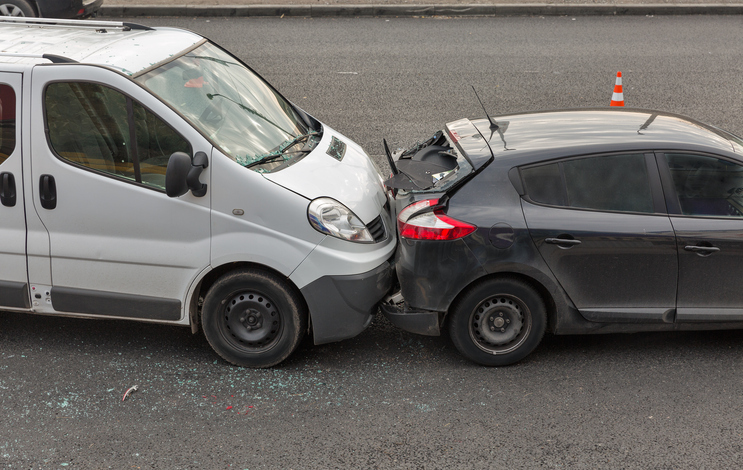
How Motorcycle Helmets Reduce Fatalities in Fort Myers Accidents
Riders and family members want to know whether the helmet saved a life or could have saved a life. The carrier’s adjuster wants to know whether the absence of a helmet shaves money off the claim. Those are two different conversations, and the one that matters for your case is rarely the one the public conversation focuses on.
So here is how I talk about it in our office. A helmet is a piece of safety equipment that, on the right impact at the right angle, reduces head and brain injury. The data on that is real and I will walk through it below. But a Fort Myers rider’s recovery after a crash does not turn on the helmet in isolation. It turns on Florida’s no-fault structure, on which driver was at fault, on your own uninsured-motorist coverage, and on whether the gear you were wearing is still sitting in a closet where a reconstruction engineer can look at it. Let me unpack each piece.
What the data actually shows on motorcycle helmets
The numbers from the National Highway Traffic Safety Administration and the Insurance Institute for Highway Safety are consistent year over year. Helmets reduce the risk of a rider death by roughly 37 percent and the risk of a passenger death by roughly 41 percent. Head injuries drop by something on the order of two-thirds. The CDC has put dollar figures on it as well; in 2017 alone, helmets saved an estimated 1,872 lives and the country avoided several billion dollars in economic costs that would have followed.
That is the macro picture. The micro picture in any one case is messier. A helmet protects the skull and brain. It does not protect a collarbone, a shoulder labrum, a wrist, a tibia, or a spine below the cervical region. A rider who took a side impact at thirty-five miles an hour on Cleveland Avenue can walk away with a perfect skull x-ray and a torn-up shoulder, a broken wrist, and four months out of work. The helmet did its job and the injury claim is still significant. That is the point I want riders to hear before the adjuster gets to them.
Florida law that actually determines your case
Three statutes do most of the work on a Florida motorcycle claim, and a rider who understands them is already in a stronger position than the carrier expects.
PIP does not cover you on the bike. Under section 627.736 of the Florida Statutes, the no-fault personal injury protection that every Florida car driver carries excludes motorcycles from the definition of motor vehicle. Plain English: the $10,000 in immediate medical that follows a car driver into the emergency room does not follow a rider. This single fact catches more Fort Myers riders off guard than any other, and it is the reason the medical bills can stack so fast in the first sixty days.
The helmet law is narrower than people think. Under section 316.211, a rider 21 or older who carries at least $10,000 in medical benefits coverage is exempt from the helmet requirement. Anyone under 21 must wear one. So if you are an adult rider in Florida with the right medical coverage, riding without a helmet is not a traffic infraction. That said, the carrier will still try to use it against you on the damages side, which leads to the next point.
Comparative negligence and the helmet defense. Florida is a modified comparative negligence state under section 768.81. In plain English: if you bear more than 50 percent of the fault for the crash, you recover nothing, and below that line your recovery is reduced by your fault percentage. The carrier reads that statute and reaches for two arguments on a motorcycle case: speed, and the helmet. The helmet argument only reaches head and brain injuries, and only if the carrier can produce a witness who will testify the helmet would have changed the medical outcome. On a labral tear, on a broken wrist, on a fractured pelvis, the helmet has no place in the conversation.
Why your own uninsured-motorist coverage matters so much
If I could put one sentence in front of every Lee County rider before they ever throw a leg over a bike, it would be this: buy stacked uninsured and underinsured motorist coverage under section 627.727, and buy as much as you can afford.
Here is why. Florida’s minimum bodily injury liability requirement is famously low. A driver pulling out of a parking lot on McGregor Boulevard or making a left across Summerlin Road can be carrying a ten-thousand-dollar bodily injury policy, and on a serious motorcycle injury that money is gone before the first surgery is billed. Your own UM coverage is what fills the gap. If you stacked across two or three household vehicles, those limits multiply. I have settled rider cases where the entire recovery came from the client’s own UM policy because the at-fault driver had nothing to give.
This is also where the real-estate side of our practice background occasionally surfaces. I have been a licensed Florida real estate broker for the last twenty-five years, and I will tell you that I have watched more than one rider buy a $400,000 house and carry $10,000 in UM. I would rather see a rider with a smaller house and a half-million in stacked UM. The risk math on two wheels is not the same as the risk math behind a steering wheel.
The Cape Coral lane-change case
One we worked recently in Cape Coral lays this out about as cleanly as any case I can think of. A rider in his forties was on a clear-weather afternoon ride when a vehicle changed lanes without checking the blind spot and put him down. The hospital workup showed a labral tear in the shoulder, and after a course of conservative care and a diagnostic MRI, the orthopedic surgeon took him into the operating room.
The carrier’s opening position was the one I see most often on motorcycle cases. They argued the rider was speeding. There was no citation in the report, no skid evidence consistent with what they were claiming, and the property damage geometry on the two vehicles told a different story. The reconstruction engineer walked through the physics. The speeding theory collapsed.
The case resolved at a high six-figure settlement. The rider had health coverage that paid the surgery in the short term, but the recovery covered the lien repayment, the lost income from the months he could not return to work, and a meaningful figure for the future restriction on the shoulder. The piece I want riders to take from that story is this: the carrier’s first theory of the case is almost never the right one, and it almost never survives an actual investigation.
What to do after a Fort Myers motorcycle crash
The riders who recover well are the ones who, in the first week, do five things. None of them are complicated.
- Save the gear. Helmet, jacket, gloves, boots. Do not throw any of it away, even the pieces that look ruined. A reconstruction engineer reads impact angle off a scuffed helmet shell the way a radiologist reads a film. The gear is evidence.
- Do not let the salvage yard crush the motorcycle. Once the bike is gone, the damage pattern is gone, and so is half the liability case. Our office will send a written hold letter the same day if you call us.
- Get the medical workup, not just the ER visit. A clean ER record with a normal CT does not rule out a labral tear, a rotator cuff, a meniscus, or a mild traumatic brain injury. If something hurts in week two, get it imaged. The carrier later treats any gap in treatment as evidence the injury was not real.
- Write down the witnesses before they disappear. The two drivers who pulled over on Daniels Parkway or Six Mile Cypress Parkway and asked if you were okay are gone in a week if no one took their phone number. Get the numbers, get the names.
- Call your own UM carrier in writing. Put them on notice early. A delayed UM notice gives the carrier a coverage argument it should never have gotten.
Key Takeaways
- Helmets reduce rider fatalities by about 37 percent and head injuries by about two-thirds, but the helmet does not change liability or the value of non-head injuries.
- Florida PIP does not cover motorcycle riders under §627.736. The medical bills are paid through the at-fault driver, your UM coverage, MedPay, health insurance, or a letter of protection.
- Florida riders 21 and older with $10,000 in medical coverage are exempt from the helmet requirement under §316.211. Carriers still try to use the helmet decision against the rider on damages.
- Stacked uninsured and underinsured motorist coverage under §627.727 is the single most important coverage a Fort Myers rider can carry.
- Save the gear and stop the salvage yard from scrapping the bike. The evidence in those two objects often decides the case.
Frequently Asked Questions
Florida does not require my helmet at age 21+. Does the carrier still use my helmet decision against me?
Yes, the carrier will try. Under §316.211, a rider 21 or older who carries at least $10,000 in medical coverage is exempt from the helmet requirement, so not wearing one is not a traffic violation. The carrier still raises it under §768.81 to argue you contributed to your own head and neck injuries. We rebut that with the crash physics, the actual injury pattern, and the medical record showing which injuries a helmet would and would not have changed.
If I was wearing a DOT-approved helmet, do I have a stronger injury claim?
Usually yes, and not for the reason most riders assume. The helmet does not change liability. What it does is take the comparative-negligence argument off the table for head and brain injuries, which means the carrier cannot shave a percentage off those damages under §768.81. On a rider with a labral tear, a fractured wrist, or road rash, the helmet has nothing to do with the injury, and we make the carrier own that.
I do not have health insurance and Florida PIP does not cover me on the bike. How do my bills get paid?
Correct on the PIP point. Under §627.736, motorcycles are excluded from the definition of motor vehicle for PIP, so the $10,000 in no-fault medical that car drivers rely on does not exist for riders. The bills get paid through the at-fault driver’s bodily injury coverage, your own uninsured/underinsured motorist coverage under §627.727, MedPay if you bought it, health insurance, or a letter of protection from the treating provider. Our office handles the LOP and the lien negotiation.
The driver who hit me only carries the Florida minimum. Am I stuck with that number?
Not if you stacked your own coverage. Florida’s minimum bodily injury liability is low, and on a serious motorcycle injury it runs out fast. Your uninsured/underinsured motorist coverage under §627.727 then steps into the gap, and if you stacked across two or three vehicles in your household, the numbers move in a hurry. This is the single most important coverage a rider can carry.
I crashed in Fort Myers a week ago. My helmet is in a closet and my bike is at a salvage yard. What do I do with the gear?
Save the gear. Helmet, jacket, gloves, boots, the bike itself. Do not let the salvage yard scrap the motorcycle, and do not throw the helmet away because the visor is cracked. That gear is your evidence. A reconstruction engineer reads impact location off a helmet and damage pattern off a fairing the way a doctor reads an x-ray. Call our office at 239-992-8259 before the bike gets crushed.
Talk to our office about your motorcycle case
If you or someone in your family went down on a bike anywhere in Fort Myers, Cape Coral, Bonita Springs, Estero, Lehigh Acres, or Naples, call our office at 239-992-8259 for a free consultation. There is no fee unless we recover for you. I will sit down with you, look at the police report and the coverage, and tell you straight what the case looks like.
About the Author

Three decades into his personal injury career in Fort Myers and across Lee County, David B. Pittman, Esq. continues to lead Pittman Law Firm, P.L., the firm he founded, with a sustained focus on serious-injury and uninsured-motorist motorcycle claims. The firm’s Fort Myers presence handles a steady stream of serious-injury work along the Daniels Parkway, Six Mile Cypress, McGregor Boulevard, Cleveland Avenue, and Summerlin Road corridors, and along I-75 between Estero and Bell Tower.
David is a Citadel grad (The Military College of South Carolina, undergraduate) and a University of South Carolina School of Law grad (JD). Martindale-Hubbell rates him AV-Preeminent; he belongs to the Multi-Million Dollar Advocates Forum.
David has held a Florida real estate broker license for twenty-five years, a credential that shapes how the firm reads the property side of premises cases. The firm handles personal injury cases across Lee and Collier Counties, serving Fort Myers, Bonita Springs, Naples, Cape Coral, Estero, and Lehigh Acres, with offices at Windsor Place in Bonita Springs (main) and Fort Myers (satellite). Call 239-992-8259 for a free consultation.
Disclaimer: This article is for general information only and does not create an attorney-client relationship. Every case turns on its own facts, and nothing here should be read as legal advice for any individual matter. Hiring a lawyer is an important decision that should not be based solely on advertising.