

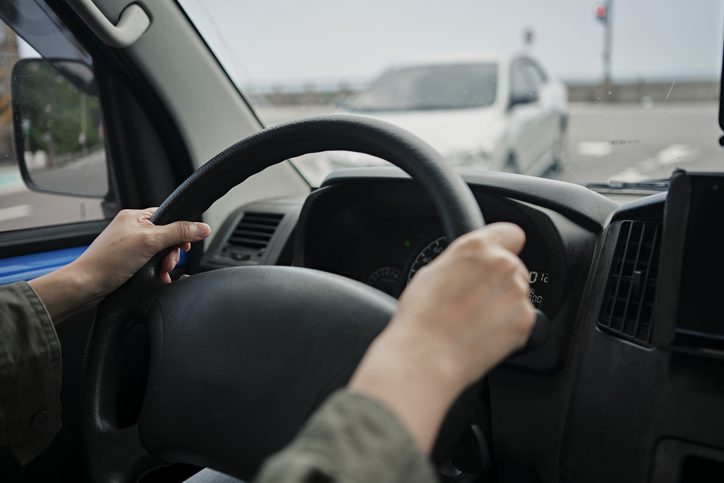
How Defensive Driving Helps Prevent Car Accidents in Fort Myers
Florida’s 2023 negligence reform changed the math on every car accident claim in Lee County — and it did it in a way that makes your driving habits matter more than they ever did before. Under the old rule, a driver found 80 percent at fault could still collect 20 percent of their damages. Under the rule that has been in place since March 2023, a driver found 51 percent at fault walks away with nothing. That single shift is why I now talk about following distance, signal use, and blind-spot checks at every client intake meeting. Those habits are not just road safety. Under §768.81, they are evidence.
Drivers who have already been hit, often on US-41 or I-75 near Alico Road, want to know whether their own habits are about to be turned against them in a claim. Those who had a near-miss on Colonial Boulevard want to know what to do differently. Both questions deserve a straight answer, and after three decades representing injured clients in Lee and Collier Counties, I can give it.
What Florida law actually says about driver fault
Two statutes do most of the work in a Fort Myers car-accident case, and a third one quietly decides a lot of them.
Section 768.81, Florida Statutes — modified comparative negligence. In plain English, a jury (or an insurance adjuster sizing up the case) assigns each party a percentage of fault. If your percentage is 50% or less, you recover, reduced by that percentage. If your percentage is 51% or more, you recover nothing. Before March 24, 2023, the rule was different. You could be 80% at fault and still recover 20% of your damages. That is no longer the case in Florida. The whole game now is keeping your fault number at or below 50%, and defensive-driving habits are the most concrete way to do it.
Section 95.11(4)(a), Florida Statutes — two-year statute of limitations. Any negligence claim that arose after March 24, 2023 must be filed within two years of the crash date. The old four-year window is gone. I have had drivers walk in eighteen months after a crash thinking they had plenty of time, and we have had to put a case together in weeks instead of months. Two years sounds like a lot until you spend a year in treatment.
Section 627.736, Florida Statutes — Personal Injury Protection. Florida is a no-fault state for the first $10,000 in medical and wage-loss benefits. Your own PIP pays regardless of who caused the crash. The catch is the fourteen-day rule: you have to start medical treatment within fourteen days of the crash, or you forfeit PIP altogether. Drivers who tough it out for two weeks because they “felt sore but okay” lose ten thousand dollars in coverage they paid for.
Section 627.727, Florida Statutes — Uninsured Motorist coverage. UM is the policy that picks up the slack when the at-fault driver has no insurance, has a minimum-limits policy, or, as in many of our hit-and-run files, cannot be found. Florida does not require drivers to carry UM, which is the single biggest gap I see in Lee County insurance portfolios. Add it. It is not expensive, and it is the policy that actually pays when the other driver fled or had a $10,000 bodily-injury limit.
Seven driving patterns we see over and over in Fort Myers crash files
Most of the cases that come into our office are not exotic. They cluster into a handful of recurring fact patterns. If you can train yourself out of these seven, your odds of being a claimant in our office drop sharply.
- Following too close on US-41. The single most common rear-end pattern in our case files. The car ahead taps the brakes at the Colonial Boulevard light and the driver behind has left maybe one second of space. Three seconds at city speeds. Four in rain. Five behind a box truck whose driver cannot see what you cannot see.
- Phone-in-lap at the I-75 ramps. The Daniels Parkway and Alico Road interchanges produce a particular kind of merge crash where the merging driver is looking down at the phone for navigation directions. The car they sideswipe is usually in their blind spot for the entire merge.
- Left-turn assumptions on McGregor Boulevard. A driver waiting to turn left assumes the oncoming car will continue straight because there is no turn signal. The oncoming car turns anyway. Florida case law does not let you off the hook for that assumption.
- Rolling stops on Six Mile Cypress side streets. Residential intersections without traffic signals. The rolling stop costs the driver any chance of arguing the other party was at fault, even if the geometry of the crash was otherwise favorable.
- Speed against the rain band. Summer afternoon storms in Fort Myers drop visibility from clear to fifty feet in under ninety seconds. Drivers who do not slow down for the rain band end up hydroplaning on Summerlin Road or rear-ending the car that did slow down.
- Tourist-season hesitation. A visitor in a rental sedan brakes hard at a green light on Cleveland Avenue because they are looking for a parking lot entrance. The local driver behind them, who knows the road, is not expecting it.
- Blind-spot drift on Pine Island Road. Two lanes each way, heavy commercial traffic, and a lot of drivers who change lanes on mirror-only checks. Motorcycle and bicycle riders pay the price for this one disproportionately.
What makes Fort Myers claims harder than they look
The textbook version of defensive driving is straightforward. The real-world version, in a Florida claim, is not. Three things make Fort Myers cases harder than the average claim.
The 50%-bar pushes everything to a fault fight. Before 2023, an adjuster might concede 70/30 liability and pay the case. Now there is a real financial incentive for the insurer to push your fault number to 51%, because if they get there, they pay nothing. So every habit that shows up in the police report, the dashcam footage, or your statement is now contested. Did you signal? Did you brake at a reasonable distance? Was your phone on? The insurer treats your answers like deposition testimony from day one.
Out-of-state and rental-car drivers complicate coverage. A driver who lives in Ohio and rents a sedan from Southwest Florida International Airport hits you on Daniels Parkway. Now you are looking at the rental company’s primary liability layer, the driver’s personal auto policy from Ohio, possibly a credit-card secondary policy, and your own Florida PIP and UM. Sorting out which policy pays first, second, and third is often a two-week project before we even talk about medical bills.
The fourteen-day PIP clock runs whether you know it or not. Drivers who take a few days to “see if it gets better” routinely walk into our office on day twelve. We can usually still get them into a clinic in time, but the margin is thin. Once you are past day fourteen with no documented treatment, the ten thousand dollars in PIP is gone, and the wage-loss component of PIP is gone with it.
One Fort Myers hit-and-run case worth noting
One we worked recently came in as a hit-and-run on US-41 in Fort Myers. Our client was stopped at a light when a vehicle rear-ended them at moderate speed. The at-fault driver pulled around them, looked over, and accelerated away. No exchange, no insurance card, no plate that anyone got cleanly. The crash report from the responding deputy listed the other vehicle as unknown.
The client felt rattled but not broken at the scene and declined transport. By the next morning the neck was stiff to the point they could not turn their head to back out of the driveway. They came to us about a week after the crash.
Treatment ran several months. Emergency department workup, imaging that confirmed a chronic cervical strain, a course of physical therapy, and a pain-management consult to handle the headaches that came with the strain. The carrier’s first move was the usual one: lowball offer, language about “soft tissue,” and a hint that the client had waited too long to seek care. We pushed back with the treatment records and the fourteen-day documentation, and the carrier paid the full UM policy limits.
The defensive-driving lesson in that file is not the client’s. They did nothing wrong. The at-fault driver was never found.
What to do if you have just been in a Fort Myers crash
I have watched thousands of post-crash decisions over the last three decades. The drivers who come out best tend to do a specific set of things in a specific order. Not generic advice. Observed.
- Call 911 from the scene, even if it looks minor. Section 316.066 requires a report for any injury or apparent property damage over $500, and the responding officer’s report is the cleanest contemporaneous record you will ever get. The deputies who work US-41 and I-75 in Lee County write detailed reports. Use them.
- Photograph the lane positions, not just the damage. Skid marks, debris field, and the position of both vehicles before they are moved tell the fault story. Insurers fight about who was in which lane all the time. Photos before anything is moved end that fight.
- Get into a clinic within seventy-two hours, not fourteen days. The statute gives you fourteen days. Adjusters give you about seventy-two before they start arguing the injury was not crash-related. I have used this seventy-two-hour standard with our clients for years and noticed that the cases where treatment starts in that window settle without a fight over causation.
- Do not give a recorded statement to the other driver’s carrier. They will call within forty-eight hours and sound friendly. They are not your friend. Tell them their insured’s lawyer or your lawyer will be in touch and hang up. Recorded statements are used to chip your fault number toward 51%.
- Write down what you remember that night. Memory of the seconds before a crash fades fast. The light, the other driver’s speed, the weather, whether you signaled — write it down the same day. We have used contemporaneous notes as evidence in dozens of cases.
- Save the vehicle. If it is totaled, do not let the insurer haul it off until our office has had a chance to look at the event-data recorder. Modern vehicles store the five seconds before airbag deployment. That data has won more than one liability fight for us.
- Call our office before you sign anything. Releases, medical authorizations, property-damage waivers. Every one of those documents was drafted by the insurer’s lawyers to help the insurer. A free consultation costs nothing. Signing the wrong release can cost everything.
Key Takeaways
- Florida’s 2023 negligence reform makes a driver’s habits — following distance, signal use, blind-spot checks — the central battleground of every car-accident claim, because the 50%-bar rule under §768.81 cuts off recovery entirely once your fault percentage hits 51%.
- You have two years from the crash date to file a lawsuit under §95.11(4)(a). The old four-year window ended in March 2023.
- Florida PIP under §627.736 pays your first $10,000 in medical bills regardless of fault, but only if you start treatment within fourteen days of the crash. We push our clients to start within seventy-two hours.
- Uninsured-motorist coverage under §627.727 is the policy that actually pays when the at-fault driver fled, was uninsured, or carried minimum limits. It is optional in Florida and the single most common gap we see in Lee County policies.
- Decline to give a recorded statement to the other driver’s carrier, photograph the scene before anything is moved, file the report required by §316.066, and call our office before signing any release.
Frequently Asked Questions
Does Florida law require me to take a defensive driving course after a crash?
No statute forces you to take a course after a crash, but a Basic Driver Improvement course can remove points and keep your insurance rates down. The Florida Highway Safety and Motor Vehicles department lists approved providers on flhsmv.gov. After thirty years in Lee and Collier Counties, my advice is to take one even if the court does not require it. The course also creates a paper record of safe-driving training that we have used in past cases to push back against insurer arguments that the client was a careless driver.
If a tourist rear-ends me on US-41, am I dealing with their out-of-state insurance?
Often yes, and that adds layers. The other driver’s home-state policy may apply, but Florida PIP under §627.736 still pays your first $10,000 in medical bills through your own carrier. Your uninsured-motorist coverage may also activate if the out-of-state policy is thin. We sort out which policy pays what before signing anything, because the order of payment changes how much money you ultimately recover.
What is the deadline to file a car-accident lawsuit in Florida?
Two years from the date of the crash under §95.11(4)(a) for any negligence claim that arose after March 24, 2023. Before the 2023 reform it was four years. Miss the two-year window and your case is gone, even if liability is obvious. The clock does not pause while you are in treatment, and it does not pause while you are negotiating with the carrier.
How does Florida’s 50%-bar rule affect a defensive-driving case?
Under §768.81, if a jury finds you 51% or more at fault, you recover nothing. At 50% or below you still recover, reduced by your percentage. Defensive-driving habits like the three-second rule and shoulder-checking blind spots are exactly the evidence we point to when an insurer tries to push your fault number over 50%. Dashcam footage, phone-lock data, and the responding deputy’s notes all matter more under the 2023 reform than they ever did before.
Do I have to file a crash report if the damage looks minor?
Under §316.066, a written report is required for any crash involving injury, death, or apparent property damage over $500. A self-report goes to the FLHSMV within ten days if law enforcement did not investigate at the scene. Skipping the report makes the insurance claim harder, and I have seen carriers deny claims on that basis alone. Always call 911 from the scene, even if you think it is minor.
Talk to a Fort Myers Car-Accident Attorney
If you have been hit on US-41, I-75, Daniels Parkway, Colonial Boulevard, or anywhere else in Lee or Collier County, our office offers a free consultation. We will look at the crash report, the coverage stack on both sides, the medical picture, and the deadlines. Call 239-992-8259. There is no fee unless we recover for you.
About the Author

Pittman Law Firm, P.L. is based in Fort Myers and has handled personal injury cases for more than thirty years under founder David B. Pittman, Esq., with a sustained focus on serious-injury auto and complex-liability cases. The firm’s Fort Myers presence handles a steady stream of serious-injury work along the Daniels Parkway, Six Mile Cypress, McGregor Boulevard, Cleveland Avenue, and Summerlin Road corridors, and along I-75 between Estero and Bell Tower.
David’s background runs from undergraduate work at The Citadel, The Military College of South Carolina, through a JD at the University of South Carolina School of Law. He carries an AV-Preeminent rating from Martindale-Hubbell and is a member of the Multi-Million Dollar Advocates Forum, with more than three decades of personal injury practice in Southwest Florida.
David has held a Florida real estate broker license for twenty-five years, a credential that shapes how the firm reads the property side of premises cases. The firm handles personal injury cases across Lee and Collier Counties, serving Fort Myers, Bonita Springs, Naples, Cape Coral, Estero, and Lehigh Acres, with offices at Windsor Place in Bonita Springs (main) and Fort Myers (satellite). Call 239-992-8259 for a free consultation.
The information on this page is general in nature and is not legal advice for any individual case. Reading this page does not create an attorney-client relationship with Pittman Law Firm, P.L. Past results do not guarantee a similar outcome. This page is attorney advertising under the rules of The Florida Bar.