

Fort Myers Motorcycle Accident Alert: Riders Are 28 Times More Likely To Have a Fatal Accident Than in Cars
The number is real. NHTSA data puts the motorcycle fatality rate at roughly 28 times the car fatality rate per mile traveled, and I am not going to soften that. What I want to tell a rider is what actually decides the case after a crash — not the statistic, but the policy structure in place the morning of the crash: whether you carried uninsured motorist coverage on your bike, whether the driver who hit you carried any meaningful bodily injury limits, and whether the gear that took the impact got preserved before someone hauled it to a dumpster. By the time the statistic shows up in the news, the case is already won or lost in the first ten days.
The legacy version of this article was a wall of NHTSA tables. I have rewritten it the way I would actually explain it to a rider sitting across the table from me at our office, with the Florida statutes that apply to a Fort Myers crash and a real case from our files.
What the data actually shows on rider risk
NHTSA’s most recent figures put the motorcycle fatality rate at roughly 31 deaths per 100 million vehicle miles traveled, against about 1.1 deaths per 100 million miles for car occupants. That is where the 28-times figure comes from. In 2023, motorcyclists were about 15% of all U.S. traffic fatalities while motorcycles were under 5% of registered vehicles. The Insurance Institute for Highway Safety publishes state-by-state numbers that line up with NHTSA’s. None of this is in dispute.
What the raw rate buries is the mechanism. Roughly half of fatal motorcycle crashes involve a second vehicle, and within that half, the dominant pattern is a left-turning car cutting across the rider’s path or a distracted driver drifting into the lane. The rider almost always sees it coming with no time to do anything about it. That mechanism is the one I see again and again on McGregor Boulevard, on Cleveland Avenue, and on the I-75 stretch near Alico Road where lane discipline falls apart at rush hour.
The other thing the rate buries is survivability. A car occupant in a 45 mph collision is sitting inside a steel cage with airbags and a belt. A rider at the same speed is the crumple zone. Even with full gear, the injuries we see — fractured wrists, road rash down to bone, shoulder separations, concussions, ORIF surgeries to put a forearm back together — are at a different order of magnitude. The rate is not a comment on rider behavior. It is a comment on physics.
The Florida law that actually determines your case
Three Florida statutes do most of the work on a motorcycle injury claim. A rider should know all three before the next time the key goes in the ignition.
Section 627.736, Florida Statutes — PIP does not cover motorcycle riders. Florida is a no-fault state for car drivers. Every Florida driver carries $10,000 in Personal Injury Protection that pays the first slice of medical bills regardless of fault. The statute defines “motor vehicle” to exclude motorcycles. In plain English: if you are hurt on a bike, your own PIP on your car policy does not pay your bills, and the at-fault driver’s PIP does not pay your bills either. PIP is a closed door for riders. Your medical care gets paid by the at-fault driver’s bodily injury coverage, your own uninsured motorist coverage, or your health insurance. That is it. This is the single most-misunderstood point in Florida motorcycle law and it catches new riders every season.
Section 316.211, Florida Statutes — the helmet law. Florida lets riders 21 and older go without a helmet, provided they carry at least $10,000 in medical coverage for crash injuries. Riders under 21 must wear one. I am not going to lecture an adult about whether to wear a helmet on Daniels Parkway in July heat. I will tell you what the defense lawyer will do with the decision if there is a head injury. They will argue, under section 768.81, that some portion of the head injury is the rider’s own fault for choosing not to wear one. Florida applies modified comparative negligence — the jury assigns each party a percentage of fault, and the rider’s recovery is reduced by that percentage. The helmet defense does not have to win to hurt the case. It only has to muddy the picture enough that the insurance carrier’s reserve number drops.
Section 627.727, Florida Statutes — uninsured and underinsured motorist coverage. Florida does not require drivers to carry bodily injury liability at all in many circumstances. The drivers who do carry it often carry only $10,000 or $25,000. UM coverage on your own motorcycle policy fills that gap. When the at-fault driver has $10,000 in BI and the rider is staring at $180,000 in hospital bills, UM is the only real recovery on the table. I have lost count of how many riders have told me their agent said UM was “optional” and they declined it to save thirty dollars a month. We will come back to that.
Why your own UM coverage matters so much on a motorcycle
If I could put one sign on the wall at every dealership in Lee County, it would say “Buy more UM than you think you need.” Here is why.
On a car claim, you have PIP at the top of the stack. The first $10,000 in medicals is covered regardless of fault. On a motorcycle claim, that $10,000 is not there. The first dollar of treatment has to come from somewhere. If the driver who hit you on Summerlin Road carries the bare-minimum bodily injury policy — and a meaningful share of Florida drivers either do or carry no BI at all — the at-fault carrier’s limits are exhausted by the ambulance, the trauma activation fee, and the first night in the hospital. Everything after that is on you, unless you bought UM.
UM coverage on a motorcycle policy is cheaper than most riders assume because the insurer is only on the hook when the at-fault driver was uninsured or underinsured. A $250,000 UM limit on a typical Florida motorcycle policy adds a small monthly premium and a stronger position for any serious injury claim. I have seen $100,000 UM policies fully recover for clients whose total damages were many times that, because the UM payout was the realistic ceiling once the at-fault driver’s limits collapsed. I have also seen riders with no UM at all walk away from clearly compensable crashes with nothing but a hospital lien, because there was no policy to collect from.
When you renew your motorcycle policy this year, look at the UM line. If it says “rejected” or “$10,000,” call your agent and have a real conversation about raising it. That five-minute call is the cheapest thing you will ever do for your case.
A rider case from our Fort Myers files
A Fort Myers rider was heading south on a weekday afternoon when a driver in the next lane drifted across the line — phone in hand, head down — and clipped his front wheel. He went down hard on the shoulder. Road rash from the right hip down to the ankle, a fractured left wrist that needed an Open Reduction Internal Fixation surgery to put plates and screws in, and weeks of occupational therapy after the cast came off so he could get grip strength back.
The driver’s carrier opened with the usual posture: minor lane-change dispute, rider was speeding, rider was lane-splitting. None of which had happened. The bike came in with damage patterns on the front wheel and right fairing that told the story by themselves. We had the helmet, the jacket, the gloves, the boots — all of it photographed before anyone touched it.
The case settled for a full insurance payout — the at-fault driver’s bodily injury limits in full, the motorcycle’s property damage paid out, and every medical bill covered. No litigation. The reason it resolved the way it did was not courtroom drama. It was that the gear was preserved, the medical chain was clean, and the carrier understood within the first thirty days that we were not going to settle short.
What to do after a Fort Myers motorcycle crash
The first ten days of a motorcycle case are evidence days. Treat them that way.
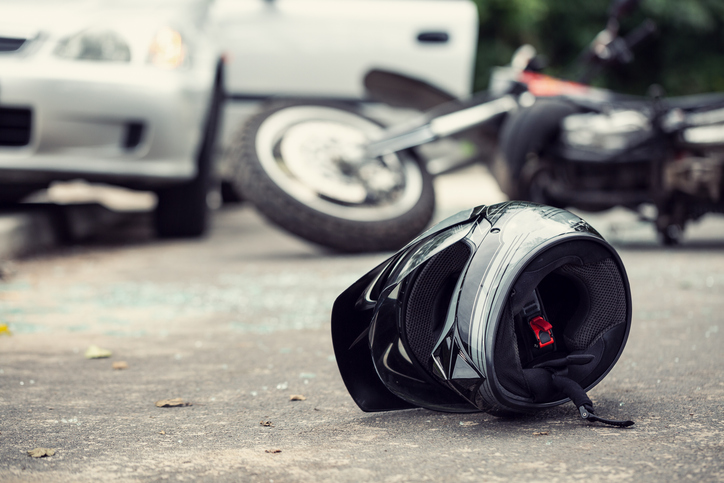
- Save the gear. Helmet, jacket, gloves, boots, eyewear, the bike itself. Do not wash anything. Do not throw out the helmet because it is cracked — a cracked helmet is the best evidence you have that the impact was severe. Bag the gear and put it somewhere dry.
- Do not authorize the bike’s repair or salvage. The carrier will push hard to “total” the bike and tow it to auction within days. Once it is gone, the damage pattern is gone with it. Tell the carrier in writing that the bike is to be held pending inspection.
- Photograph everything before you leave the scene if you can. Skid marks, the other vehicle’s position, debris field, traffic signals, road conditions. If you cannot do it because you are on a backboard, have a family member return to the scene as soon as possible the next day. Skid marks fade fast in Florida sun.
- Get the names and phone numbers of every witness on the scene — not just the ones the officer talked to. The officer’s crash report names two witnesses. There were usually five. The ones who were not interviewed are often the ones who saw the whole thing.
- Follow every medical recommendation in order. ER, orthopedic follow-up, imaging, OT, PT. A gap in treatment is the first thing the defense will point to as evidence the injury was not serious. There is no good reason to give them that argument.
- Do not give a recorded statement to the at-fault driver’s insurance company. They will call within forty-eight hours and sound friendly. You are not required to give one. Politely decline and refer them to your lawyer.
- Pull your own motorcycle policy and read the UM line. Bring the declarations page to your first attorney meeting. The case strategy depends on what coverage exists.
I have used this approach with rider clients up and down Colonial Boulevard and Pine Island Road over the years, and the cases where the gear and the bike were preserved settle for materially more than the cases where someone let the salvage yard win.
Key Takeaways
- Motorcycles are excluded from Florida’s PIP statute, so the $10,000 in no-fault medical that car drivers carry does not apply to riders. Your hospital bills go to the at-fault driver’s BI policy, your UM, and your health insurance.
- Florida riders 21 and older may ride without a helmet if they carry at least $10,000 in medical coverage, but the helmet decision will be used as a comparative-fault argument in any head-injury claim.
- Uninsured/underinsured motorist coverage on your own motorcycle policy is the most important policy decision a Florida rider makes. Buy more than the minimum.
- Preserve the helmet, jacket, gloves, boots, and the motorcycle itself. Do not let the carrier salvage the bike until it has been photographed and inspected.
- The first ten days after a crash are evidence days. Decline recorded statements, follow every medical recommendation, and bring your declarations page to the first attorney meeting.
Frequently Asked Questions
Q1. Does my PIP insurance cover me if I am injured on my motorcycle in Fort Myers?
No. Under section 627.736 of the Florida Statutes, motorcycles are excluded from the definition of motor vehicle for PIP purposes. The $10,000 in no-fault medical benefits Florida drivers get from their car policy does not follow them onto a bike. If you are hurt on a motorcycle, your medical bills go straight to the at-fault driver’s bodily injury coverage, your own uninsured motorist coverage, and your health insurance.
Q2. Do I have to wear a helmet in Florida if I am over 21?
Section 316.211 of the Florida Statutes allows riders 21 and older to ride without a helmet if they carry at least $10,000 in medical coverage for crash injuries. Riders under 21 must wear a helmet. Whether you wear one is your choice; just understand the defense lawyer on the other side will use that choice against you in any head-injury claim.
Q3. Can the at-fault driver argue I share the blame because I was not wearing a helmet?
Yes. Under section 768.81, Florida applies modified comparative negligence, which means a jury can assign you a percentage of fault that reduces your recovery. Insurance defense lawyers routinely argue that a head-injury rider who was not wearing a helmet should bear some of the blame for the severity of the injury, even when the crash itself was entirely the driver’s fault. It is one of the first arguments we plan around.
Q4. Why does my own uninsured motorist coverage matter so much on a motorcycle?
Florida’s minimum bodily injury limits on a car policy are low — many drivers carry only $10,000 or $25,000 per person. A serious motorcycle injury blows through those limits before the rider leaves the trauma bay. Section 627.727 of the Florida Statutes lets you carry uninsured/underinsured motorist coverage on your own motorcycle policy that picks up where the at-fault driver’s limits stop. For a rider, that policy is often the difference between a recovery and a hospital lien.
Q5. What should I do with my helmet, jacket, and bike after a Fort Myers crash?
Do not throw any of it away, do not let the insurance company haul the bike off to salvage, and do not let the body shop start repairs until someone has photographed and preserved everything. The helmet, jacket, gloves, boots, and the motorcycle itself are physical evidence of what happened. Defense witnesses will reconstruct the crash from photos and damage patterns, and if your gear is gone, you have lost your side of that conversation.
Talk to our office
If you were hurt on a motorcycle in Fort Myers, Bonita Springs, Naples, Estero, Cape Coral, or Lehigh Acres, call our office at 239-992-8259 for a free consultation. Bring your motorcycle policy declarations page and any photos of the bike and gear. There is no fee unless we recover for you.
About the Author

A more-than-thirty-year personal injury practice in Fort Myers and across Lee County has been the daily work of David B. Pittman, Esq., founder of Pittman Law Firm, P.L., with a sustained focus on serious-injury and uninsured-motorist motorcycle claims. The firm’s Fort Myers presence handles a steady stream of serious-injury work along the Daniels Parkway, Six Mile Cypress, McGregor Boulevard, Cleveland Avenue, and Summerlin Road corridors, and along I-75 between Estero and Bell Tower.
David completed his undergraduate degree at The Citadel, The Military College of South Carolina, and his JD at the University of South Carolina School of Law. Martindale-Hubbell rates him AV-Preeminent; the Multi-Million Dollar Advocates Forum counts him as a member.
David has held a Florida real estate broker license for twenty-five years, a credential that shapes how the firm reads the property side of premises cases. The firm handles personal injury cases across Lee and Collier Counties, serving Fort Myers, Bonita Springs, Naples, Cape Coral, Estero, and Lehigh Acres, with offices at Windsor Place in Bonita Springs (main) and Fort Myers (satellite). Call 239-992-8259 for a free consultation.
Disclaimer: This article is for general information only and does not create an attorney-client relationship. Every motorcycle injury claim turns on its own facts, policy language, and medical record. For advice on a specific situation, contact Pittman Law Firm, P.L. directly. The hiring of a lawyer is an important decision that should not be based solely on advertisements; before you decide, ask us to send you free written information about our qualifications and experience.