

Florida Boating Under the Influence: What Every Fort Myers Boater Must Know
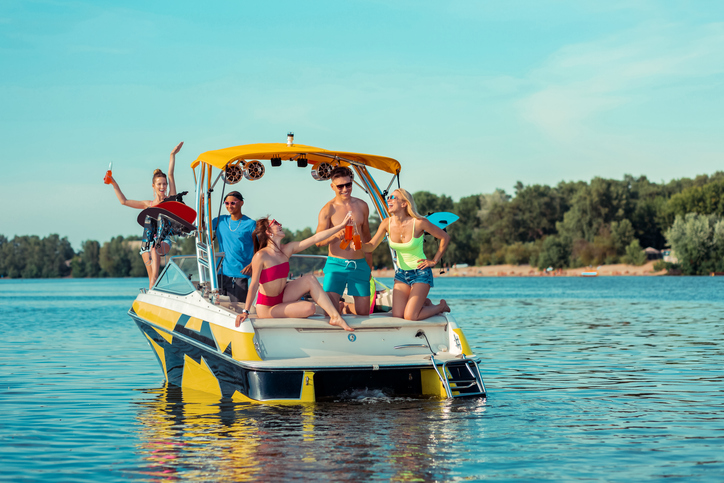
People are surprised by how serious Florida’s BUI law is, and they are surprised by how differently it works from the rules they know from the road. On the road, you cannot open a beer in a moving vehicle. On a Florida recreational vessel, passengers may drink freely — and many do. The operator has to stay under 0.08, but that threshold is easier to approach on water than most boaters realize. Sun exposure, dehydration, and engine vibration all affect how alcohol metabolizes, which is why the FWC tends to see BUI readings come in higher than drivers would expect from the same drink count on land.
I have practiced personal injury here in Lee and Collier Counties for more than thirty years, and our office handles boat-crash injury claims year round. Some version of these calls comes through the office every spring once the sandbar weekends start back up: a client got stopped near the mouth of the Caloosahatchee, a friend was thrown from a console boat off Pine Island Sound, a family member took a breath test at the Cape Coral boat ramp and does not know what comes next. What follows is a plain walk-through of Florida’s BUI statute, how it gets enforced from the Caloosahatchee out to Estero Bay, the patterns we actually see in our case files, and what to do if you are hurt in a wreck on the water.
What Florida law actually says about Boating Under the Influence
The core statute is Florida Statute 327.35. In plain English, the law says a person is guilty of BUI if they are operating a vessel on Florida waters while either (a) under the influence of alcohol or a controlled substance to the point that their normal faculties are impaired, or (b) carrying a blood-alcohol or breath-alcohol level of 0.08 or higher. For operators under 21, the threshold drops to 0.02, which is roughly the level reached after one beer.
The statute also pulls in chemical impairment of any kind. Prescription medication that is doing what it is supposed to do, but is also making the operator drowsy or slow, counts. We have had clients charged after taking a normal dose of a pain medication and going out for a sunset cruise. The label said “do not operate machinery.” A boat counts as machinery.
Two pieces of Florida law surprise people. The first is the boarding rule. Marine officers from the Florida Fish and Wildlife Conservation Commission, and county marine units that work with them, may board a vessel for a safety and equipment inspection without a warrant and without probable cause. That is set out in the boating-safety chapter of the Florida statutes and has been upheld by Florida courts for decades. The officer does not need to suspect anything to come aboard. Once on the deck, what the officer sees, smells, and hears can develop into the reasonable suspicion that leads to a full BUI workup.
The second is implied consent. By operating a vessel in Florida waters, you have already consented, by statute, to a breath, blood, or urine test if you are lawfully arrested for BUI. Refusing the test triggers a separate civil penalty of $500 on a first refusal, and on a second refusal it is its own misdemeanor charge.
Penalty levels under Section 327.35 climb fast. A first conviction carries a fine of $500 to $1,000 and up to six months in jail. A second conviction within five years carries a mandatory ten days in custody and steeper fines. A third within ten years is a third-degree felony, which in Florida means up to five years in state prison. Causing serious bodily injury during a BUI is a third-degree felony on its own, and BUI manslaughter is a second-degree felony that exposes the operator to a 15-year prison ceiling. Aggravators stack on top: a 0.15 or higher reading roughly doubles the fines, and having a passenger under 18 on the boat does the same.
The boating crashes we handle most in Fort Myers
After thirty years of personal injury work in Lee and Collier Counties, I can tell you that BUI-related injury cases tend to fall into four buckets. The buckets matter, because the insurance coverage and the legal theory are different in each one.
- The impaired operator hits another boat. The classic case. Two vessels collide, often near a marker or in a no-wake zone where one boat slowed down and the other did not. The operator at fault tests over the limit. The injured occupants of the other boat have a straightforward liability claim against the impaired operator’s watercraft or homeowner policy.
- The impaired operator throws their own passengers. Sharper turn than the conditions allow, wake taken at the wrong angle, a passenger sitting on the bow gets launched. The passenger’s claim is against the operator they were riding with, which is awkward when the operator is a friend or family member but is also exactly what liability insurance is there for.
- Operator inattention, with alcohol in the background. The reading comes in below 0.08, but the operator had been drinking, the wreck happened, and the officer’s report notes the smell of alcohol and the open cooler. In civil court we do not need a BUI conviction to prove negligence. Alcohol in the background, combined with inattention or excessive speed, supports the claim on its own.
- Sober operator, drunk-operator hits them. The mirror image of the first scenario from the injured side. Recovery is usually straightforward once the at-fault operator’s coverage is identified, but uninsured/underinsured boat coverage matters here because watercraft policies are often thinner than auto policies.
BUI injury cases — what makes them genuinely hard to resolve
Three things make these cases harder than a comparable car crash on Cleveland Avenue or Colonial Boulevard. First, the scene goes away. A roadway leaves skid marks, debris, and traffic cameras. A wreck off Sanibel leaves a wake that is gone in two minutes and an oil sheen that drifts. We move fast on photographs, GPS data from the chartplotter, and witness statements while memories are fresh.
Second, insurance coverage on boats is uneven. Florida does not require liability insurance to register a recreational vessel. A boat owner who carries a homeowner policy may or may not have watercraft coverage that picks up the loss. Some homeowner policies cap watercraft liability at low limits or exclude boats over a certain horsepower entirely. Our office reads the actual policy, not the summary the carrier mails out.
Third, the criminal case and the civil case move on different tracks and at different speeds. The State Attorney prosecutes the BUI. We pursue the injury claim. A BUI conviction is useful for us, because it can be admitted as evidence of negligence per se in the civil case, but we do not wait for the criminal case to finish. Statute of limitations on a Florida negligence claim arising after the 2023 tort reform is two years from the date of the wreck, and the evidence-preservation work has to start within days.
One more wrinkle worth knowing: marine officers may take a blood draw without probable cause in cases involving death or serious bodily injury, under the post-2024 changes that came in with Lucy’s Law. That blood evidence becomes a central piece of both the criminal prosecution and our civil case.
What to do if you are hurt in a boat wreck where alcohol may be involved
This is the practical, observed-from-experience part. Over the years we have watched what helps a case and what hurts one. If you are hurt in a boat wreck where the other operator was drinking, or where your own operator was drinking, here is the order we recommend.
- Get checked at a hospital, not a walk-in. A boat wreck can rattle the head and neck in ways that do not show until the next day. The Lee Health emergency department off Cleveland Avenue and the NCH systems in Naples both have trauma capability. A baseline imaging study from an emergency department on day one is worth more than three urgent-care visits over the following week.
- Photograph the boats before they leave the water. Hull damage tells the story. A boat on a trailer in someone’s side yard does not. If you cannot do it yourself, ask the marina or a witness to grab photos.
- Save the GPS unit and the engine ECM, if you own the vessel. The chartplotter logs speed and heading. The engine module logs throttle position. That data has a way of disappearing when the boat goes in for repair. Put a note in writing to the marina that the electronics are to be preserved.
- Get the names of everyone on board both boats. Memory fades and witnesses scatter. Phone numbers on day one are worth more than addresses on day thirty.
- Do not give a recorded statement to the other operator’s carrier. They will call within 48 hours and ask for one. The polite answer is, “I am represented, please call my attorney.” That call is the single most common moment where a strong case gets weakened.
- Call our office before signing anything. Medical authorizations, property-damage releases, repair-shop work orders that include liability waivers — all of it gets used later. A five-minute call to 239-992-8259 will tell you what to sign and what to set aside.
Key Takeaways
- Florida’s BUI threshold is 0.08, with 0.02 for operators under 21, and chemical impairment of any kind is included alongside alcohol.
- Marine officers may board a Florida vessel for a safety check without a warrant and without probable cause — that is a deliberate feature of the boating-safety chapter, not a loophole.
- Boat liability insurance is not required in Florida, so finding the coverage on a watercraft case takes a real read of the homeowner and watercraft policies.
- The criminal BUI case and the civil injury case run on separate tracks; the injured person should not wait for the prosecution to finish before pursuing the civil claim.
- Day-one evidence preservation — photos, GPS data, witness contact information, hospital baseline — is what separates a strong settlement from a thin one.
Frequently Asked Questions
Q1. What is the legal blood alcohol limit for operating a boat in Florida?
Florida sets the limit for boat operators at a blood alcohol concentration of 0.08 percent under Section 327.35, the same threshold used for driving a car. Operators under 21 hit a violation at 0.02 percent. Marine conditions like sun, dehydration, and engine vibration can make a person feel and test higher than they would on land at the same drink count.
Q2. Can passengers drink on a boat in Southwest Florida?
Yes. Florida does not have an open-container rule for passengers on a recreational vessel. The operator has to stay under the legal limit and unimpaired, but the people riding with that operator may have a drink. That difference between car rules and boat rules is one of the reasons we see so many BUI cases in Lee and Collier Counties.
Q3. Can Florida law enforcement board my boat without probable cause?
Yes. Under Florida Statute 327.70 and related provisions, the Florida Fish and Wildlife Conservation Commission and other marine officers may board a vessel for a safety and registration check without a warrant and without probable cause. Once aboard, they may observe the operator and develop reasonable suspicion of impairment that supports a full BUI investigation.
Q4. What happens to my driver’s license if I get convicted of BUI?
A BUI conviction does not by itself suspend your driver’s license, but it counts as a prior offense if you later pick up a DUI. Your boat operating privileges, on the other hand, can be suspended six months to a year on a first conviction, and longer with priors. Insurance carriers also treat a BUI as an alcohol-related conviction and adjust premiums accordingly.
Q5. I was hurt as a passenger on a boat where the operator was drinking. Do I have a case?
Often, yes. A boat operator owes the people on board a duty of reasonable care, and operating impaired is a textbook breach of that duty. Recovery usually comes from the operator’s homeowner or watercraft liability policy, and sometimes from the boat owner if the operator was not the owner. A free consultation with our office at 239-992-8259 will tell you what coverage is in play and what the case is worth.
If you were hurt in a boat wreck on Southwest Florida waters, call us
Our firm handles boating-injury claims out of the Caloosahatchee, Pine Island Sound, Estero Bay, and the Gulf waters off Sanibel, Captiva, and Marco Island. If you or a family member was hurt in a wreck where the other operator was drinking, or where you suspect impairment played a role, call 239-992-8259 for a free consultation. There is no fee unless we recover for you. I read every new boat-injury intake personally.
About the Author

The firm is led by David B. Pittman, Esq., who founded Pittman Law Firm, P.L. and has practiced personal injury law in Fort Myers and across Lee County for more than thirty years. The firm’s Fort Myers presence handles a steady stream of serious-injury work along the Daniels Parkway, Six Mile Cypress, McGregor Boulevard, Cleveland Avenue, and Summerlin Road corridors, and along I-75 between Estero and Bell Tower, representing injured clients across Lee and Collier Counties with a particular focus on commercial-vehicle, complex-liability, and serious-injury cases.
David earned his undergraduate degree at The Citadel, The Military College of South Carolina, and his JD at the University of South Carolina School of Law. He holds an AV-Preeminent rating from Martindale-Hubbell and is a member of the Multi-Million Dollar Advocates Forum, a forum whose membership is limited to attorneys who have secured million- and multi-million-dollar verdicts and settlements for their clients.
David has held a Florida real estate broker license for twenty-five years, a credential that shapes how the firm reads the property side of premises cases. The firm handles personal injury cases across Lee and Collier Counties, serving Fort Myers, Bonita Springs, Naples, Cape Coral, Estero, and Lehigh Acres, with offices at Windsor Place in Bonita Springs (main) and Fort Myers (satellite). Call 239-992-8259 for a free consultation.
Attorney advertising. The information on this page is general background, not legal advice for any individual case. Reading this page does not create an attorney-client relationship with Pittman Law Firm, P.L. Past results do not guarantee a similar outcome. Every matter turns on its own facts.