

What to Keep in Your Car for Accident Preparedness in Fort Myers
Three items change outcomes after a Fort Myers crash, and none of them are a flare gun or a first-aid kit. They are a charged phone, a pen and notebook, and the habit of calling law enforcement before you decide the damage is too minor to report. Everything else in your trunk is useful for the flat tire on Summerlin Road that does not involve another car. The legal record that decides what you recover begins in the first ten minutes after metal stops moving, and what you have with you in that window is what you have to work with.
I tell our children the same thing I tell clients who call after a crash on I-75 near Alico Road: the kit matters less than knowing what Florida law expects of you in that first hour. Below is the version of that conversation I give in person — what the statutes actually require, the patterns we see at our Fort Myers desk, and the short checklist that has made a real difference for people who walked into our office after a Lee County wreck.
What Florida law actually says about your duties after a crash
Before we get to the gear, you need to know what the statute books require of you the moment metal stops moving. Two Florida statutes do most of the work here.
Florida Statute 316.066 is the crash-report rule. It requires a written report when a wreck involves injury, death, or apparent property damage of at least $500. In plain English: if there is any visible damage to either vehicle or anyone is sore, you call law enforcement and you wait for the report. I have lost count of how many clients tell me, “He said he would just pay cash for the bumper, so we did not call anyone.” Three days later they cannot raise his phone, and we are starting from zero.
Florida Statute 768.81 is the fault rule. In 2023 the Florida legislature rewrote it to a modified comparative negligence standard. Plain English: if a jury later finds you were more than 50 percent responsible for the crash, you recover nothing. At 50 percent or below, your recovery is reduced by your share of fault. This is why the photos you take in the first ten minutes matter so much. A clean set of scene photos can move a juror from thinking you were 55 percent at fault to thinking you were 35 percent at fault, and that single shift is the difference between a recovery and a zero.
Florida Statute 95.11(4)(a) is the deadline. As of the 2023 reform, you have two years from the crash to file suit on a negligence claim. Before the reform it was four. That is half the runway most Floridians grew up assuming they had, and it is the change I see misunderstood most often at our intake desk.
Florida Statute 627.736 is your PIP. Every registered vehicle in Florida carries $10,000 in Personal Injury Protection that pays 80 percent of reasonable medical bills and 60 percent of lost wages, regardless of fault. The catch is the fourteen-day rule. You must see a qualifying medical provider within fourteen days of the crash or you forfeit PIP entirely. That clock starts the moment your bumper stops moving.
Five crash patterns at our Fort Myers desk — and what the kit decides in each one
When clients walk in to our satellite office off Daniels Parkway, the crash patterns sort themselves into roughly five buckets. Knowing which one you are in tells you what matters in your kit.
- The rear-ender on Colonial Boulevard at rush hour. Soft-tissue, low visible damage, the other driver insists he barely tapped you. Your phone, your photos, and your willingness to call police are the case. Without those three, the carrier has every reason to argue you were not really hurt.
- The intersection T-bone on Cleveland Avenue or McGregor Boulevard. Signal disputes, witness disagreement, both drivers convinced the other ran the light. The traffic-camera footage and the names of two independent witnesses standing on the sidewalk are what move the comparative-fault number under Section 768.81.
- The merge-lane sideswipe on I-75 between Daniels Parkway and Bell Tower. Highway speeds, lane-change ambiguity, often a commercial vehicle involved. Photos of final rest positions and skid marks matter here in a way they do not on a slow surface street.
- The parking-lot strike on Summerlin Road or in a Six Mile Cypress Parkway shopping center. Private property, no police report by default, the other driver leaving before exchanging information. A pen and paper to write down the tag number while you are still standing there saves the case. Phones run out of battery. Pens do not.
- The hit-and-run on Pine Island Road late at night. The other driver is gone before you can take a breath. Your uninsured-motorist coverage under Florida Statute 627.727 is your recovery here, and the police report becomes the proof of loss your own carrier needs.
What the kit actually decides three months later
Most clients arrive thinking the case is about what they did at the scene. Carriers think about it differently. The adjuster on the other side is reading your scene photos against the photos of every prior client who ever filed a similar claim, looking for the gap that lets them argue your injury was preexisting, your damages are inflated, or your account of the crash is inconsistent with the physical evidence.
That is why a general “have a flashlight in your trunk” list misses the point. A flashlight is useful if you are changing a tire on Pine Island Road at midnight. It does nothing for your claim three months later when an adjuster is sitting across a conference table arguing you were 55 percent at fault and therefore owed nothing under Section 768.81. The kit that protects your case is mostly information: photos with timestamps, contact cards for witnesses, a written note of what each side said before the stories shifted, and the medical follow-up within fourteen days that preserves your PIP.
I have used this approach with hundreds of clients over the years and noticed that the ones who walk in with a phone full of scene photos and a written note about who said what tend to recover meaningfully more than the ones who relied on memory. That gap is not a small one.
What to do in the first twenty minutes after a Fort Myers crash
This is the action list I give to clients in person. It is short on purpose. A long action list is something nobody remembers at the scene.
- Photos before anything is moved. Final rest positions of both vehicles. License plates. The other driver’s insurance card and license. Skid marks if you can see them. Wide shots that show the intersection or the lane markings. Close shots of damage. Take more than you think you need.
- Call law enforcement, even if the other driver pushes back. Florida Statute 316.066 makes the written report the official record of the crash. An adjuster three months later will treat the absence of a report as evidence that nothing serious happened.
- Write down the names and phone numbers of any witness standing within a hundred feet. Witnesses leave. Their accounts are worth more than yours because they have no stake. A pen and a small notebook in your glove box are worth more than a tire-pressure gauge.
- See a doctor within fourteen days, even if you “feel fine.” Soft-tissue injuries from a low-speed rear-ender often do not present until day three or four. Section 627.736 forfeits your $10,000 in PIP if you wait past the fourteenth day. Urgent care counts. The local emergency room counts. A primary-care visit counts.
- Do not give a recorded statement to the other driver’s carrier. The adjuster will be friendly. The recording is being typed out and used to find inconsistencies. Talk to a lawyer first. We do not charge for the conversation.
- Save the gear. If you were on a motorcycle or a bicycle, the helmet, jacket, gloves, and boots are evidence. If you were in a car, the dashcam footage and the vehicle itself are evidence. Do not let an insurer rush you to a total-loss settlement before the car has been photographed by your own people.
The kit in your trunk should support that action list. A charged phone matters more than a fire extinguisher. A pen and small notebook matter more than a tow strap. A printed card with your insurance information, your primary doctor’s number, and an emergency contact matters more than a thermal blanket. The rest is useful for the breakdown on Summerlin Road that does not involve another car, and it is worth having, but it does not move the legal needle.
The short list, in order of priority
For the readers who came for the checklist, here it is, ordered by what I would actually replace first if I had to choose:
- Phone charging cable that fits your car, plus a small backup battery that holds at least one full charge.
- A printed card in your glove box with your insurance carrier and policy number, the name and number of your primary-care doctor, and one emergency contact who is not you.
- A small spiral notebook and two working pens.
- A flashlight with fresh batteries.
- A reflective triangle or roadside flare for breakdowns on shoulders along I-75 or Pine Island Road.
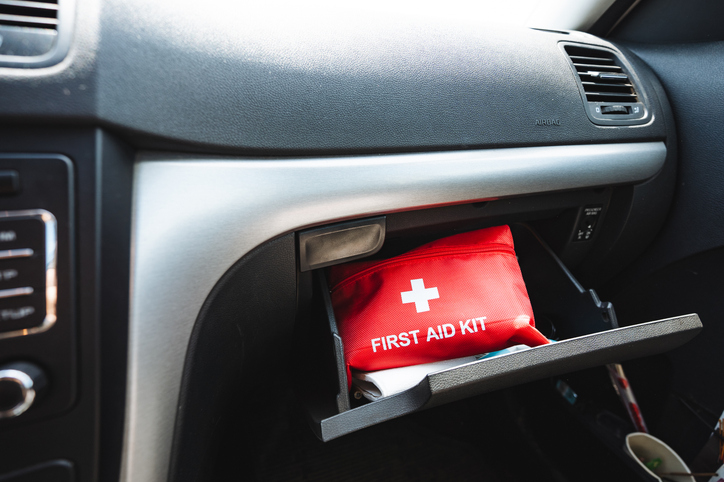
- A first-aid pouch with bandages, antiseptic wipes, and any prescription you take daily.
- A bottle of water and a couple of shelf-stable snacks.
- A small towel or shop rag.
- Jumper cables or a portable jump starter.
- The registration and proof of insurance kept somewhere you can find in the dark.
Key Takeaways
- The most valuable item in your car after a Fort Myers crash is a charged phone, not a flashlight. Scene photos and a written witness list win cases.
- Florida Statute 316.066 requires a written crash report for any wreck with injury, death, or $500 in apparent damage. Do not skip the report on the other driver’s promise to pay cash.
- Florida Statute 95.11(4)(a) gives you two years to file a negligence claim, not four. The 2023 reform cut the runway in half.
- Florida Statute 627.736 forfeits your $10,000 in PIP if you do not see a doctor within fourteen days of the crash. Urgent care counts.
- Florida Statute 768.81 bars recovery if you are more than 50 percent at fault. Scene photos move that fault number more than any other piece of evidence.
Frequently Asked Questions
What is the single most useful item to keep in my car after a Fort Myers crash?
A charged phone with a backup battery and a small card listing your insurance information, primary doctor, and an emergency contact. Photos and a written exchange of information at the scene win cases. We have had clients whose cases turned on three time-stamped phone photos taken before the other driver left.
Do I have to file a written crash report if my injuries seem minor?
Under Florida Statute 316.066, a driver must report a crash that involves injury, death, or apparent property damage of at least $500. In practice, anything beyond a parking-lot tap should be reported. We have seen too many soft-tissue injuries that did not show up until day three, and by then the no-report decision had already hurt the claim.
How long do I have to file an injury claim in Florida after a car accident?
Two years from the date of the crash for most negligence claims under Florida Statute 95.11(4)(a), as amended in 2023. Before the 2023 reform it was four years. That cut in half is one of the most misunderstood changes in Florida injury law, and waiting too long is a hard problem to fix.
If I was partly at fault, can I still recover anything in Florida?
Yes, but only if you are 50 percent at fault or less. Florida Statute 768.81 was rewritten in 2023 to use a modified comparative negligence rule. Cross the 51 percent line and you recover nothing. Stay at 50 or below and your recovery is reduced by your share of fault.
Does my PIP coverage actually pay if I get hurt on Daniels Parkway or I-75?
Florida Statute 627.736 requires $10,000 in Personal Injury Protection on every registered vehicle. PIP pays 80 percent of reasonable medical bills and 60 percent of lost wages regardless of fault, but only if you see a doctor within 14 days. Miss that 14-day window and you forfeit PIP entirely. That deadline catches people.
If you have been in a crash, call us
If you or someone in your family has been hurt in a Fort Myers car accident, the conversation with our office is free. There is no fee unless we recover for you. Call Pittman Law Firm, P.L. at 239-992-8259 and ask for me directly. We will sit down with you, look at your scene photos, look at the police report, and tell you straight what the case is worth and what your two-year window under Section 95.11(4)(a) looks like from where we sit.
About the Author

For more than thirty years, David B. Pittman, Esq. has handled personal injury cases out of the firm he founded, Pittman Law Firm, P.L., with a sustained focus in Fort Myers and across Lee County. The firm’s Fort Myers presence handles a steady stream of serious-injury work along the Daniels Parkway, Six Mile Cypress, McGregor Boulevard, Cleveland Avenue, and Summerlin Road corridors, and along I-75 between Estero and Bell Tower. He represents injured clients across Lee and Collier Counties, with a particular focus on commercial-vehicle, complex-liability, and serious-injury cases.
David earned his undergraduate degree at The Citadel, The Military College of South Carolina, and his law degree at the University of South Carolina School of Law. He is rated AV-Preeminent by Martindale-Hubbell and belongs to the Multi-Million Dollar Advocates Forum.
David has held a Florida real estate broker license for twenty-five years, a credential that shapes how the firm reads the property side of premises cases. The firm handles personal injury cases across Lee and Collier Counties, serving Fort Myers, Bonita Springs, Naples, Cape Coral, Estero, and Lehigh Acres, with offices at Windsor Place in Bonita Springs (main) and Fort Myers (satellite). Call 239-992-8259 for a free consultation.
Attorney advertising. The information in this article is general and not legal advice for any specific case. Reading this article does not create an attorney-client relationship with Pittman Law Firm, P.L. Prior results do not guarantee a similar outcome. Pittman Law Firm, P.L., 3525 Bonita Beach Rd, Suite 107, Bonita Springs, FL 34134.