

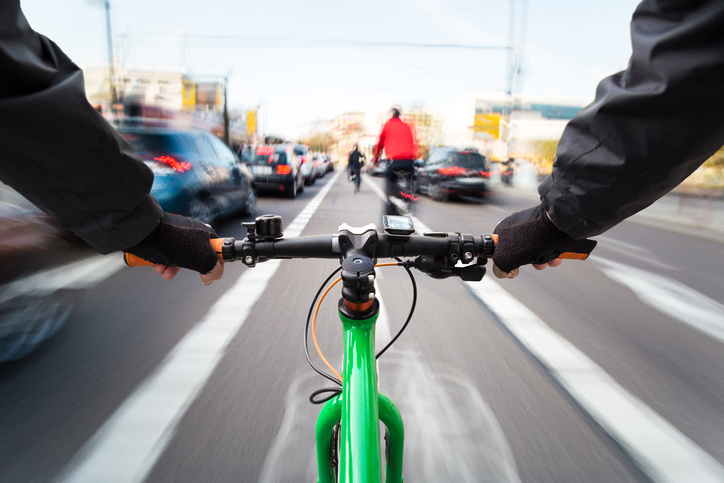
Smart Safety Gear for Southwest Florida Bicyclists
I get the gear question a lot. A rider comes in after a crash on US-41 or on one of the bike paths off Bonita Beach Road and asks me what helmet, what lights, what camera he should have been wearing. After thirty years of representing injured riders in Lee and Collier Counties, my answer is that gear matters, but it is rarely what decides the case. What decides the case is whether the driver violated a Florida traffic statute, whether anyone documented the scene, and whether the rider had the right insurance coverage at home. Gear is the last line of defense, not the case file.
I still tell every cyclist in our practice to wear a helmet, run daytime lights, and ride in bright clothing. The reason is not that it will win your lawsuit. The reason is that it might keep you out of one. But once a crash has happened, the right gear can preserve evidence in a way nothing else does — and the wrong assumptions about gear can hand the defense an argument it did not earn.
What the data actually shows on bicycle gear
The Insurance Institute for Highway Safety has tracked bicyclist fatalities for decades. Helmet use cuts the risk of a serious head injury substantially, and daytime running lights cut the risk of being struck from behind. The CDC injury data on adult cyclists points in the same direction. None of that is in dispute.
What is less obvious is what gear does for your case after the fact. In our office, we have seen three pieces of equipment carry real weight in negotiations with carriers: a cracked helmet, a working rear camera, and a properly fitted, undamaged-by-storage bike frame. Each one tells a story the police report cannot. A helmet split along the foam liner shows the angle and severity of the impact. A rear camera shows whether the driver drifted, swerved, or simply never looked. A bent fork or scored frame establishes the point of contact. I have settled cases on the strength of a helmet photo alone.
What we tell our riders is simple. Do not buy the most expensive setup. Buy gear that you will actually use every ride, and after a crash, save all of it.
Practical gear list for Southwest Florida riding
This is the list I give clients and friends. It is short on purpose.
- A helmet that fits. The brand matters less than the fit. Two fingers between chin and strap. Replace it after any impact, even a parking-lot drop. Florida has high heat, so look for ventilation.
- Front and rear daytime lights. Run them in daylight. Drivers on US-41 and the I-75 corridor frontage roads are looking for cars, not bikes. A blinking rear light shifts their attention.
- A rear-facing camera. The single piece of equipment most likely to change a case. If a driver hits you and leaves, the plate is on the SD card.
- Eye protection. Polarized lenses for the Naples sun. Clear lenses for early morning rides on Estero or Bonita Beach Road, where you will hit shaded canopy stretches.
- Bright, fitted clothing. Loose fabric catches on chainrings. Fluorescent yellow reads better than white in our humidity-soft afternoon light.
- Full-finger gloves. Florida palms come off the bars in heat. Gloves keep grip and save skin in a fall.
- A bell. Cheap, useful on the Linear Park trail in Bonita and the John Yarbrough Linear Park trail in Fort Myers, where pedestrians and cyclists share the path.
- ID on your person. A road ID bracelet or a card in your jersey pocket. EMTs work faster when they can identify you.
That is the entire list. Smart helmets, GPS theft trackers, and rear-radar units are fine if you want them, but they are not what carries an injury claim. The rear camera does.
Florida law that actually determines your case
If you are hit on your bike in Southwest Florida, four statutes will shape your claim more than any piece of gear ever could.
Florida Statute §316.2065 — Bicycle traffic regulations. Florida treats a bicycle as a vehicle. Riders have the rights and the duties of any driver. That cuts two ways. It means a car cannot run you off the road, but it also means you have to obey signals, ride with traffic, and yield where a driver would yield. The same statute carries the helmet requirement for riders under sixteen.
Florida Statute §316.083 — Overtaking, the three-foot rule. When a driver overtakes a cyclist, the driver has to leave at least three feet of clearance. The number sounds modest, but it does serious work for us. If a driver passes too close and clips a rider or causes a swerve-and-fall, we have a statutory violation to put in front of the carrier. That is plainer than arguing general negligence.
Florida Statute §627.736 — PIP, which follows you onto the bike. This is the rule riders get wrong most often. Personal Injury Protection on your own car policy covers you when you are riding your bicycle and a vehicle is involved in the crash. PIP pays the first $10,000 of medical bills and lost wages, no matter who was at fault. If a family member in your household has a car policy and you live there, that PIP can apply to you. We have opened PIP for adult children living at home and parents on a child’s policy more times than I can count.
Florida Statute §627.727 — Uninsured Motorist coverage. Florida is full of drivers carrying the state-minimum $10,000 in bodily injury liability or no liability coverage at all. If the driver who hits you cannot pay, your own uninsured motorist policy steps into the at-fault driver’s shoes. UM follows the person, not the car. If you have it on your auto policy, it covers you on your bike. I will say it directly: every rider in this state should carry stacked UM. It is the cheapest serious coverage you can buy, and on a bike claim it is often the only money on the table.
Why your own UM coverage matters so much
The hardest conversation in our office is not the one about pain and recovery. It is the one where I tell a rider that the driver who hit him has $10,000 in liability coverage and no assets, and that the rider declined UM on his own policy to save fifteen dollars a month. Once the at-fault carrier tenders its policy limits, the rest of the case lives or dies on what the rider has at home.
I tell every client who calls about a bike crash the same thing: pull your declarations page before we hang up. Look for UM. Look for whether it is stacked. Look at how high the limit is. On a fractured-hip claim with a six-figure hospital bill, $25,000 in UM disappears in the first week. On a serious orthopedic claim, $100,000 in stacked UM can be the difference between a real recovery and a settlement that covers the ambulance and nothing else. Florida does not require drivers to carry bodily injury liability at all, which means a rider’s own UM is, in many cases, the only meaningful pool of money in the entire claim.
If you ride in Lee or Collier County and you do not know what UM coverage you carry, that is the call to your agent to make this week. Not after a crash.
What the camera and the cracked helmet did for one Bonita Springs rider
A retired gentleman in Bonita Springs was riding the loop he rode most mornings when a driver pulling out of a side street struck him broadside. He went over the bars and landed on his hip and shoulder. He spent the morning in the trauma bay at the local hospital and the next six months in MRI scans, pain management, and physical therapy. The orthopedic damage was significant.
He called our office from his hospital room. The at-fault driver carried only state-minimum liability. Without that UM, the case would have closed at $10,000 and a hospital lien that ate most of it.
What helped us beyond the coverage was what he had at home. He had photographed his bike when he bought it. He had saved his helmet in the box from the hospital. He had a rear camera card that showed the driver had not slowed at the stop bar. We sent the carrier a demand with photographs of the cracked helmet, the bent fork, the camera still capture, and his complete orthopedic file. The case settled in full within six months, and he was able to focus on his physical therapy rather than chasing adjusters. The gear did not prevent the crash, but it told the story of the crash in a way no narrative from us could have matched.
What to do after a Southwest Florida bicycle crash
If you ride here long enough, the odds of a near miss are high and the odds of a real one are not zero. When it happens, the first hour matters more than people realize. Here is the order I give clients.
- Call 911 and get a report. Even if you feel ambulatory at the scene, get the report. Adrenaline hides injuries. The report locks down the driver’s identity, the insurance, and the officer’s first impression of fault.
- Photograph everything before you move it. Your bike. Your helmet. The driver’s car, including the license plate. The intersection. Skid marks. Any debris. Take twice as many as you think you need.
- Save the gear. Helmet, gloves, jersey, shoes, bike. Do not wash the jersey. Do not throw out the cracked helmet. Do not let a well-meaning friend “fix” your bike. Box it and set it aside.
- Pull the camera card immediately. If you ran a rear camera, take the SD card out and put it somewhere safe. Do not let the camera record over the file on your next ride.
- Get checked the same day. A primary-care visit, an urgent-care visit, or an emergency-room visit, but something same-day. PIP requires medical care within fourteen days. The carrier reads any gap as proof you were not really hurt.
- Find witnesses while they are still standing on the sidewalk. Names, phone numbers, what they saw. If you cannot, ask the responding officer to canvass.
- Call a Florida injury attorney before you call the driver’s insurance. The adjuster who calls you the next day is friendly for a reason. Recorded statements before a lawyer is involved tend to come back as quotations in a denial letter.
That sequence is not generic advice. It is the order I have watched make a difference in cases on the Estero corridor, on US-41 through Bonita, and on the side roads of North Naples for three decades.
Key Takeaways
- Florida treats bicycles as vehicles under §316.2065, and adult helmet use is recommended but not required.
- The three-foot passing rule under §316.083 gives riders a statutory violation to point to when a driver buzzes them.
- Your own household PIP under §627.736 follows you onto your bike and pays the first $10,000 in medical bills regardless of fault.
- Uninsured motorist coverage under §627.727 is often the only meaningful money on a serious bike-injury claim. Carry it. Stack it if you can.
- After a crash, save the helmet, save the bike, pull the camera card, get same-day medical care, and call counsel before you call the at-fault carrier.
Frequently Asked Questions
Q1. Does Florida require adult cyclists to wear a helmet?
Florida law requires a helmet only for riders under sixteen, under §316.2065. Adults are not required to wear one. From a case standpoint, the defense will raise helmet use on any head-injury claim, so we recommend a helmet for every ride regardless of age.
Q2. Will my own auto insurance pay if I am hit on my bike?
Yes. Florida PIP under §627.736 follows you onto your bicycle. If you own a car with PIP, your PIP pays the first $10,000 of medical bills and lost wages, even though you were on a bike. If you carry uninsured motorist coverage on that policy, that follows you too.
Q3. What is the three-foot passing rule in Florida?
Under §316.083, a driver overtaking a bicycle has to allow at least three feet of clearance. When a driver passes too close and a crash results, the three-foot rule gives us a clean statutory violation to put in front of the carrier rather than arguing general negligence.
Q4. Should I save my helmet and gear after a bike crash?
Yes. Do not throw anything away. The helmet, the jersey, the gloves, the bike itself — photograph all of it in the condition it came home in and store it. We have settled cases where the cracked helmet shell did more to prove the force of impact than the police report did.
Q5. How long do I have to bring a bicycle-injury claim in Florida?
Florida shortened the negligence statute of limitations to two years from the date of the crash, effective March 24, 2023. That is a hard deadline, and it runs whether or not your medical treatment is finished. Call us sooner rather than later so we can investigate while the evidence is still fresh.
Call Pittman Law Firm
If you or someone in your family has been hurt riding a bike in Bonita Springs, Fort Myers, Naples, Estero, Cape Coral, or anywhere across Lee or Collier County, call our office. We will sit down with you, pull your declarations page, open your PIP, and look hard at whether UM applies. There is no fee unless we recover for you, and the first consultation is free.
Call 239-992-8259. We answer our phones.
About the Author

Pittman Law Firm, P.L. operates across Southwest Florida under the direction of founder David B. Pittman, Esq., who has practiced personal injury law for more than thirty years, with a sustained focus on cyclist-injury cases and the insurance-coverage complexities specific to riders. The firm represents injured clients across Lee and Collier Counties, from the firm’s main office at Windsor Place on Bonita Beach Road through Fort Myers, Naples, Estero, Cape Coral, and Lehigh Acres.
David holds an AV-Preeminent rating from Martindale-Hubbell and belongs to the Multi-Million Dollar Advocates Forum. His undergraduate degree is from The Citadel, The Military College of South Carolina, and his JD is from the University of South Carolina School of Law.
David has held a Florida real estate broker license for twenty-five years, a credential that shapes how the firm reads the property side of premises cases. The firm handles personal injury cases across Lee and Collier Counties, serving Fort Myers, Bonita Springs, Naples, Cape Coral, Estero, and Lehigh Acres, with offices at Windsor Place in Bonita Springs (main) and Fort Myers (satellite). Call 239-992-8259 for a free consultation.
The information on this page is for general educational purposes and does not constitute legal advice. Every case turns on its own facts. Reading this article does not create an attorney-client relationship with Pittman Law Firm, P.L. For advice about a specific situation, please contact our office. Attorney advertising.