

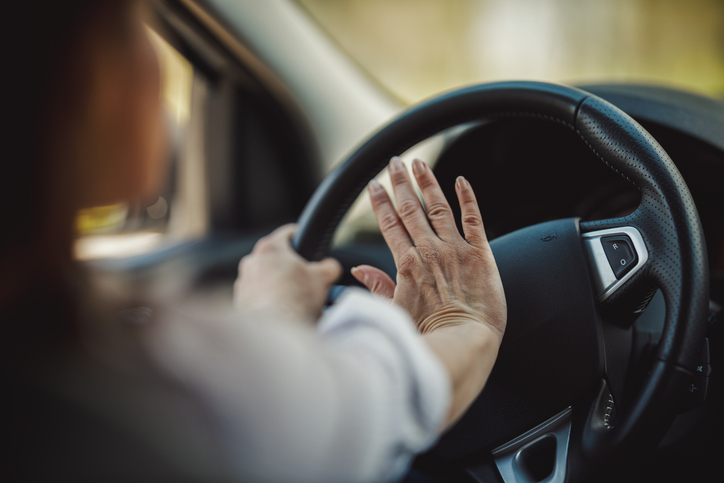
Road Rage Triggered by Horn Honking: A Florida Attorney’s Practical Guide
A honk. A glare in the rearview mirror. Then a regular Tuesday afternoon commute on US-41 turns into a chase, high beams flashing, somebody gripping the wheel hard enough to leave marks. Then someone gets hurt, and our office gets the call. I have been on the receiving end of those calls for over thirty years of personal injury practice in Lee and Collier Counties, and I can tell you that the legal questions after a road-rage crash are different from the ones after an ordinary fender-bender.
The insurance coverage works differently. The fault analysis works differently. And in the worst cases, the conduct crosses from negligence into intentional tort, which changes the menu of recovery options completely. I want to lay out, in plain English, what Florida law actually says, what we see in our own files along the I-75 corridor and through Lee County, and what to do if a honk turns into something more.
What Florida law actually says about road-rage crashes
Four statutes do the heavy lifting on a road-rage injury case in Florida. Knowing what they say up front helps clients understand why their case is being handled the way it is.
Modified comparative negligence — §768.81, Florida Statutes. Florida changed this rule in 2023. A jury can still assign each party a percentage of fault, and your recovery gets reduced by your share. The new wrinkle: if a jury decides you were more than 50 percent at fault, you take home nothing. In a road-rage case, this matters because the defense will try to argue you provoked the encounter. We get out in front of that argument early.
Two-year deadline to sue — §95.11(4)(a), Florida Statutes. Negligence claims used to carry a four-year statute of limitations in Florida. The 2023 reform cut that to two years. A road-rage crash that goes uninvestigated for eighteen months is suddenly an emergency. Our office tracks these deadlines on a calendar, but I tell every caller the same thing: do not assume you have time.
PIP — §627.736, Florida Statutes. Florida is a no-fault state for the first layer of medical bills. Your own auto policy pays up to $10,000 in PIP benefits no matter who caused the crash. That includes 80 percent of medically necessary treatment if you see a doctor within 14 days. After that, the door closes on PIP. I cannot count how many road-rage clients lost PIP benefits because the adrenaline wore off on day fifteen and they finally went to the doctor.
Uninsured Motorist — §627.727, Florida Statutes. Aggressive drivers often turn out to be uninsured or underinsured drivers. When the at-fault driver has no coverage or runs from the scene, UM coverage on your own policy fills the gap above PIP. I tell every Florida driver to carry UM stacked at the highest limit they can afford. It is the single best dollar you will ever spend on auto insurance.
Crash report — §316.066, Florida Statutes. If there is injury, death, or $500 in property damage, Florida law requires a crash report. The report is hearsay at trial, but in the months leading up to litigation, it is the document every adjuster reads first. If the responding officer wrote down that the other driver was tailgating, swerving, or honking aggressively, we have a head start. For more on filing a report in our area, see the Florida Highway Safety and Motor Vehicles site.
Road-rage patterns along the I-75 corridor through Lee and Collier Counties
Road-rage cases sound like one thing in the news and look like five different things in our office. Here are the patterns we see most often along the I-75 corridor through Lee and Collier Counties:
- The merge dispute. A driver merges onto I-75 from Daniels Parkway, somebody on the highway taps the horn, and the merging driver responds with brake-checks for the next four miles. Most of these end with a rear-end collision and a fault fight neither driver wins cleanly.
- The honk-and-chase. A frustrated honk at a green light becomes a follow-home situation. We had a client followed off US-41 into a residential driveway in Bonita Springs. He stayed in the car and called 911 from the seat. That was the right call.
- The lane-change retaliation. One driver cuts the other off, the cut-off driver honks, the original driver responds by changing lanes back into the honking driver’s path. This one produces the worst injuries because both drivers are at speed.
- The parking-lot escalation. A horn argument in a lot at Coconut Point or Coastland Center becomes a physical confrontation. The auto insurance question goes away here and the homeowners or umbrella policy becomes the relevant coverage.
- The intentional ramming. This is the rarest and the most serious. A driver uses the vehicle as a weapon. The insurance picture changes completely because most policies exclude intentional acts, and we have to look at personal assets, criminal restitution, and any available umbrella coverage.
What makes road-rage injury claims more complicated than they appear
From the outside, a road-rage case feels like it should be straightforward. There is a clear aggressor. Often there is a witness. Sometimes there is dash-cam footage. Then we open the file and the complications surface.
The first complication is the fault story. Insurance carriers tell two versions of every road-rage crash. The defense version is always that our client honked first, gestured first, or provoked the response. Under §768.81, every percentage point of fault assigned to our client comes off the top of the recovery. So a $200,000 case where the jury decides our client was 30 percent at fault becomes a $140,000 case. We spend serious time on the provocation narrative because the defense always brings it up.
The second complication is the coverage question. If the other driver intentionally caused the crash, the at-fault driver’s auto policy may deny coverage entirely under an intentional-acts exclusion. That is when we start looking at the driver’s homeowners policy, any umbrella policy, and personal assets. It is also when our client’s UM coverage starts to matter more than the other driver’s liability coverage.
The third complication is medical proof. Road-rage clients often refuse the ambulance at the scene because they are angry and want to deal with the police, not the paramedics. Then they miss the 14-day PIP window, lose the no-fault benefit, and arrive at our office two months later with a hospital bill and no easy way to pay it. The 14-day rule under §627.736 is the cruelest deadline in Florida injury law. I tell every road-rage caller the same thing: see a doctor, even if you feel okay.
What to do if a honk turns into something more
Here is what I tell our clients to do, in order, based on what I have seen actually work after thirty years of handling these files in Lee and Collier Counties.
- Stay in the vehicle. Doors locked, windows up. The single worst injury patterns I have seen on road-rage files happen when one driver gets out and approaches the other vehicle. Whatever the other driver is doing, you are safer inside your own car than outside it.
- Drive toward people, not away from them. A gas station, a fire station, a busy parking lot. Do not drive home. The aggressor now knows where you live. I have had clients drive straight to the Bonita Springs substation parking lot and wait it out. That was smart.
- Get the plate, the make, the color, and a description. A note on your phone, a voice memo, anything. Memory is unreliable after an adrenaline spike. Write it down inside ten minutes or you will get it wrong.
- Call 911 from a safe location, not while driving. Florida law generally allows hands-free calls in this situation, but you are better off pulling into a lot and making the call stationary. Dispatchers need clear information and you need both hands on the wheel if the situation is still active.
- Go to the doctor within 14 days. No exceptions. If you feel fine the next morning, go anyway. Soft-tissue injuries from a sudden brake or impact often surface on day three or day five. Missing the 14-day window costs you your PIP benefits under §627.736 and gives the defense a delay argument they will use for the rest of the case.
- Preserve the dashcam file before it overwrites. Most dashcams loop and overwrite within 24 to 72 hours. Pull the SD card, copy the file, label it with the date. We have lost more good evidence to overwritten dashcam loops than to any other single cause.
- Do not post about it on social media. Not a vent, not a “you would not believe what happened to me today” story, nothing. The defense will pull every public post and read it back to you at deposition.
- Call our office before you call the at-fault driver’s insurance carrier. The carrier will record the call, frame the questions to lock in fault, and use your statement later. A free consultation with us costs you nothing and changes how the carrier handles the file from day one.
Key Takeaways
- Road-rage crashes are evaluated under the same Florida negligence framework as any other crash, but the intentional-act question can change which insurance policy actually pays.
- Florida’s PIP statute (§627.736) gives you $10,000 of no-fault medical coverage, but only if you see a doctor within 14 days. Miss that window and the door closes.
- The 2023 reform shortened the negligence statute of limitations to two years under §95.11(4)(a). Old assumptions about a four-year deadline are wrong and cost cases.
- Under §768.81, fault above 50 percent ends your recovery. The provocation narrative the defense builds matters as much as the conduct of the at-fault driver.
- Uninsured Motorist coverage under §627.727 is the single most useful policy feature for road-rage cases because aggressive drivers are often uninsured or flee the scene.
Frequently Asked Questions
If a road-rage driver hits me, does my own insurance cover it?
Florida’s PIP coverage under §627.736 pays up to $10,000 of your initial medical bills regardless of who caused the crash. If the at-fault driver flees or carries no liability coverage, your Uninsured Motorist coverage under §627.727 picks up bodily injury damages above PIP. Most of our road-rage clients end up using a combination of PIP and UM, particularly when the aggressor is uninsured or disappears from the scene.
Can a road-rage incident be treated as an intentional act rather than a regular car accident?
Yes, and the distinction matters. If a driver intentionally rams another vehicle or runs someone off the road, the conduct shifts from ordinary negligence to intentional tort and possibly criminal assault. Most auto liability policies exclude intentional acts, which means the at-fault driver may have to pay out of personal assets. Punitive damages also become available in clear intentional cases.
How long do I have to file a road-rage injury lawsuit in Florida?
Under §95.11(4)(a), Florida Statutes, you have two years from the date of the crash to file a negligence lawsuit. That window was shortened from four years in the 2023 tort reform. Intentional acts and wrongful-death claims carry their own deadlines, so call our office sooner rather than later so we can identify which clock applies to your situation.
What if I honked first and the other driver responded aggressively?
Florida uses modified comparative negligence under §768.81. A jury can assign you a percentage of fault, and your recovery is reduced by that percentage. If you are found more than 50 percent at fault, you recover nothing. Honking first does not automatically place fault on you, but it is a fact the defense will raise. We work through these arguments with you before the insurance carrier ever frames the story.
Should I call the police even if no one was hurt during a road-rage incident?
Yes. Under §316.066, Florida law requires a crash report when there is injury, death, or property damage of $500 or more. Beyond the statute, a police report creates the official record we rely on if injuries surface in the days after. Many of our clients had no pain at the scene and woke up the next morning with neck, back, or shoulder symptoms that did not show up on adrenaline.
Talk to Our Office Before You Talk to the Insurance Carrier
If a honk turned into a crash, a chase, or a confrontation, the next call you make matters. Insurance carriers move quickly to lock in a fault story, and the version of events they record on day one is the version that shapes the file for the next two years. Call our office at 239-992-8259 for a free consultation. There is no fee unless we recover for you. We will walk through the facts with you, review the police report, identify every layer of coverage available, and tell you straight whether you have a case worth pursuing.
About the Author

David B. Pittman, Esq., the founder of Pittman Law Firm, P.L., concentrates his practice on personal injury matters across Southwest Florida and has done so for more than thirty years. The firm represents injured clients across Lee and Collier Counties — Bonita Springs, Fort Myers, Naples, Estero, Cape Coral, and Lehigh Acres — with offices in Bonita Springs and Fort Myers, focusing on commercial-vehicle, complex-liability, and serious-injury cases.
After The Citadel, The Military College of South Carolina, David took his JD from the University of South Carolina School of Law and built a personal injury practice that now carries AV-Preeminent recognition with Martindale-Hubbell and a membership in the Multi-Million Dollar Advocates Forum.
David has held a Florida real estate broker license for twenty-five years, a credential that shapes how the firm reads the property side of premises cases. The firm handles personal injury cases across Lee and Collier Counties, serving Fort Myers, Bonita Springs, Naples, Cape Coral, Estero, and Lehigh Acres, with offices at Windsor Place in Bonita Springs (main) and Fort Myers (satellite). Call 239-992-8259 for a free consultation.
This article is for general information only and is not legal advice. Reading it does not create an attorney-client relationship with Pittman Law Firm, P.L. The hiring of a lawyer is an important decision that should not be based solely on advertising. Past results do not guarantee a similar outcome.