

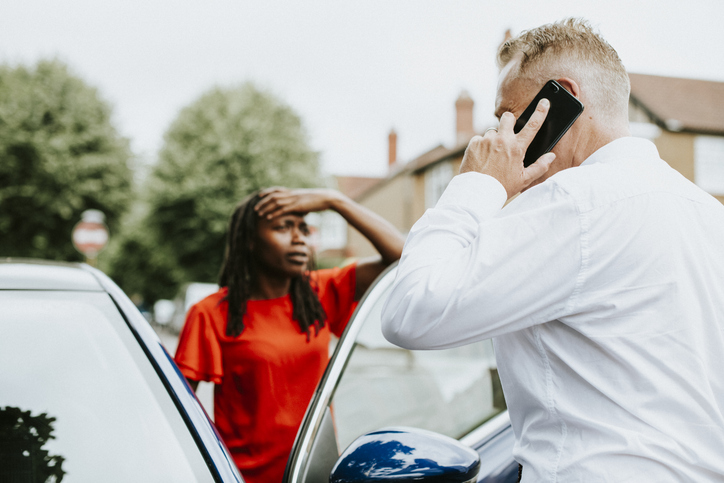
Car Accident in Fort Myers? Here’s How to Tell if Your Car is Safe to Drive
There are three things to check before you drive a damaged car off a Fort Myers crash scene: whether any airbag deployed, whether there is a fluid puddle under the vehicle, and whether the car tracks straight when you take your hands off the wheel for two seconds. Most drivers check the body damage. Those three checks decide whether the car will actually stop and steer on the way home.
The tow bill sounds expensive. The second wreck caused by a hidden tie-rod failure on McGregor Boulevard is more expensive. Below is the way I walk a client through this on the phone, the Florida law that starts running the moment the bumpers touch, and a recent case from our office that shows what the UM policy does when the at-fault driver is already gone.
What Florida law actually says about driving a damaged car
Three statutes control what you have to do at the scene and what time pressure starts running the second the bumpers touch.
Florida Statute section 316.061 is the move-out-of-the-road statute. If your car is drivable and the wreck is not a serious-injury or fatal crash, the law tells you to clear the travel lane so you do not block traffic. People misread this rule. The duty to move the car is not the State of Florida certifying the car is roadworthy. It only means you have done what the statute asks at the scene. After that, the question of whether the car is safe to drive home is back in your hands.
Florida Statute section 316.066 is the crash report rule. Any crash with an injury, a death, a hit-and-run, a DUI, or a tow-away gets a long-form crash report from law enforcement. If your car has to be towed off Daniels Parkway because the radiator is sitting in the road, that is a tow-away wreck and it is going to be reported. Get the report number before you leave. We use that report on every claim we file.
Florida Statute section 627.736, the PIP statute, is the one most Fort Myers drivers do not think about until later. Your own Personal Injury Protection pays the first $10,000 of reasonable and necessary medical care, no matter who caused the crash. To get the full $10,000 you generally have to be seen by a qualifying medical provider within fourteen days of the wreck. Miss that window and the benefit can drop to $2,500. The single most common mistake I see is a driver who tells the trooper “I’m fine” at the scene, drives the damaged car home, wakes up two days later with a stiff neck, and waits another week before going to an urgent care clinic. By that point the medical record looks like a delayed onset, and the carrier uses that delay against the claim.
And the clock that matters most is the deadline under Florida Statute section 95.11(4)(a). After the 2023 tort reform, you have two years from the date of the crash to file a personal injury lawsuit. The old four-year window is gone. If your car looks fine and you wait it out, that two-year statute of limitations is running on you the entire time.
Five “drivable or not?” situations from our Fort Myers caseload
Here is what comes through the office in practice. None of these are textbook fact patterns. They are the calls we take on a regular Tuesday.
- The low-speed Cleveland Avenue rear-end. Bumper looks fine, no airbag, the driver walks around the car and decides it is drivable. Two days later the trunk will not latch and the alignment pulls hard to the right. That second problem is frame deflection, and you can rarely see it from the outside.
- The Daniels Parkway T-bone at a green-arrow turn. Side airbags fire. The door still opens, the engine still starts, and the driver wants to nurse the car the two miles home. Once a side airbag has deployed, the side curtain has to be replaced and the body control module needs a sensor reset. The car is not safe to drive even if it appears to run.
- The Six Mile Cypress Parkway low-impact tap on the way to work. Plastic bumper cover cracked, no warning lights, no fluid. Often genuinely drivable, but only after a quick check for steering pull and a look under the front end for a leak the size of a quarter.
- The Summerlin Road sideswipe with a phantom driver. The other car never stops. The body damage is on the driver-side rear quarter, the wheel may be rubbing the inner fender liner, and there is no other driver on scene to exchange insurance with. That is a hit-and-run, and Uninsured Motorist coverage becomes the source of recovery, not the at-fault driver.
- The I-75 near Alico Road highway-speed rear-end. The wreck that looks the worst is sometimes the safest car to move. The wreck that looks survivable at sixty miles an hour is often the one with hidden frame and suspension damage that should never be driven another mile. Tow it. Pay the hundred dollars. Let the body shop tell you what it found.
If any one of those five descriptions sounds like your wreck, the bias should be toward calling a wrecker, not toward driving home.
What you can’t see from the outside — and what to look for
The body of the car is the part you can see. The parts that decide whether the car will stop and steer are the parts you cannot. After a collision, the four checks I tell every client to run before they put a single mile on the car are:
- Airbag light and ABS light. Turn the key. If the airbag light stays on or the ABS warning is illuminated, the safety systems are not arming for a second collision. Driving a car with the airbag light on after a wreck is driving a car with no airbags.
- Steering pull. On an empty stretch of straight road, take your hands off the wheel for two seconds. If the car drifts hard left or right, the tie rod, control arm, or wheel alignment took damage. Cleveland Avenue and McGregor Boulevard both have long, flat, straight stretches where this test is easy. If you cannot do it without the car tugging, do not drive it home.
- Tire and wheel. Walk around and look at every tire from above and from behind. A wheel that is canted in or out at the top, a tire that is rubbing the wheel well, or a cracked rim is a tow-the-car situation. People drive on bent rims for a week and call us when the wheel separates on Pine Island Road at forty miles an hour.
None of those four checks take more than ten minutes. The reason we walk every new client through them on the first call is simple: a second wreck on the way home is the most preventable injury we see. And if you are unsure on any one of the four, the answer is to tow it. Insurance will pay for a tow far more readily than they will pay for a totaled second car.
A US-41 hit-and-run that turned on the UM policy
A client of ours was rear-ended on US-41 in Fort Myers in heavy afternoon traffic. The car behind her hit her hard enough to push her into the truck in front, and then the at-fault driver pulled around the wreck and kept going. By the time the trooper arrived there was no plate, no description anyone could agree on, and no second driver to take a statement from. A textbook hit-and-run.
The body damage on her car was bad but not dramatic, and she had driven it the half-mile home before she called us. Within two days her neck had locked up. The ER cleared her for fractures and sent her home with a soft collar. She went on to physical therapy and then pain management for chronic cervical strain that the treating doctor connected directly back to the crash.
Because the at-fault driver was never identified, the case turned on her own Uninsured Motorist coverage under section 627.727. A phantom driver is treated like an uninsured driver under Florida law, so the UM carrier stepped into the at-fault driver’s shoes. The lesson the client took from it, in her own words, was that the second-most-important call after the trooper is the call to your own carrier, not to the other driver’s.
What to do if your car looks drivable after a Fort Myers crash
This is the action list I give every client who calls us in the first hour. It is the same list I have given for thirty years. I have refined it because of what I have watched go wrong.
- Get the long-form crash report number before you leave. If the trooper or Fort Myers PD officer wrote the report, the number is on their card. Without it, the PIP carrier will slow-walk the claim.
- Take twelve photos, not three. Both bumpers, both sides, all four wheels from straight on, the airbag panel inside, the dashboard with the key on showing every warning light, the road in both directions, and the other car’s plate. A photo of a warning light is a photo the insurance adjuster cannot argue with later.
- Run the four mechanical checks before you put the car in drive. Fluid puddle, airbag light, steering pull, tire and wheel. If any one of the four is off, call a tow. Do not drive it.
- See a doctor within fourteen days, even if you feel fine. This is the PIP rule, not a suggestion. A delayed onset is real, and the carrier will read a two-week gap in your medical record as evidence the injury came from something else.
- Save the body shop estimate, not just the insurance estimate. The insurance estimate is the carrier’s number. The body shop tear-down often shows frame damage the insurance estimate missed. We use the tear-down on diminished-value claims regularly.
- Do not give a recorded statement to the other side’s carrier before talking to an attorney. They are not calling to help you. They are calling to fix the boundaries of the claim before you have seen a doctor.
One observed pattern from the office: clients who follow the four-check routine in the first thirty minutes almost never come back to us with a second wreck story. Clients who do not are the ones whose first wreck got worse before the body shop opened.
Key Takeaways
- Florida Statute section 316.061 tells you to move a drivable car off the road. That is not a finding that the car is roadworthy.
- Run the four-check routine before driving: fluid puddle, airbag light, steering pull, tire and wheel. If any one is off, tow it.
- See a doctor within fourteen days under section 627.736 or your PIP benefit can drop from $10,000 to $2,500.
- The deadline to file a personal injury lawsuit after a Fort Myers crash is two years under section 95.11(4)(a). The old four-year clock is gone.
- If the at-fault driver flees, section 627.727 lets your own Uninsured Motorist coverage step in. Hit-and-run claims often pay through your policy, not theirs.
Frequently Asked Questions
Q1. Is my car safe to drive home after a Fort Myers crash?
Only if you can confirm three things at the scene: no airbag deployed, no fluid puddle under the car, and the vehicle tracks straight without pulling. If any one of those is off, do not drive it. The cost of a tow is far less than the cost of a second wreck caused by a hidden steering or brake failure.
Q2. Does Florida law require me to move my damaged car off the road?
Yes. Florida Statute section 316.061 says if your car can be moved safely, you should move it out of the travel lane to a shoulder or parking area to avoid blocking traffic. That obligation to move is not a finding that the car is roadworthy. It only means you have done what the statute asks at the scene.
Q3. What is the Florida deadline to file a personal injury claim after a car accident?
Under the 2023 tort reform, the deadline under section 95.11(4)(a) is two years from the date of the crash for most negligence claims. The old four-year window is gone. Wait too long and the claim is barred, no matter how strong the facts are.
Q4. Will my PIP cover the ER bills if the other driver caused the crash?
Yes. Under Florida Statute section 627.736, your own Personal Injury Protection pays the first $10,000 in reasonable and necessary medical care regardless of fault, but you generally need to be seen by a qualified medical provider within fourteen days for the full benefit. Miss that window and PIP can drop to $2,500.
Q5. What if the driver who hit me fled the scene on US-41?
Hit-and-run cases are why Uninsured Motorist coverage matters. Under section 627.727, a phantom driver who cannot be identified is treated like an uninsured driver, and your UM policy can step in to pay for medical bills, lost wages, and pain and suffering up to your limits. We have recovered full policy payouts for clients in exactly that situation.
Talk to a Fort Myers Car Accident Attorney
If you have been hurt in a Fort Myers car accident and you are not sure whether your car, your insurance position, or your medical timeline is in good shape, call our office. We will walk through the four-check routine on the phone, line up a doctor under your PIP if you need one, and read the crash report with you. There is no fee unless we recover for you.
Call 239-992-8259 for a free consultation.
About the Author

David B. Pittman, Esq. is a thirty-plus-year personal injury attorney in Fort Myers and across Lee County and the founder of Pittman Law Firm, P.L., with a sustained focus on serious-injury auto and complex-liability cases. The firm’s Fort Myers presence handles a steady stream of serious-injury work along the Daniels Parkway, Six Mile Cypress, McGregor Boulevard, Cleveland Avenue, and Summerlin Road corridors, and along I-75 between Estero and Bell Tower.
David trained at The Citadel, The Military College of South Carolina before earning his JD at the University of South Carolina School of Law. He is AV-Preeminent at Martindale-Hubbell and a Multi-Million Dollar Advocates Forum member.
David has held a Florida real estate broker license for twenty-five years, a credential that shapes how the firm reads the property side of premises cases. The firm handles personal injury cases across Lee and Collier Counties, serving Fort Myers, Bonita Springs, Naples, Cape Coral, Estero, and Lehigh Acres, with offices at Windsor Place in Bonita Springs (main) and Fort Myers (satellite). Call 239-992-8259 for a free consultation.
Disclaimer: The information on this page is for general information only and is not legal advice for any individual case or situation. Viewing or reading this page does not create an attorney-client relationship with Pittman Law Firm, P.L. This page is attorney advertising.